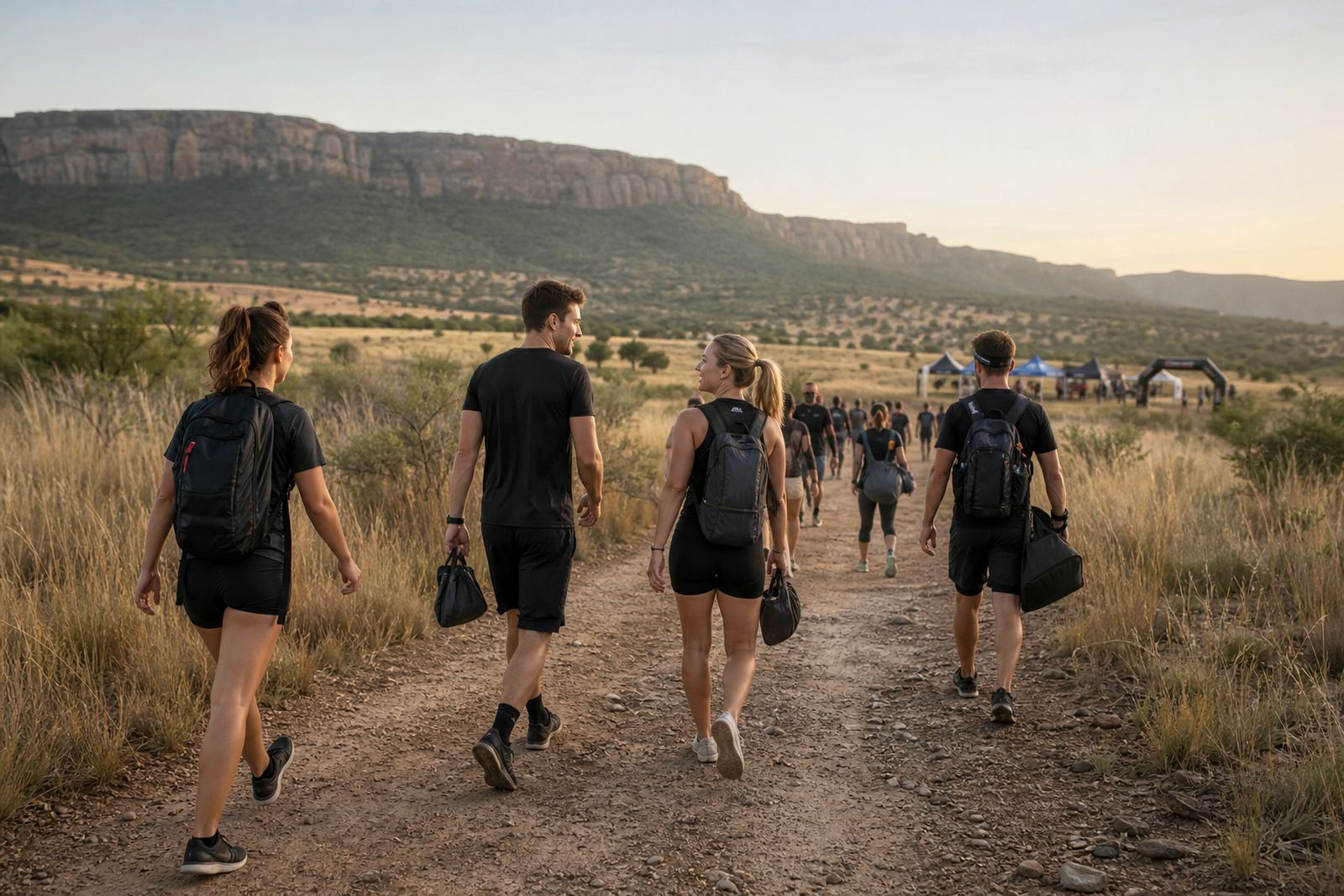


When a school leavers group wants more than a normal outing
School leavers usually arrive as a mixed group with different fitness levels, different nerves and plenty of energy. The event works best when it is planned as a supervised group rather than as a loose arrival of friends. That means clear team communication, sensible timing and enough structure so nobody gets left behind at the start line or confused after the first obstacle.
For this use case the client situation is usually straightforward: a school, alumni group, youth group or parent organiser wants a day that feels exciting without becoming chaotic. The Magaliesberg terrain suits that well because the course can include hills, open ground, mud, water crossings and grip-heavy obstacles that test balance as much as speed. Young adults from Johannesburg, Pretoria, Cape Town, Durban and Bloemfontein often want something more physical than a social outing, but still memorable for the whole group.
Before anyone trains hard, each participant should check with a doctor if they have concerns about exercise, asthma, injuries or any other health issue. That is especially important for young adults who have not trained regularly for a while.
The kit that actually helps on course
For school leavers, the right kit is less about looking the part and more about getting through the day comfortably. Old shoes with a proper grip usually work better than shiny new pairs. Clothing should be light, quick-drying and able to handle mud, dust and repeated dragging or crawling. In coastal humidity or after rain, fabrics that stay heavy can become a real nuisance. A small towel and dry clothes for after the event are also worth packing.
- Trail shoes or trainers with good grip and a closed toe
- Comfortable shorts or tights that allow climbing and crawling
- Light shirt or top that can get wet and dirty
- Water bottle and a small recovery snack
- Dry clothes, towel and a bag for muddy items
- Any required medication, clearly labelled
For supervised groups, it also helps to have one adult or appointed captain who keeps track of waivers, arrival times and the final team count. That person does not need to manage the whole race, but they do need to know who is present and who has been delayed at the gate or parking area.
How to lay out the day so nobody stalls before the first obstacle
A good school leavers plan starts before the warmup. Groups should arrive with enough time for check-in, safety briefing and a calm changeover into race mode. If the group is large, heat allocation support helps avoid crowding. It also makes it easier to keep friends together where possible, while still matching the course flow to the event setup.
The best layout is usually simple: arrival, waiver check, safety briefing groups, group warmup session, team photo moments, then staggered starts or heat release. Recovery area guidance should be part of the plan too, because some participants will finish fast and others will need a place to breathe, drink water and wait for their friends. If there are supporters on site, they should know where they may stand safely and where not to block access routes or marshals.
- Use one captain per smaller group so communication stays clear
- Keep valuables, car keys and phones in one safe spot
- Do not send tired participants out without water
- Allow time for mud, changing and transport after the finish
In Hekpoort and the wider Magaliesberg area, weather can change quickly, so it is wise to plan for sun, wind or rain on the same day. That matters for young adults because a hot start can become a slippery finish if the ground changes during the morning.
Safety habits that matter more than bravado
Obstacle course racing is supposed to feel challenging, but it still needs discipline. The briefing should cover how to move around obstacles, when to wait for a marshal, how to avoid pushing past another runner and what to do if someone slips or feels unwell. Participants should listen properly even if they are excited, because most avoidable problems come from rushing, not from the obstacle itself.
Waiver coordination is also important for this age group. School leavers may be adults or nearly adults, but paperwork still needs to be complete and checked properly before the event starts. If a participant has any existing injury or medical concern, it should be flagged early so the team can advise on safer pacing or a less intense approach to certain sections.
- Follow marshal instructions at every obstacle
- Do not attempt a climb or jump if footing looks unstable
- Stay hydrated before the start and after each major effort
- Tell a marshal straight away if there is pain, dizziness or cramping
For tougher workouts and long endurance challenges, participants should have trained a little beforehand. That does not mean they need to be elite athletes, but basic running, squatting, carrying and grip work helps a lot. It also reduces the chance of day-of panic when the course starts getting steep or muddy.
The most common mistakes school leavers make
One common mistake is turning up in the wrong shoes. Smooth soles, brand-new trainers and slip-prone fashion footwear can spoil the day fast. Another mistake is eating badly before the event, or eating too much right before the start. A light meal with enough time to settle is usually better than arriving full and uncomfortable.
Groups also sometimes underestimate how long the recovery period takes. A race may be over in under an hour for some, but the full experience includes check-in, waiting, briefing, warmup and changeover. If transport is arranged too tightly, people end up rushed and irritable. Another issue is poor captain communication, where one person knows the plan and the rest are guessing. That leads to missed heat times, confusion over waivers and unnecessary stress.
A final mistake is trying to prove something on every obstacle. This is a shared event, not a private fitness test. Some participants will move quickly, others will take a cautious route and both approaches are fine if the group stays safe and keeps moving forward.
Planning a Practical Rand Budget
Budgeting for school leavers depends on group size, transport and the level of support needed on the day. Some groups only need entry planning and waiver coordination, while others want full team registration help, custom briefing, recovery area guidance and supporter planning. A practical budget often sits in a lower range for a straightforward group plan, and moves higher when the group is large or needs more onsite coordination.
For a modest supervised group with basic planning support, the cost can start in the low thousands of Rand overall, depending on what is included. For larger school leavers groups that need more structure, a wider support package can move into the mid thousands or higher. Transport, food, changes of clothes and any pre-event training are usually separate from event support, so they should be counted early rather than added at the last minute.
The smart approach is to work with a total budget that covers the event itself, a small allowance for extras, and enough margin for last-minute changes. That way the day stays organised even if the weather shifts or a few participants need more time in the recovery area.
The part that makes the day worth remembering
School leavers often want one shared experience that feels bigger than a normal class outing, and a well-run obstacle race does that without needing anything flashy. The course gives them teamwork, laughter, a bit of pressure and a proper sense of finishing something difficult together. For many groups, the photo moments after the race are as important as the start line because everyone has a story by then.
Punisher supports school leavers groups from Hekpoort and the Magaliesburg area through clear communication, practical onsite help and organised group handling. With the right planning, the day can feel tough in the right way, with enough structure for safety and enough freedom for the group to enjoy itself outdoors.