

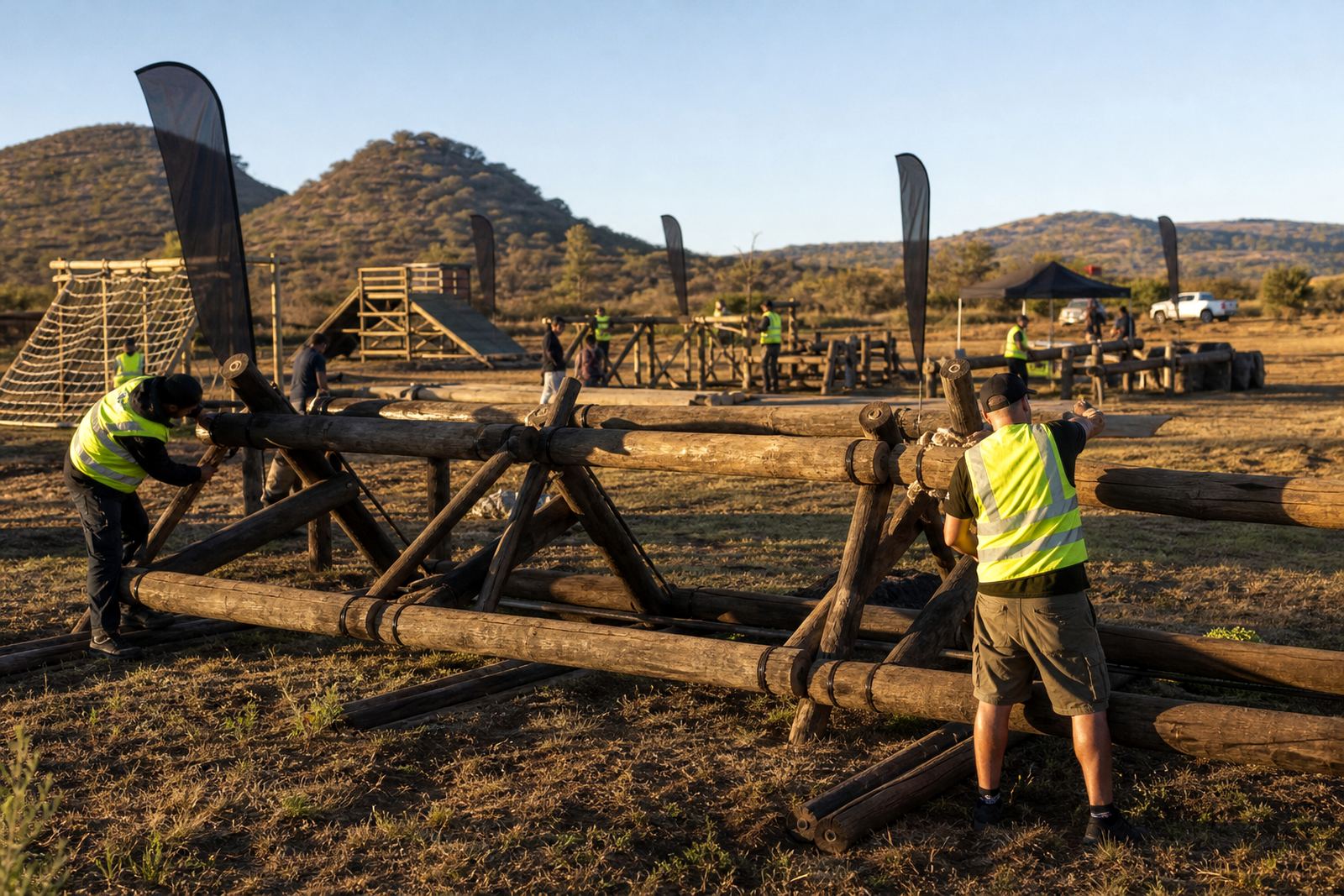
How a rough patch of ground became a race day
The first obstacle kit was put together in Hekpoort, where open ground, uneven slopes and hard-running terrain offered the right setting for a course built on grit, balance and teamwork. From the outset, the events were shaped by a practical idea: people enjoy a proper challenge when the route is clear, the briefing is solid, and the support is steady from start to finish. In 2022, Punisher took form in Magaliesberg as a South African obstacle race business rooted in real terrain and a tough, rewarding race experience.
From the start, the work was not only about obstacles. It was about how a group arrives, warms up, listens, signs what needs signing, and moves through the day with enough structure to feel safe. That approach shaped the business from the first race onwards, and it still shapes every event now.
What grew as the courses got sharper
As the obstacle set expanded, the craft behind it had to grow as well. Course building needed more planning, more checks and more attention to the ground underfoot. Loose stones, mud after rain, wind exposure on open sections and hot inland weather all affect how a course should be set up and supervised.
Johan du Plessis leads the course build side with a practical eye for spacing, grip, signage and transition points. Bianca Khoza handles safety and briefing work, making sure participants know what the obstacles ask of them before they start. That mix of build know-how and clear communication is what keeps the day moving properly.
- Obstacle spacing planned for mixed fitness levels
- Briefings that cover grip, falls, hydration and pacing
- Route checks for slippery sections after rain
- Support points for teams who need a slower entry into the course
The people who now arrive at the start line
The customer base has widened in a steady way. Some arrive with office teams, some with club mates, some with friends looking for an outdoor challenge and some are travelling in from other parts of the country for a weekend of hard effort and good banter. The mix is broad, and that is part of the appeal.
We work with people from Johannesburg and Pretoria, as well as travellers from Cape Town, Durban, Bloemfontein, Rustenburg and Potchefstroom. Some are strong runners, some are there for the first time, and some want an event that tests more than speed. The course has to make room for all of them without losing its edge.
- Corporate teams needing entry support and group handling
- Friends entering together and wanting a shared challenge
- Fitness groups training for a tougher event day
- Visitors who want a full outdoor experience in the Magaliesberg area
How the team works when the gates open
Today the business runs through a team that knows the race day routine well. Lerato Zondo keeps operations moving, Ayanda Nxumalo supports participants on the day, and Carmen Botha manages corporate entries where groups need extra coordination. Tshepo Khumalo handles training content, so participants can prepare properly before they arrive.
Support is built around practical steps rather than noisy promises. That includes heat allocation support, onsite team check-in, custom team briefings, captain communication, recovery area guidance and group warmup sessions. When a team has a clear plan, the day feels less chaotic and people can focus on the task in front of them.
There is also a lot of small work that matters. Waiver coordination needs to be neat, participant questions need real answers, and team photos should happen at the right moment, not when everyone is still trying to catch their breath.
Why safety is part of the story, not an afterthought
Obstacle racing asks a lot from the body, especially when the route is dusty, cold in the morning or heavy with heat by midday. That is why safety briefings sit at the centre of the event, not on the side. Participants are told what each section requires, where to slow down, how to move around equipment and when to ask for help.
We also make it clear that anyone planning hard exercise should check with a doctor first, especially if they have existing health concerns or have been out of training for a while. That is not a formality. It is part of responsible event participation and helps people make a proper call before they take part.
- Safety briefings before the start
- Waivers handled with care and order
- Recovery space guidance after the race
- Support for captains and group leaders
The Magaliesberg base and the road in from town
Hekpoort remains the base because it suits the work and the terrain. The Magaliesberg area gives the event enough natural character to feel like a real outing, while still being accessible for visitors coming from Gauteng and further afield. That matters for corporate groups, private teams and travellers who want a day that feels worth the trip.
Some participants come through Hartbeespoort, others from Krugersdorp, Pretoria or Johannesburg, and others arrive after a longer drive from coastal or inland cities. The event experience has to work for all of them, which means clear directions, organised arrivals and a team that understands what a full race day actually demands.
From the first rough course in Hekpoort to the event support now in place, the story has stayed practical. Build a course that earns respect, brief people properly, look after the teams, and give them a day they will talk about later without needing to exaggerate it.