Why older runners treat race day like a worksite, not a gamble
Many mature participants arrive with decent fitness, but they also know a tough obstacle course can ask more from ankles, shoulders and recovery than a normal 5 km fun run. Around Hekpoort, Magaliesburg and Hartbeespoort, the ground can be rocky in one section and soft in the next, so the plan needs to match the terrain not just the distance.
For masters entrants, the usual client situation is a mix of solo runners, parent pairs, and company teams where one or two people have not done an obstacle race before. The best approach is to get them onto the same page early. That means reading the event rules, checking the waiver, understanding the heat start process, and looking honestly at what pace can be held after a burpee set or a steep climb. If someone has any health concern, it is wise to check with a doctor before hard exercise.
Kit that earns its place in the bag
Masters Racers usually travel lighter than first timers think, but the right kit saves a lot of friction on the day. The key is grip, comfort and recovery. Cotton shirts hold water too long, and loose shoes can ruin confidence on rope work or wet tyres. In the North West sun, a cap and sunblock matter more than people expect, especially for later heats.
- Trail shoes or grippy trainers with drainage and decent ankle hold
- Lightweight socks that stay put when wet
- Quick-dry top and shorts or tights that do not catch on obstacles
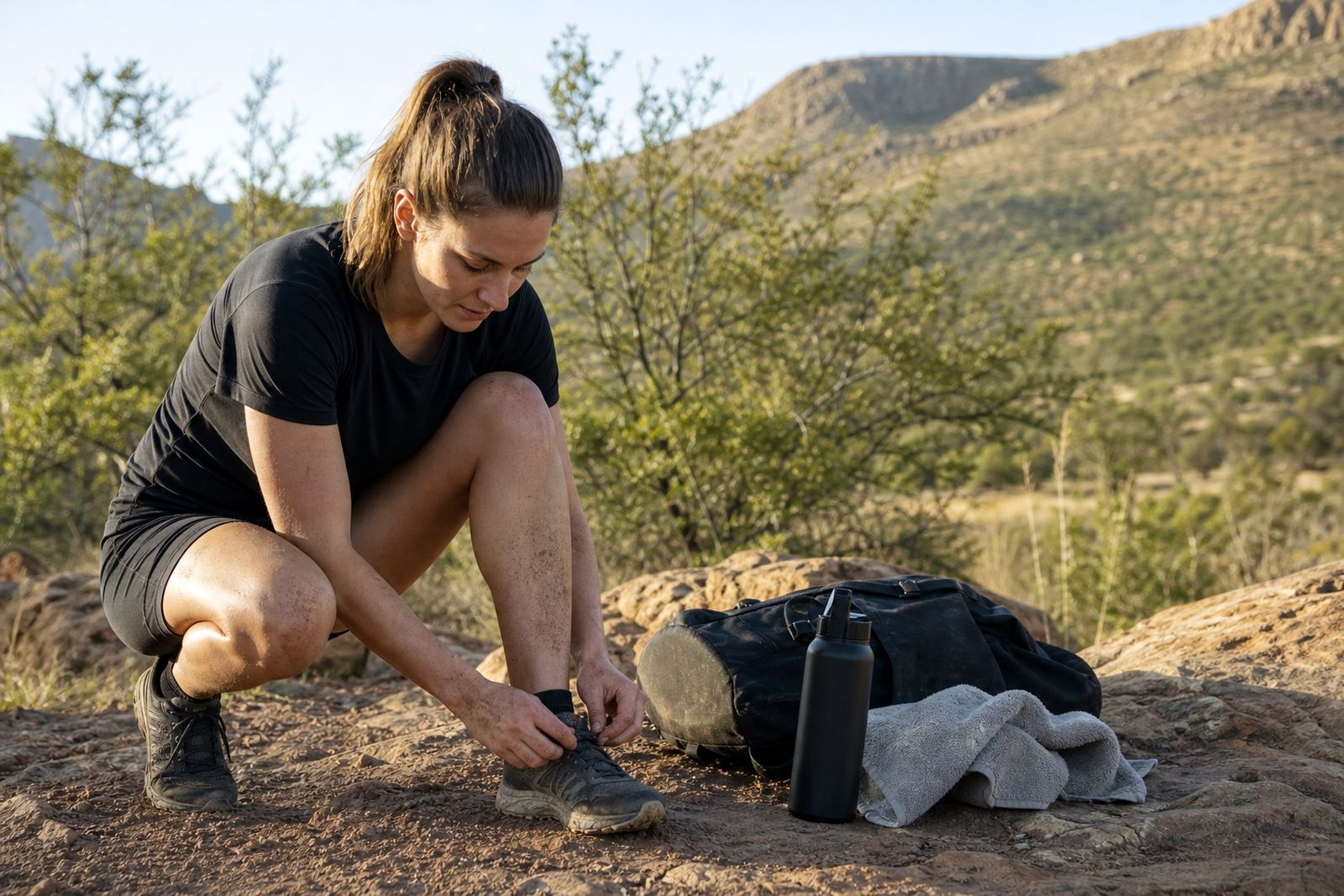
- Small towel, spare socks and dry clothes for after the finish
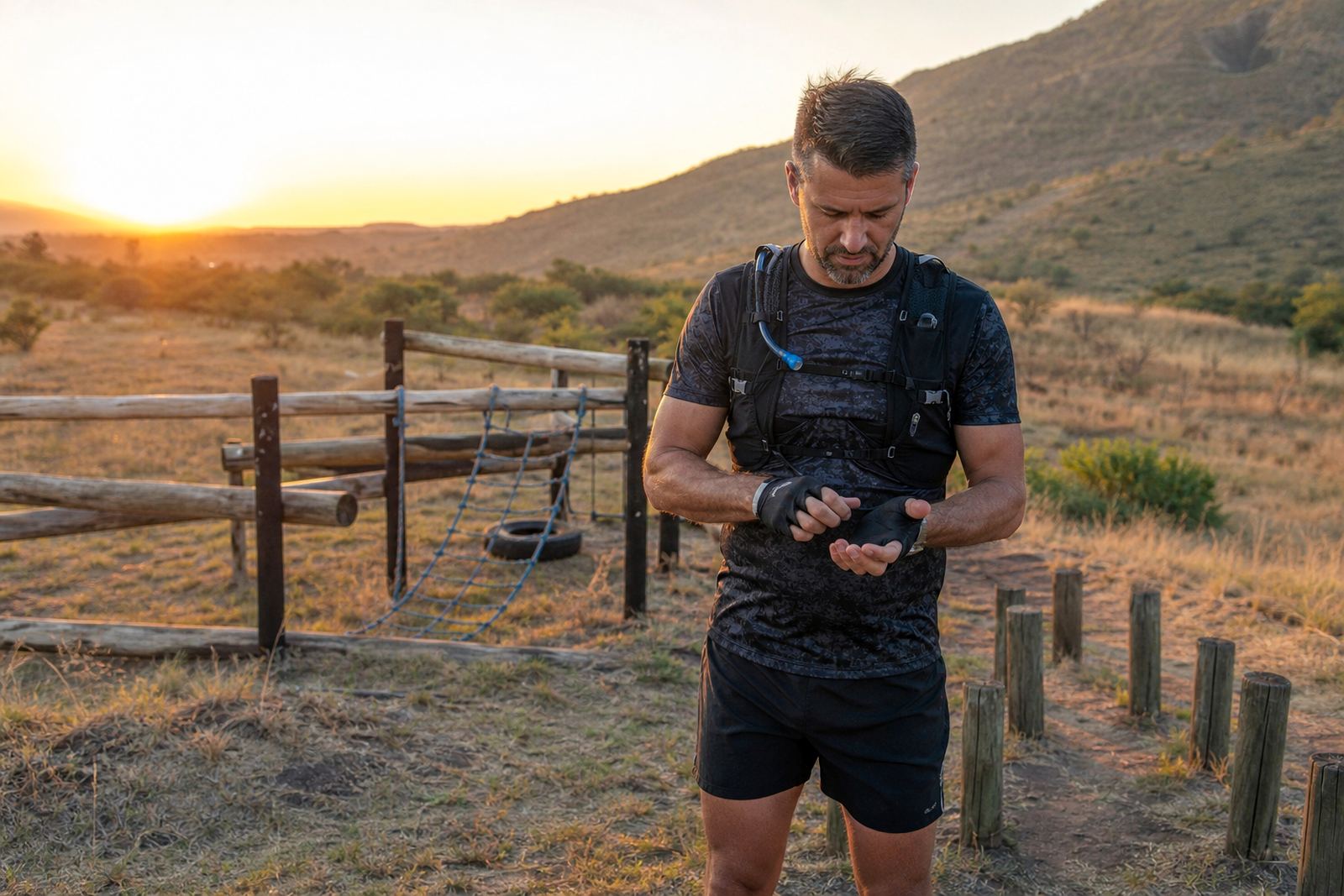
- Water bottle or hydration pack if the event allows it
- Simple snacks for after the race, plus any personal medication
- Change of shoes if you are driving back to Johannesburg, Pretoria or Potchefstroom
For corporate groups, we often suggest one person carries the team extras, such as bandages, plasters, a spare cap and a rubbish bag for muddy kit.
How to lay out the day so nobody burns out early
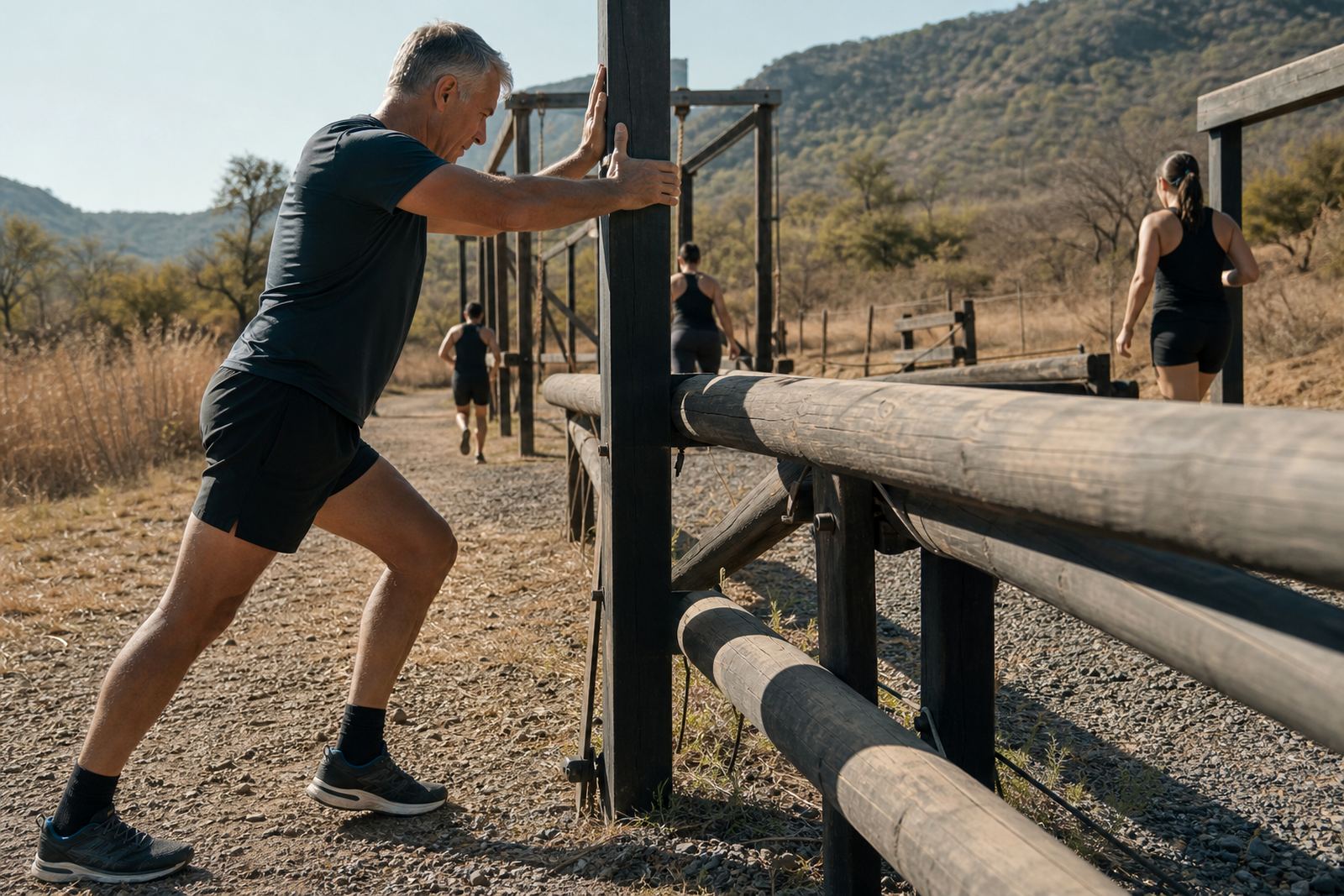
Good layout starts before the first obstacle. Mature participants do better when there is time for a calm warm-up, a toilet stop and a quick briefing on what will happen at the start line. A rushed arrival is where mistakes begin, especially if the group has travelled from Pretoria, Rustenburg or Johannesburg and arrived in convoy.
For team planning, we usually suggest grouping runners by comfort level rather than by job title. A stronger climber can help over walls and cargo nets, while a steadier runner can manage pace and keep the group from going out too hard. Heat allocation matters too. If the morning is cool and the afternoon turns hot, the later heats need more water and more shade time. A recovery area near the finish is useful for shoes, towels and a sit-down before the drive home.
- Arrive early enough for the safety briefing and group warmup
- Keep one clear meeting spot for the team after the finish
- Plan transport so no one has to rush off muddy and tired
- Check where the water points and support areas are placed
- Allow time for team photo moments only after breathing is under control
The common errors that trip up experienced adults
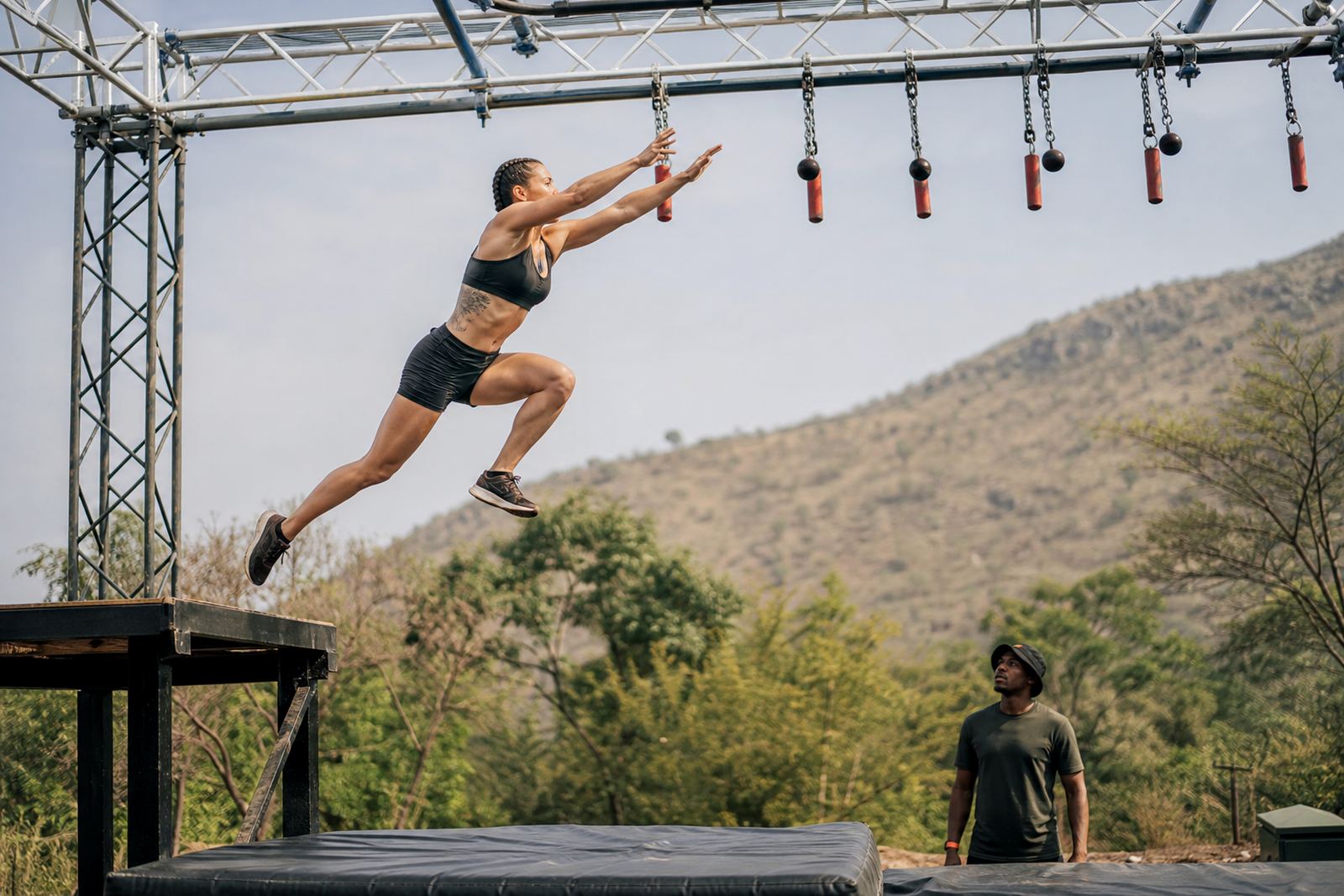
The biggest mistake is overconfidence. A participant who runs half marathons may still struggle on monkey bars, sandbag carries or low crawls if training has not included grip and upper body work. Another problem is ignoring the briefing because the course looks familiar. Every obstacle race has its own rules and own way of moving through marshals, penalties and bypass points.
People also underestimate the weather. In Magaliesberg, a cool start can turn into a warm, dusty finish. In wet conditions, the course may be slippery, and that changes foot placement on climbs and descents. Shoes with worn treads are a bad choice. So are brand new shoes that have not been broken in. For older entrants, another easy miss is skipping recovery after training. If you are sore and pushing on anyway, the body often pays for it later.
Budget bands that make sense for mature entrants and teams
Budgeting for Masters Racers is not only about the entry. There is travel, kit replacement, food and sometimes a recovery stop on the way home. A sensible budget helps the whole group avoid last minute scrambles. For companies, it also helps when finance needs a clean estimate before team registration is approved.
Typical planning ranges in Rand can look like this: basic personal kit refresh at R400 to R1 500 if shoes or socks need replacing, team support items at R250 to R800, travel and fuel depending on whether the group is coming from Gauteng or further afield, and post-race food at a modest local café or venue braai area. If a corporate team wants waiver coordination, captain communication, onsite team checkin and custom team briefing, the admin side should be budgeted separately from the runners gear. That keeps the total neat and avoids confusion when a few extra names are added late.
A practical rule is to keep a small buffer for lost items, wet clothing or a second pair of shoes. Mud has a habit of travelling home with everyone.
What Punisher helps coordinate for masters entries
For mature participants, support is often about clarity more than cheerleading. We help with corporate entry planning, team registration help, waiver coordination, safety briefing groups, captain communication, heat allocation support, onsite team checkin, group warmup session, supporter planning, recovery area guidance and custom team briefing. That makes it easier for a mixed-age team to arrive prepared and leave with fewer hassles.
- Hekpoort Venue and Magaliesburg Venue for local access
- Hartbeespoort Access for participants coming around the dam side
- Krugersdorp Visitors for western Gauteng travellers
- Pretoria Travellers and Johannesburg Travellers for Gauteng teams
- Rustenburg Visitors and Potchefstroom Visitors for North West entrants
If a masters group wants a steadier race experience, the best plan is usually the one that is easy to follow. Clear start times, a brief warmup, enough water, and a calm finish area do more good than complicated instructions and rushed kit checks.