

Hekpoort roads, rocky climbs and the reason we started there
Punisher is based in Hekpoort in the Magaliesberg, where the terrain does a lot of the talking for us. The hills, loose stone, sun and wind all shape the way a race feels, so the course has to make sense in real conditions, not just on paper. We plan for hot afternoons, early starts, dusty trails and the kind of footing that asks for proper shoes and attention.
The business was built around the idea that a hard event can still be fair and welcoming. Punisher works with runners and teams heading to Magaliesberg for obstacles, carries and hard climbs. Some arrive wanting a full test, others want to finish their first obstacle course race without being left behind. We make room for both, because the same course can mean different things to different bodies and different levels of preparation.
From the beginning, the focus has been on clear planning, practical support and a steady race-day flow. That means talking plainly about what is expected, where to stand, how to move through the course and what to do if the heat, dust or cramps start to bite. It is not about pretending the work is easy, it is about making it manageable and well run.
What our races ask of you, and what they give back
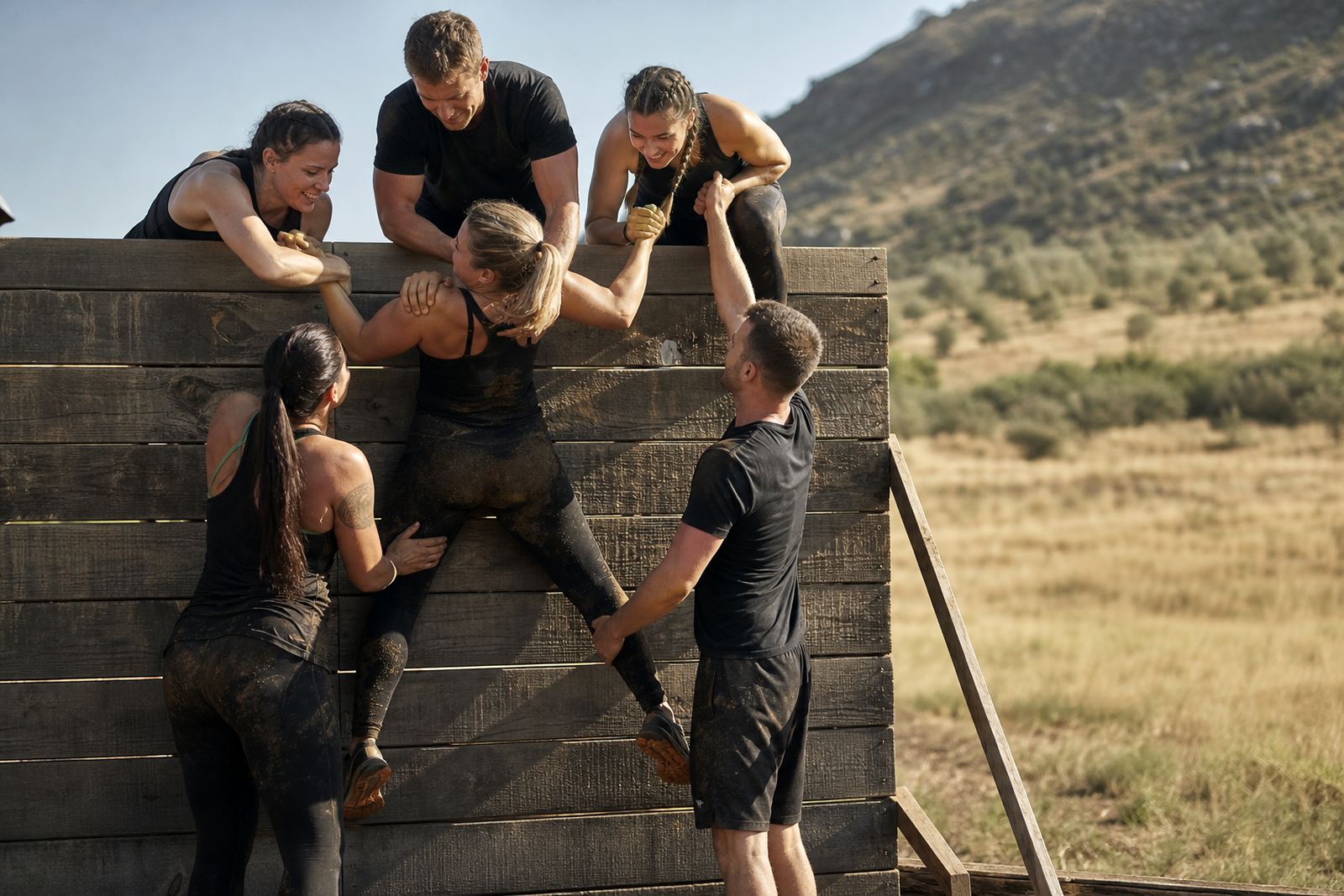
Obstacle course racing asks for more than pace. There is carrying, climbing, crawling, balancing and moving with tired legs while keeping your head straight. We design events that test strength, coordination and staying power, but we also want people to leave with something useful: a better sense of their own pace, a bit of courage and a story worth telling.
Our participants come from across South Africa, and the mix matters. One start line can hold a corporate team from Pretoria, a group of friends from Johannesburg, a traveller from Cape Town and a neighbour from Krugersdorp. That mix gives the day its energy. People are not only racing the route, they are sizing themselves up against nerves, heat and the next obstacle.
We try to keep the course honest. Obstacles should challenge without becoming unsafe or confusing. Where there is mud, water, rope work or a steep section, there needs to be a reason for it and a plan for how it is managed. That is where our course build and briefing work matters most.
- Clear route markings and obstacle instructions
- Warmup guidance before the first wave moves out
- Support for teams, captains and mixed fitness groups
- Recovery space for anyone who needs a breather
The people behind the timing chips and tape markers
Punisher runs through a small team with specific duties, and that helps on busy event days. Mandla van der Merwe leads the business with a practical eye on how the event should feel from the first enquiry to the last participant clearing the finish area. Lerato Zondo keeps operations tight, Johan du Plessis handles course build work, Ayanda Nxumalo looks after participant support, Bianca Khoza leads safety and briefings, Tshepo Khumalo coordinates training content, and Carmen Botha manages corporate entries.
We do not treat any one part as more important than the rest. A strong course means little if people do not know where to go, when to warm up, or how the waiver process works. A good briefing means little if the heat allocation is messy or the team check-in takes too long. Our way of working is to keep those pieces joined up so the day feels ordered even when the effort is hard.
This approach also helps with the practical side of travel. People driving in from Rustenburg, Potchefstroom or the greater Pretoria side may arrive tired or early, and teams often have mixed needs. Some want a captain briefed separately. Others need help with group registration, supporter planning or recovery area guidance. We keep the process straight so nobody is guessing at the gate.
How we handle safety before the first whistle
Safety is part of the event, not something added at the end. We use safety briefings, waiver coordination and group instructions so participants understand the course before they start. Those briefings cover practical matters like where to queue, how to move through obstacles, what to do if a participant feels unwell and how to use the recovery area if needed.
We also ask people to think properly before entering hard exercise. If you have not trained for a while, if you are carrying an injury, or if you have any health concern, check with a doctor before taking part in a demanding event. That is not drama, it is just sensible preparation.
Our briefing work is there to reduce confusion, not to talk over people. We explain the hard parts in a plain way and we keep the instructions short enough to remember under pressure. On race day, Bianca and the support team watch the flow closely so the first group does not crowd the next one and the course remains workable for everyone.
- Read the waiver before arrival and bring any required details with you
- Wear trail shoes or trainers with grip, plus clothing that can handle dirt and sweat
- Carry water, a snack and any personal items you may need after finishing
- Bring a small towel, dry clothing and sun protection for the recovery period
Training content for teams that want more than a finish line
Not everyone arrives knowing how to prepare for an obstacle course race, and that is where our training content is useful. Tshepo Khumalo prepares material that helps teams understand pacing, grip strength, movement under fatigue and how to work with a partner when the route gets awkward. It is not a classroom exercise. It is practical guidance for people who want to arrive with a clearer head and fewer surprises.
Corporate entries often need a bit more structure, especially when the group includes different ages, fitness levels and work schedules. Carmen Botha helps with that side, including captain communication, registration help, heat allocation support and custom team briefings. When a company sends a team, we want the process to feel orderly from the first contact through to the final wave.
Training, for us, is not about making everyone fast. It is about helping people move better and stay steady when the course gets rough. A well prepared participant is usually calmer, safer and better able to enjoy the day, even if the finish time is not the main point.
How a race day runs
People come to Punisher for different reasons. Some want a serious personal challenge. Some want to build team spirit without making the day feel forced. Others simply want to do something outside the ordinary with a few mates and see what happens when the route turns steep. We respect those different reasons and shape the event around them.
Our work includes the practical pieces that make a group day run well: onsite team check-in, custom briefing, supporter planning, team photo moments and recovery area guidance. That means there is less confusion around arrival, less standing around and a better chance that the group gets what it came for. In a place like Magaliesberg, where weather can shift and terrain can bite, the details matter.
We also keep communication direct with participants travelling from nearby towns and major centres. Whether someone is driving in from Hartbeespoort, staying over near Magaliesburg, or coming through from the Gauteng side, they need clear instructions and no guesswork. That is how we prefer to work: practical, straight and easy to follow, even when the course itself is anything but easy.
Above all, Punisher is about effort shared properly. The work is hard, but the day should still feel organised, fair and worth the drive.