Two people, one start line, same muddy story
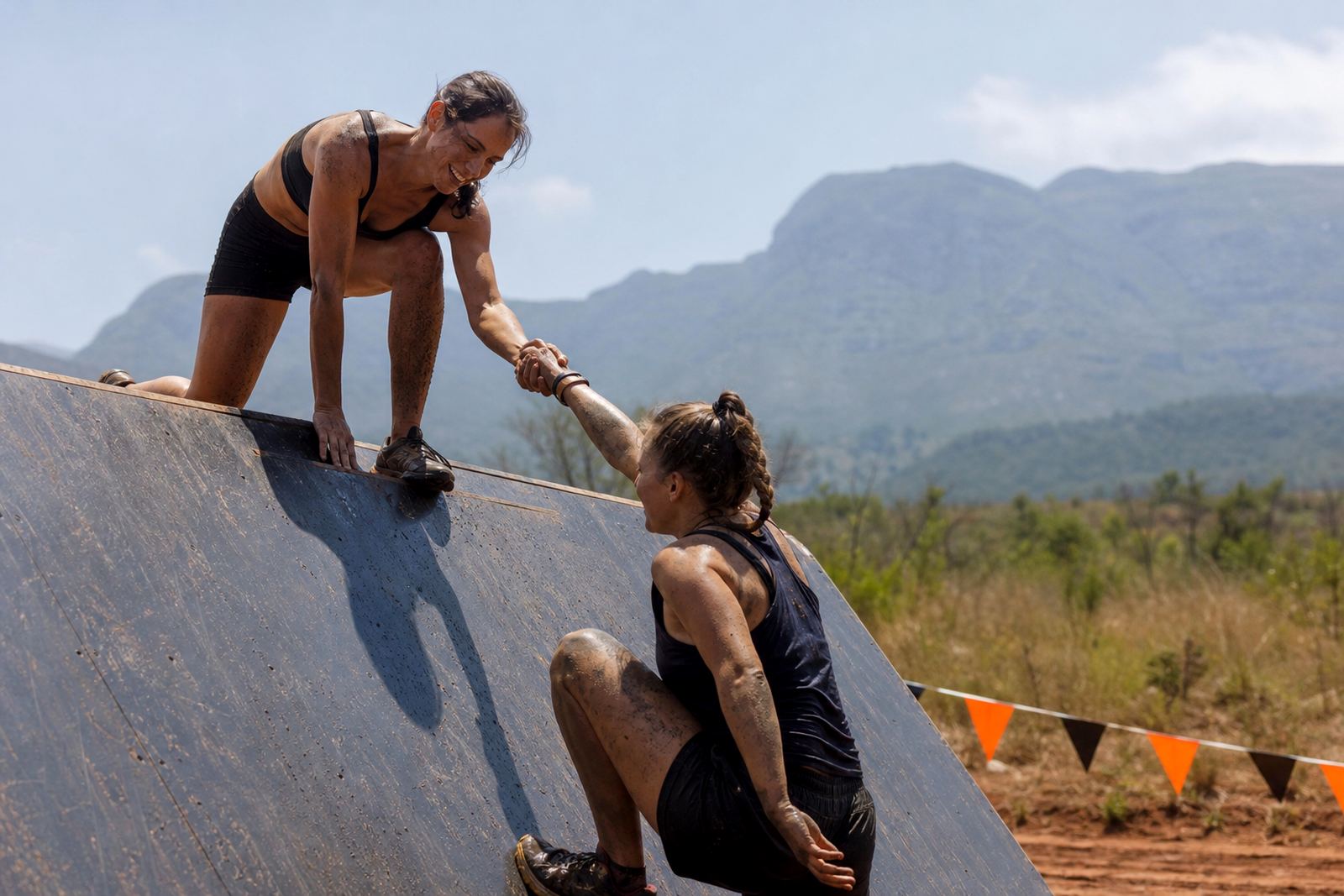
This use case suits couples, close mates, siblings, or a small training pair who want more than a casual run. The event format works well when one person is stronger on climbs and the other is better at carries, because the course asks for different skills at different points. It is not only about speed, it is about working out how to move together when the ground is loose, the hands are dirty, and the next obstacle needs a quick plan.
For teams travelling in from Johannesburg, Pretoria, Cape Town, Durban or Bloemfontein, the main win is shared preparation. You can line up with a clear division of jobs, keep track of each other through the course, and finish with the same stories. If one person has not done an obstacle race before, the pair format still works well, provided both are honest about fitness and injury history. Check with a doctor before hard exercise if there are any health concerns.
- Best for two people who train better together than alone
- Good for mixed fitness levels if pacing is planned properly
- Useful for first-timers who want support at the start and finish
- Works well for a shared goal, not just individual results
What a small group usually needs on race day
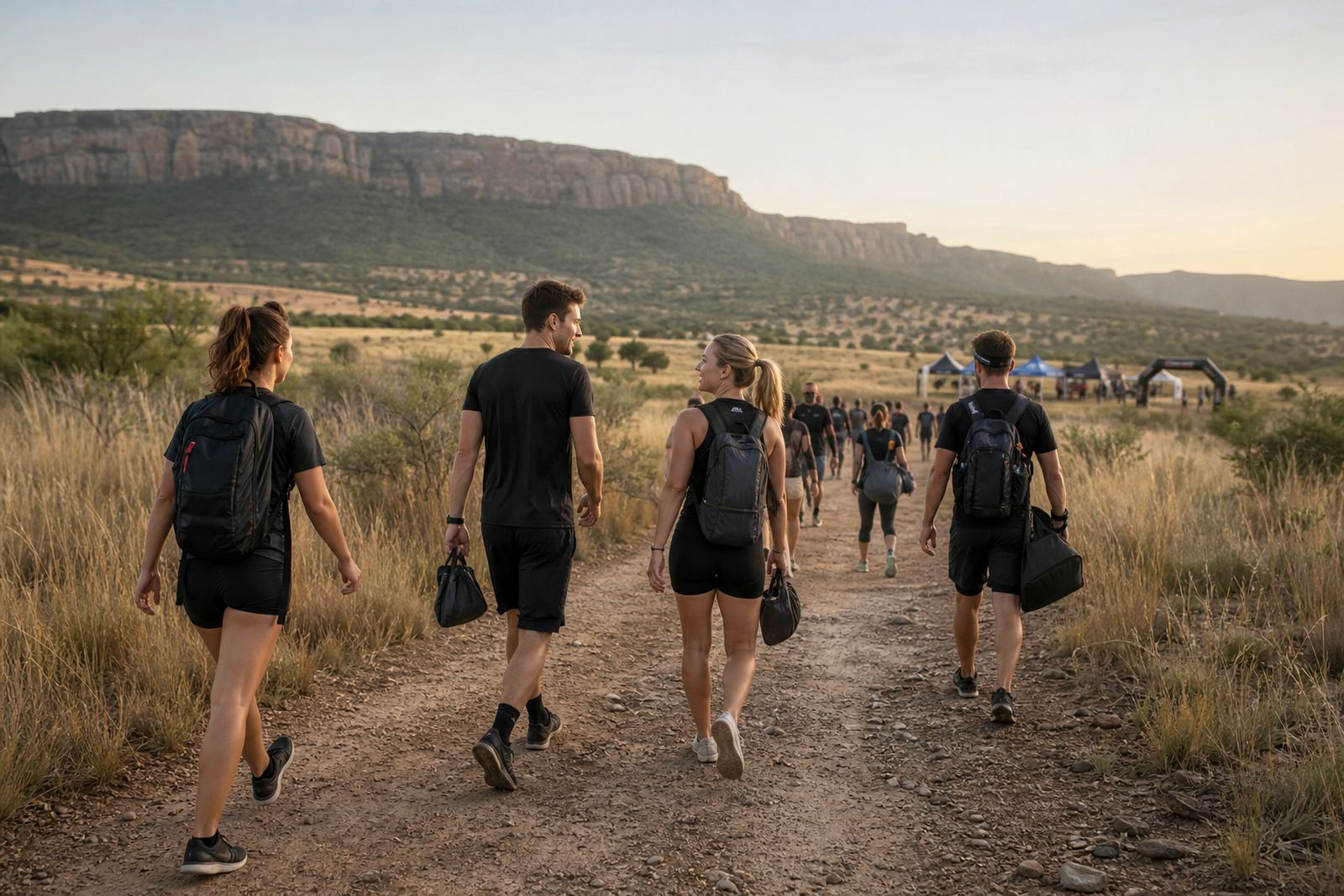
The kit list is practical rather than fancy. Comfortable trail shoes with grip are important, and many pairs carry a spare pair of socks for after the finish. Light clothing that dries quickly helps in Magaliesberg conditions, especially when dust turns to mud after water obstacles or when the wind picks up near open ground. A hat, sunscreen, and a sealed water bottle are sensible for the warm-up and recovery area.
For couples and friends, a small shared bag is often enough if it is packed carefully. Keep valuables to a minimum and use simple packing that makes it easy to find items after the race. If you are travelling from Pretoria or Krugersdorp, think about the drive home too, because wet clothes and sore legs need a towel and a clean layer for the return trip.
- Trail shoes or grip shoes
- Extra socks and a towel
- Water bottle and light snacks for after the race
- Sunscreen, cap, and a change of clothes
- Small bag for keys, ID, and recovery items
How the course works when you are racing side by side
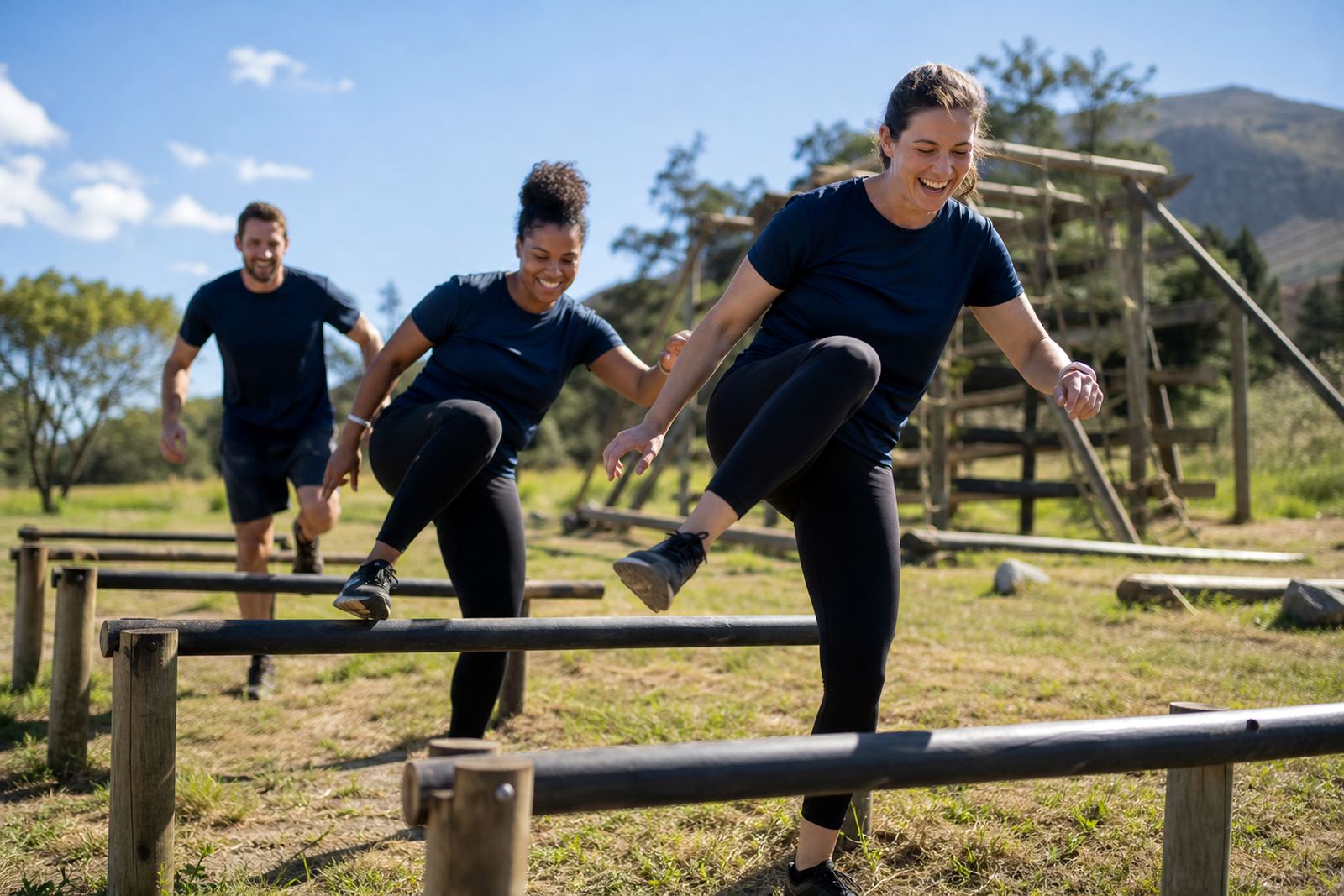
Obstacle course events in the Magaliesberg area can include hills, ropes, carries, crawl sections, balance work, and water or mud features. The route is usually planned so that participants move through in waves or heat groupings, which keeps the field manageable and helps the team stay together. For couples and friends, it helps to agree beforehand on when to wait, when to push on, and what to do if one person needs a short breather.
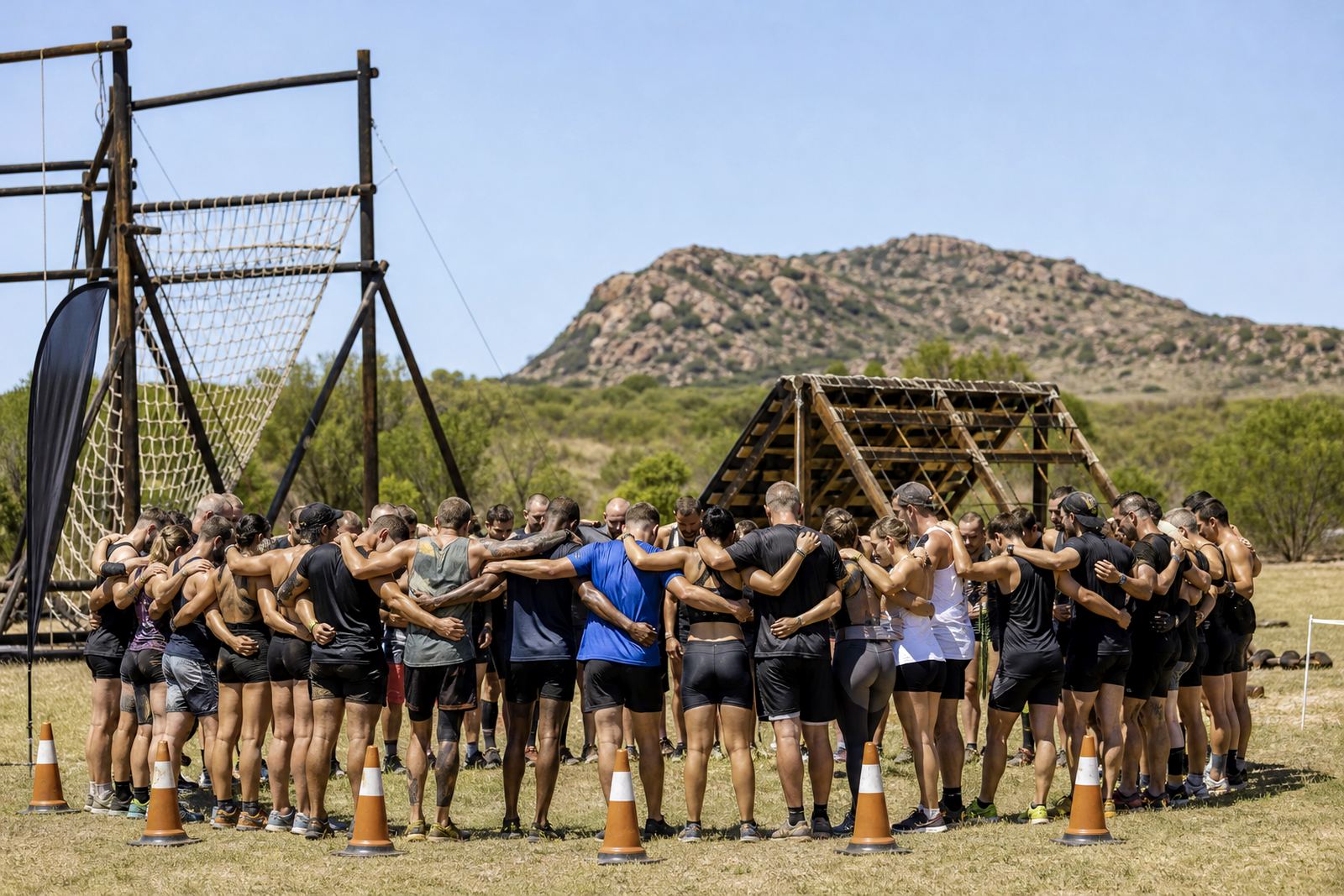
Our base in Hekpoort supports a straightforward set-up for groups from the North West and Gauteng corridor. Safety briefings are given before the start, waivers are handled in advance where possible, and participant support can cover heat allocation, onsite check-in, and custom team briefing. If you are bringing supporters, it is useful to decide where they will wait and how they will move around the venue so they do not block access routes. That bit is easy to overlook, and it matters.
- Briefing before the start so both people know the route rules
- Waiver coordination to keep admin tidy before race day
- Heat allocation support for pairs entering together
- Recovery area guidance for after the finish
Training together without trying to outdo each other
The best training plan for pairs is the one you both can stick to. A couple of short runs each week, one strength session, and one hill or stair session usually work better than trying to smash every workout. The goal is to build enough leg strength, grip, and breathing control for the course, not to make every session feel like a test. If one person is fitter, let the other set the pace sometimes so training stays useful rather than frustrating.
We often suggest a simple routine: warm up together, do a few bodyweight moves, practise carrying a weighted bag or sand-filled container, and finish with an easy jog or walk. This type of prep helps with coordination and reduces panic when the obstacle sequence changes suddenly. If the pair is training around Johannesburg or Pretoria, local parks, hills, and open fields can work well, but always stay within municipal rules and use public spaces responsibly.
- Two short cardio sessions a week
- One strength session for legs, core, and shoulders
- One carry or grip drill session
- One easy recovery walk or jog together
The mistakes that trip up couples and friends
Most group mistakes are not about fitness, they are about planning. A common one is arriving with one person ready and the other still sorting kit in the car. Another is eating too little before the start, then fading halfway through the course. People also forget that the weather in Magaliesberg can change quickly, and a hot start can still end with muddy hands, tired calves, and a cold breeze on the way out.
It also helps to avoid turning the race into a contest between the two of you. That usually creates stress where there should be teamwork. The better approach is to agree on a pace, decide how to communicate if one person struggles, and accept that a slower section can still be a strong section. One more small issue we see often is poor footwear choice, especially shoes with too much tread wear. That can make grips and slopes harder than they should be.
- Leaving kit packing to the last minute
- Starting with too little food or water
- Choosing shoes with weak grip
- Forgetting to agree on pace and waiting points
- Ignoring aches, tightness, or old injuries before entry
Budgeting for Your Race in Rand
For couples and friends, the budget depends on how much help you want with entry admin, briefing, and group coordination. A basic self-managed outing usually keeps costs lower, while a more supported setup with waiver handling, custom briefing, and recovery guidance sits higher. Travelling from far towns can also add fuel, tolls, snacks, and a night away if you do not want a very early start.
As a rough planning guide, many small groups allow for a few hundred Rand per person for race-day basics, then extra for travel and after-event meals. A more structured plan for two people or a small friend group can sit at a higher range if you want onsite support and coordinated check-in. It is better to budget a bit extra and not need it than to arrive short and rush the day. That keeps the focus on the course, not on last minute scrambling.
- Basic race-day allowance: around R300 to R800 per person
- More supported group planning: around R800 to R1 500 per person
- Travel, fuel, and food: allow extra depending on your town
- Optional recovery items and spare clothing: small extra budget