
Build the engine before you chase the obstacle
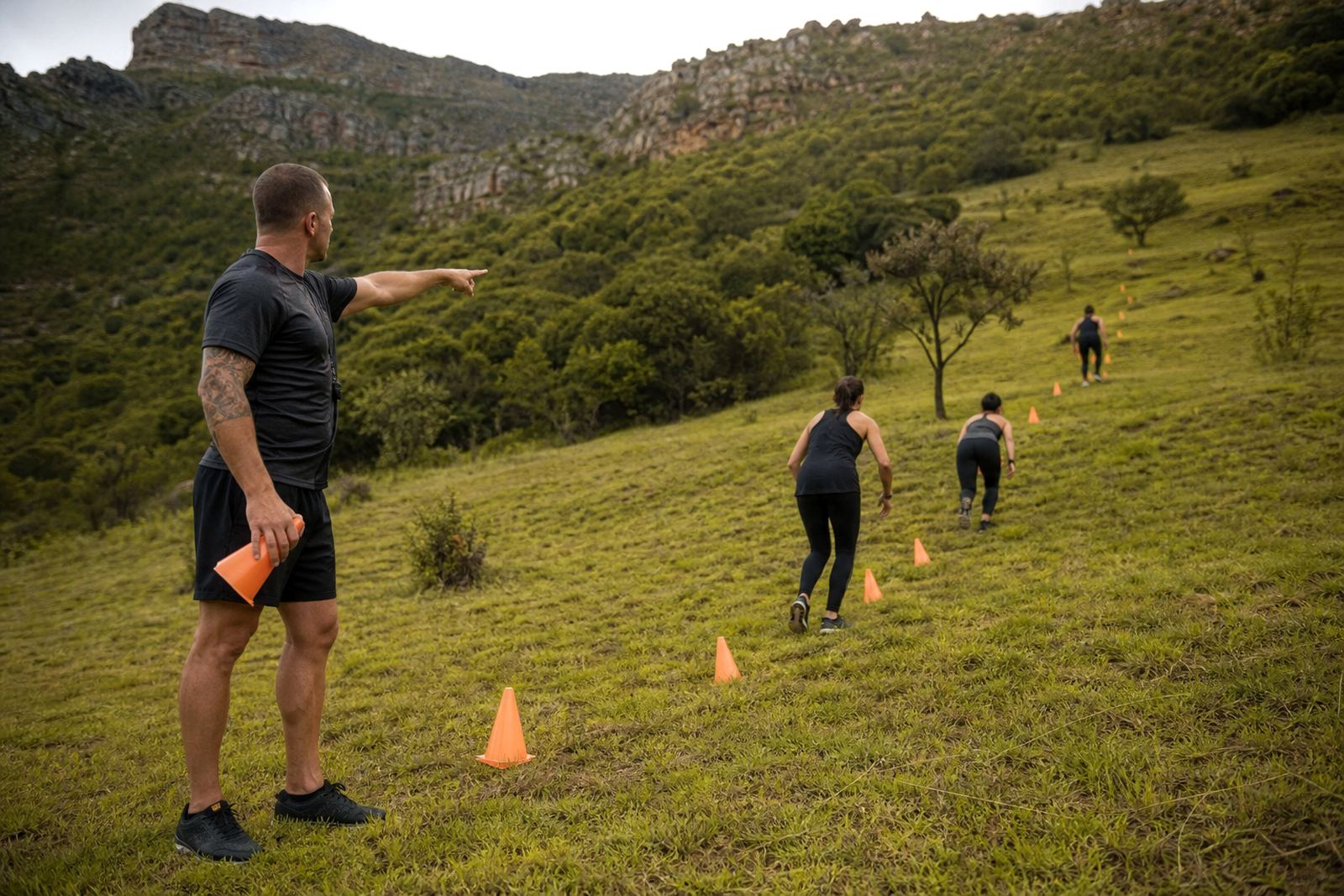
Obstacle racing asks for more than raw power. You need enough leg drive for hills and sand, enough pulling strength for ropes and walls, and enough trunk control to keep shape when you are tired. If you train in Hekpoort, Magaliesberg or the highveld around Pretoria and Johannesburg, do not ignore heat, wind and uneven ground, because those factors change how hard a session feels.
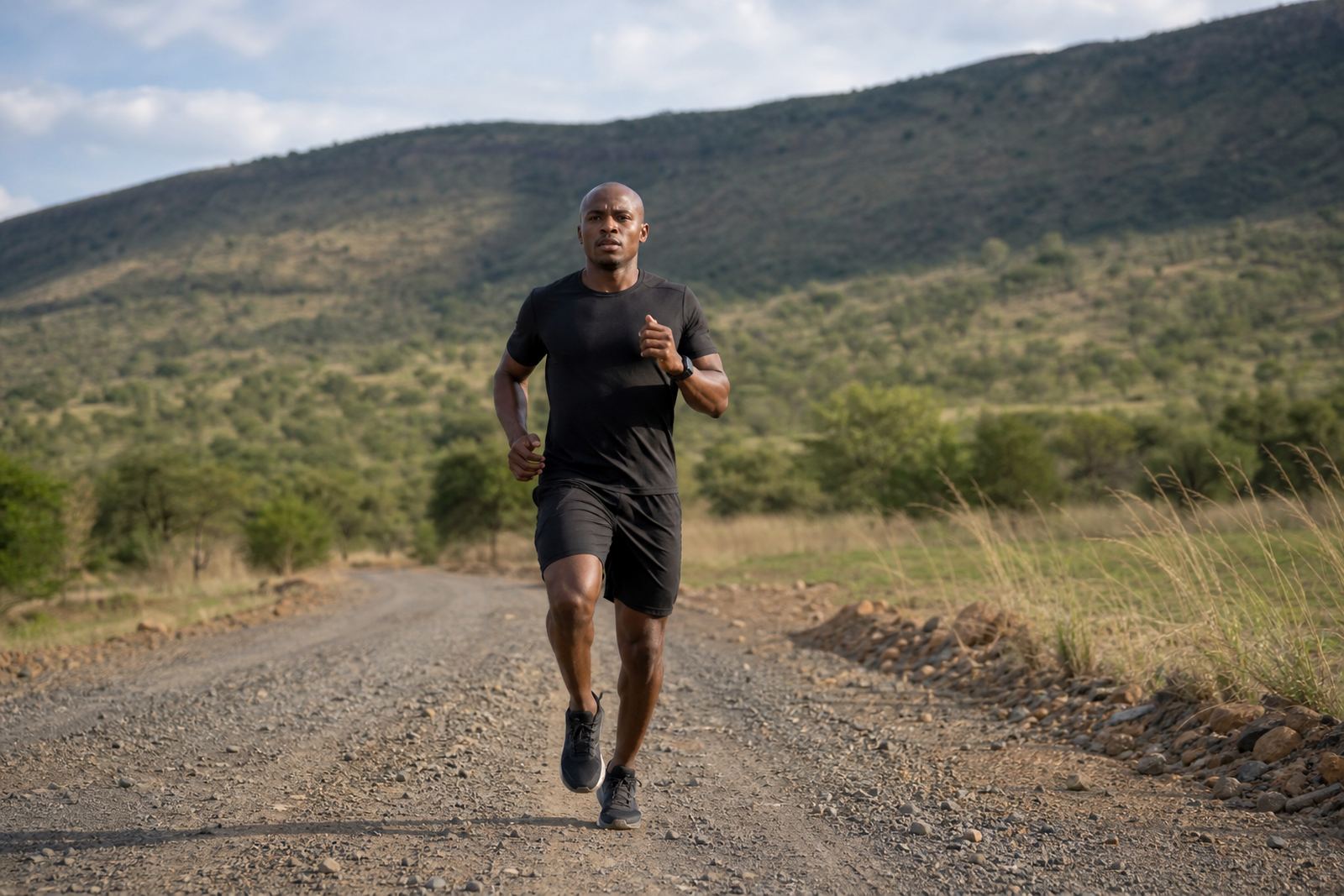
Start with two to four strength sessions a week, depending on your work load and recovery. Keep the movements basic and repeat them well. Squats, lunges, deadlifts, rows, presses, loaded carries and hangs all have a place. Add one or two short conditioning sessions for hill repeats, step-ups, row intervals or brisk runs. Hard training works best when you can repeat it next week, not just once.
Grip and carry work that carries over to race day
Grip is often the first thing to fail on ropes, monkey bars and awkward carries. Train it directly, but keep your hands healthy. Use thick towels, hanging holds, farmer carries and suitcase carries. If you train outdoors in the North West, dry air and dust can make hands crack, so moisturise after training and keep chalk use controlled. Too much chalk can make the course and equipment messy.
- Dead hangs: 3 to 5 sets of 10 to 30 seconds
- Farmer carries: 4 to 6 runs of 20 to 40 metres
- Suitcase carries: 3 to 4 sets per side over 15 to 25 metres
- Towel rows or towel hangs: 3 sets with clean form
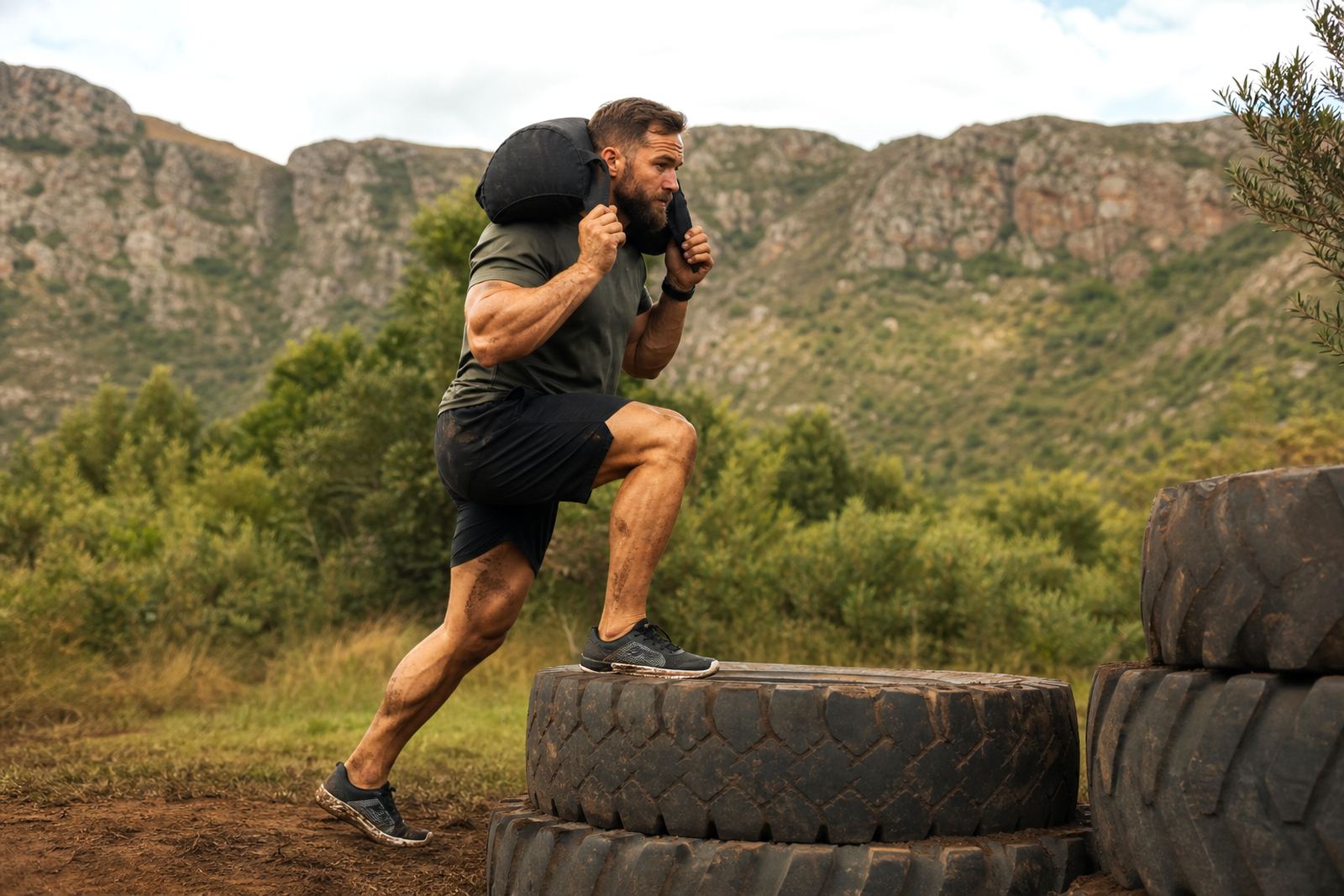
- Sandbag or odd-object carries: short bursts with upright posture
Keep the load heavy enough to challenge your grip but light enough that you can stand tall and breathe. If your shoulders shrug up to your ears, the weight is too much for now.
Climb strength for walls, ropes and awkward exits
Climbing strength is about pulling, bracing and placing your feet well. A strong upper back helps with rope pulls and wall get-overs, but your legs still do plenty of work. Train pull-ups or assisted pull-ups, inverted rows, lat-focused pulls and core bracing. Use step-ups on a box or tyre to mimic high foot placement. That footwork matters more than most people think.
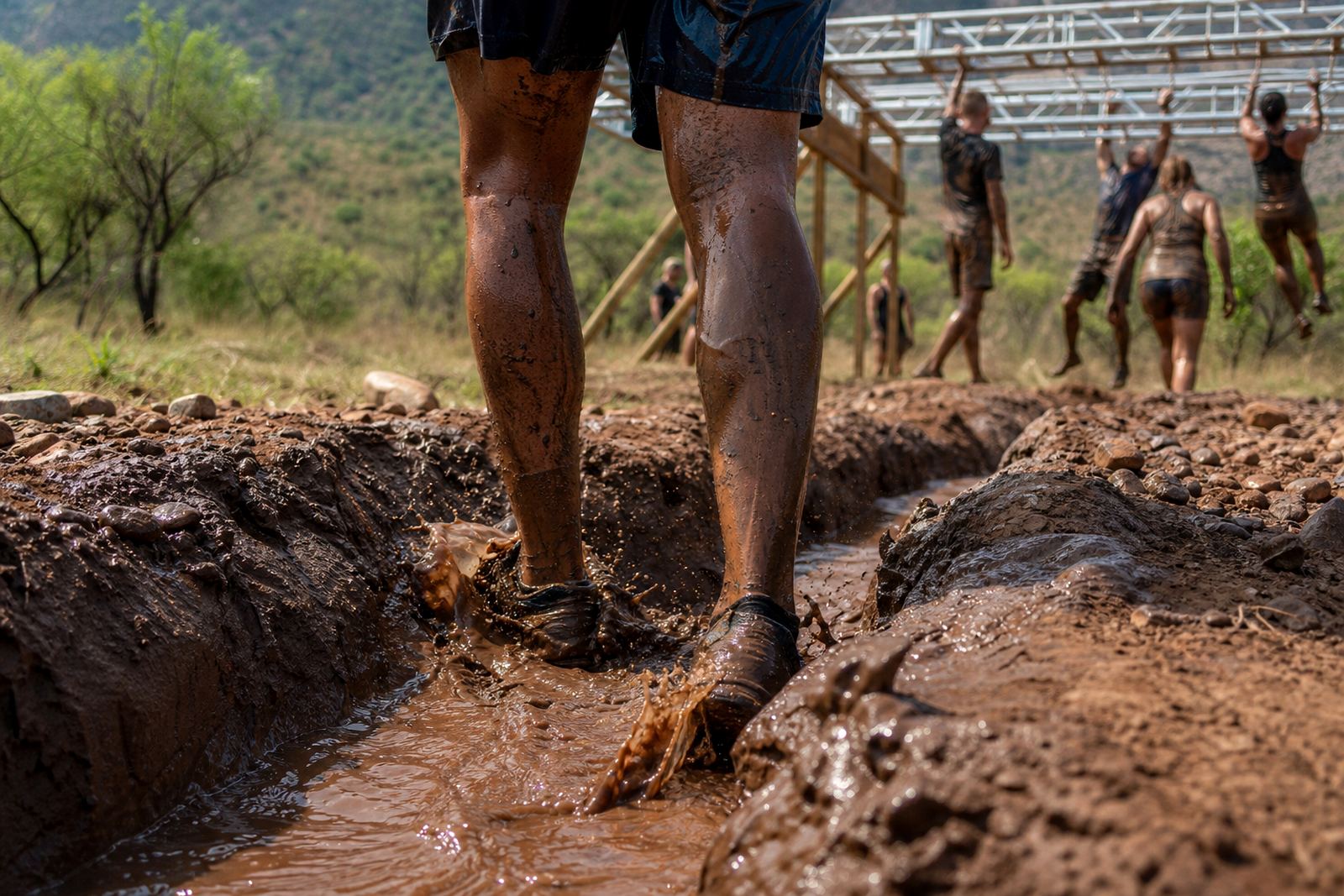
For rope and wall preparation, practise controlled repetitions. Pull, pause, set the feet, then move again. If the race uses muddy obstacles, you need a calm, deliberate rhythm. Panicking burns energy and makes mistakes. When possible, train with a partner who can check your foot placement and give you a quick cue when your form slips a bit.
Body control when the course gets slippery
Obstacles punish poor balance. If you are carrying a bucket, crossing a beam, crawling under netting or stepping over logs, body control keeps you moving. Train single-leg work, anti-rotation core drills and slow tempo squats. Add crawling patterns and bear walks for shoulder and hip control. These drills look ordinary, but they teach your body to stay organised under load.
- Single-leg squats to a box or bench
- Reverse lunges with steady knee tracking
- Side planks and dead bugs for trunk control
- Bear crawls and crab walks for coordination
- Tempo squats with a 3 second lowering phase
Good body control also helps on wet mornings and dusty descents around Magaliesberg. You do not need to be flashy, just stable. The more calm your footwork, the less energy you waste correcting each step.
Recovery habits that keep you useful on the next hill
Training only counts if you recover enough to repeat it. Sleep, food, fluids and rest days all matter. After a hard session, eat a mix of protein and carbohydrate within a reasonable window, drink water, and keep moving lightly for a few minutes. If you train in the heat or do long outdoor work, replace fluids properly. Cramping and poor recovery usually start with neglecting the basics.
Before any hard exercise or obstacle event, check with a doctor if you have health concerns, a recent injury or a medical condition that could be affected by intense effort. That is especially important if you have chest pain, dizziness, asthma that is not well controlled or a history of joint issues. Better to sort that out early than to force a race and pay for it later.
Race week packing and safety checks
In the final days before an obstacle event, do not chase a last minute miracle session. Reduce volume, keep movement sharp and sort your kit. Many participants get caught out by weather, mud or a long wait between heats, so pack with the day in mind. Safety briefings and waivers are part of the process for a reason. Read them carefully, then listen for course-specific instructions on the day.
- Trail shoes with grip that suits mud, gravel and rock
- Comfortable clothing that dries quickly
- Change of clothes and a towel for after the race
- Water, snacks and any personal items needed for the day
- Sun protection, a cap and a small first aid kit if needed
If you are racing from Johannesburg, Pretoria, Rustenburg, Potchefstroom or further afield, allow time for travel, parking and registration. For corporate groups, a captain or team lead should keep names, heat details and waiver status in order before the start.