
Start the morning with kit that can take a proper soaking
Mud races are not the place for cotton that stays heavy or shoes that hold water. Choose clothing that dries fast, fits close to the body and will not drag once it is wet. A pair of trail shoes or trainers with a decent tread is a better choice than smooth soles, especially on grass slopes and slippery logs around the Magaliesberg and Hartbeespoort side.
Pack a spare set of clothes for after the finish, plus a towel and a bin bag or dry bag for the dirty kit. If you are travelling from Johannesburg, Pretoria, Rustenburg or Potchefstroom, keep your change of clothes in a separate bag so the rest of your vehicle stays clean on the drive home. Coastal humidity is not the issue here, but wet kit can still smell by the time you reach your car.
- Light top and shorts or leggings that do not chafe
- Shoes with grip and drainage
- Socks you do not mind throwing into the wash straight away
- Spare underwear and a full change of clothes
- Small towel, wet wipes and a refuse bag
How to handle slippery ground without burning out early
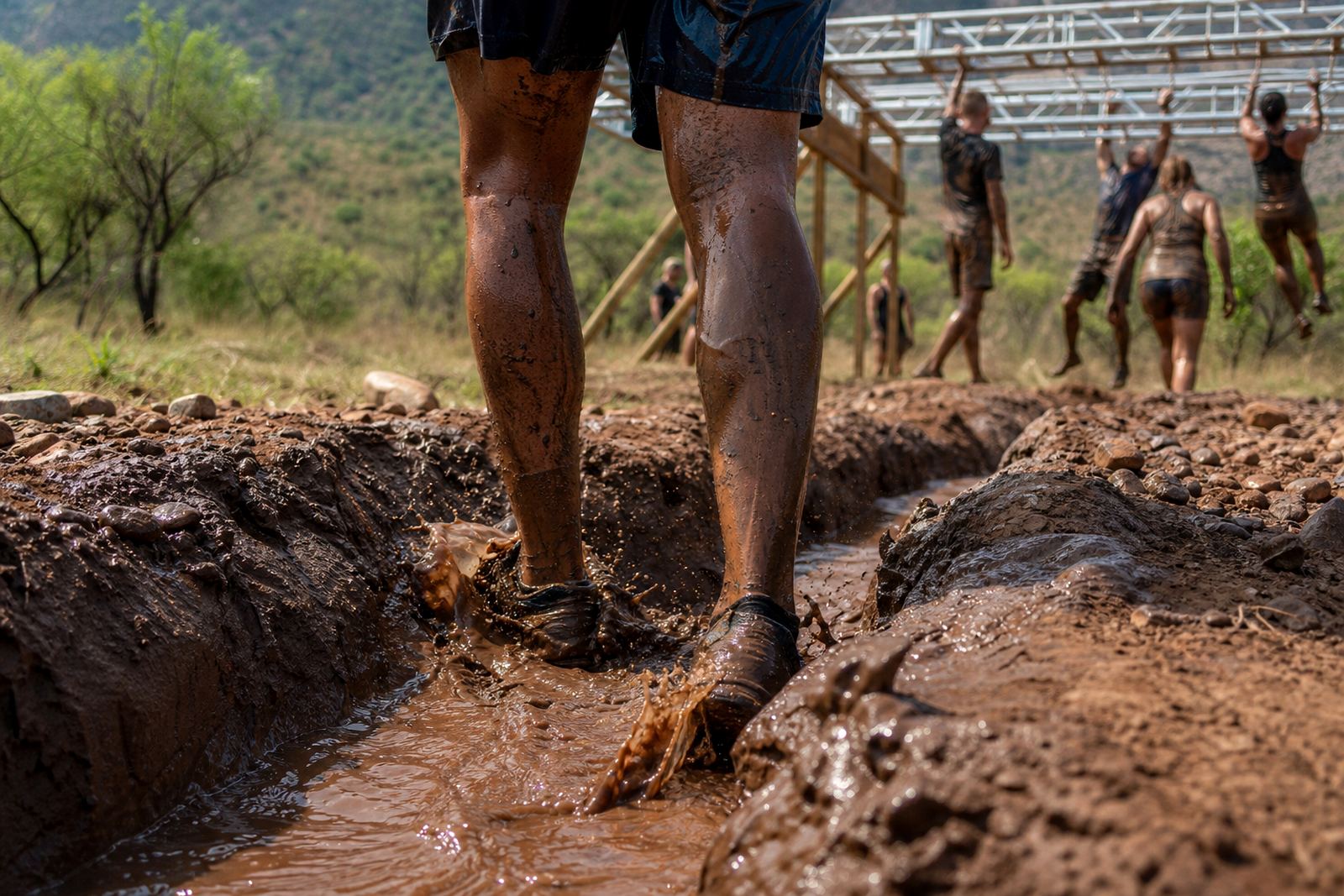
Mud makes every transition slower, so start with measured effort rather than sprinting the first obstacle. Shorter steps help on wet banks and uneven ground. Keep your weight slightly forward on climbs and do not rush corners where the course may have been churned up by earlier runners.
If you hit a section where the ground gives way underfoot, slow down and pick a stable line. That can save more time than trying to force speed through soft patches. The aim is steady movement, not perfect movement, and it is better to arrive at the next obstacle with enough energy for the pull, carry or climb.
- Look two or three steps ahead on muddy ground
- Plant your foot flat instead of reaching too far forward
- Use your arms for balance on slopes and turns
- Back off the pace when the ground gets slicker than expected
Warm-up that wakes up ankles, knees and grip
A proper warm-up matters more when the course is wet, because cold muscles and sloppy footing are a bad mix. Spend a few minutes on joint circles, bodyweight squats, walking lunges and short skips. Add a little upper-body work too, because mud races often involve crawling, hauling and climbing over low structures.
Before your start wave, test how your shoes feel on damp grass and give yourself time to settle into them. If your entry includes a group warmup session or custom team briefing, treat that as part of your race prep and not as an optional extra. It is also a sensible moment to check tape, laces and any gear that could loosen once it gets wet.
- 5 to 10 minutes of light movement before the start
- Ankle rolls, hip circles and shoulder circles
- Two short bursts of faster running to raise breathing rate
- Quick check that laces, sleeves and pockets are secure
What the safety briefing is really for
Safety briefings are there to explain how the course is set up, where marshals are stationed and how to use each obstacle without making a bad landing. Listen carefully. Wet surfaces can change the risk level of ramps, ropes and carrying sections, and briefing notes often cover the safest route through the muddiest patches.
Waivers are part of the entry process too. They set out the condition of participation and confirm that you understand the physical nature of the event. If you are unsure about a section or a rule, ask before the start, not halfway through the obstacle when your hands are covered in mud and you are trying to keep your balance.
- Follow marshal instructions the first time they are given
- Use the marked route, even if a shortcut looks faster
- Keep clear of blocked or closed obstacles
- Tell staff straight away if you see a hazard or feel unwell
What to pack for a muddy race day
Your bag does not need to be full, but it should be ready for weather changes, dirty hands and a longer-than-planned recovery. Bring water, something with quick energy after the finish and a fresh top layer if the air cools down. At Hekpoort and across the Magaliesberg area, the weather can shift quickly so a light jacket is worth carrying if there is a chance of rain.
Do a quick check the night before so you are not hunting for socks at 4:30 in the morning. If you are travelling with a team from Cape Town, Durban or Bloemfontein, keep each runner's kit together and label what is yours. That makes onsite team check-in a lot easier and avoids mix-ups in the recovery area.
- Water bottle or hydration pack
- Energy snack for after the finish
- Dry clothes and footwear
- Identification and any race paperwork you were told to bring
- Small sealable bag for phone, keys and valuables
After the finish: recovery that starts before the mud dries
Do not wait until you are completely stiff before you start recovering. Walk for a few minutes, drink water and get out of wet kit as soon as you can. Clean feet and hands properly, then check for rubbing, cuts or blisters that may need attention. If the race has recovery area guidance, use it rather than trying to sort everything at the car.
If you are not used to hard exercise, check with a doctor before taking part in a demanding obstacle race. That is especially important if you have asthma, a heart condition, joint issues or are returning to exercise after a long break. A careful start is better than pushing through a problem that could have been picked up before race day.
For corporate entries, team registration help, waiver coordination and captain communication, it helps to have one person keeping the details together. That makes the day smoother for everyone and gives the group a clear point of contact if there are changes at the venue or to the heat allocation support.