
First hour off the course: what to do before you get clever
As soon as you finish, slow yourself down properly. Walk for a few minutes, breathe deeply and let your heart rate settle before you sit, stretch hard or pile straight into the car. In the Magaliesberg heat, or after a muddy winter start near Hekpoort, your body can feel fine for a while then tighten up once the effort drops away.
Drink water in small sips first, then add something with salt or a light snack if you have been racing for a long time. If you feel shaky, crampy or light-headed, stay in the recovery area and tell one of the event staff. A race briefing should always explain where to find help, and you should already know where your team captain or support person is parked.
- Keep walking, do not stop dead
- Remove wet gloves, number bands and anything that rubs
- Drink little and often
- Check for cuts, blisters and lost bits of kit
Gentle movement beats lying stiff for hours
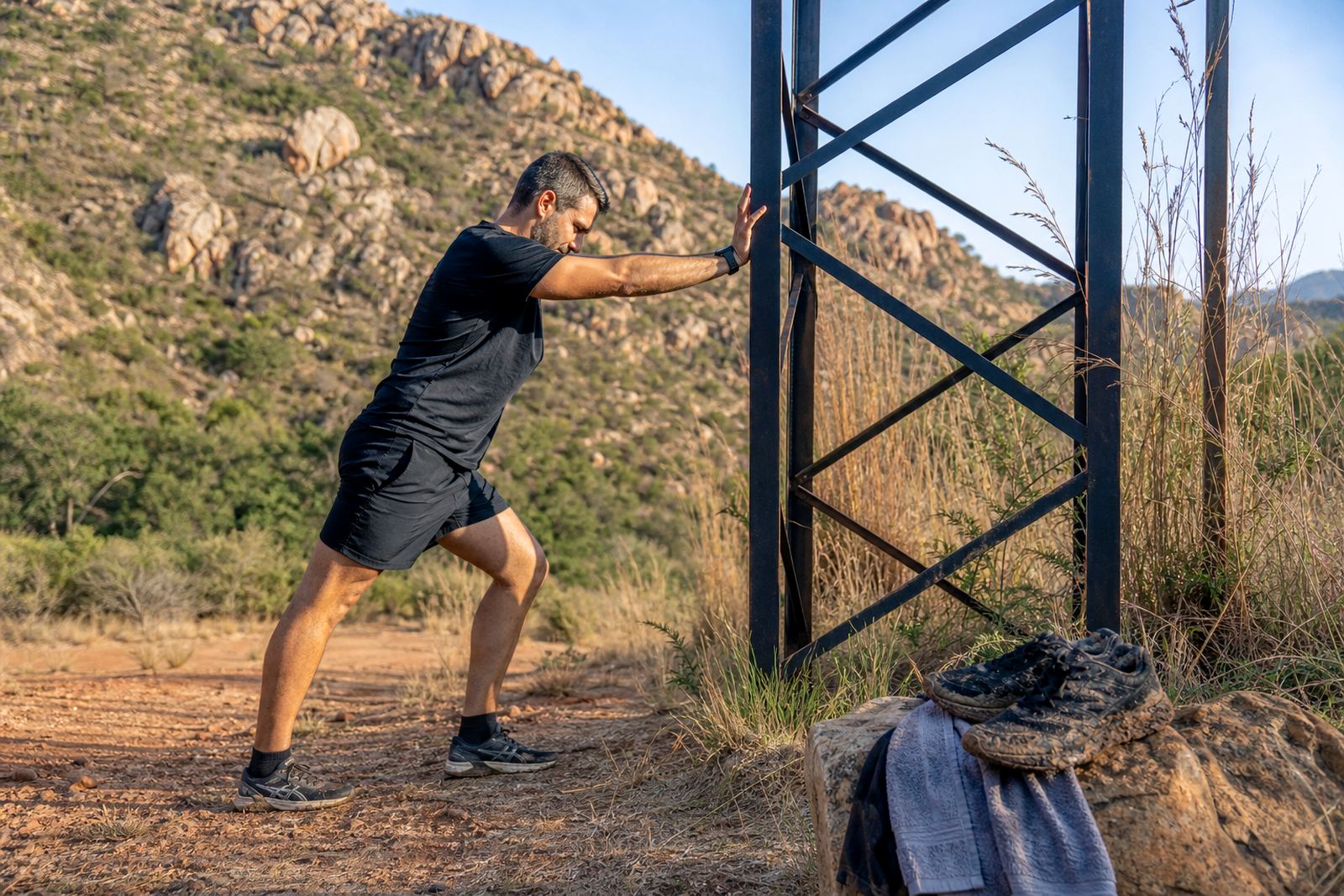
The day after a race, light movement usually works better than staying stuck on the couch. A short walk, easy spin on a bike or a relaxed mobility session can help ease the legs, shoulders and lower back. You are not trying to train, just to keep the body from locking up after climbs, crawls, carries and wall work.
Keep the pace comfortable enough to chat. If your knees, ankles or back feel unusual, leave out the harder stuff and let them settle. A doctor should check you before hard exercise if you have chest pain, dizziness that does not pass, asthma that flares badly or an injury that is not improving. That applies whether you travelled in from Pretoria, Durban, Cape Town or a local farm road in North West.
- 5 to 20 minutes of easy walking is often enough
- Use light mobility for hips, calves and shoulders
- Avoid heavy leg sessions for a day or two
- Stop if pain gets sharper instead of easing
Food, fluid and salt when the mud is washed off
Recovery starts with proper food, not only with a shower. After a demanding obstacle race, try to eat a balanced meal with protein, carbohydrates and some fruit or vegetables within a few hours. If you finished hot and sweaty, replace fluids steadily through the rest of the day. Coastal humidity in Durban can leave people more drained than they expect, while dry wind around the Magaliesberg can hide how much water they have lost.
Do not wait until you are thirsty to drink again. Keep a bottle nearby and add a little salt to food if you are still cramping, unless a medical professional has told you otherwise. If your stomach is unsettled, smaller meals can sit better than one huge plate.
- Water first, then add electrolytes if needed
- Protein for muscle repair, such as eggs, yoghurt, chicken or beans
- Carbs to refill energy, like rice, pap, potatoes or bread
- Fruit or cooked veg for extra nutrients
Kit clean-up that stops bad smells and damage
Mud, sweat and sand can wreck gear if you leave it in a bag for days. Empty everything out when you get home. Rinse shoes and soft kit as soon as you can, then dry them out of direct harsh sun so the glue and fabric do not take unnecessary punishment. If you raced near water or through wet grass, check for hidden grit in seams, straps and pockets.
For muddy loads, use a hose or bucket first and only then a proper wash. Wet gear left in a hot vehicle can sour fast, and that smell is hard to shift. Put race bibs, gloves, buffs and socks in a separate pile so nothing gets forgotten before the next event.
- Shake out mud before washing
- Air dry shoes fully, then pack them only when dry
- Check laces, buckles and straps for wear
- Keep a small repair pile for broken clips and torn fabric
Blisters, bruises and the odd scrape need a plan
Most people finish with something small to sort out. Clean cuts and scrapes with clean water, cover them if the skin is open and keep an eye on swelling. Bruises often feel worse the next day than they do on race afternoon, so use rest and gentle movement rather than trying to force a hard session too quickly.
If a blister is intact and not causing trouble, leave it alone and protect it. If it has opened, keep it clean and covered. Any wound that is hot, spreading red, oozing or getting more painful should be checked by a health professional. A proper safety briefing should also make it clear where the medic point is, in case you need a second look after the event.
- Wash hands before touching any wound
- Use a clean dressing on open skin
- Keep an eye on swelling around ankles, wrists and fingers
- Do not ignore pain that changes shape or intensity
When team members need a slower pace after the finish
Recovery is not only about your own legs. If you travelled as a corporate or club group, check in on each other before everyone scatters home. Some runners need quiet time, some need food and some only need a lift back to the hotel or guesthouse. A good event team will usually help with group photos, supporter movement and recovery area guidance, which makes the exit smoother.
It helps to agree on one clear contact person for your team captain communication before race day, then use that same plan after the finish. If someone is slower to recover, let them go at their own pace and keep the load light for the trip back to Johannesburg, Potchefstroom, Rustenburg or wherever the weekend ends.
- Confirm who has keys, tickets and spare cash
- Check that everyone has all their kit and phones
- Share lifts and leave time in hand
- Keep a spare towel or dry shirt in the vehicle
The next morning checklist before you count yourself done
The day after race day is a good time for one calm check. Look at your body, your kit and your paperwork. If you signed a waiver or took part in a group entry process, keep the details together in case you need them later. More importantly, note what worked and what did not, from shoe choice to breakfast timing to how well your gloves held up.
A few small notes now will save frustration next time. You might need different socks for wet ground, a better bottle setup or a warmer top for early starts in Magaliesburg. Recovery is part of performance, not an afterthought, and the people who treat it well usually enjoy the next challenge more.
- Check sore spots and treat them early
- Wash kit and repack the race bag
- Write down what you want to change next time
- Book a rest day if your body still feels flat