Get your body ready for odd-shaped weight
Carry work for obstacle course racing is not the same as a gym lift. Buckets, sandbags and other awkward loads pull you off balance, so your training needs to build grip, trunk strength and the ability to keep moving when your shoulders start to burn. Start light, then add time or load in small steps. If you are new to hard exercise, or if you have a health concern, check with a doctor before you push into high effort training.
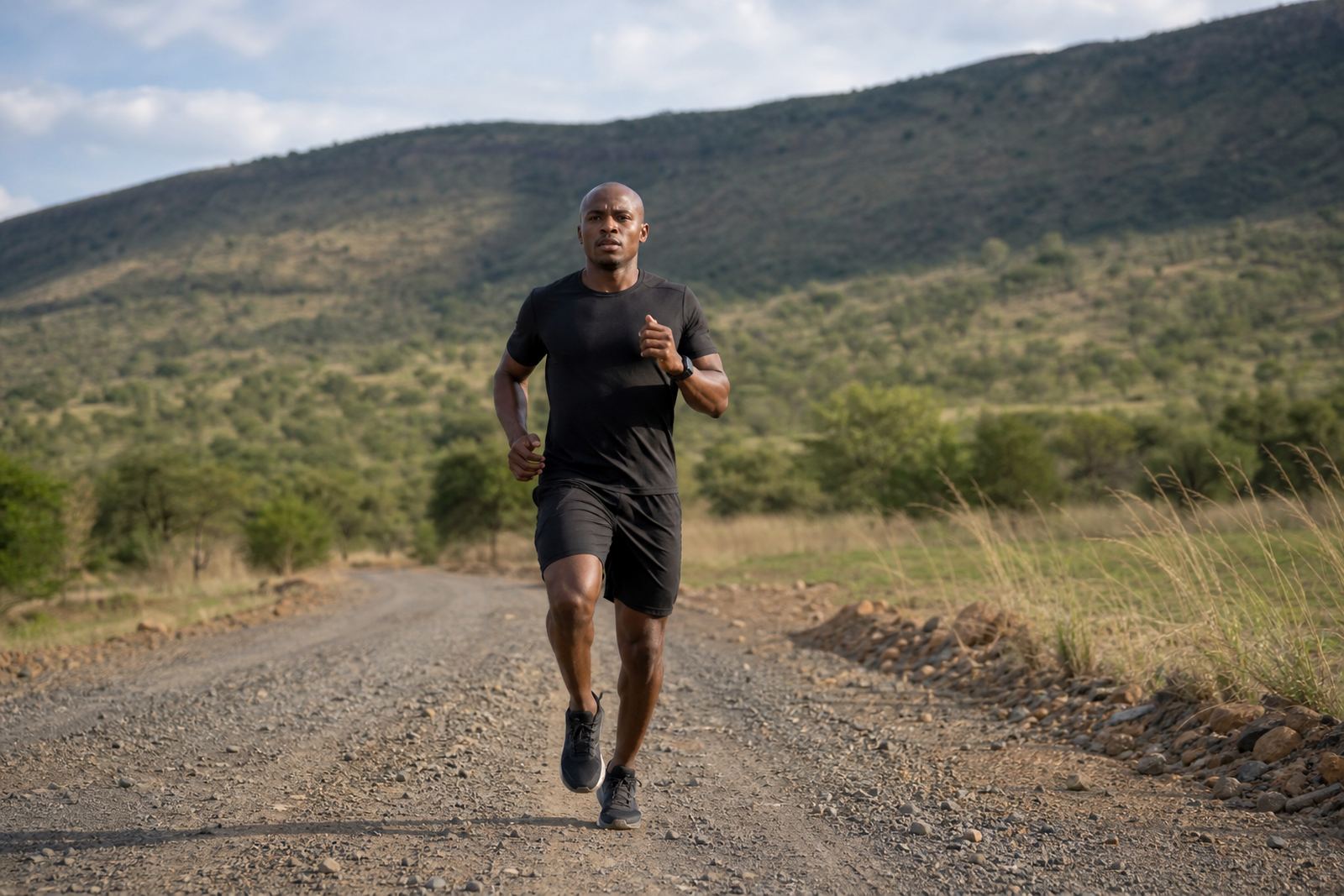
Train on mixed ground where possible. A gravel driveway, grass verge, dirt track or uneven trail teaches your ankles and hips to react quicker. Keep your chest tall, eyes forward and steps short. If your grip fails early, the rest of your body will fight to stay upright and that is when poor form creeps in.
- Use a sandbag, loaded bucket or a similar awkward object, not a perfect gym bell.
- Practise carrying for time, not only for distance.
- Include uphill walking and stair work where safe.
- Rest between sets long enough to keep your shape tidy.
The carry session that does not waste a Saturday
A useful session does not have to be long. One or two carry blocks a week, added to general strength work, is enough for most participants who are building up for races in the Magaliesberg area. The goal is to learn how to keep the load close, breathe under pressure and turn around without twisting your back. That matters on dry North West ground, and it matters even more when the route gets rocky or sandy.
Try a steady progression. Warm up first, then move through carries that change the demand on your body. One week can focus on shorter, heavier sets. The next can use lighter loads for longer periods. If your shoulders or lower back complain more than normal soreness, back off and check your technique. Pushing through bad pain is not training, it is a poor trade.
- Short carry: 20 to 40 metres with a controlled turn.
- Mid carry: 60 to 100 metres at a talking pace.
- Mixed carry: alternate uphill, flat, then a short stair or step section.
- Recovery walk: 2 to 3 minutes between efforts, longer if breathing is ragged.
How to move with a bucket without fighting it
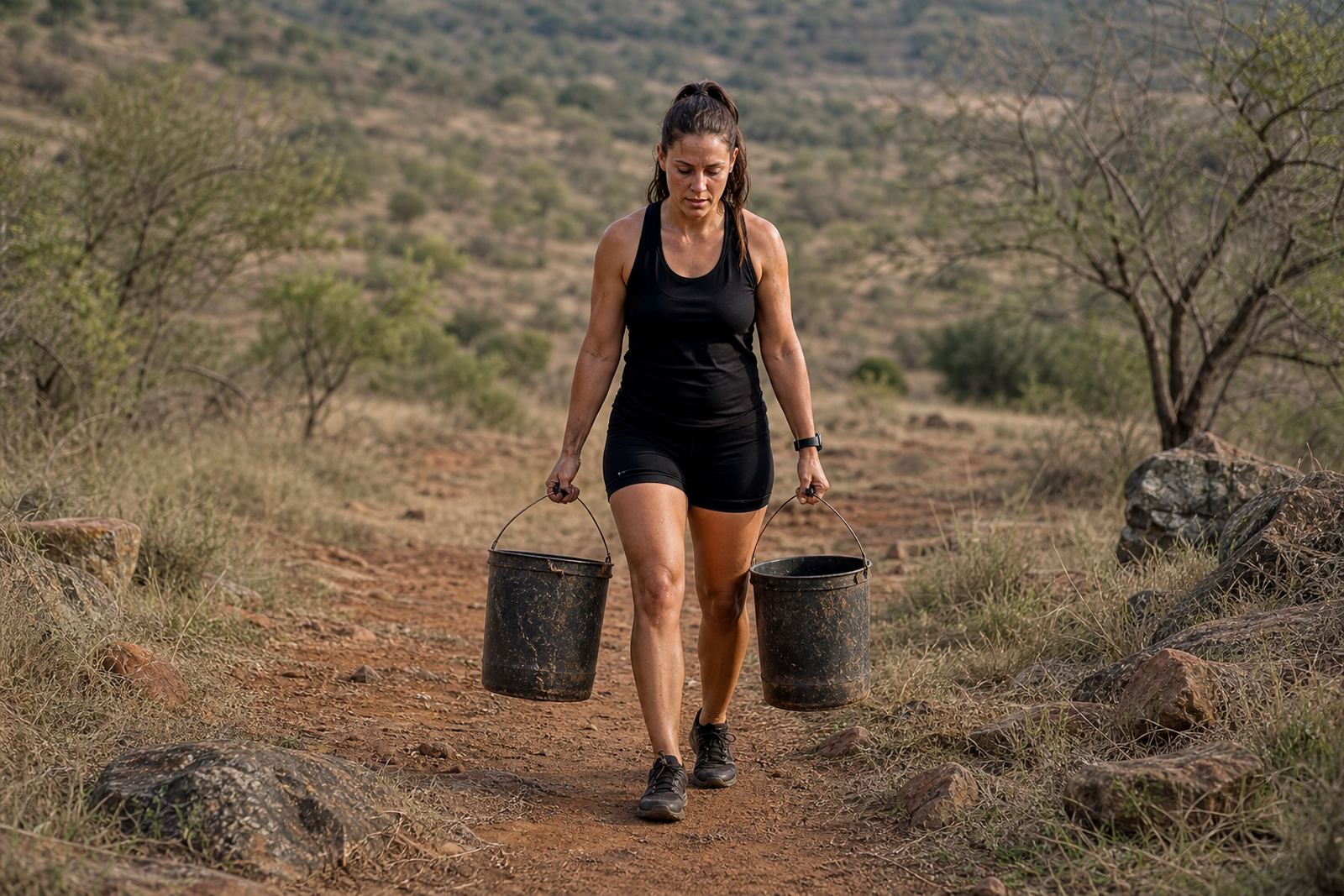
Bucket carries can look easy until the handles dig into your hands and the weight swings out of line. Keep both hands even and let your elbows stay soft, not locked. If the bucket has a narrow grip, avoid squeezing so hard that your forearms cramp within the first minute. The aim is control, not a death grip.
Step with purpose and avoid overstriding. Each foot should land under you, not far ahead of you. On loose ground near Hekpoort or Hartbeespoort, a shorter step helps you stay upright when the surface shifts. If you are carrying both sides, balance the load by checking that each bucket or container sits at the same height before you move off.
- Pick the load up with a flat back and bent knees.
- Brace your core before the first step.
- Do not swing your upper body to help the load move.
- Set the bucket down under control, not by dropping it.
Sandbags ask for shoulders, lungs and patience
Sandbags are awkward by design. They move, they shift, and they expose weak links quickly. When you train with them, practise clean lifts from the ground, lap to shoulder movements, and short loaded walks. Keep your breathing even and do not hold your breath for longer than needed. A steady exhale helps you stay calm when the route starts to climb.
For obstacle races, sandbag work should also prepare you for sudden changes in pace. Walk fast for a short stretch, then slow down before the next obstacle. That teaches your body to recover while still moving. In a team event, the strongest person does not always need to take the bag. Good race results often come from sharing effort sensibly, not from one person doing all the heavy lifting.
- Use a bag that fits your hands well, not one that forces a poor grip.
- Practise both front carry and shoulder carry positions.
- Keep the load close to the body so it does not pull you forward.
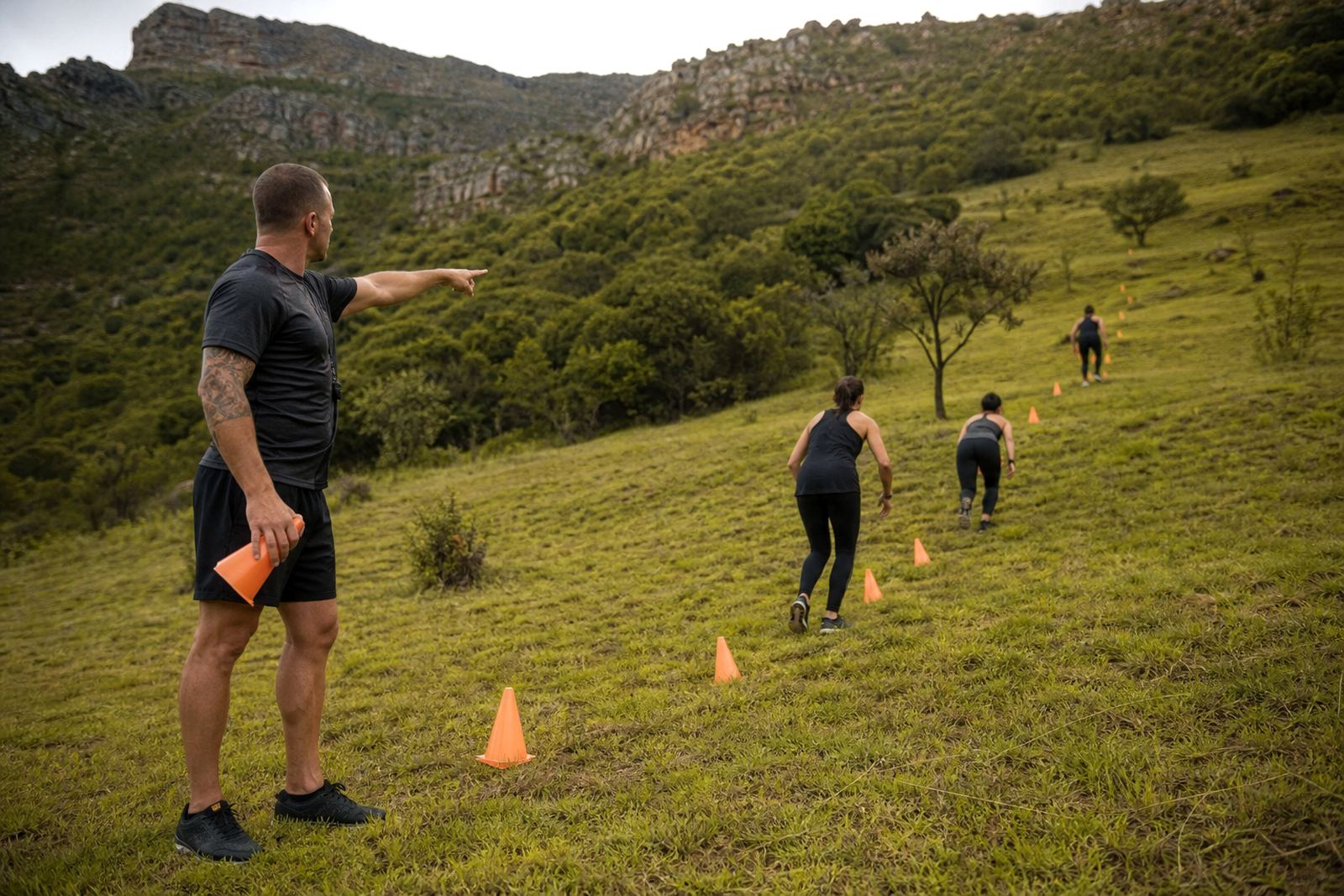
- Train on slopes if your route includes hills or rough veld paths.
What to sort out before race morning
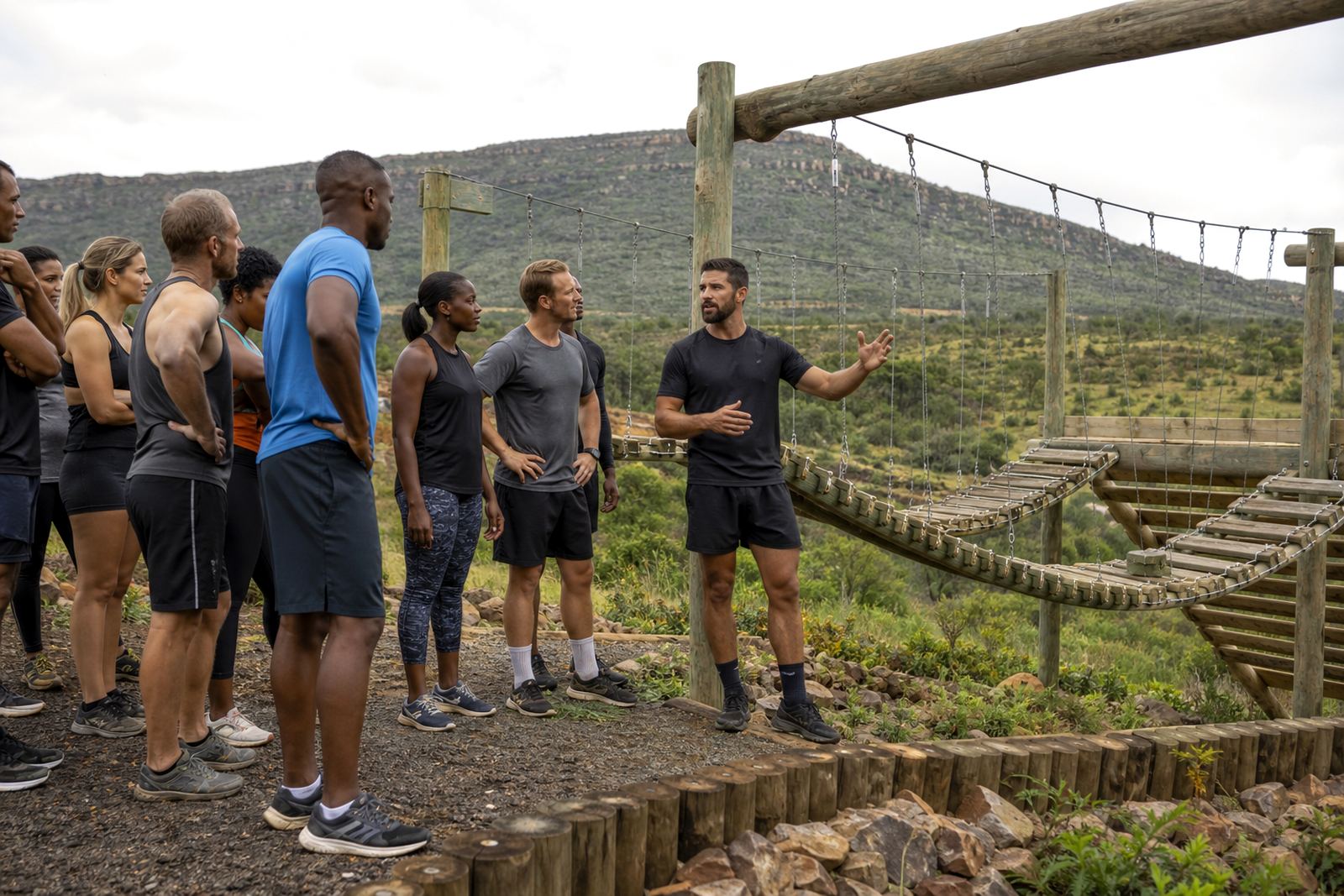
Carry training is only one part of getting ready. You still need the basics in order. Read the safety briefing, sign the waiver, and listen carefully to the instructions for the specific heat or group you are placed in. If you are part of a corporate team, make sure the captain understands the plan for check-in, warm-up and any team adjustments. Clear instructions save time and reduce confusion at the start line.
Pack for the conditions you expect. The Magaliesberg can be hot, dusty and uneven, and the weather can change quickly. Bring enough water, a small snack for after the event, comfortable clothing that can handle mud, and shoes with proper grip. If the race uses a recovery area, have dry socks or a towel ready. Dry feet matter more than people think, especially if you have been running through wet grass or river crossings.
- Photo ID or other event paperwork requested by the organisers.
- Water container that can be carried easily.
- Grip-friendly gloves if you prefer them for carries.
- Change of clothes, towel and basic wash items for after the event.
When a carry goes wrong, slow down and reset
Sometimes the weight shifts, your grip slips or your breathing runs away from you. That is the time to reset rather than panic. Set the load down if the rules and course space allow it, collect your breath, then pick it up again with better body position. There is no medal for trying to muscle through a carry with a poor back angle or a twisted stance.
During training, pay attention to warning signs such as sharp pain, numbness, dizziness or a deep pull in the lower back that does not settle once you stop. Those are not normal training feelings. For race day, the safest plan is to arrive rested, hydrated and ready to follow the briefing from the safety team. The course is there to test you, yes, but it should still be approached with care.
Good carry work builds more than strength. It builds pace judgement, patience and the ability to help a teammate keep moving when the load feels awkward. That is the kind of prep that shows up on the course long before the finish line.