
Leave early enough to miss the rush past Krugersdorp and Hartbeespoort
Plan your drive with a little extra time in hand, especially if you are travelling in from Johannesburg, Pretoria, Rustenburg, Potchefstroom, Cape Town, Durban or Bloemfontein. The roads into Hekpoort and the wider Magaliesberg area can slow down on weekends, and a late start makes everything feel tighter than it should. If you are sharing lifts, agree the departure time the night before and leave room for fuel stops and a quick toilet stop.
For teams, it helps to set one meeting point and one lead vehicle. That keeps the group together when you reach the venue area and reduces last-minute calls. If you are carrying coolers, team flags or spare kit, load them the night before so you are not rummaging around in the dark before dawn.
- Check your route and allow extra time for morning traffic
- Keep your booking details and team captain name close at hand
- Carry cashless payment options for any final day needs
- Make sure your phone is charged in case you need to call your group
What to sort before you leave the bakkie or car park
Before you head to the start area, make sure you have the basics with you and that your kit is easy to reach. Use a small bag or tote that you can close properly. If you are travelling with children, supporters or a corporate group, label bottles, bags and spare shirts clearly so nothing gets mixed up at the recovery area or team tent.
Keep in mind that Magaliesberg mornings can feel cool, but once you are moving the temperature rises fast. A light layer is useful before the start, then you can take it off and hand it to a supporter or leave it in the right storage area if one is available. Coastal humidity is not the issue here, but dust, sun and uneven ground can still catch people off guard.
- Identification and booking confirmation
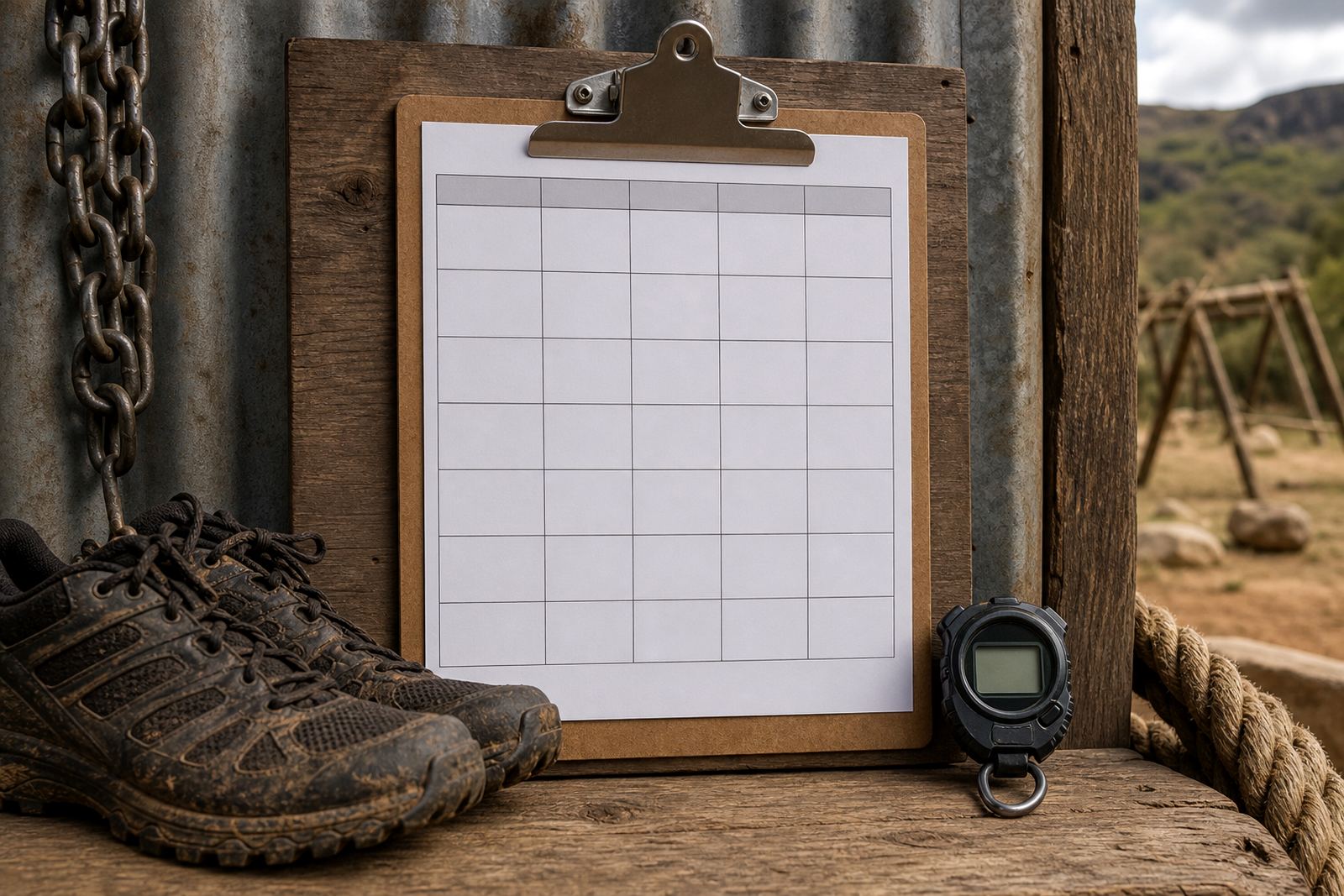
- Closed running shoes with grip that can handle mud and rocks
- Water bottle or hydration pack
- Dry socks and a small towel for after the race
- Sunblock, cap and a change of shirt
Check-in is faster when your waiver and team details are ready
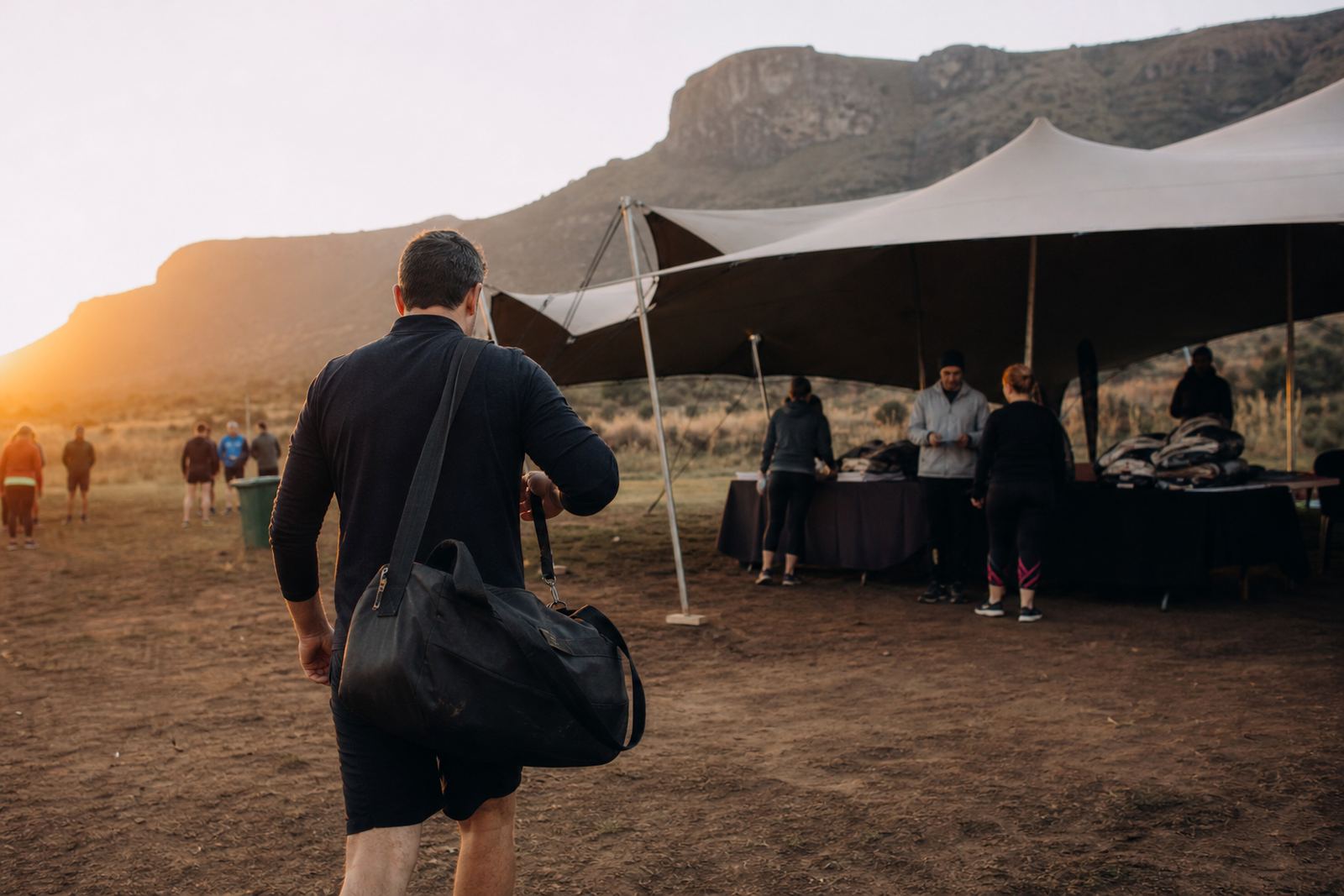
When you reach the venue, head straight to check-in and have your waiver details ready. If you are racing as part of a team, keep your captain communication clear so the right people are linked to the right heat and support group. Corporate entries usually move more smoothly when one person holds the full team list and knows who still needs to complete paperwork.
Waivers and registration checks are part of keeping the day organised and safe. Read everything carefully, sign where needed and ask if any detail is unclear before you leave the counter area. If you have medical concerns, have had a recent injury, or are on treatment that affects exercise, check with a doctor before taking on hard exertion.
- Have each participant’s details ready before standing in the queue
- Keep team names, heat info and waiver status together
- Do not leave registration until the last minute
- Ask the staff member on duty if you are not sure where to go next
Warm up like the course is already under your feet
Once check-in is done, move into the warm-up area and give your body a proper start. Keep it light and controlled, then build up gradually. A few easy jogs, joint rolls, leg swings and short bursts of movement are usually better than trying to do too much too soon. For teams, a group warm-up also helps everyone settle their breathing and get focused on the same plan.
Listen to the safety briefing before you decide how hard to push the early sections. Obstacles can vary from climbing and carrying to crawling, balancing and grip work. If you know that your shoulders, knees or back get sore under strain, adjust your pace and tell the support crew if you need a steadier line through the course.
- Warm up for 10 to 15 minutes, not just a few quick stretches
- Start with gentle movement and finish with race-specific motion
- Keep water nearby, especially on hot North West mornings
- Do not use the warm-up to tire yourself out before the start
Safety briefing: the part people should never skip
The safety briefing gives you the working rules for the course, the marshals and the recovery areas. Pay attention even if you have raced before, because obstacle layouts, ground conditions and flow can change from event to event. The briefing will usually cover passing points, where to slow down, how to approach water or slippery sections, and what to do if you need help.
Take note of any instructions about footwear, clothing, jewellery and personal items. Loose items can get lost or become a hazard. If you are racing in a group, agree a simple plan for checking in on one another during the event, especially if someone is new to this type of challenge or is managing a slower pace.
- Listen all the way through, even if you think you know the drill
- Ask about course changes, restrictions or recovery points
- Keep your team together at the start and after tricky obstacles
- Follow marshal instructions without arguing on the line
After the start line, stay practical and keep moving
Once the race begins, keep your focus on the next obstacle rather than the whole route. A steady pace, good footing and clear breathing usually beat a fast start that fades later. If you are supporting a teammate, use short calls and simple encouragement. A calm voice is often more useful than a loud one.
Keep your hydration plan sensible and do not leave rubbish on the course. When you reach the recovery area, take a moment to cool down, drink water and check for any scrapes or muscle tightness. If the event has a team photo moment, get everyone together before people drift off to change, eat or fetch bags.
- Pace yourself in the early stages
- Keep grip, footing and breathing under control
- Use the recovery area if you feel worn out or unsteady
- Report any issue to the staff rather than trying to push through blindly