Start with the grips that fail first
Most obstacle course trouble starts when the hands open up before the lungs do. Rope climbs, suspended carries, bucket holds and monkey bars all ask for different grip patterns, so it helps to know where you lose control first. Some runners squeeze too hard and burn out fast, others hold too lightly and slip on dust, sweat or damp metal.
Begin with a short self-check after a normal training session. If your forearms pump up quickly, your fingers slip on horizontal bars, or you cannot dead hang for long without kicking, those are the areas to train. If you have a history of hand, wrist or elbow pain, check with a doctor before hard exercise and get clearance before pushing volume up.
Build grip without wrecking the forearms
Grip strength grows best when you train it often enough to adapt, but not so much that the tendons stay sore all week. Start with 2 or 3 grip sessions in a week, kept short and controlled. Mix thick holds, towel hangs and bar hangs so the hands work in different positions.
- Dead hang from a pull-up bar for 10 to 30 seconds at a time
- Hanging knee raise hold with the shoulders active
- Farmer carry with buckets, water containers or weighted bags
- Towel hold over a bar or branch for extra finger demand
- Wrist extension and flexion with light load for balance
Keep the shoulders packed, ribs down and neck relaxed. If the grip work turns into a full body shrug, reduce the load and tidy the position first.
Turn hanging into a habit, not a gamble
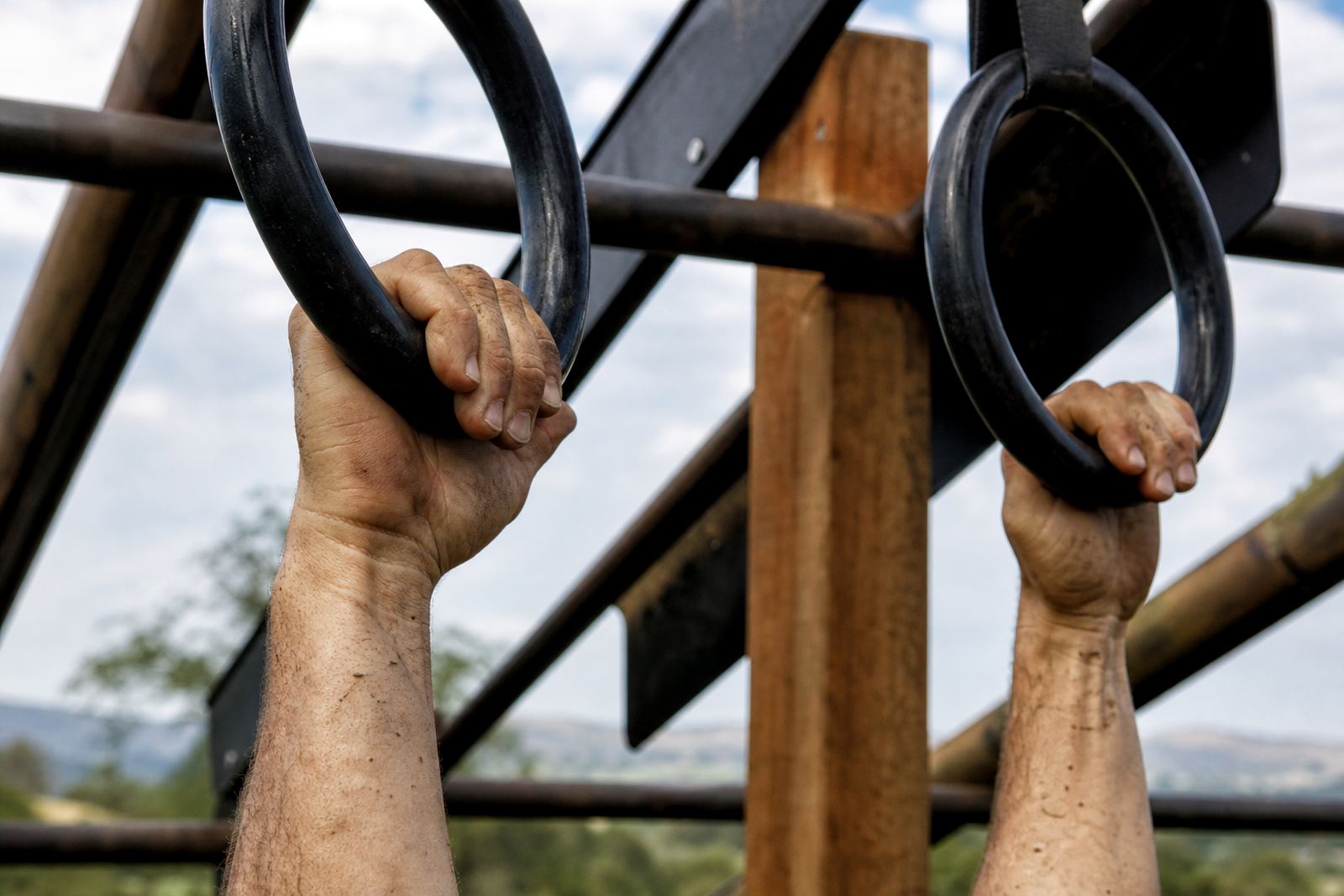
Race obstacles reward people who can hang while breathing calmly. To build that, treat hanging as a skill, not just a strength test. Short, repeated hangs usually work better than one heroic attempt that leaves the elbows angry for two days.
Use a ladder format: 10 seconds on, 20 seconds rest, repeat 5 times. When that feels easy, move to 15 seconds on and 15 seconds off. Later, try mixed grips, one hand overhand and the other neutral, then switch. This kind of work helps on uneven rigs where each obstacle feels a little different.
A useful rule is to stop each set before form falls apart. If the hands start opening at the same point every session, note it and build from there rather than forcing extra time. That small bit of patience pays off on race day, especially on longer courses around the Magaliesberg where fatigue builds under sun, dust and wind.
Train the support muscles around the hands
Better grip is not only about the palm and fingers. The forearms, upper back, shoulders and trunk all help keep the hands alive when an obstacle asks for control under load. A weak midline makes the hands work harder than they should.
Include a few support exercises after your main session, or on a separate day if your grip work is already heavy.
- Scapular pull-ups for shoulder control
- Rows with a pause at the top
- Plank variations for trunk tension
- Reverse curls for forearm balance
- Rice bucket work or towel wringing for fine hand control
Keep the pace steady. You are building repeatable function for obstacle racing, not chasing one max effort lift.
Use race-like conditions in practice
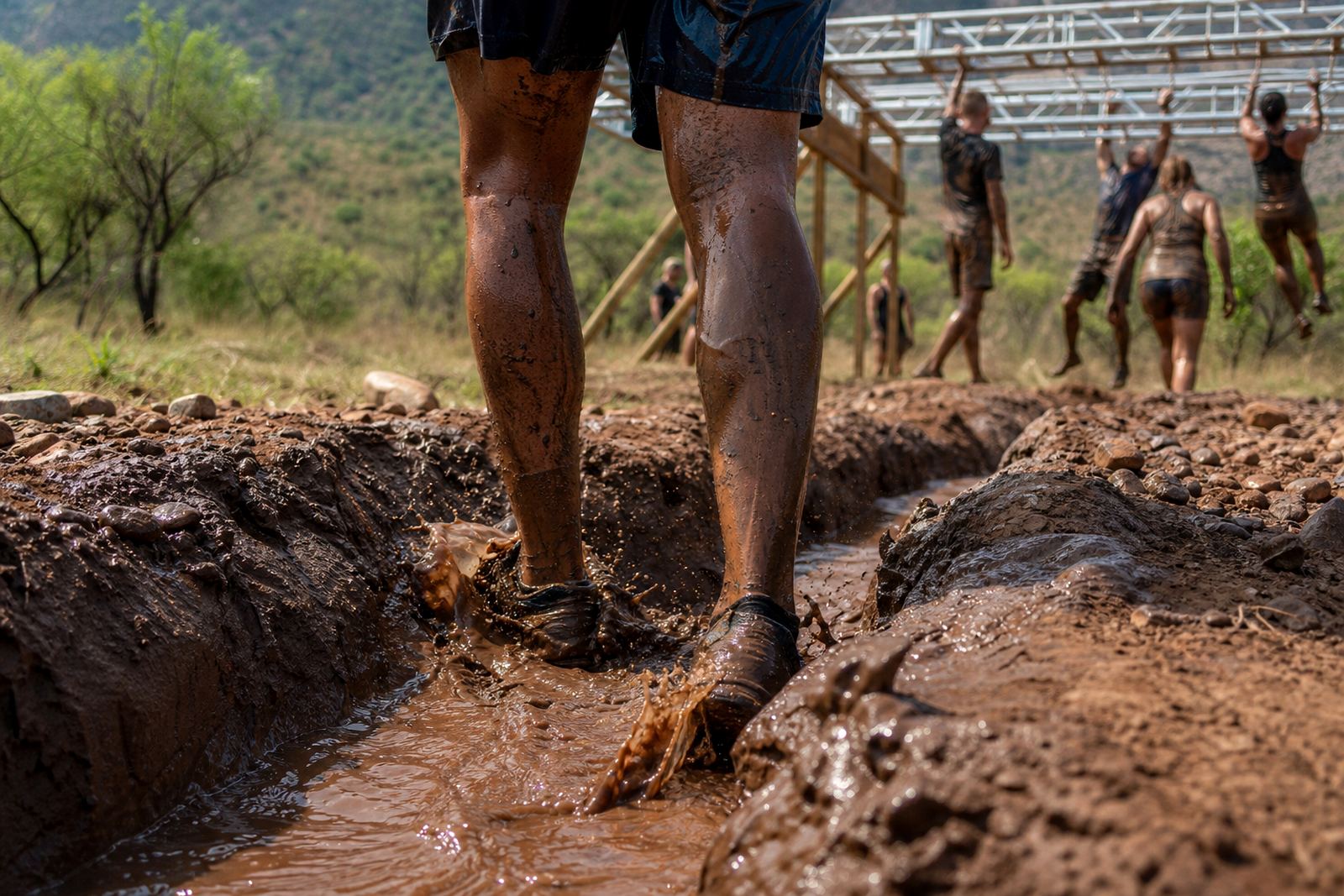
Obstacle races are rarely neat and dry. Hands get dusty, mud sticks to skin, and sometimes there is a bit of moisture from grass, morning dew or water-based obstacles. Practice under conditions that feel closer to the event so the grip adaptation actually transfers.
Try simple changes in your sessions. Do a short run before hanging. Practice after a hill repeat. Use a slightly tired grip after carries. If you train outdoors near Hekpoort or on open ground in North West, you will also learn how heat affects sweat and friction. In cooler coastal weather, wet hands and cold fingers can change the feel again, so it helps to test both.
- Carry chalk if your event rules allow it, but do not rely on it alone
- Wear gloves only if the course or weather makes them useful for your own grip
- Keep nails short so you do not catch skin on rope or mesh
- Bring a small towel, water and a spare shirt if you sweat heavily
Briefing day checks that save energy
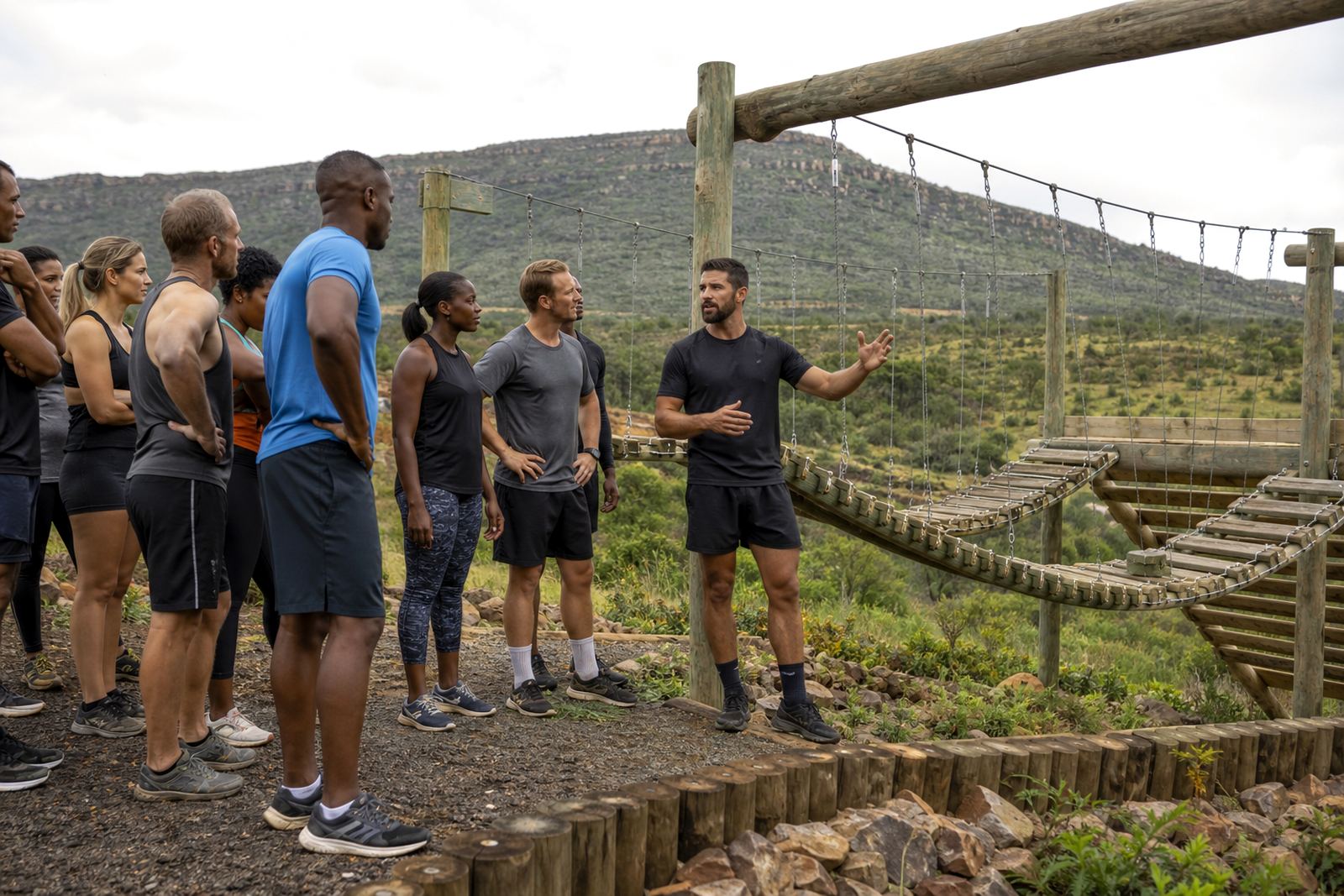
Good grip work still needs sensible race-day preparation. Read the safety briefing carefully, follow waiver instructions, and listen for any obstacle-specific rules. Some obstacles need a two-hand hold, some require a controlled drop, and some have no passing if the surface is slick or the queue is tight.
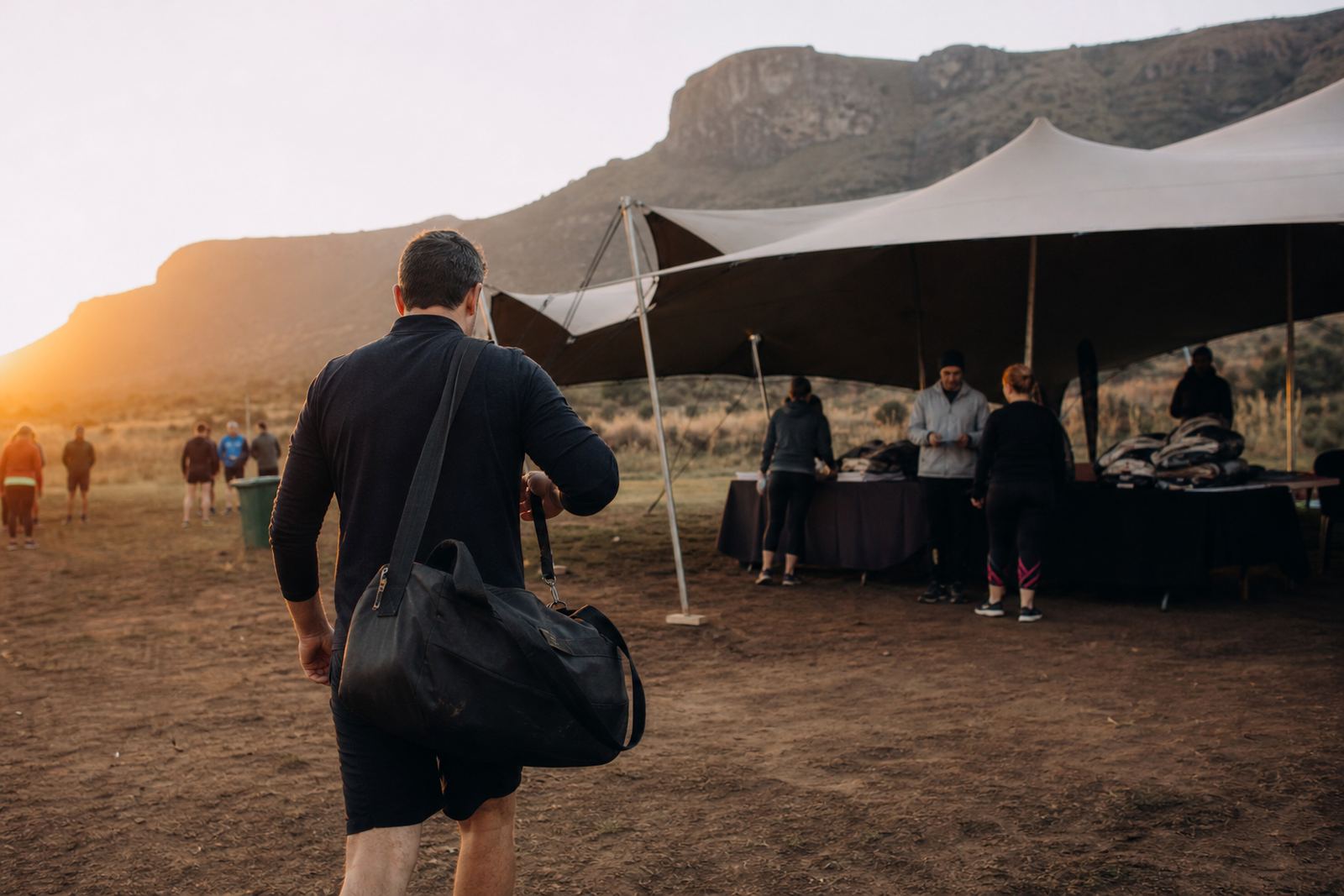
Before the start, warm the hands and shoulders with light circles, band pull-aparts if you have them, and a few easy hangs. Do not arrive cold and expect the first obstacle to sort you out. Carry the basics only: water, a towel, a change of shirt, any required identification, and anything else listed in the event instructions. If you are travelling from Johannesburg, Pretoria, Rustenburg, Potchefstroom or further afield, pack the night before so you are not rushing in the morning.
When the hands start to give out mid course
If your grip fades during a race, the answer is usually to calm the shoulders, shorten the breath and reset body tension. Panic makes the forearms clamp harder and fatigue faster. Drop only when the rules allow it, then re-engage with a cleaner hand position instead of fighting sloppily through the obstacle.
Training should teach you to recognise the warning signs early: thumb web pain, finger tingling, forearm cramp or elbow irritation. If those signs keep showing up, reduce volume for a week and check your technique. A few careful sessions are better than forcing through an injury that keeps you off the course.
For teams, grip work also helps with trust. When everyone knows how to hang, brace and recover, the whole group moves better through the event and supports weaker members without rushing them.