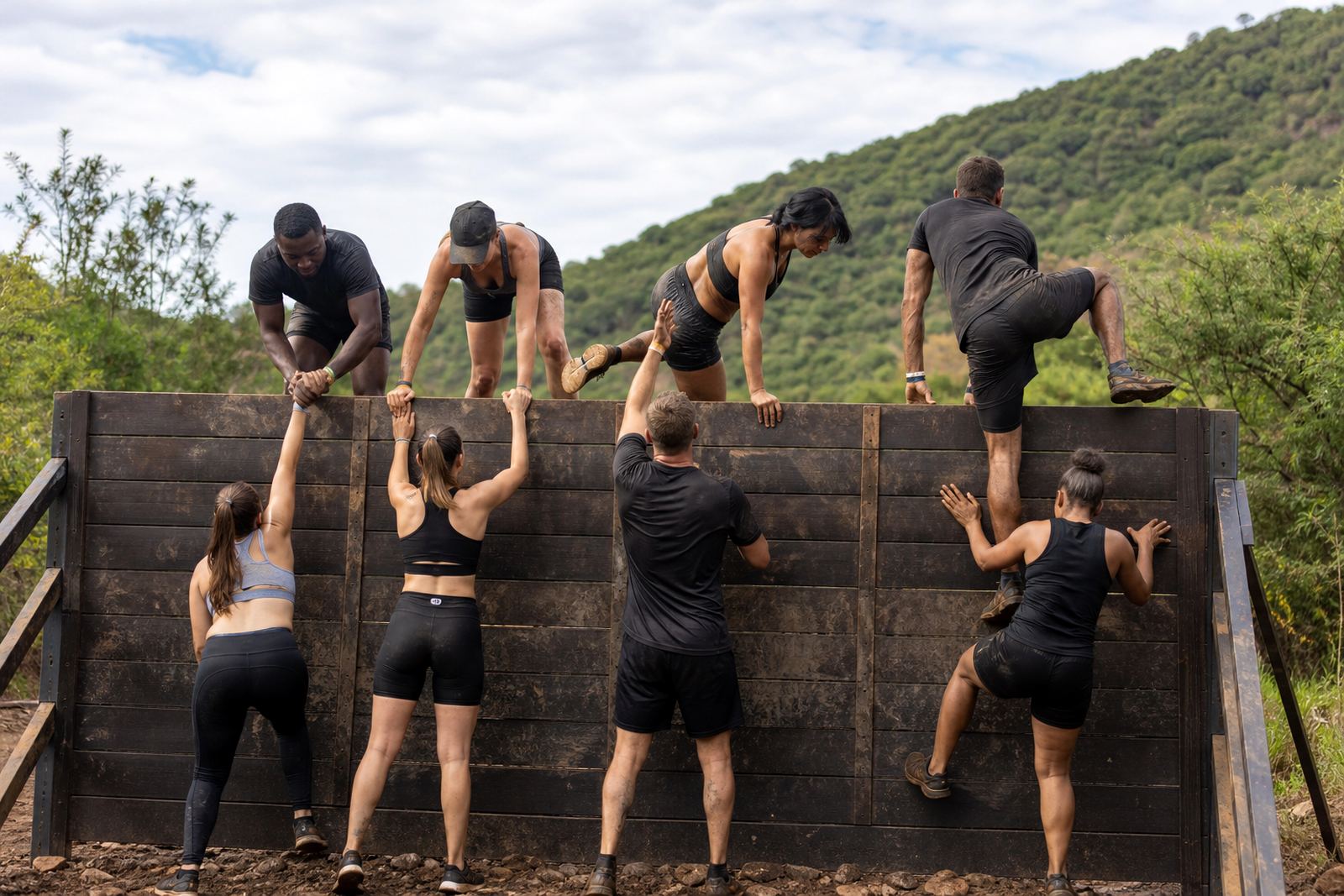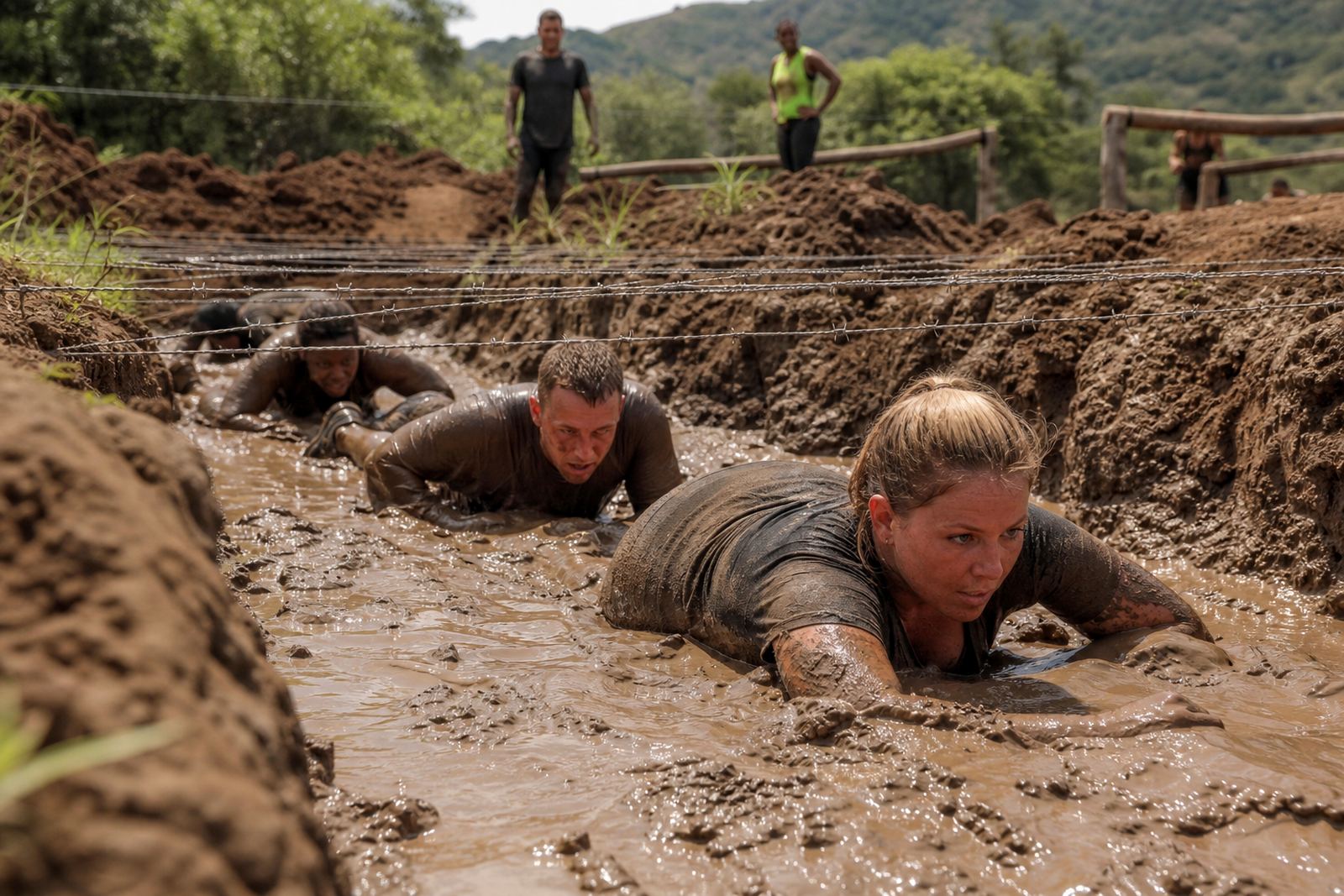


A start line that lets people find their footing
Beginner Heat is the entry option for participants who want the obstacle course experience without being thrown into the fastest wave. It is suited to mixed fitness groups, first-timers, corporate teams, and weekend challengers who want to finish the course at a sensible pace. The focus is on steady movement, sensible spacing, and enough time to handle each obstacle properly, especially on rough ground or after rain in the Magaliesberg area.
This heat is used for obstacle course races where people may be learning the route, getting used to carries, climbs and crawl sections, or testing themselves before moving into a tougher wave later in the day. It works well for venues around Hekpoort, Magaliesburg, Hartbeespoort, Krugersdorp, Pretoria, Johannesburg, Rustenburg and Potchefstroom, where travel time, heat and dusty ground can all affect how participants pace themselves.
- Best for first-time entrants and mixed ability groups
- Allows a more relaxed start line flow and clearer instruction
- Useful for corporate teams, family groups and new adventure racers
- Can be paired with team registration help and captain communication
Course flow and the kind of effort to expect
The Beginner Heat usually follows the same obstacle layout as other waves, but with a less crowded start and a more controlled rhythm through the first section of the course. That matters on climbs, balance features, low crawls, bucket carries and tyre sections where people need space to move without feeling rushed. In the Magaliesberg, loose soil, uneven ground and sudden wind can change footing quickly, so this heat is often the better choice for people who want to settle in properly.
Participants should still expect real effort. This is not a stroll. The route may include running, walking, crawling, carrying, climbing and brief recovery points between obstacles. For many groups, the benefit is that they can finish with more confidence, stay together, and enjoy the event instead of burning out too early.
- Suitable for obstacle courses with repeated carry and climb stations
- Works well on mixed terrain, slopes and dusty farm tracks
- Supports group pacing for teams that want to finish together
- Can be matched with recovery area guidance after the heat
Sizes, wave options and what gets booked
Beginner Heat is usually offered as a wave or batch option within the broader event schedule. The exact group format depends on the venue, route length and the number of heats being run on the day. For corporate entries and team bookings, the heat can be linked to heat allocation support so participants are grouped in a practical way, with captains told where to assemble and when to check in.
Where the course has several start groups, this option is ideal for people who want a gentler roll-out. It can suit smaller teams, larger corporate groups, or mixed clubs that want one team in a more comfortable wave while stronger runners go later. If a group includes people travelling from Johannesburg, Pretoria or farther afield, the calm start also helps with arrivals, warm up time and last minute kit checks.
- Wave-based start option for beginner friendly pacing
- Useful for team entries, corporate groups and mixed fitness levels
- Can be used with custom team briefing and onsite team checkin
- Start details should be confirmed against the event schedule and venue plan
What has to be sorted before the gun goes
For this heat, the practical details matter. Participants need to know the event venue, reporting time, captain contact point, waiver status and whether there are any specific requirements for mud, water features or carry sections. All entrants should read the safety briefing carefully and complete the waiver before taking part. If someone has a medical condition, injury history or concerns about hard exercise, they should check with a doctor before the event. That is the safest way to decide if the heat is suitable.
For organisers, the important part is making sure the group list is correct and the right people are placed in the right wave. Team registration help, waiver coordination and captain communication reduce confusion at the start line, especially where there are multiple heats and supporters arriving at different times. Municipal or venue rules may also affect parking, loading zones and where teams may gather.
- Participant names must match the entry list and waiver records
- Captain details should be confirmed before race day
- Safety briefing groups need a clear meeting point
- Venue instructions may cover parking, toilets and spectator areas
What to pack for a cleaner run and easier finish
Beginner Heat participants should bring the same practical kit they would use for any outdoor obstacle event, with an eye on dust, sun and wet ground. Good shoes with grip, moisture-wicking clothing and a change of kit for afterwards are the basics. In summer, sunblock and a cap for before and after the race are useful, while in cooler weather a dry layer for the recovery area helps after a hard effort. Water, a small towel and a plastic bag for muddy clothes are also worth having.
For teams travelling from Cape Town, Durban or Bloemfontein, it helps to pack the day before and keep the essentials easy to reach in the vehicle. If the venue is in the North West and the ground is dry, dust can be heavy on clothing and glasses. If there has been rain, the course may be slippery in sections so grip and a spare pair of shoes can make a difference.
- Trail shoes or trainers with decent grip
- Change of clothes, towel and a bag for muddy items
- Water, sunblock and any personal items needed for the day
- Any required documentation for registration and waiver checks
Keeping the heat sensible from briefing to recovery
The value of Beginner Heat is not that it removes the effort, but that it keeps the effort manageable. A clear briefing, sensible grouping and staff who know the course help participants stay calm at the tricky points. Onsite team checkin and recovery area guidance matter after the finish too, especially when the day is hot or the route has steep sections. For corporate groups, a short team photo moment at the end often works better once everyone has had a drink and caught their breath.
Care after the event is straightforward. Rinse mud from shoes and clothes as soon as practical, dry all kit fully and check for wear on laces, soles and gloves. Any gear used in wet weather should be cleaned out before it is packed away, otherwise the smell and grit become a problem later. If participants have had a hard day on uneven ground, a rest day and proper hydration are worth more than trying to push straight into another session.
- Rinse kit promptly to remove mud and grit
- Dry shoes and gloves fully before storage
- Check for worn soles, torn seams and damaged straps
- Use the recovery area before loading out or heading home
Key facts
| Product type | Beginner-friendly obstacle course heat option |
|---|---|
| Use case | First-time entrants, mixed fitness groups, corporate teams and casual adventure participants |
| Course fit | Suitable for wave-based obstacle races, endurance challenges and grouped start lines |
| Group handling | Supports team registration help, captain communication and heat allocation |
| Participant prep | Waiver coordination, safety briefing groups and onsite team checkin |
| Location fit | Works well for events in Hekpoort, Magaliesburg, Hartbeespoort, Krugersdorp, Pretoria, Johannesburg, Rustenburg and Potchefstroom |