
What makes this course mud-heavy, not just muddy
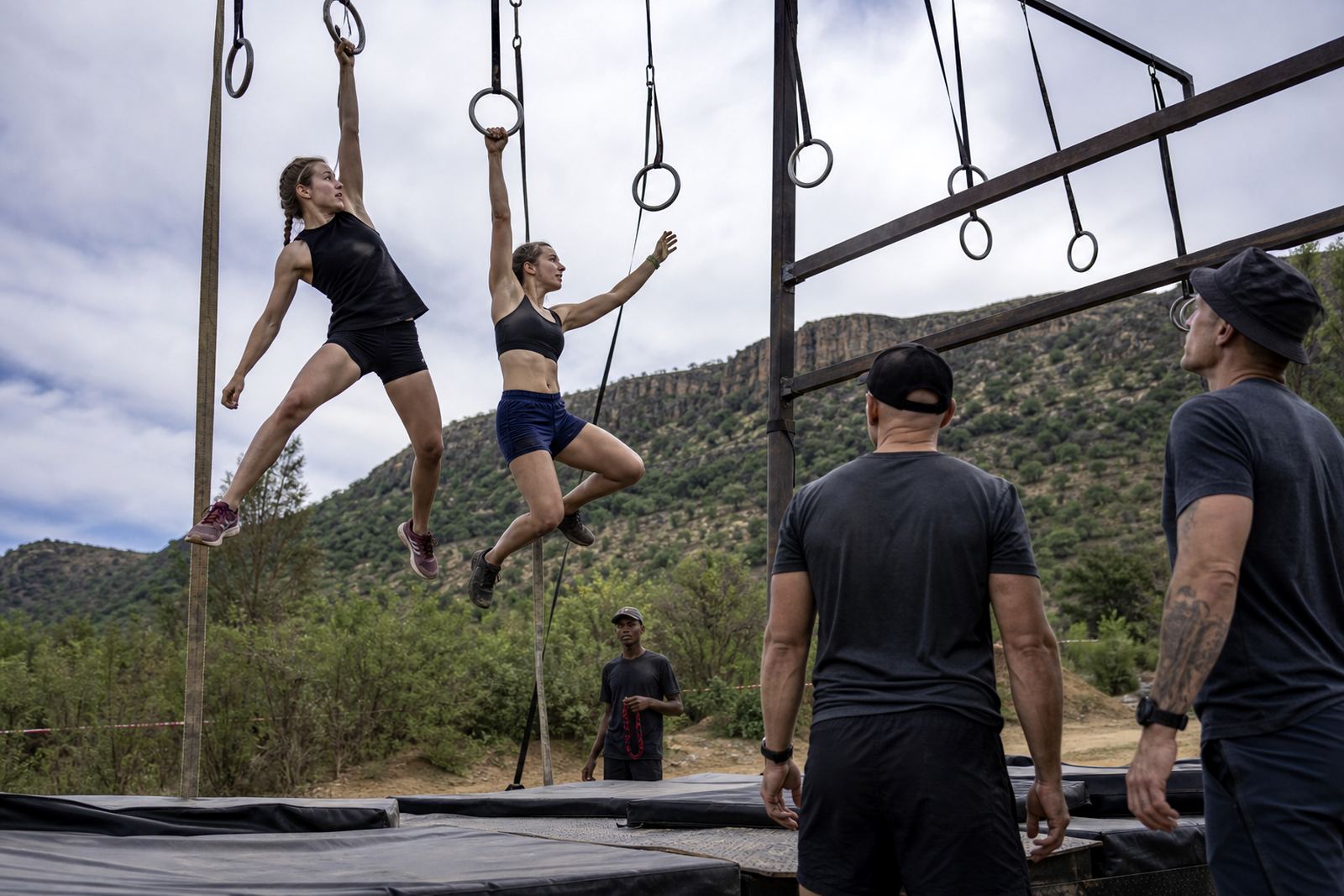
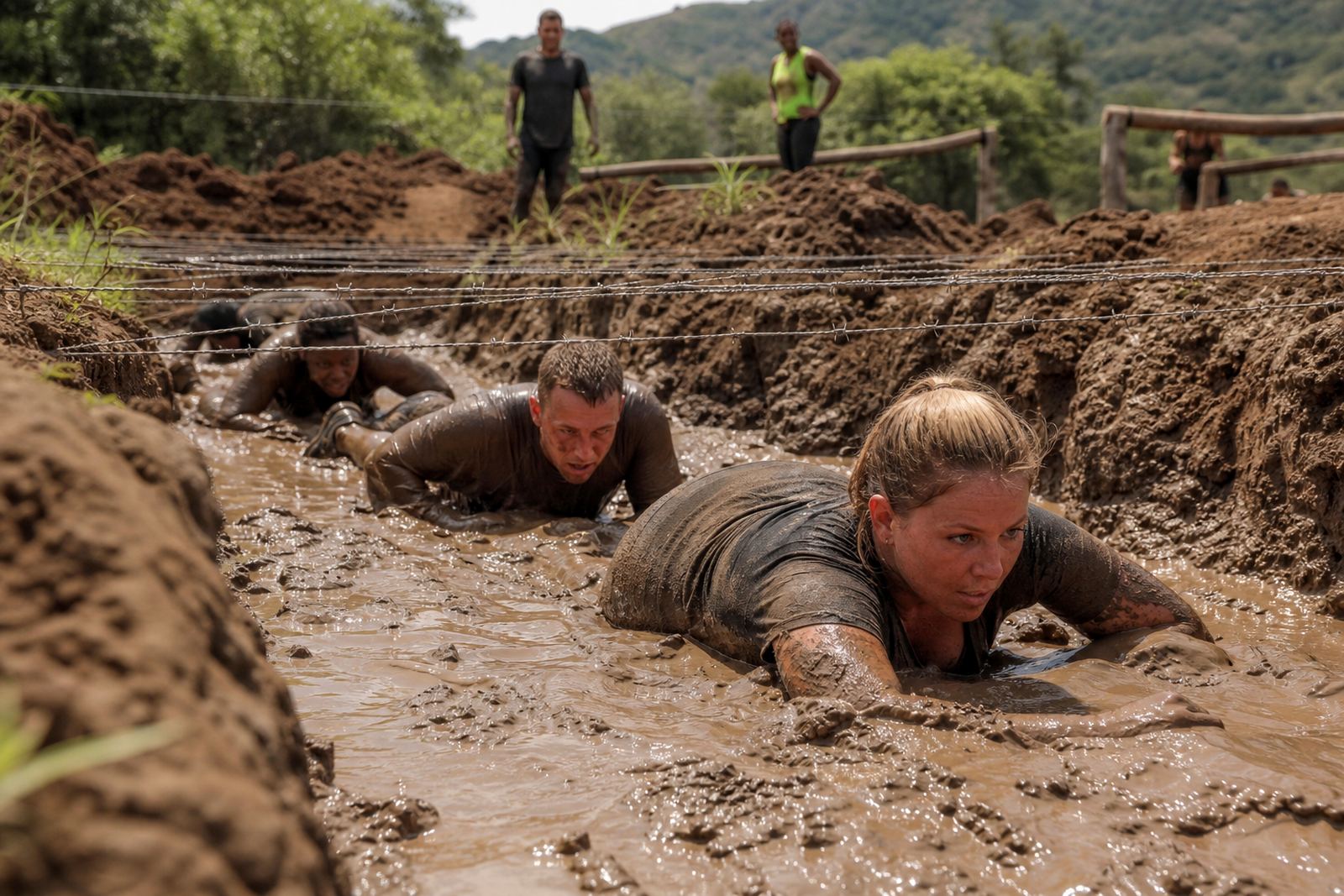
This option is set up for people who enjoy messy obstacle course racing and do not mind getting properly wet, heavy and covered in red soil by the finish. The layout can include deep mud trenches, sloped carries, crawl-through sections, low walls with wet handholds, balance logs in slippery ground and recovery points between obstacles so participants can reset before the next push.
It is designed as a race series option rather than a fixed single obstacle, which means the build can be adjusted for venue conditions in Hekpoort, Magaliesburg, Hartbeespoort, Krugersdorp, Pretoria, Johannesburg, Rustenburg and Potchefstroom access routes. On a dry week the ground holds differently than after rain, so the course team plans for footing, drainage and traffic flow before runners are sent out.
The aim is to create a hard working course that still feels fair for mixed fitness levels. Strong runners can push pace, while first timers can move at their own rhythm and make use of team support. If a participant is planning hard training or has a health concern, they should check with a doctor before taking on strenuous exercise.
Sizes, layouts and the kind of distance it suits
Mud Heavy Course can be arranged as a shorter, high-intensity loop or a longer endurance format, depending on the event plan and the space available at the venue. The build team can scale obstacle spacing, mud depth, lane width and carry sections to suit corporate challenge days, club entries, training events and full race weekends.
Typical layout choices include straight-through lanes for faster turnover, wider team lanes for groups staying together, and technical sections where participants need more footing care. In loose soil around Magaliesberg and the North West, the course may be anchored more firmly at key points so the route stays clear through the day.
- Short loop format for fast rounds and team rotations
- Mid-distance option for mixed fitness groups and first time entrants
- Endurance layout for participants who want longer carry and climb segments
- Wider lanes for corporate teams, supporter groups and captain-led entries
For event planners, the size choice should be matched to arrival times, heat allocation and recovery area space. That makes check-in smoother and helps avoid bottlenecks at the mud sections, which can back up quickly when everyone reaches the same obstacle at once.
Where it works best across the region
This course suits outdoor venues with open ground, access for water refills and enough clearance for wet traffic, muddy exits and spectator movement. In the Magaliesberg area, the natural contours help create better challenge lines, while the surrounding soil gives the course a proper heavy feel underfoot. Hekpoort is the base, but the layout can be adapted for venues serving visitors from Pretoria, Johannesburg, Rustenburg, Krugersdorp, Hartbeespoort and Potchefstroom.
It also suits corporate team days where organisers want a practical challenge that gets people talking without needing a highly technical setup. For travellers coming in from Cape Town, Durban or Bloemfontein, the course offers a clear event structure with briefing groups, captain communication and support areas that are easy to follow.
- Best for open veld, farm venues and sports grounds with drainage
- Works well where access roads can handle wet shoes and support vehicles
- Useful for team events that need photo moments, warmups and recovery space
- Suitable for venues where mud management and clean-down points can be controlled
Municipal rules and venue conditions matter, especially where water use, run-off and parking control must be managed carefully. The event team should confirm local access, toilet placement and crowd flow before the course is locked in.
Build and fitting details the course crew must lock in
Mud Heavy Course is not a shelf item. It needs course build work, ground marking and safety preparation before runners step onto the line. The crew normally confirms route length, obstacle order, mud depth, entry and exit points, marshal positions and the space needed for warmup, support staff and the recovery area. If pumps, wash stations or lighting are part of the wider event setup, those need to be planned early as well.
Good fitting depends on ground conditions. If the soil is soft after rain, the team may need wider footing zones, stronger barriers and more frequent route checks during the day. Where the ground is dry and hard, extra water management can help keep the slippery sections working as intended. Course build should also allow for clean captain handovers and clear participant flow at the briefing point.
- Confirm venue access times and vehicle entry for the build crew
- Confirm whether water points, wash-down areas or power are available on site
- Confirm if the course will need extra barriers, cones or marshal posts
- Confirm the planned lane count for individual, team or corporate heat use
For organisers, the important thing is not only the obstacle design but how it fits the event day schedule. A course that looks good on paper can still cause delays if the entry gate is too narrow or the recovery area is too small, so those details need checking before the order is finalised.
Safety briefing, waivers and the practical kit list
Every mud-heavy event needs a proper safety briefing before the first heat goes out. Participants should hear the route rules, obstacle do nots, fall zones, passing instructions and the procedure for stopping if someone is hurt or exhausted. Waiver coordination also needs to be handled before race day so there is no rush at registration when people should be focusing on the course and their own readiness.
For the participant side, the best kit is plain and practical. Clothing should be close fitting enough not to snag, with shoes that grip in wet soil and can take a proper rinse afterwards. If a team plans photos, the organiser can help with timing so the group gets a clean moment before the mud takes over completely.
- Trail shoes or other grippy shoes with drainage
- Extra socks and a full change of clothes
- Water bottle or hydration pack
- Towel, bag for wet gear and basic after-race toiletries
- Sun protection for waiting areas and heat breaks
Participants should also be told about the recovery area, where to find water, and how to rejoin their group after the race. For corporate entries, captain communication and support for on-site check-in make the process cleaner for everyone involved.
Care after the mud has had its say
Once the race is done, the course needs cleaning, inspection and reset. Mud sections should be checked for wear, slippery patches left by repeated foot traffic, and any loose materials that were shifted during the heats. Barriers, markers and carry items need to be washed down and stacked properly so the next event starts in good order.
Participants should rinse off gear as soon as they can, especially shoes and socks, because dried mud in wet seams can be hard on fabric and fittings. If clothes have been dragged through sand and clay, they need a proper wash before storage. People who got rubbed raw by straps or wet clothing should dry off and change quickly rather than sitting around in damp gear for too long.
For organisers, the best aftercare is a clear handover between participant support, operations and course build. That makes it easier to spot issues before the next heat or the next event day. It also helps when groups from different towns arrive in waves and the site needs to reset fast.
Ordering details that help us set the right course
When requesting Mud Heavy Course for an event, the useful details are straightforward: venue location, intended date, expected heat structure, whether the entry is corporate or open, and how much ground is available for build and recovery space. It also helps to know if the event needs custom team briefing, supporter planning, captain communication or recovery area guidance.
The team can then match the course to the site conditions and the type of participant flow you want on the day. If you are arranging a group from Pretoria or Johannesburg, or bringing visitors in from Cape Town, Durban or Bloemfontein, plan for travel time, heat allocation and enough time for safety briefing before the first start.
- Venue name and access route
- Heat count and group size
- Need for team registration help or onsite team check-in
- Need for warmup session, photo moments or custom briefing
- Any ground or weather concerns at the venue
Clients can reach the team through the enquiry form on our contact page. That is the cleanest way to line up the right build, the right brief and the right support for a muddy event that still runs on time.
Key facts
| Course type | Mud-heavy obstacle course race option |
|---|---|
| Use case | Open race heats, corporate challenge days and endurance events |
| Layout formats | Short loop, mid-distance and longer endurance build |
| Ground needs | Open outdoor space, drainage and controlled access |
| Participant support | Safety briefing groups, captain communication and recovery area guidance |
| Region | Hekpoort, Magaliesberg with reach into North West and major South African centres |