
A fast course that still asks plenty of you
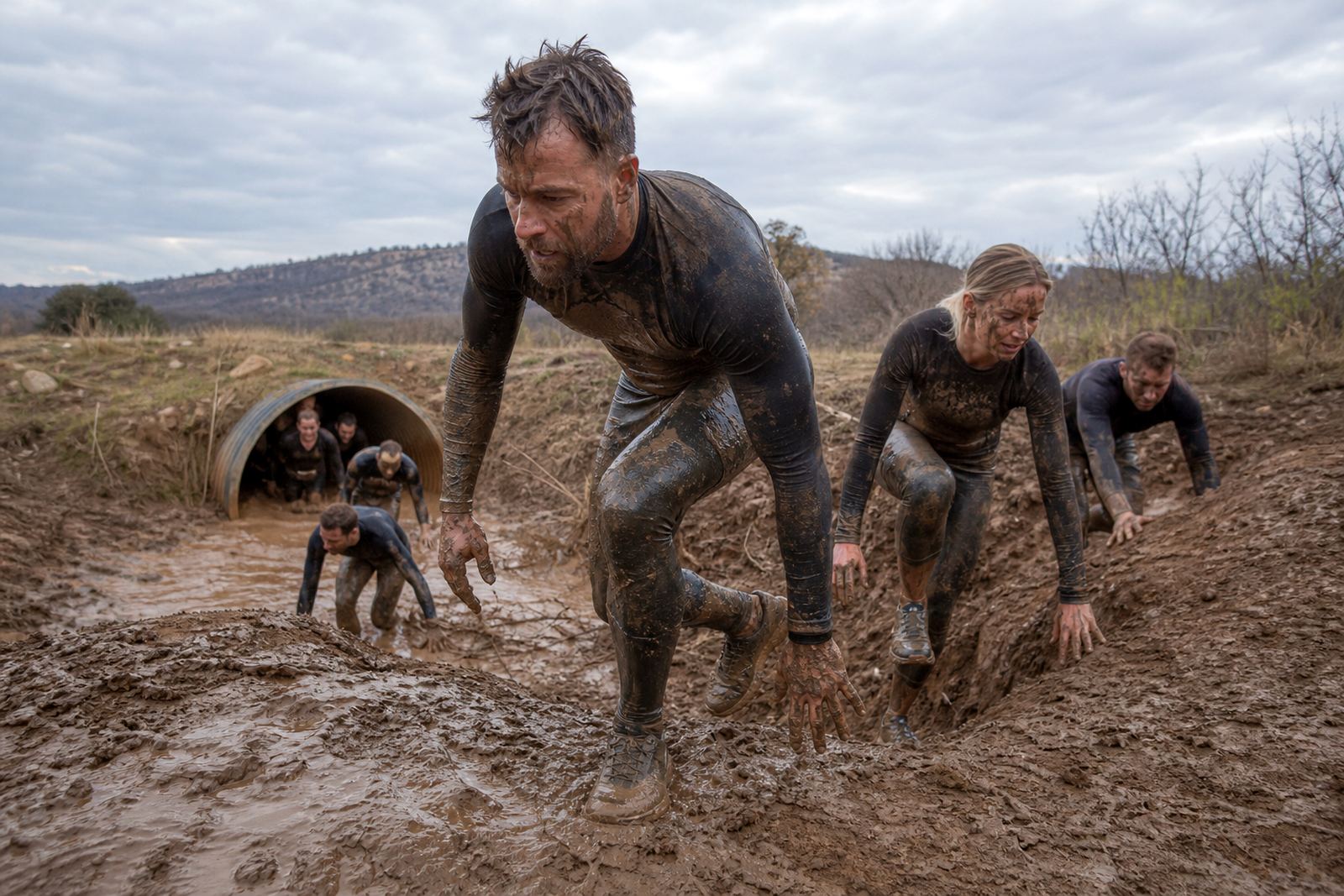
The 5km Sprint is built for participants who want the pace of a short race with enough obstacles to make every kilometre count. It is the right fit for runners moving up from casual training, workplace teams, and adventure seekers who want a shorter format that still brings hill work, grip work and bodyweight effort into one outing. Around Hekpoort and the wider Magaliesberg, the terrain gives the race a proper outdoor feel with dust, uneven ground and short climbs, so shoes and pacing matter.
This format is usually chosen for a half day event plan, with a strong start, a clear route flow and enough recovery points to keep the field moving. It is also suitable for mixed ability groups, provided each person understands the physical demands. If someone has a medical condition, has been inactive for a while, or is unsure about hard exercise, they should check with a doctor before taking part.
- Approximate distance: 5km route with obstacle sections
- Target pace: quick, but still manageable for newer participants
- Typical use: first timers, running clubs, staff teams and social groups
- Terrain: mixed ground, rises, turns and obstacle stations
Route shapes and entry options that suit different groups
The 5km Sprint can be set up for individual entrants, team entries, corporate groups and supported school or club style entries where the organiser needs cleaner control over waiver collection and arrival flow. For smaller groups, the event is straightforward: one entry line, one briefing group and a direct start order. For larger company groups from Johannesburg, Pretoria, Rustenburg, Potchefstroom or Bloemfontein, it helps to pre-plan captain communication, heat allocation and onsite team checkin so the day does not bottleneck at the start gate.
We also work with visitors travelling in from Cape Town and Durban who need clear instructions before the event day. When a group is spread across departments, the 5km Sprint is often the neatest option because it gives the same course feel without asking people to spend all day on site. That makes it easier to plan supporter movement, recovery area use and post-race team photos.
- Individual entries for independent runners
- Team entries for clubs, workplaces and social groups
- Corporate planning with captain communication and group checkin
- Supporter planning for families or spectators on site
What gets handled before the starting horn
A clean race day depends on the admin being sorted before anyone steps onto the course. For the 5km Sprint, that usually means confirming participant names, emergency contacts, waiver status and the heat each person has been placed in. Where a group booking is involved, a custom team briefing helps keep everyone on the same page about start times, obstacle conduct and what to expect at the recovery area.
Safety briefings matter on a shorter race too, because speed can make people careless. The briefing covers route markers, passing etiquette, how to approach water crossings or slippery sections, and when to step aside if a participant is struggling. The course build team also checks obstacle spacing, ground conditions and any sections that need extra marshal attention after rain or strong wind.
- Waiver coordination before race day or at onsite checkin
- Safety briefing groups with clear route instructions
- Custom team briefing for workplace or club entries
- Heat allocation support where entries arrive in batches
What to wear, carry and leave out of your kit bag
For a 5km Sprint, the best kit is practical and light. Closed training shoes with decent grip are the starting point, especially on dusty ground or after summer rain. Clothing should allow movement and drying, because mud and sweat are part of the day. A small towel, dry clothes for after the race and a sealed bottle for hydration are sensible items to keep in the car or support area. In the Magaliesberg sun, a cap can help before the start, but it should not get in the way once the race begins.
Participants should avoid carrying loose valuables on the course. If phones, keys or cards must be kept on site, they should be secured in a proper bag or left with a supporter. For corporate groups and visitors from Gauteng or the North West, it helps to confirm whether the venue has a marked recovery area and where team meeting points are located after the finish. If people are doing the race as a work function, matching shirts are fine, but they should not restrict movement or get too heavy when wet.
- Closed running shoes with grip
- Light top and shorts or tights that move well
- Water bottle for before and after the run
- Dry change of clothes and a towel
- Any personal medication, carried by the participant as advised
Course care on dusty hills, wet patches and hard use weekends
The 5km Sprint course works best when the ground is checked before, during and after each event window. In the Magaliesberg, dust, loose stones and sudden rain can change how an obstacle feels from one hour to the next. That means the team needs to walk the route, check footing, tidy marked edges and keep briefing notes updated if conditions shift. On busy weekends, especially when multiple corporate groups or visitors are on site, recovery points and marshal positions must be kept clear so people do not bunch up.
From a participant point of view, care is mostly about respecting the course and the other runners. Do not cut across marked sections, take shortcuts around an obstacle or rush past a marshal call. After the race, rinse mud and dust off shoes and kit as soon as practical, then dry everything properly to prevent smell and fabric damage. For coastal groups travelling inland or inland groups visiting from humid regions, gear that stays damp in a bag will deteriorate quickly, so airing it out matters.
- Check footing before each obstacle, especially after rain
- Follow marshal directions at all times
- Rinse and dry shoes, socks and kit after the event
- Store race clothing out of direct sun once clean
When this shorter format fits best
The 5km Sprint suits events where time, energy and group variety all matter. It is a strong choice for a company challenge, a first obstacle race, a club day, or a mixed group where some people want to race hard and others want a controlled introduction to obstacle course racing. It also works well for visitors who are based around Hartbeespoort, Krugersdorp, Pretoria and Johannesburg and want a format that fits into a morning or early afternoon without turning the day into an endurance outing.
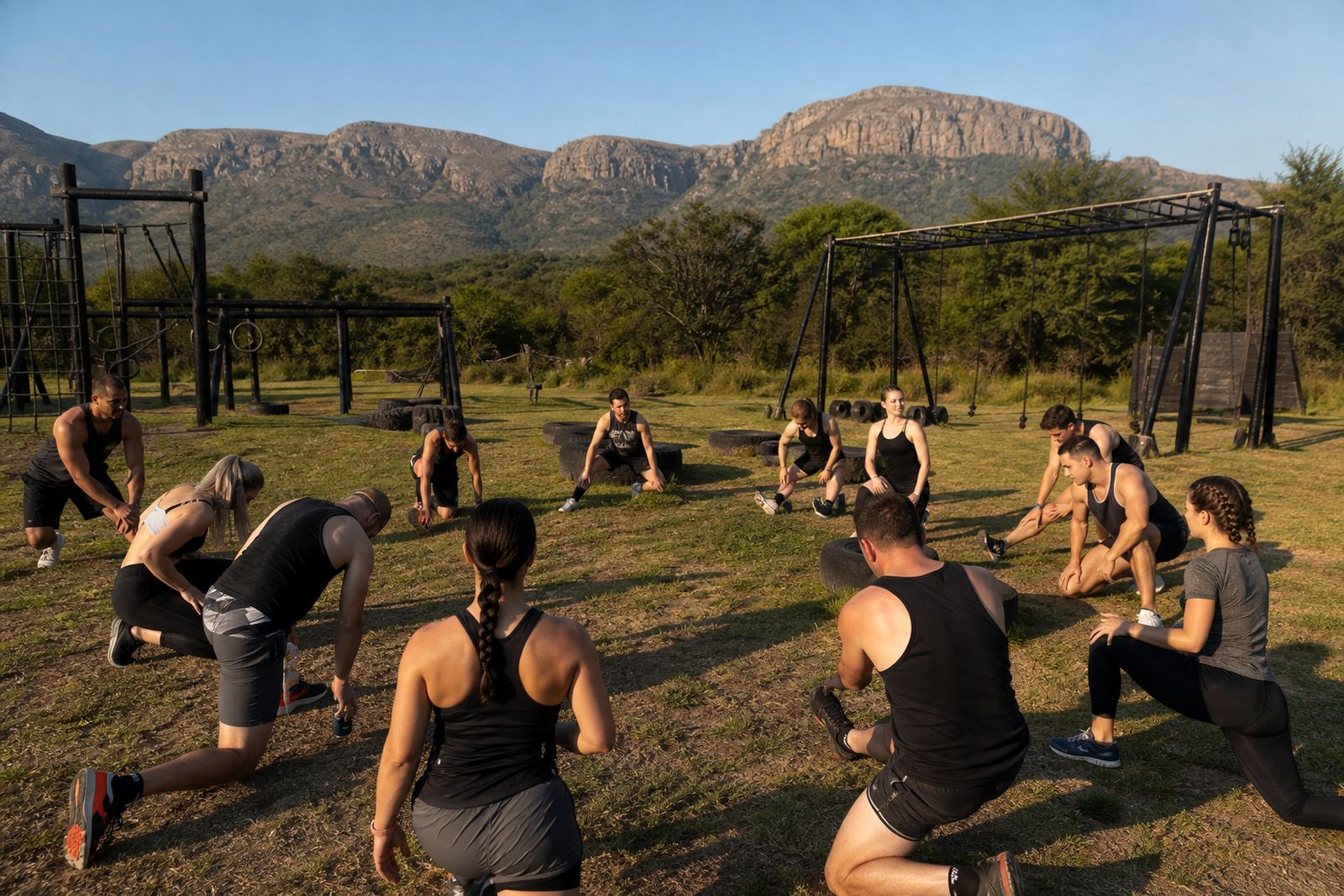
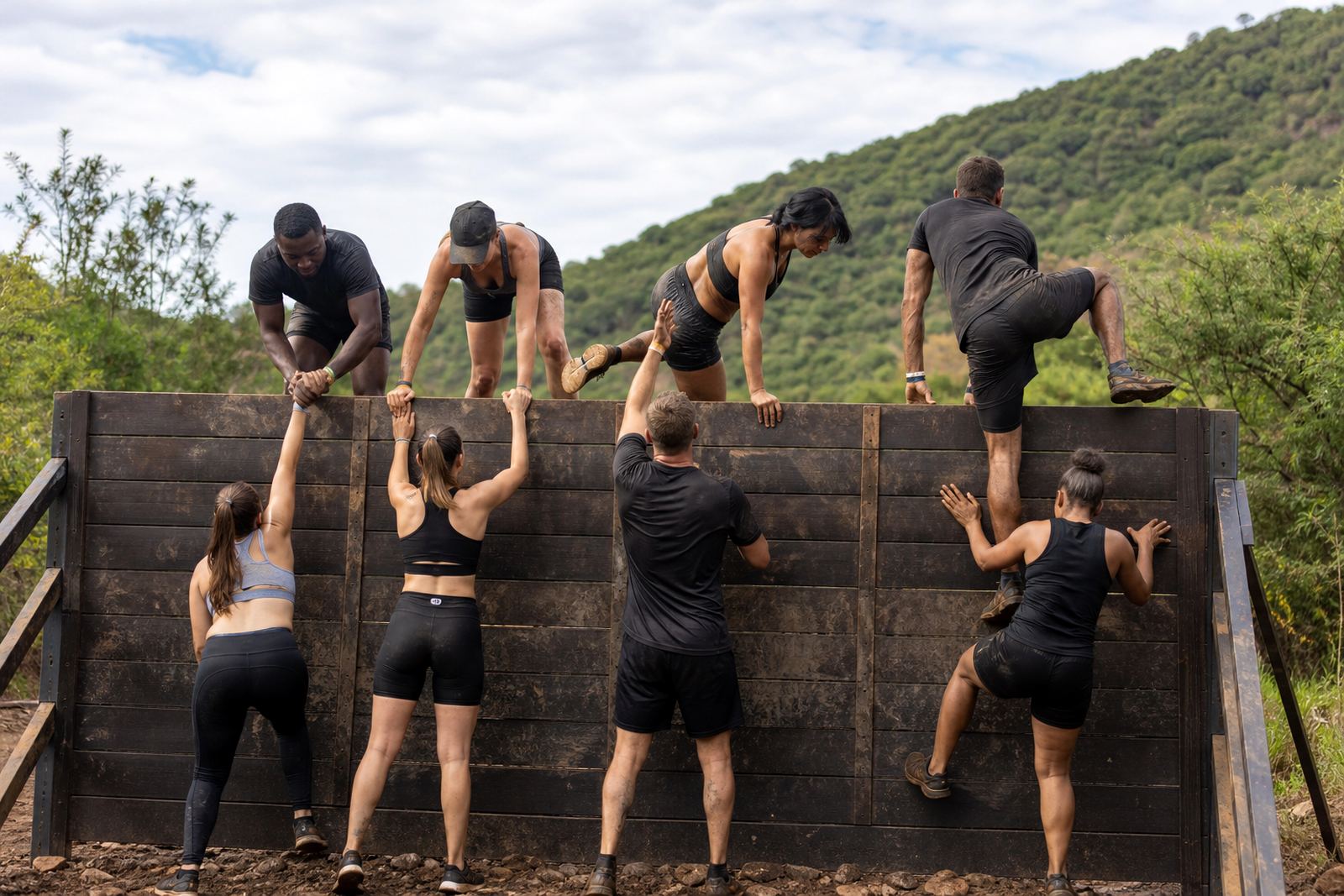
Where the entry list includes both experienced runners and beginners, the shorter course keeps the focus on participation and personal achievement. It lets teams encourage one another through the harder sections, then regroup quickly at the finish for photos and recovery. If you need onsite help, the support team can assist with participant checkin, warmup flow, captain messaging, and group guidance around where to wait, where to hydrate and where supporters should gather.
- Suitable for first timers and faster runners
- Fits workplace teams and mixed fitness groups
- Good for morning events and half day planning
- Easy to support with team photos and recovery area guidance
Key facts
| Format | 5km obstacle course race |
|---|---|
| Distance | Approximate 5km route |
| Terrain | Mixed ground, hills, turns and obstacle stations |
| Best suited to | First timers, club runners, corporate teams and fast paced participants |
| Support included | Waiver coordination, safety briefings, heat allocation and onsite team checkin |
| Base area | Hekpoort, Magaliesberg, North West |