
A Potchefstroom outing built for trail legs and grip work
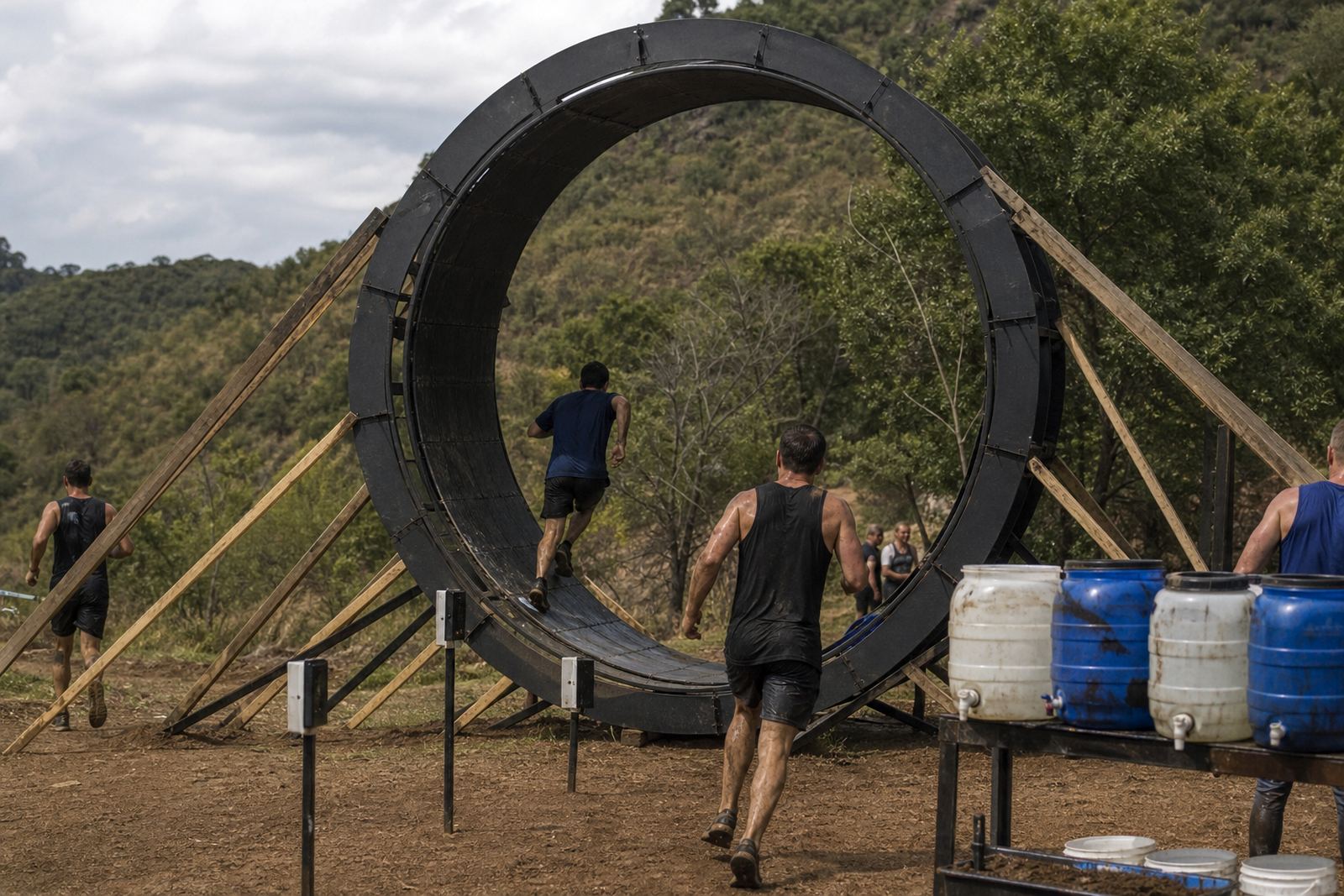
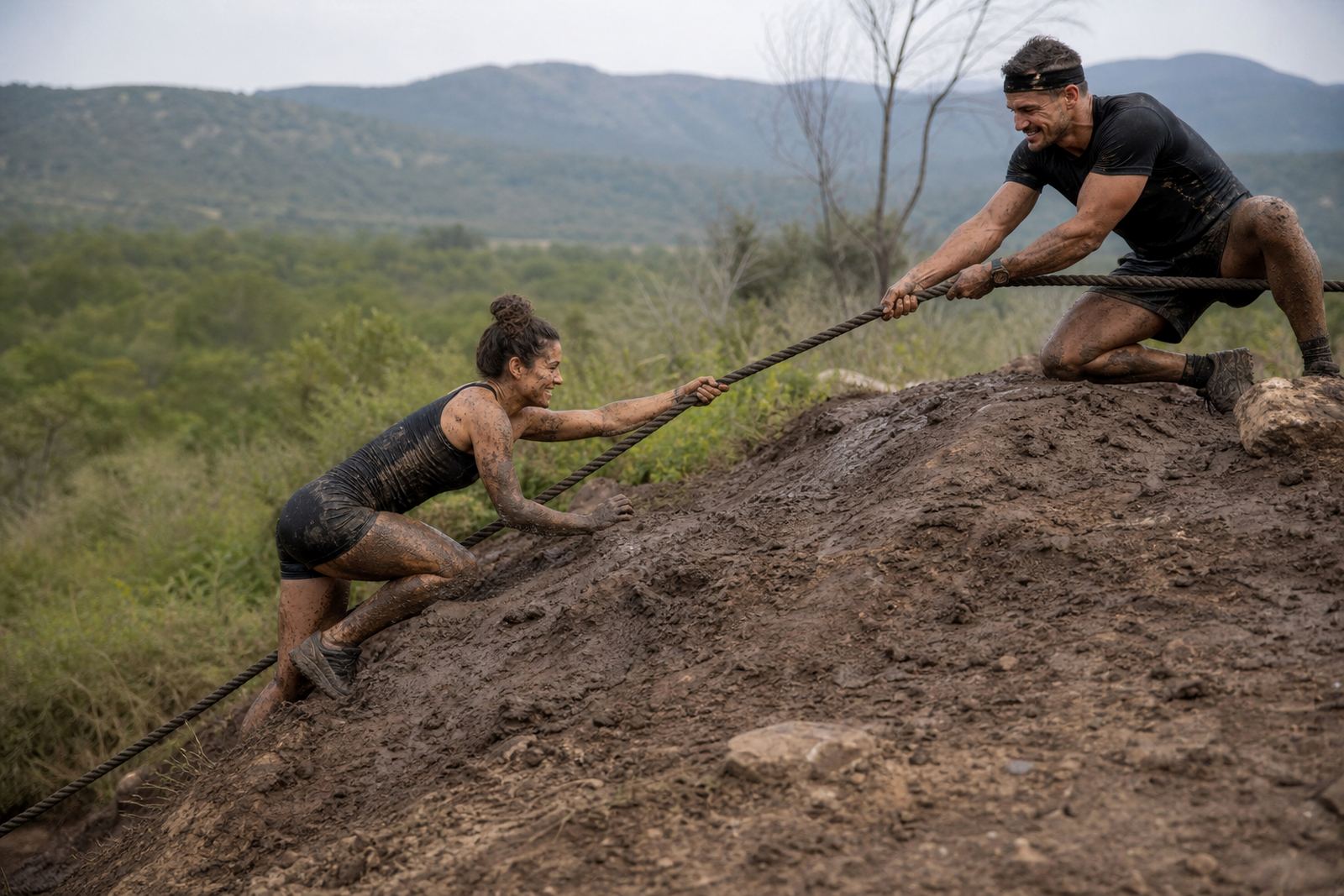
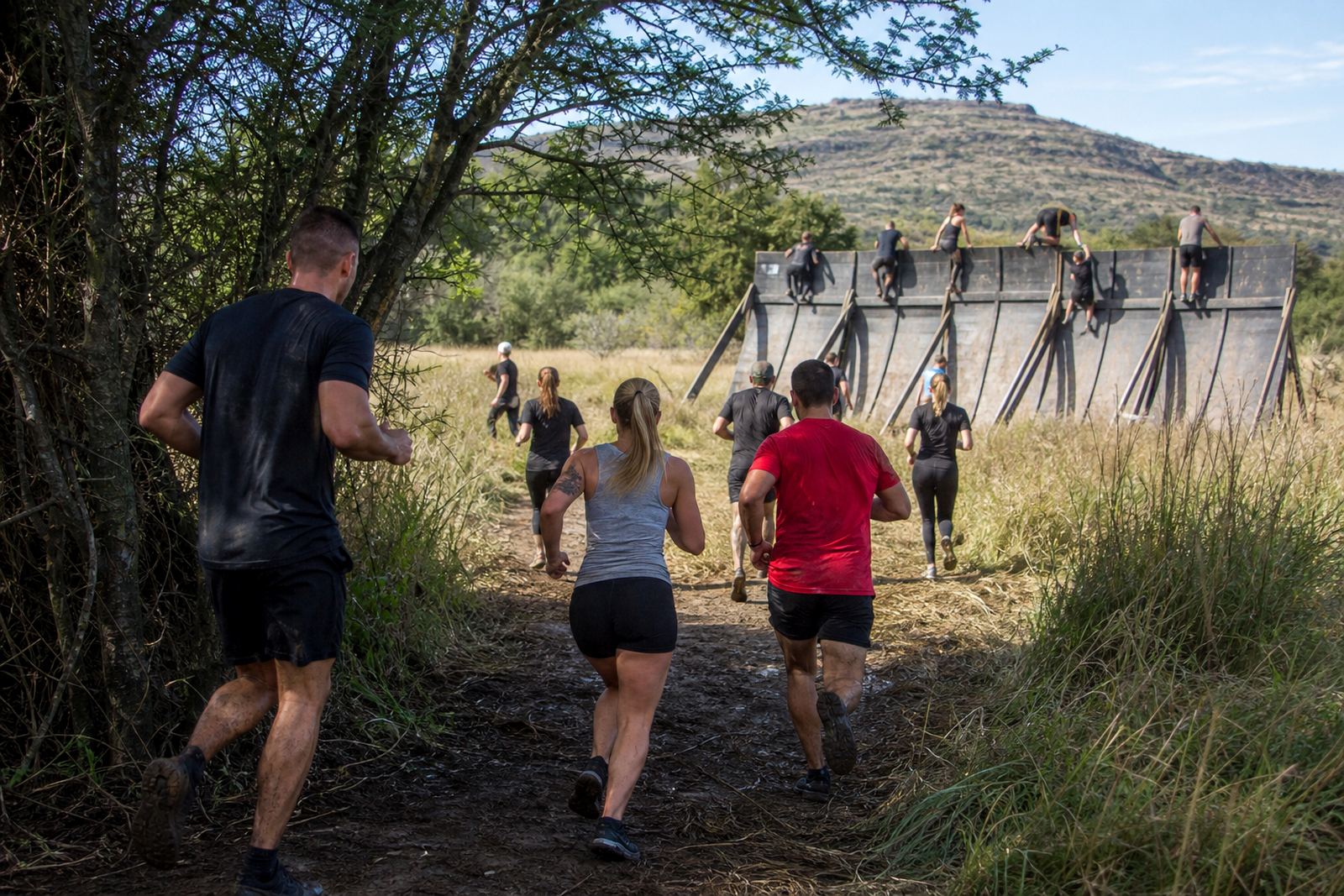
This project was for a client group in Potchefstroom looking for an obstacle course race format that kept the trail running sections honest, but did not overbuild the course into something awkward or unsafe. The ask was direct: create a route that felt like a proper outdoor challenge, with enough climbing, carrying, climbing again and handling work to reward training, yet still practical for mixed fitness levels.
The route concept used natural ground as the base, then placed obstacles where they made sense for flow and supervision. That meant fewer dead spots, better visibility for marshals, and less crowding at choke points. It also helped with the morning briefing because runners could understand the order of the day before they even stepped onto the start chute.
- Trail running sections linked to obstacle zones instead of random scatter points
- Practical carries, climbs, crawls and balance work
- Clear separation between runner movement and spectator space
- Course markings that could be checked before each wave
Briefing the field before anyone hit the first hill
The brief called for a race experience that treated safety as part of the day, not an afterthought. For a mixed crowd, the key was making the rules easy to hear and easy to follow. We prepared safety briefing groups, waiver coordination and participant check-in support so the event team could handle arrivals without bottlenecks.
Because obstacle racing asks a lot from ankles, shoulders and lungs, the pre-race messaging included a clear reminder for participants to check with a doctor before hard exercise if they had any concerns about training load or existing conditions. That note sat alongside practical instructions on hydration, footwear and pacing. No one needs a lecture before a race, just enough direction to stay steady and enjoy the work.
- Safety briefing groups split by wave
- Waiver handling matched to the check-in flow
- Warm-up direction kept short and easy to follow
- Finish-area recovery guidance for runners who needed a breather
What we had to solve on the ground in North West
The Magaliesberg area brings good scenery and proper terrain, but it also brings practical issues that affect every event decision. Morning cool air can shift quickly into heat, dust can build on the drier sections and shaded spots can hold moisture after earlier weather. That meant the course build had to respect footing, drainage and marshal access from the start.
We also had to keep the setup realistic for a travelling participant mix coming from Johannesburg, Pretoria, Cape Town, Durban and Bloemfontein. People arrive with different expectations, different fitness backgrounds and different timing. The event structure had to work for corporate teams, private entrants and supporters without making the site feel cramped. We kept access points clear, reduced unnecessary cross-traffic and made the runner path easy to read.
- Terrain planning for uneven ground and changing grip conditions
- Access lanes left open for officials and support movement
- Wave timing designed to spread out pressure on obstacles
- Recovery area guidance placed close to the finish zone
Course build notes from Hekpoort to Potchefstroom
The course build and event support moved over a five-week planning window. In week one we worked through the route logic, checkpoint placement and the needs of the host site. Week two focused on obstacle sequence, safety spacing and what could be managed with the available terrain. Weeks three and four were used for participant communication, briefing notes, team registration help and captain communication. The final week brought on-site mark-up, final checks and the practical handover for race day.
Our team in Hekpoort handled the operational side with input from Lerato Zondo on scheduling, Johan du Plessis on the build layout, Ayanda Nxumalo on participant support and Bianca Khoza on safety briefings. Tshepo Khumalo prepared training content for entrants who wanted to know how to pace the hills, while Carmen Botha handled corporate entries and team coordination. Mandla van der Merwe oversaw the project from our side, making sure all the moving parts stayed aligned.
- 5-week planning and delivery window
- Course layout, safety briefings and waiver flow managed together
- Custom team briefing prepared for corporate and group entries
- Onsite team check-in aligned with heat allocation support
Participant support that kept the day moving
What made this project work was not only the route, but the support around it. On race day, people need to know where to stand, when to move and what to do after an obstacle. We supplied group warm-up session guidance, supporter planning and team photo moments so the event had structure without feeling stiff. Small touches like these help reduce confusion and keep teams together.
We also made space for the ordinary things that matter at an endurance event: where to leave bags, where to recover after a hard section, and where to find the right person if a waiver issue or wave issue came up. That sort of support keeps the event practical. It also helps the people who are there only to finish, not to race the clock.
- Onsite team check-in with clear wave direction
- Supporter flow planned away from the runner line
- Recovery area guidance for post-finish regrouping
- Custom briefing notes for captains and team leads
What the day showed us about a well-tuned OCR
The result was a race day that balanced trail running with obstacle placements in a way that made sense to the people on the ground. Runners got a proper test without feeling trapped in a confusing route, and support staff could manage the site without fighting the layout. That is usually the best sign that the planning worked: fewer repeated questions, smoother queue movement and better confidence at each wave start.
We would use the same approach again for a Potchefstroom-style field day or a North West trail OCR. Keep the route readable, keep the obstacles useful, keep the briefing short and keep the recovery area close enough to matter. Those choices are not flashy, but they make the day better for everyone involved.
- Trail and obstacle balance stayed practical for mixed fitness levels
- Briefing and waiver flow reduced hold-ups at check-in
- Support teams had clear lines of movement on site
- Participants left with a clearer sense of how to train for the next event
Key facts
| Project | Potchefstroom Trail OCR |
|---|---|
| Region | Magaliesberg, North West |
| Base | Hekpoort |
| Timeline | 5 weeks |
| Event type | Natural route obstacle course race with endurance sections |
| Core support | Team registration help, waivers, briefings, check-in and recovery guidance |