Why Germiston Needed a Buddy-Focused Race Day
The client brief came from a Germiston group organising a pair race day for staff and friends who wanted a challenge without the pressure of going solo. The event had to suit mixed fitness levels, support shared pacing, and keep each pair moving through the course without confusion at the obstacle stations.
The setting also needed to work for people travelling in from Johannesburg, Pretoria and the East Rand, with enough structure for first-timers and regular obstacle racers alike. We planned the day so each pair could stick together, complete the course safely, and still get the competitive feel that makes obstacle racing worthwhile.
- Client type: corporate and social buddy entries
- Town focus: Germiston, with travellers from across Gauteng
- Event style: shared pacing and paired obstacle work
- Base support: Hekpoort, Magaliesberg
The Brief, Cut to the Practical Bits
The main requirement was a race format that rewarded teamwork rather than speed alone. Pairs needed clear guidance on when to move together, when to wait for each other, and how to handle the trickier sections without pushing beyond what their bodies could manage on the day.
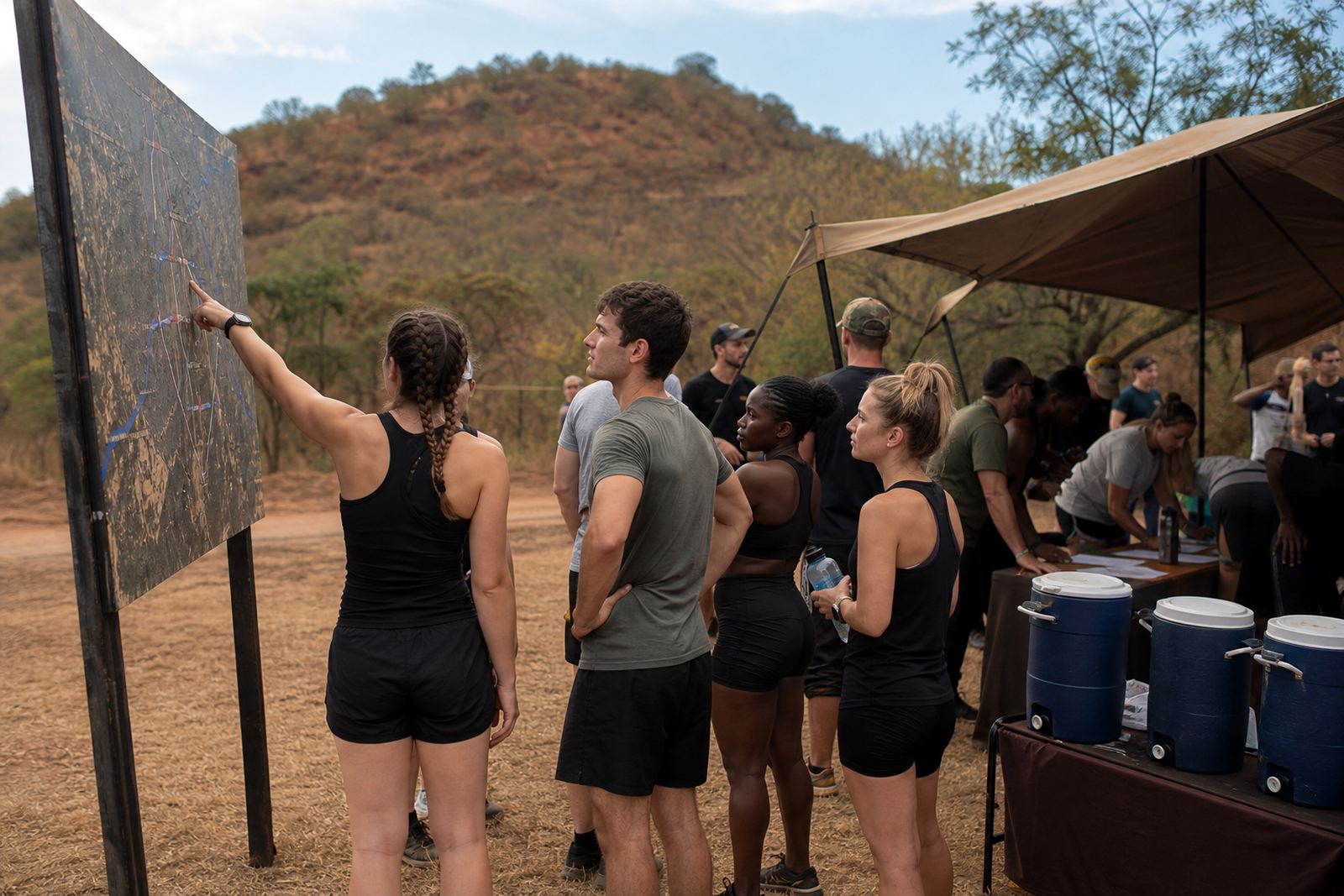
We also had to keep the admin clean. That meant waiver coordination before arrival, participant sorting by heat, safety briefing groups, and a check-in process that did not back up at the gate. For a mixed group in Gauteng, the details matter more than the hype.
- Waivers prepared and matched to entry groups
- Heat allocation arranged for pairs, not individuals
- Briefing notes set out in plain language
- Supporter flow planned so the finish area stayed clear
Course Shape and Shared Obstacles
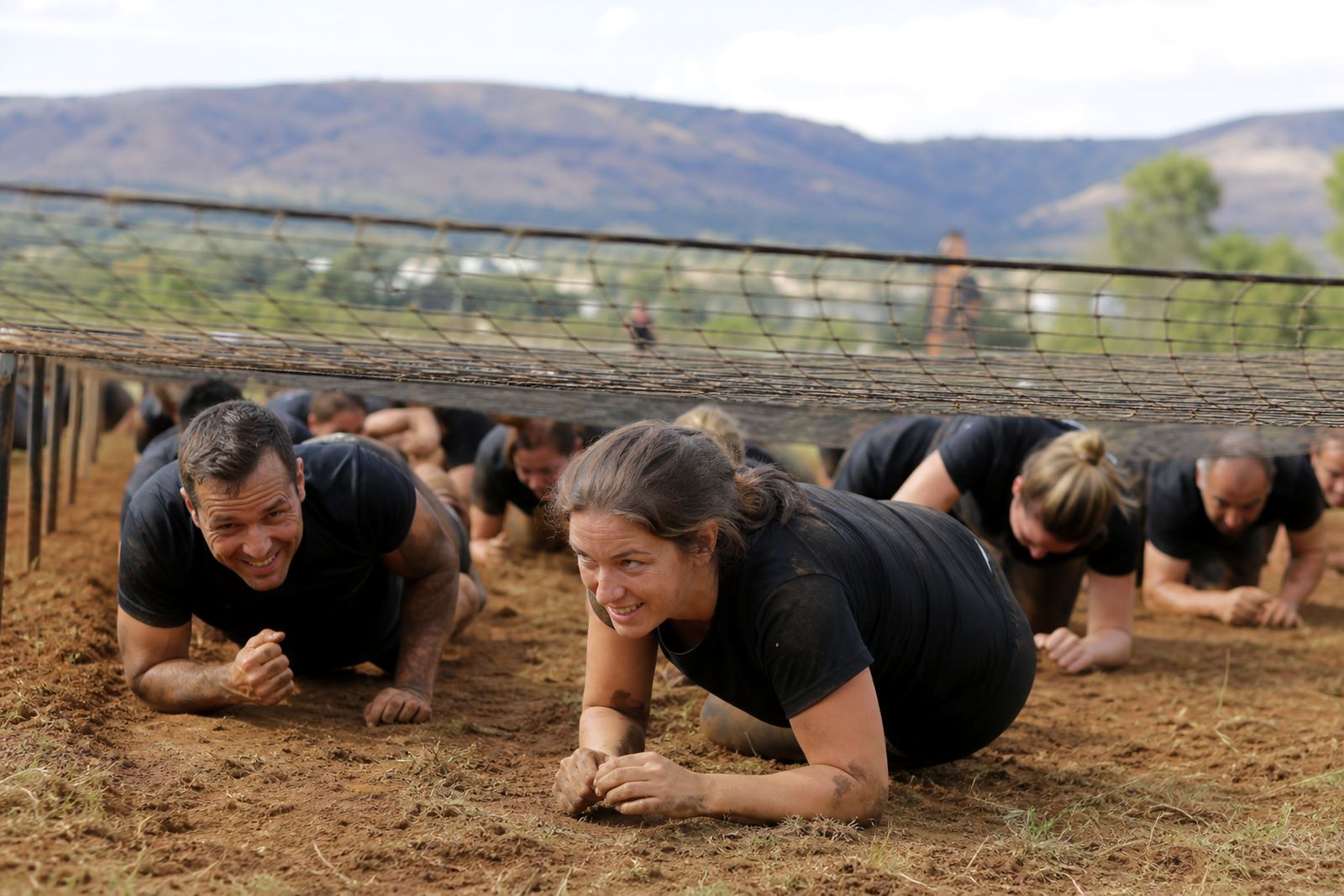
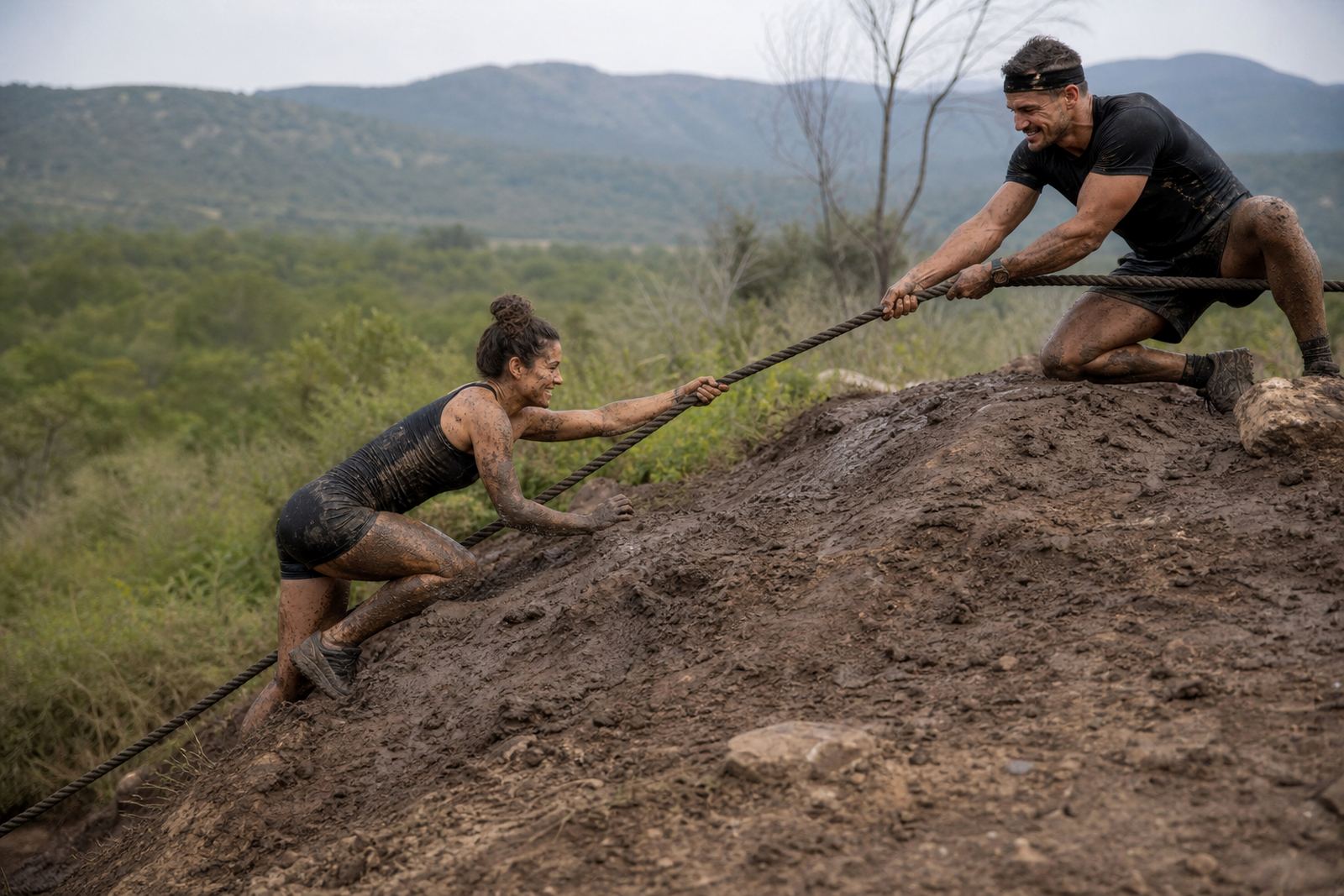
The course layout was built around cooperative tasks, where one runner could steady a section while the other completed the movement, then swap without losing momentum. That worked well for pairs with different strengths. One partner might handle carries better, while the other had stronger grip or balance, and the layout allowed both to contribute.
We kept the transitions short and logical. That is important on a race day because overlong gaps between obstacles can cause people to cool down too much, especially in winter mornings around the Magaliesberg or in windy weather near the western side of Gauteng. The route design also kept an eye on surface condition, with mud, dust and uneven footing treated as normal course factors rather than surprises.
- Cooperative obstacle set-up for two-person entries
- Shared pacing sections to reduce split-ups
- Clear marshal sightlines at each obstacle
- Recovery area kept close to the finish zone
What We Put in Place Before the First Wave
Our team handled the event build and participant flow over three weeks. Week one was entry sorting and briefing structure. Week two was course set-out, safety walk-throughs and the final pairing logic. Week three covered on-site readiness, including check-in tables, warm-up planning and briefing groups.
The race day plan was practical rather than fancy. It had to work for people arriving from Germiston, Krugersdorp, Pretoria and Johannesburg, some after early morning traffic and with limited time to spare. We kept the process orderly so participants could register, hear the safety notes and move to their heat without standing around in the sun too long.
- Timeline: 3 weeks from planning to race day readiness
- Onsite team check-in and captain communication
- Custom team briefing for buddy entries
- Group warm-up session before the first heat
Safety, Waivers and the Part People Usually Forget
The safety side was handled with the same attention as the course itself. Every pair received a briefing that covered footing, obstacle contact points, marshal instructions and what to do if one partner needed to slow down. We also made sure the waiver process was not left to the last minute, because that only creates delays at the gate and extra pressure on staff.
Participants were told to check with a doctor before hard exercise if they had any health concerns, injuries or long gaps since their last training block. That message is practical, not dramatic. We also advised people to bring water, trail shoes with grip, a dry shirt for after the run, sunscreen and a small towel. In Magaliesberg weather can shift quickly and the course needs people to be prepared.
- Safety briefing groups run before each wave
- Waiver coordination completed ahead of arrival where possible
- Participant kit guidance shared in plain terms
- Recovery area guidance for cool-down and sorting out kit
How the Day Landed in Germiston
The result was a race day that felt controlled, lively and fair to pairs with different levels of experience. The structure helped reduce confusion at the obstacles and made it easier for buddy entries to stay together without the event turning into a scramble. People who travelled in from Durban, Bloemfontein and Cape Town had the same clear process as the local Gauteng groups, which kept the standard consistent across the field.
From an operations point of view, the main win was calm movement. The check-in flow held up, the briefings were understood, and the course build supported cooperation instead of forcing one runner to carry the entire effort. For a pair race, that balance matters. It lets people push themselves a bit, but not at the expense of safety or team spirit.
- Better heat flow through the start area
- Clearer teamwork at shared obstacles
- Less confusion during transitions
- Steadier finish area management for supporters
What We’d Do for a Similar Race
For a repeat Germiston-style pair race, we would keep the same approach: early waiver handling, short and direct briefings, and a course layout that gives both partners something meaningful to do. That formula worked because it respected the people taking part, whether they were seasoned obstacle racers or joining for the first time with a training mate, colleague or spouse.
We would also keep the support structure tight around the finish and recovery zones. A pair event does not need extra clutter, it needs clear steps. With that in place, participants know where to go, what to do and how to look after themselves after the last obstacle has been done. It is the kind of arrangement that works well for corporate groups, club entries and private buddy races alike.
- Keep pair entries together from check-in to finish
- Use plain-language briefing notes and marshal calls
- Plan for weather, mud and uneven ground from the start
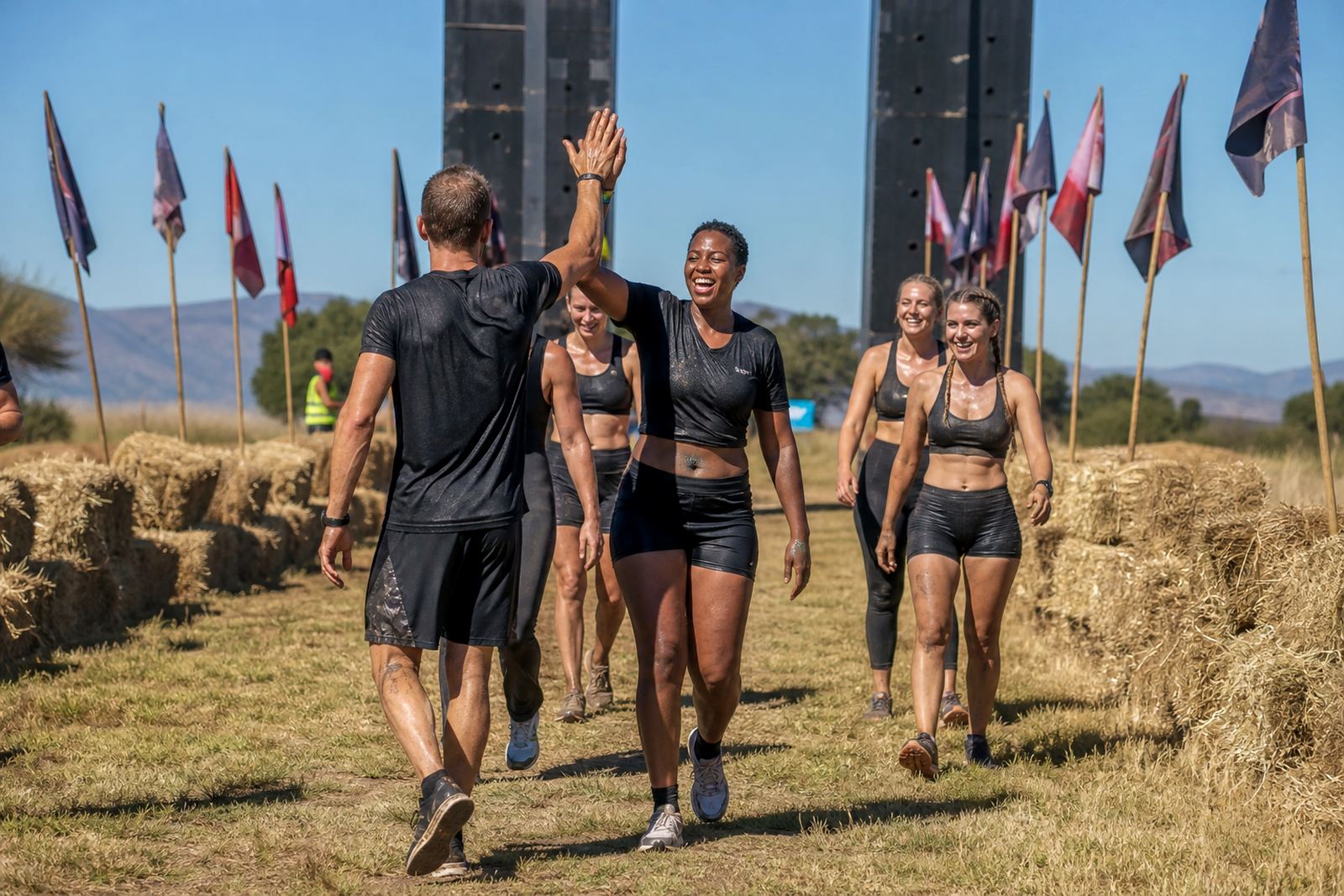
- Leave space for recovery and team photos after the race
Key facts
| Project | Germiston Pair Race |
|---|---|
| Client type | Buddy entries and small group participants |
| Location focus | Germiston, Gauteng |
| Base of operations | Hekpoort, Magaliesberg |
| Timeline | 3 weeks |
| Core services | Waiver coordination, safety briefings, heat allocation, onsite team check-in, warm-up support |