

A club race built for West Rand legs and lungs
This project was set up for a club group in Krugersdorp that wanted an obstacle race day with a proper team feel, not a loose fun run. The brief was to keep the day organised from first arrival to final finish, with enough challenge for stronger runners and enough structure for newer participants who needed a steadier pace.
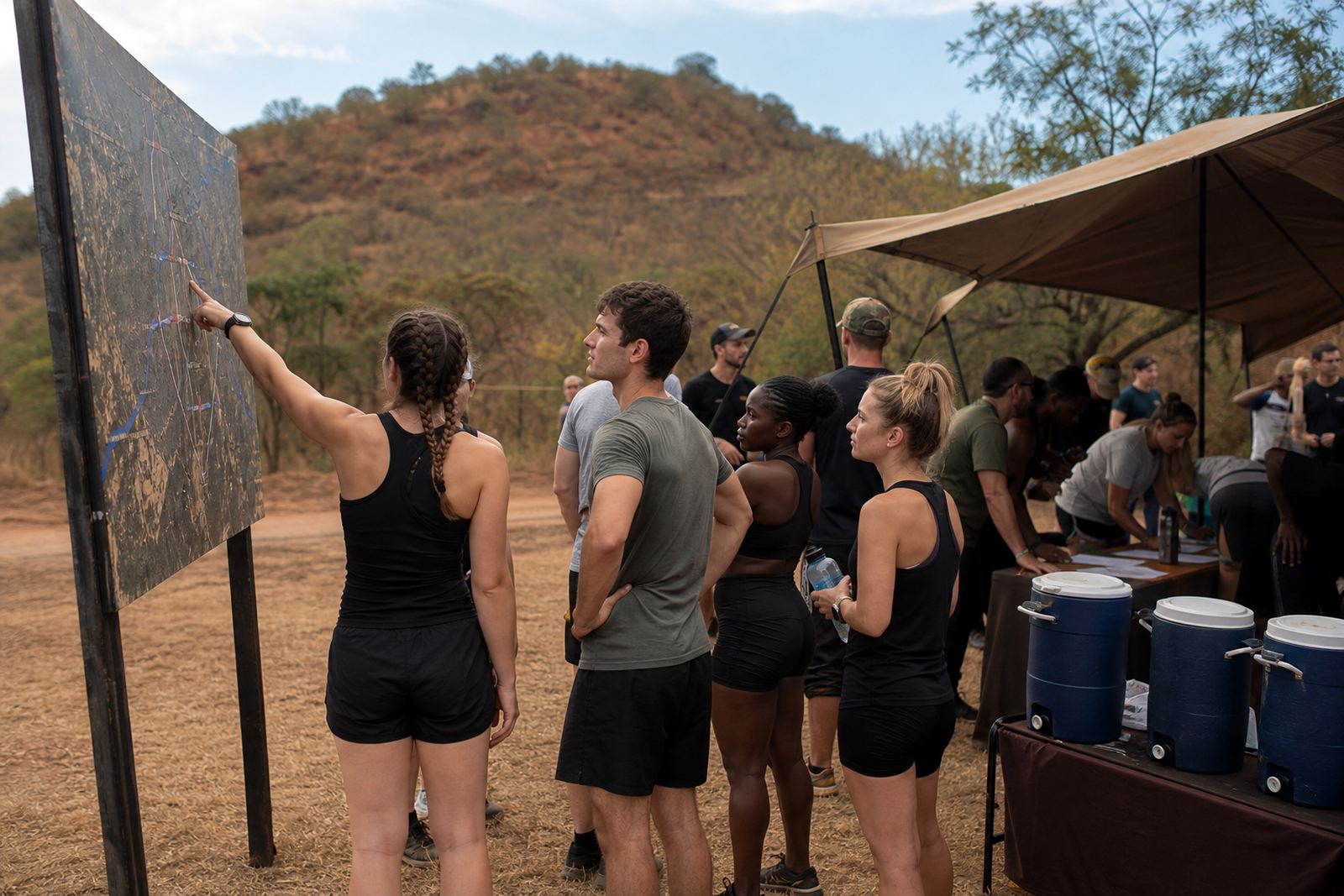
The venue set-up had to work for people travelling in from Johannesburg, Pretoria and nearby West Rand areas, with clear parking flow, a calm check-in point and space for warm ups before each heat. The route design used mixed terrain, carrying sections, climbs and obstacles that asked for grip, balance and decision-making. On a windy Highveld day, that kind of planning matters, because dust, heat and dry ground can turn a messy run into a tiring one fast.
Briefing notes, waivers and the bits people forget
The client asked for a race process that made safety practical rather than preachy. That meant clear waiver handling, short but firm safety briefings, and a pre-race checklist that told participants what to bring without filling their bags with unnecessary kit. We also built in a short reminder for anyone unsure about hard exercise to check with a doctor first. No medical advice on the spot, just a proper nudge before they push hard.
- Signed waiver coordination before heat allocation
- Safety briefing groups with obstacle-specific notes
- Water, comfortable kit, grip-friendly shoes and a towel
- Change of clothes for the trip home after mud and sweat
- Personal medication if required, carried by the participant
There was also a small admin layer for captains, because mixed groups tend to lose track of who is in which heat. A quick captain update before each wave kept everyone informed and cut down on confusion at the start line.
What we handled on the ground in Krugersdorp
Our team supported the day from the first arrival through to the recovery period after the final heat. That included onsite team check-in, heat allocation support, group warm-up guidance, support for captains and custom team briefings where the club wanted a bit more detail. The aim was to keep the event moving at a steady pace so the participants did not stand around too long between stages.
- Warm up areas positioned near the start zone
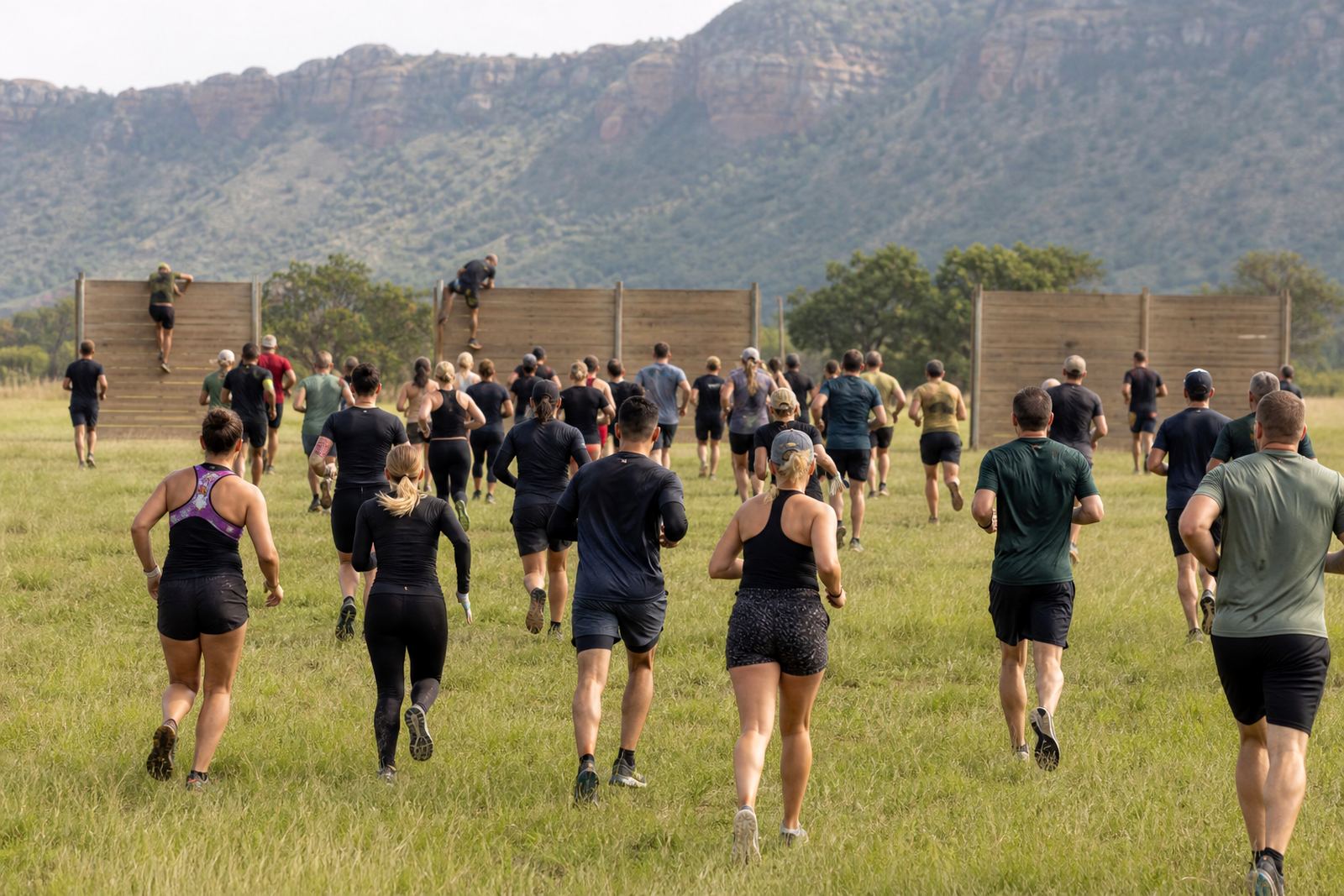
- Paced heats to reduce congestion on the course
- Participant support at check-in and at recovery points
- Team photo moments after the shared finish
- Recovery area guidance for water, shade and sitting space
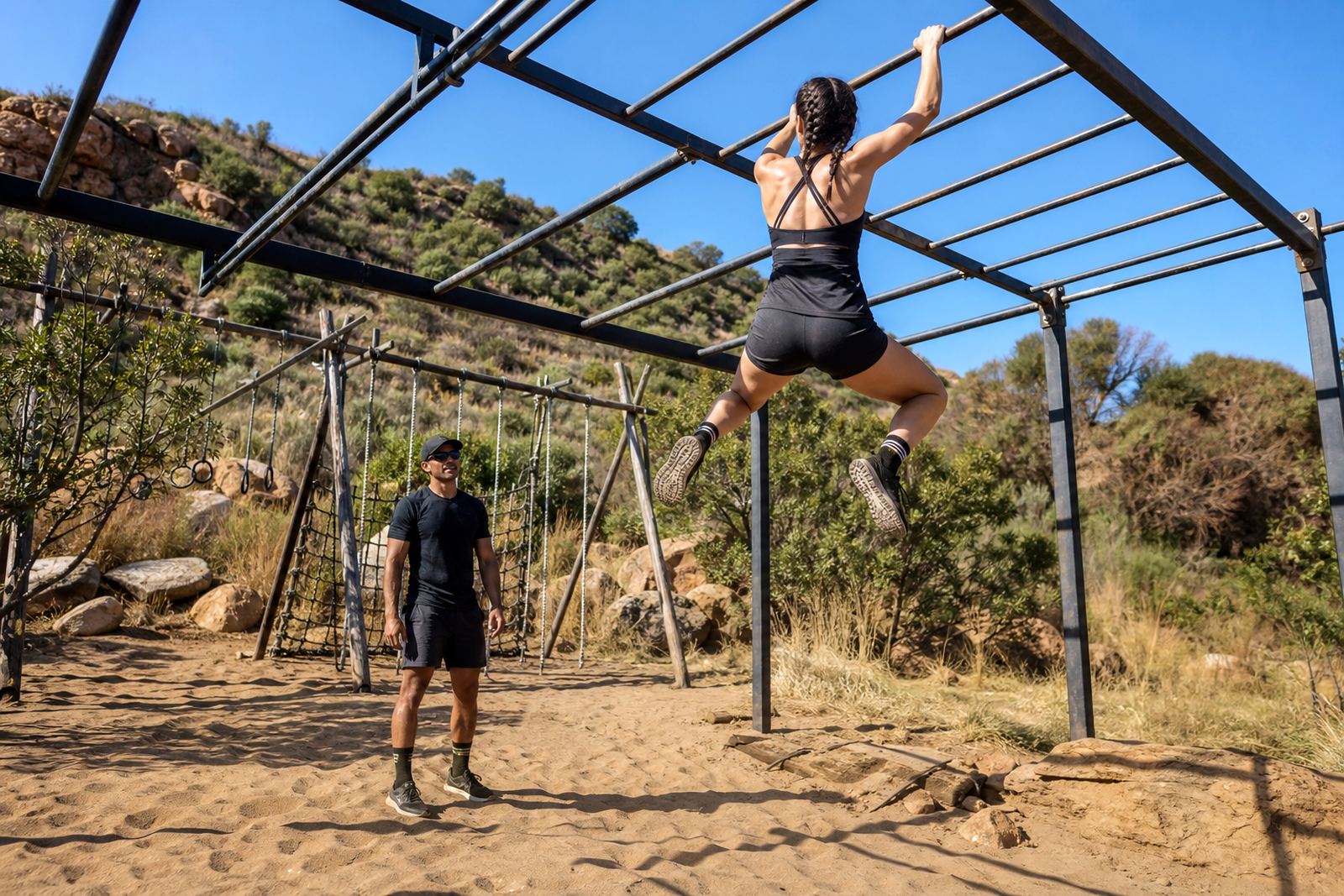
The course build itself needed ordinary practical thinking: clear entry and exit points on obstacles, enough space for marshals to see the flow, and a layout that would hold up when the ground got churned up. Nothing fancy, just a race set-up that worked under pressure and did not leave people guessing about where to go next.
Seven weeks from planning table to race day
The project ran over seven weeks from the first planning discussions to event day. The early weeks focused on entry structure, participant communication and the race timetable. Midway through, the briefing notes and captain instructions were tightened, while the final week dealt with venue flow, team registration help and the last safety checks. That timeline gave enough room to correct small issues before they became last-minute problems.
Because the event was for a club rather than a casual walk-in crowd, the admin had to be clean. Team names, heat groupings and waiver confirmations all needed to match. A missing name or a late change can throw off a start sheet quickly, so we kept the process tight and the updates regular.
- Week 1 to 2: entries, timing structure and brief planning
- Week 3 to 5: safety notes, heat layout and captain communication
- Week 6: onsite plan, recovery space and participant guidance
- Week 7: final checks, briefing pack and race day readiness
The result the club wanted, and got
The result was a club race day that felt controlled, energetic and social at the same time. Participants had a proper warm up, the heats were paced well, and the shared finish moments gave the group a clear sense of achievement. There was room for stronger competitors to push, and room for others to finish with confidence instead of being rushed or left behind.
For the organisers, the biggest win was predictable flow. When the waiver process, briefing groups and support points all line up properly, the day feels easier for everyone involved. The participants leave with muddy shoes and a proper story to tell, not a headache from poor sequencing.
The parts we would set up the same way again
For another Krugersdorp club race, we would keep the same core approach: a clear start routine, short safety briefings, tidy heat allocation and a recovery area that works for tired legs. We would also keep the captain communication in place, because that is where small event problems get sorted before they spread.
We would make the same choice to keep the race practical for all fitness levels, with enough structure to help newer participants and enough challenge to satisfy the quicker runners. That balance is what makes an obstacle day feel worthwhile rather than chaotic. In Magaliesberg and the West Rand, the weather and ground conditions can shift fast, so steady planning is not optional it is the difference between a smooth event and a long afternoon.
- Keep briefing groups short and clear
- Use paced heats to avoid bottlenecks
- Maintain recovery space with water and shade
- Give captains one contact point for updates
Key facts
| Project | Krugersdorp Club Race |
|---|---|
| Client type | Local sports club obstacle day |
| Region | Krugersdorp, West Rand |
| Base | Hekpoort, Magaliesberg |
| Timeline | 7 weeks |
| Key support | Waivers, briefings, heats, warm ups, recovery area guidance |