
What the Benoni brief asked for on race day
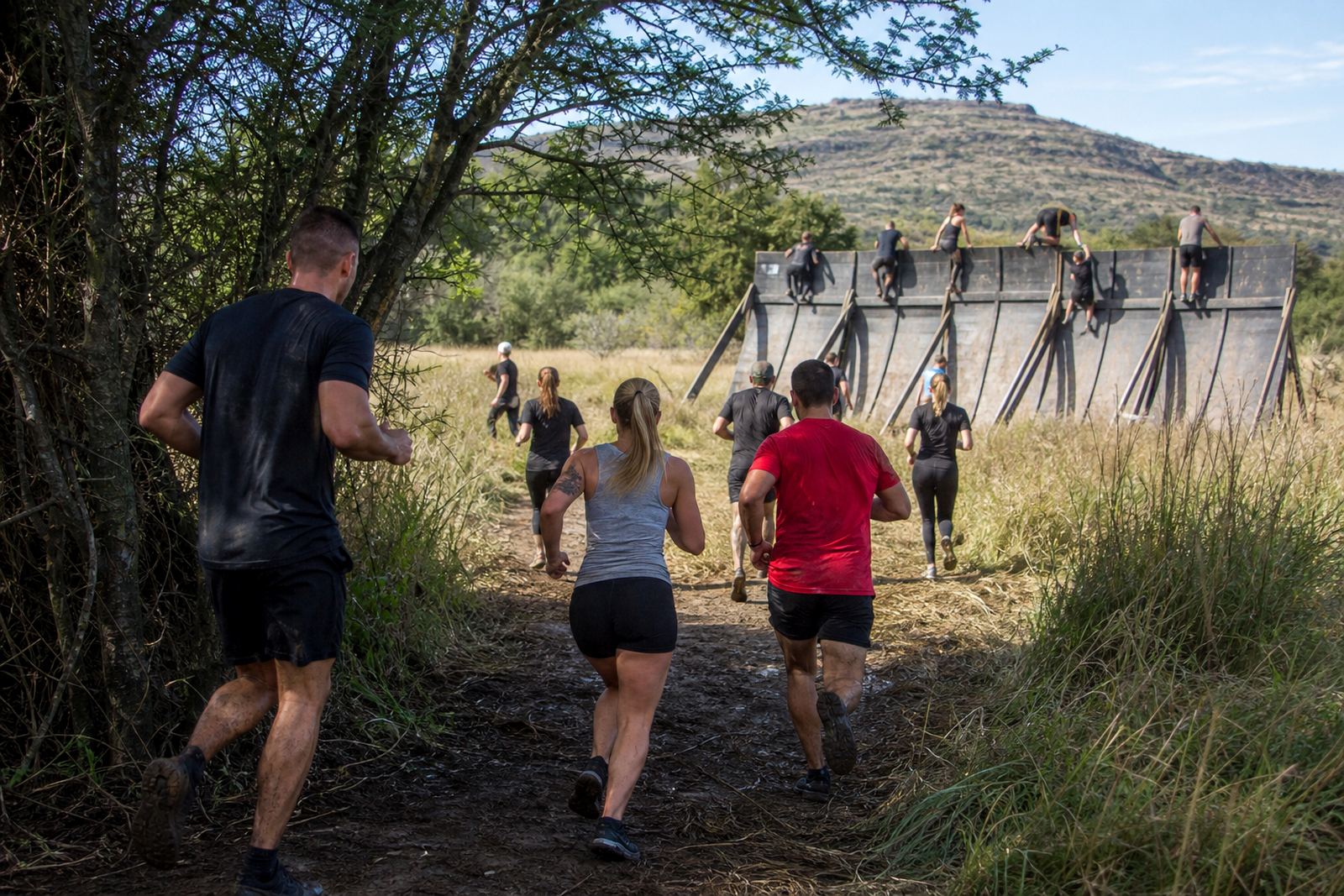
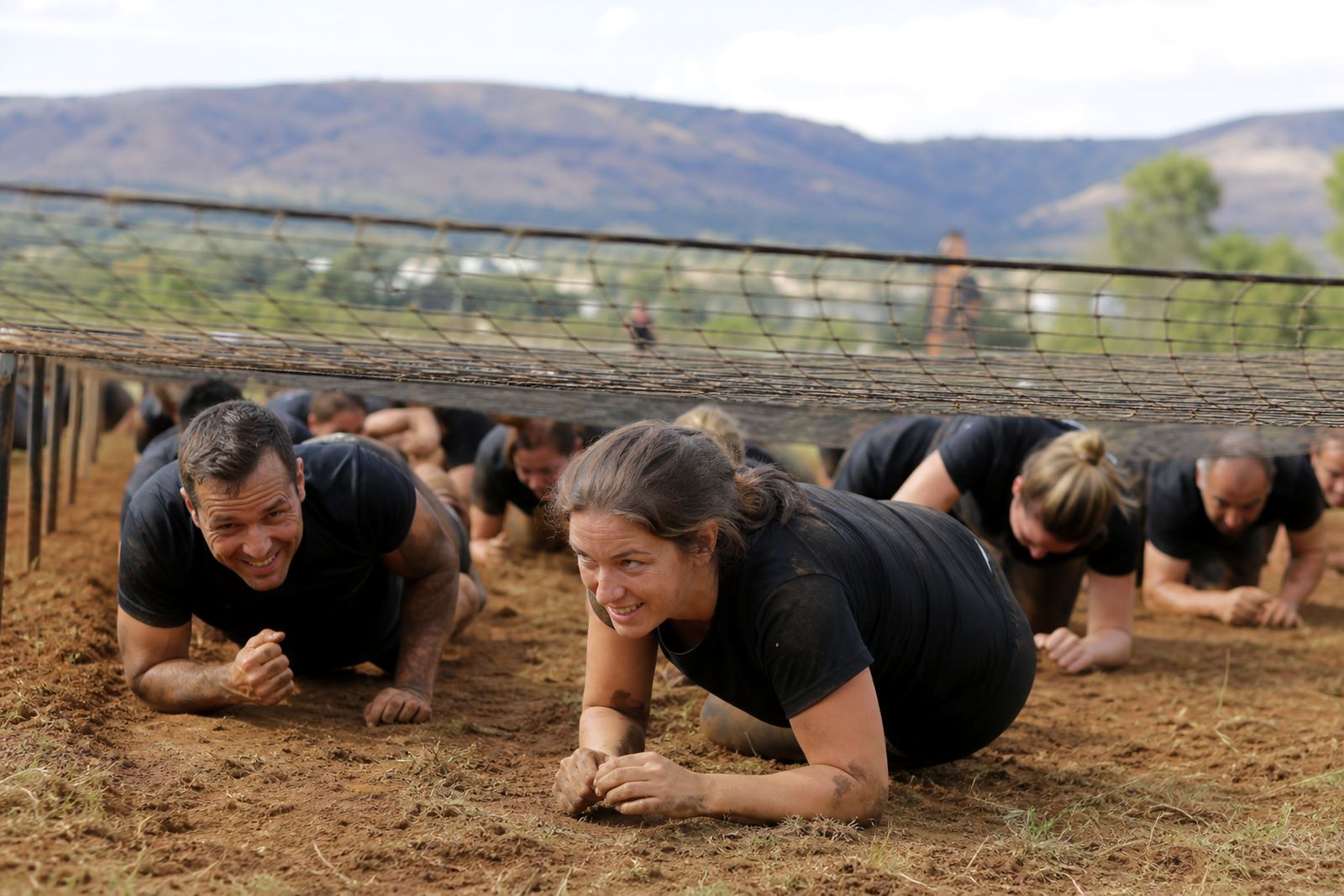
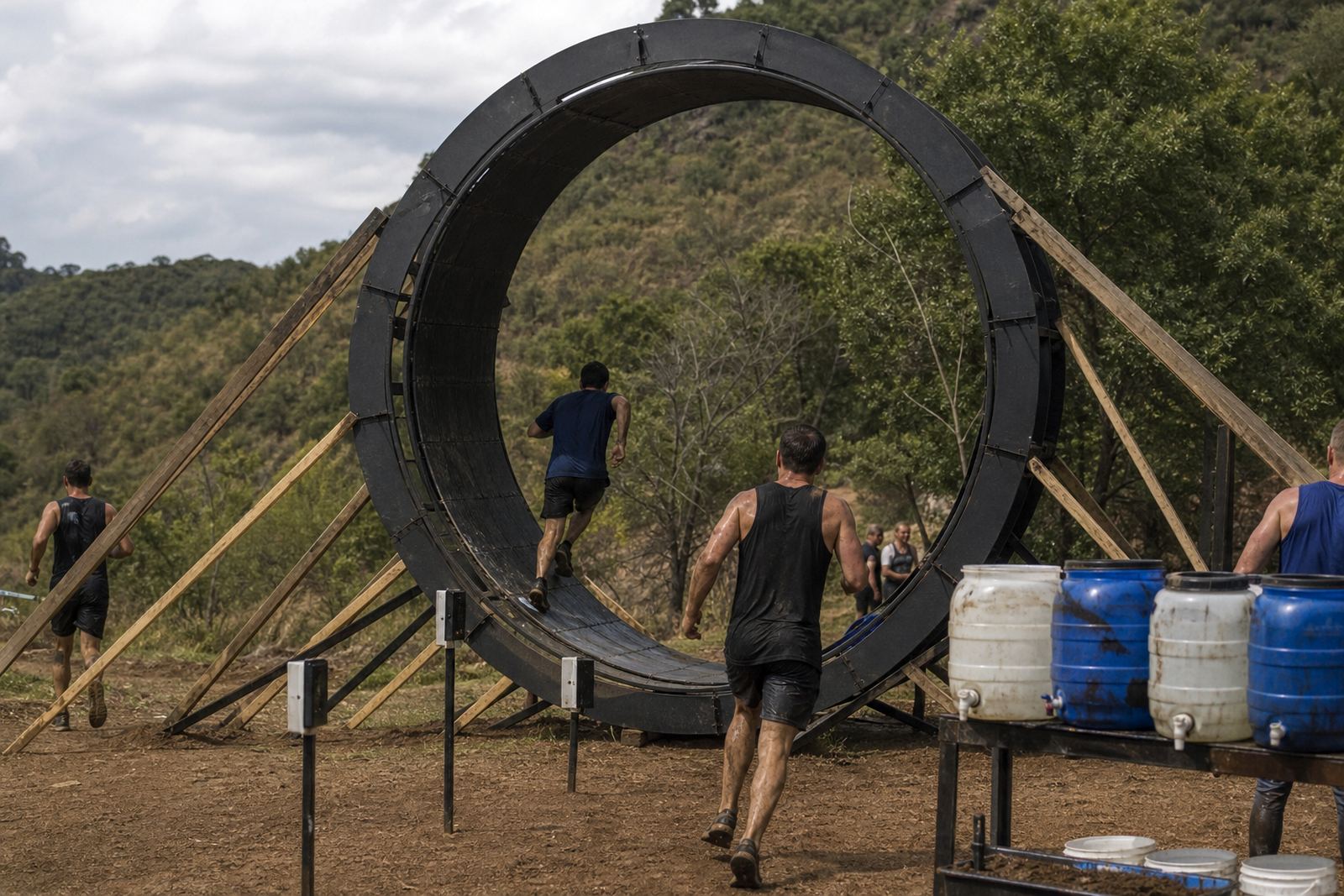
The client wanted a course that would keep people moving without crowding the field too early. That meant a loop format, clear handover points, and obstacle placements that tested grip, balance, carries and recovery over more than one pass. The race had to suit mixed fitness levels, while still giving stronger participants enough pressure to work hard.
As a South African event team, we also had to plan for heat, dust, changing wind and the normal stop-start rhythm that comes with community obstacle racing. Benoni can draw entrants from nearby suburbs as well as travellers making the trip from Pretoria, Johannesburg or farther away. That called for a race day flow that stayed readable from start to finish.
- Lap based layout for pace control and course repetition
- Obstacle spacing that reduced bottlenecks at the busiest points
- Clear route markers for participants, marshals and support staff
- Briefing points that could handle teams and individuals
Ground rules that shaped the course build
The main constraint was controlled progression. A loop can feel easier to plan on paper, but in practice it needs careful spacing so people are not bunched at one obstacle and then left too quiet at the next. The build also had to allow for safety checks, recovery access and staff visibility across the whole route. We worked with that in mind from the first layout pass.
Because obstacle racing carries wet hands, tired legs and the odd cramp, the course needed safe run ins and run outs, plus enough room for marshals to guide people without stopping the event flow. We also kept the setup practical for a North West venue, where dust, uneven ground and strong sun can change the way a route feels by midday.
- Controlled progression through repeated laps
- Space for recovery access and participant support
- Marshals positioned for line of sight at key turns
- Materials and obstacles chosen for outdoor wear and repeated use
What we put in place for the lap format
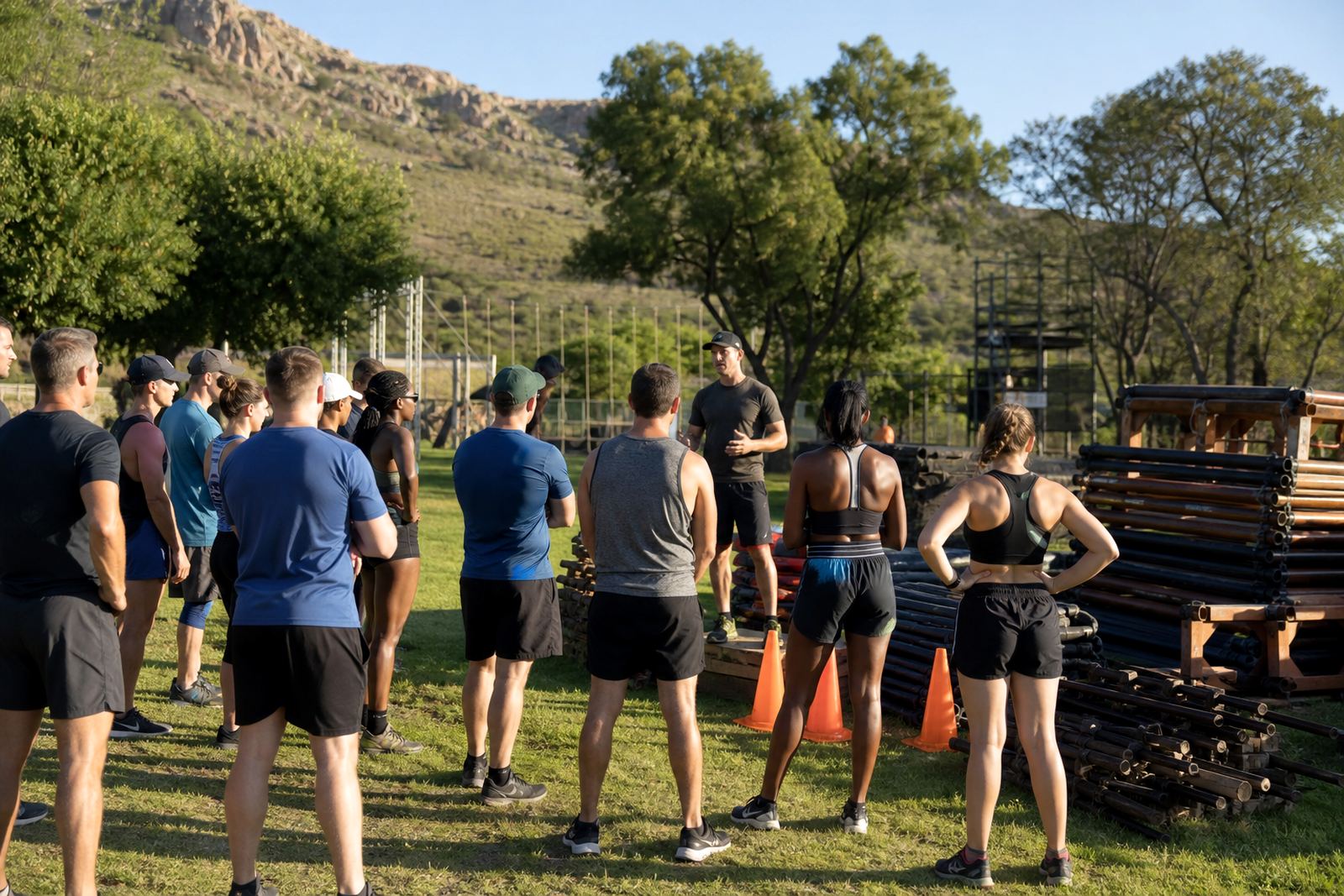
We supplied the structure that let the day move cleanly from arrival to final finish. That included participant check-in flow, waiver coordination, safety briefing groups, captain communication and heat allocation support. For teams, the loop format also made it easier to manage warmups and set expectations before the first lap started.
On the ground, the layout used repeated obstacles so participants could measure their own pacing and adjust from one lap to the next. That worked well for endurance focused entrants and for corporate groups wanting a tougher shared challenge. The repeated effort gave people a fair chance to settle into rhythm, then push harder as the race opened up.
- Onsite team check-in and captain communication
- Group warmup session and custom team briefing
- Safety briefing groups with clear instructions before start
- Recovery area guidance for athletes and support crews
Timing from first walk-through to race-ready
The project was handled over a short, practical build window measured in weeks. The first stage was a site walk-through and race logic review, followed by obstacle placement planning and participant flow mapping. After that came briefing preparation, support staffing and final day coordination. The sequence had to stay tight because endurance events leave little room for guesswork.
By the final week, the team had a working race day plan that covered start order, team movement, rest areas and what each marshal had to watch for. It was not a case of making the route complicated, but of making the movements easy to read under pressure. That matters when people are breathing hard and trying to keep their heads in the race.
- Week 1: route review and operational planning
- Week 2: obstacle spacing, briefing design and support mapping
- Week 3: final checks, team comms and race day handover
Safety briefing detail that kept the day orderly
Safety work sat at the centre of the project. We prepared briefing points covering obstacle use, expected effort levels, hydration awareness and what to do if a participant needed help. People were also reminded to check with a doctor before hard exercise if they had any health concerns. That message belongs in every serious endurance event, because no race should ignore the basics.
Waiver coordination was handled as part of the registration flow so that participants could move through the process without confusion. The race team also had support notes for teams arriving from different parts of Gauteng and North West, where travel times can affect warmup, food intake and pre-race focus. The operational answer was to keep instructions direct and easy to repeat.
- Waiver coordination before start line movement
- Obstacle safety notes for repeated effort and fatigue
- Hydration reminders for warm weather race days
- Doctor check reminder before hard exercise where needed
What the finish line told us
The result was a race day that allowed steady pacing without losing the competitive edge. Participants could settle into a rhythm, test themselves again on later laps and finish with a clearer sense of progress. The repeated obstacle pattern also helped teams stay together longer, which suited the corporate side of the brief and the social side of the event.
From an operations point of view, the day held together because the course logic matched the staffing plan. The support areas were where people expected them, the briefing messages stayed consistent and the participant movement remained controlled. That is the sort of outcome you want in an endurance event. It sounds ordinary, but it takes work to get there.
- Clearer pacing for runners and team entries
- Less confusion at repeated obstacle points
- Better support for first timers and stronger competitors
- More orderly movement through the start, lap and finish zones
What went right at the Benoni endurance loop day
We would use the same core approach again: lap based routing, early safety planning, and briefings that give participants enough detail without overloading them. The format works well for mixed fitness groups, provided the spacing stays sensible and the support crew know where pressure points will appear. That part makes a bigger differnce than most people expect.
For future endurance builds in Benoni or similar inland venues, we would keep the same emphasis on heat management, recovery access and simple communication between captains, marshals and the briefing lead. The method suits corporate entries, club teams and mixed individual fields, which is why it has so much value for a South African obstacle day.
- Repeat the lap format for controlled progression
- Keep briefing groups small enough to stay focused
- Place recovery guidance close to the busiest sections
- Use the same support structure for local and travelling entrants
Key facts
| Project | Benoni Endurance Loop |
|---|---|
| Race format | Lap based obstacle course and endurance layout |
| Base | Hekpoort, Magaliesberg, North West |
| Target entrants | Individuals, teams, corporate groups and endurance athletes |
| Key services | Team registration help, waiver coordination, safety briefings, heat allocation support |
| Project timeline | Completed across a short three week build window |