
Why your body needs a wake-up before the first climb
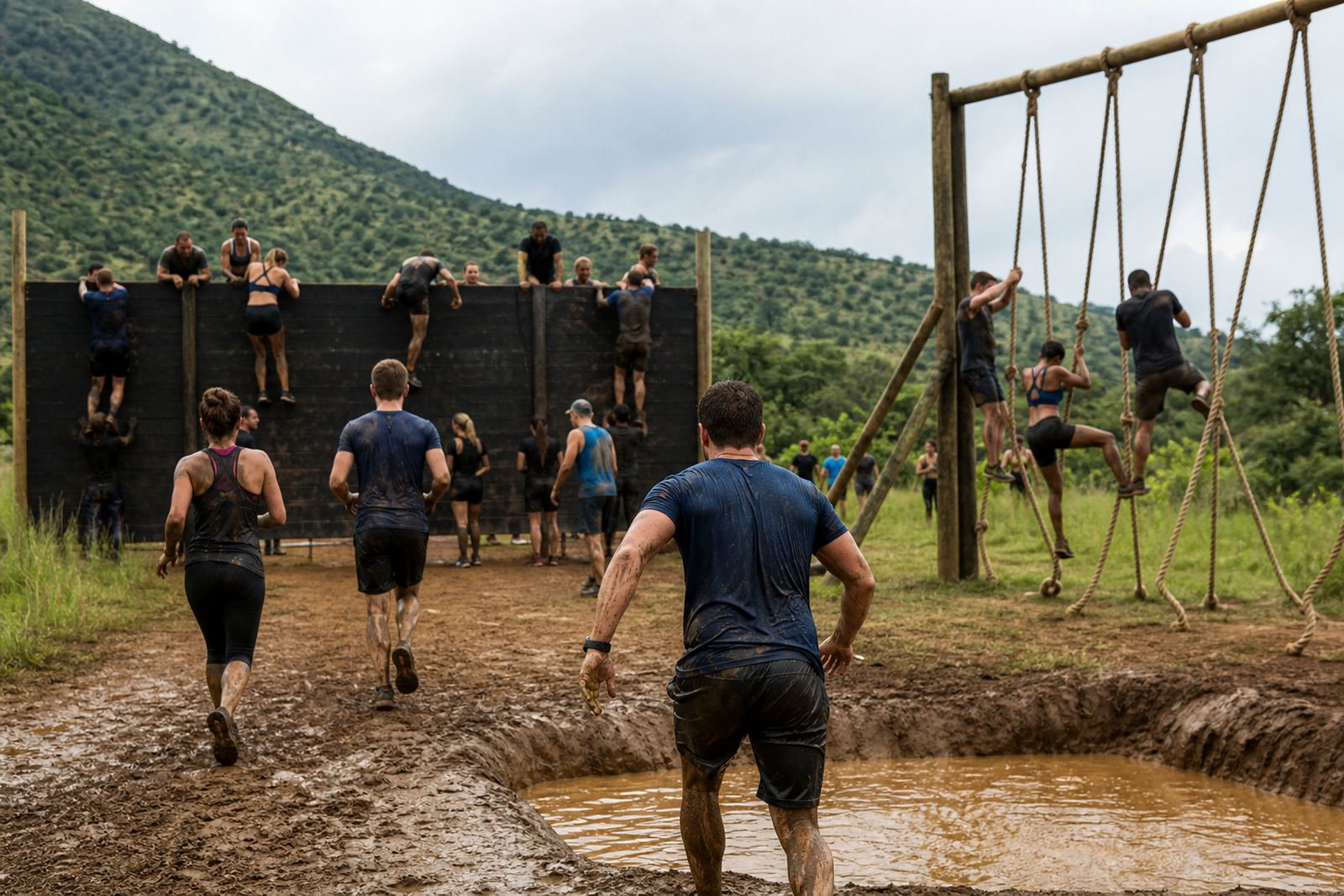
An obstacle course asks more from the body than a regular run. You are moving from jogging to climbing, from carrying your own weight to gripping ropes, then dropping to the ground and getting up again. A warm up prepares the joints and muscles for these changes so they do not go from still to full effort in one step.
It also helps your head. A short routine gives you time to settle nerves, check your breathing and remember the basics from the safety briefing. If you are travelling in from Johannesburg, Pretoria, Cape Town, Durban or Bloemfontein, the body can feel stiff after a long drive and that first bit of movement matters even more.
In Hekpoort and around the Magaliesberg, mornings can be cool and dry, then the sun comes through fast. A warm up helps you feel ready for that switch. It is not about showing off or doing a lot. It is about being useful, steady and ready to move with control.
A 10 minute routine that suits mixed fitness levels
You do not need a gym floor or complicated gear. Ten minutes is enough if you use it well. Start easy, then build. The aim is to raise your heart rate, open the hips and shoulders, and bring awareness into the feet and hands.
- 2 minutes of light jogging, brisk walking or skipping in place
- 10 arm circles each way, then shoulder rolls
- 10 leg swings per leg, front to back and side to side
- 10 bodyweight squats, slow and controlled
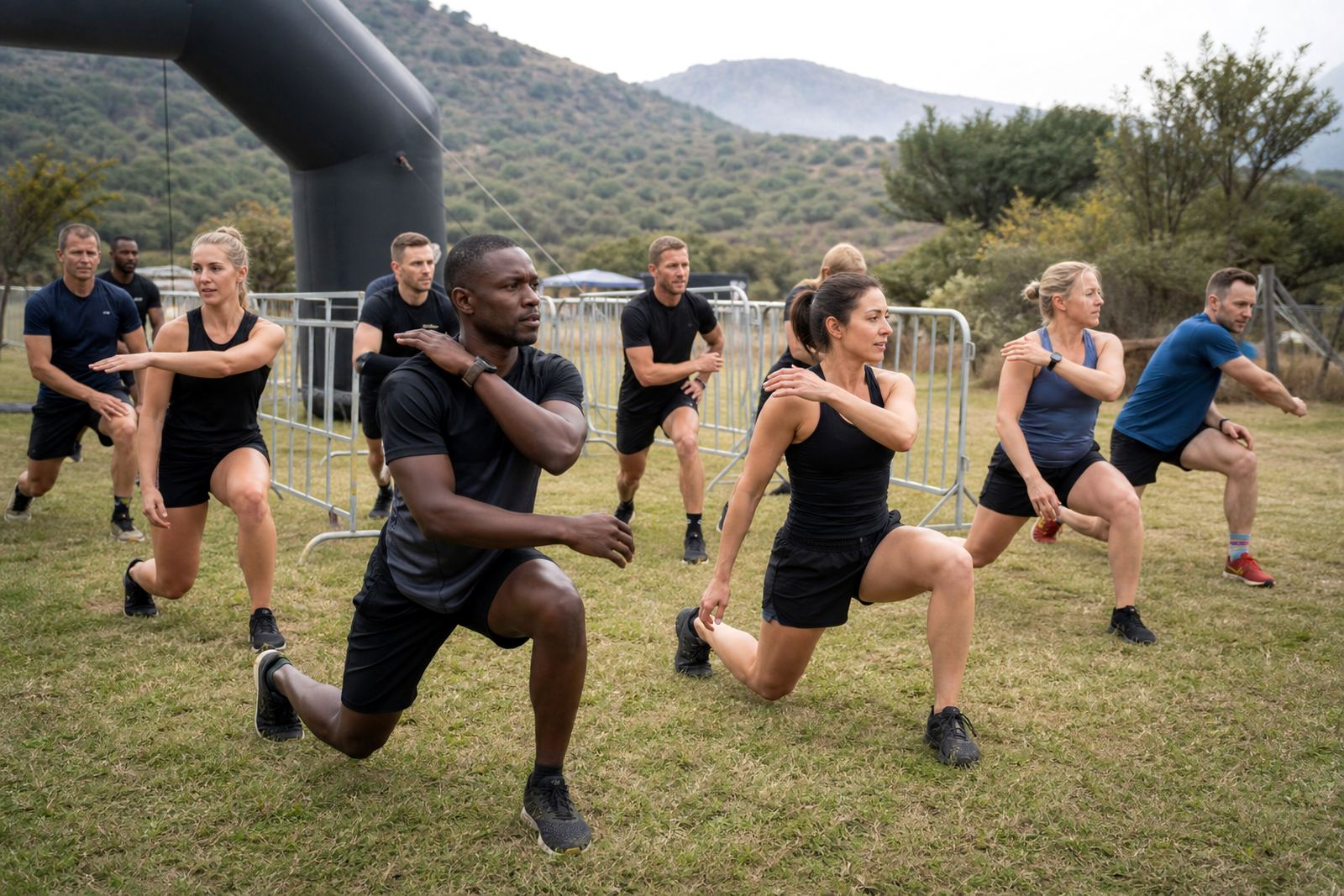
- 10 walking lunges, short steps if your knees feel tight
- 20 seconds of high knees, then 20 seconds of heel taps
- 5 deep breaths in through the nose and out through the mouth
If you are in a team, keep the pace friendly so nobody feels rushed. A warm up should bring everyone together, not split the group into fast and slow. For larger corporate entries or mixed teams, the same routine works well because it is easy to follow and easy to scale.
Grip, ankles and shoulders deserve extra attention
Obstacle courses test parts of the body that people often forget in normal training. Grip strength matters on ropes, walls and carries. Ankles need to be awake for loose ground. Shoulders must be ready for hanging, pulling and reaching overhead. If those areas are cold, the first hard movement can feel clumsy.
Spend a little more time on these three areas before you move to the start line. Open and close your hands 20 times, then do a few wrist circles. Stand on one foot for 15 to 20 seconds, then switch sides. Do wall presses or incline push-ups to switch on the shoulders without tiring them out.
A useful extra is a short farmer carry with a light object if one is available. Keep the chest up, shoulders level and steps short. That helps the body remember how to stay organised when the course asks for carrying, climbing or shifting under load.
At a venue like Hekpoort, where the ground can be uneven and dust can rise after a dry spell, ankles and feet need proper attention. Shoes with grip and a secure fit matter too, because a good warm up only helps if your footing is stable.
The briefing and the warm up should work together
A race warm up is not only about muscles. It is also the right time to listen properly to the safety briefing, check the route flow and understand where support staff are stationed. If there are heat allocations, wave starts or team check-in steps, this is when those details start to make sense.
Listen for the parts that affect your effort: water points, recovery areas, penalty rules, obstacle order and any places where you must slow down. If you know where to move and where to wait, you save energy and avoid unnecessary stress.
- Read your waiver carefully before race day, not at the last minute
- Wear gear that lets you bend, climb and squat without pulling
- Check laces, race numbers and any required wrist bands
- Use the warm up to confirm your team captain knows the plan
- Speak up if you are unsure about an obstacle or instruction
This is also the best time to remind yourself that it is fine to move at your own pace. A clear briefing and a calm warm up often lead to better decisions once the course starts. That can save energy and reduce mistakes, especially when teams are trying to stay together.
What to bring so the warm up does its job
A sensible warm up is easier when you arrive with the right basics. You do not need a lot, but what you bring should support movement, hydration and recovery. The goal is to avoid standing around cold and then rushing into effort without preparation.
- Water bottle with enough to sip before the start
- Light snack if your stomach tolerates food before exercise
- Comfortable training clothes that do not restrict movement
- Socks and shoes with decent grip for gravel, mud or grass
- Dry towel or small cloth for sweat and dust
- Sun protection for open venues, especially in North West heat
- Any personal items required for the event waiver or check-in
If you are coming from Pretoria, Rustenburg, Potchefstroom or the Johannesburg side, allow extra time for parking and team sign-in so the warm up is not squeezed into a few rushed minutes. A calm start is better than a frantic one. For coastal humidity in other parts of the country, the same rule still holds: sip early, move steadily and do not arrive already exhausted.
After the last drill, stay ready not flat
Once the warm up is done, do not sit down and switch off completely. Keep walking lightly, sip water and stay loose until your start time. If you sit on a cold bench or crouch in one place too long, the body can cool down again and undo the preparation.
Use the final minutes to check breathing, tighten shoe laces if needed and remind yourself of the first few minutes of the course. Think about posture, short steps and steady effort rather than trying to rush every obstacle. That kind of focus usually helps more than starting too fast and paying for it later.
If you feel unusual pain, dizziness or a health concern before the start, do not ignore it. Check with a doctor before hard exercise if you have any doubt about your fitness for race day. A warm up is there to prepare you, not to force you through warning signs. Punisher’s role is to support safe participation with proper briefing, waiver coordination and onsite guidance, while each athlete takes responsibility for their own readiness.
A Magaliesberg start line example
Picture a cool morning at Hekpoort. The air is still, the ground is dusty in places and the first hill sits in view before the whistle goes. A team from Pretoria has arrived, a little stiff from the drive and a little nervous because one member has never tried a rope climb before. They do the shared warm up, then split into a few extra grip drills and ankle wakes ups. By the time they move to the start line, the group is chatting, shoulders are loose and the first steps feel controlled instead of shaky.
That is the real value of a proper warm up. It does not make the course easy, but it makes you more ready for the work ahead. And on a mixed obstacle course, readiness counts for a lot.