Reading the ground before your feet land
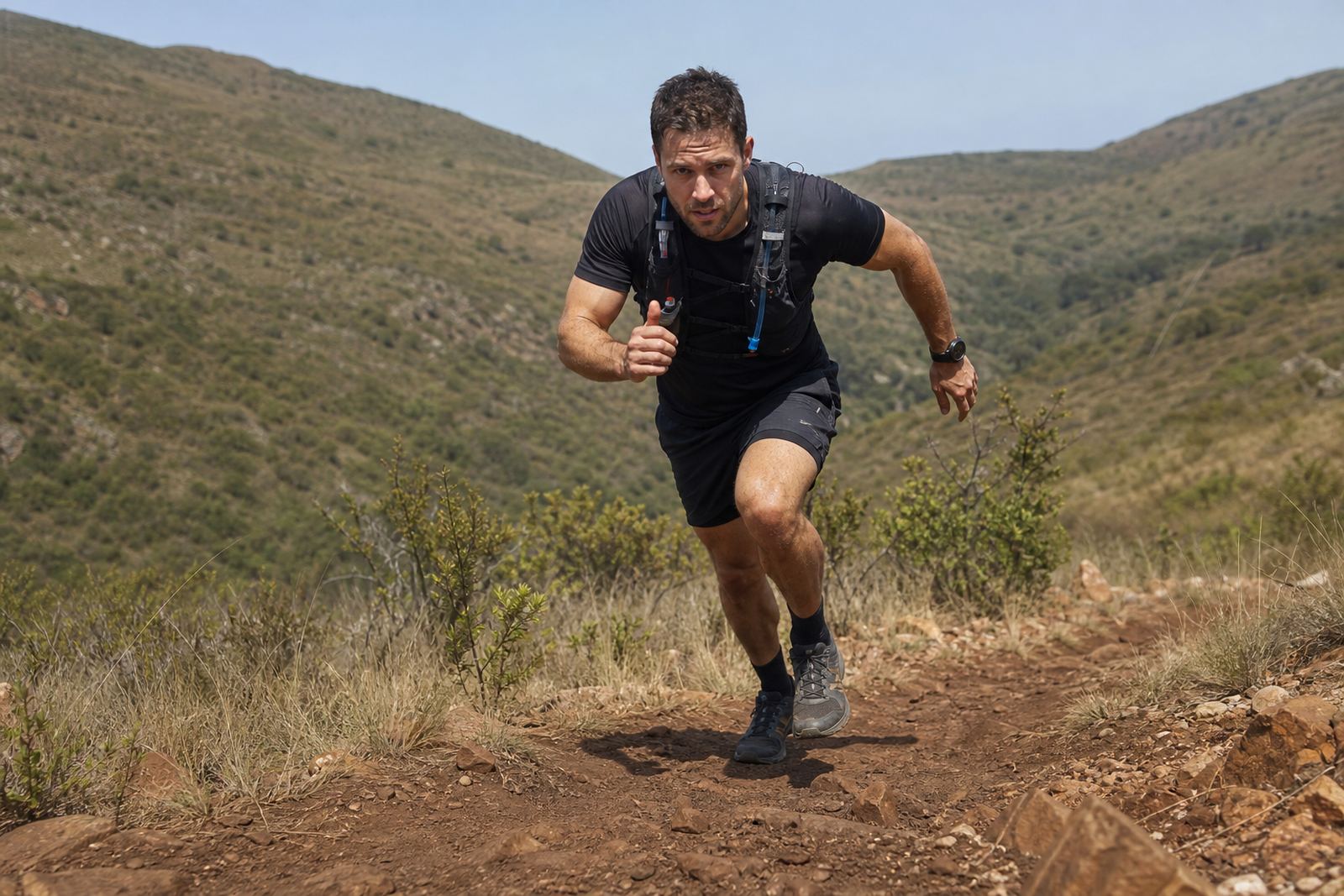
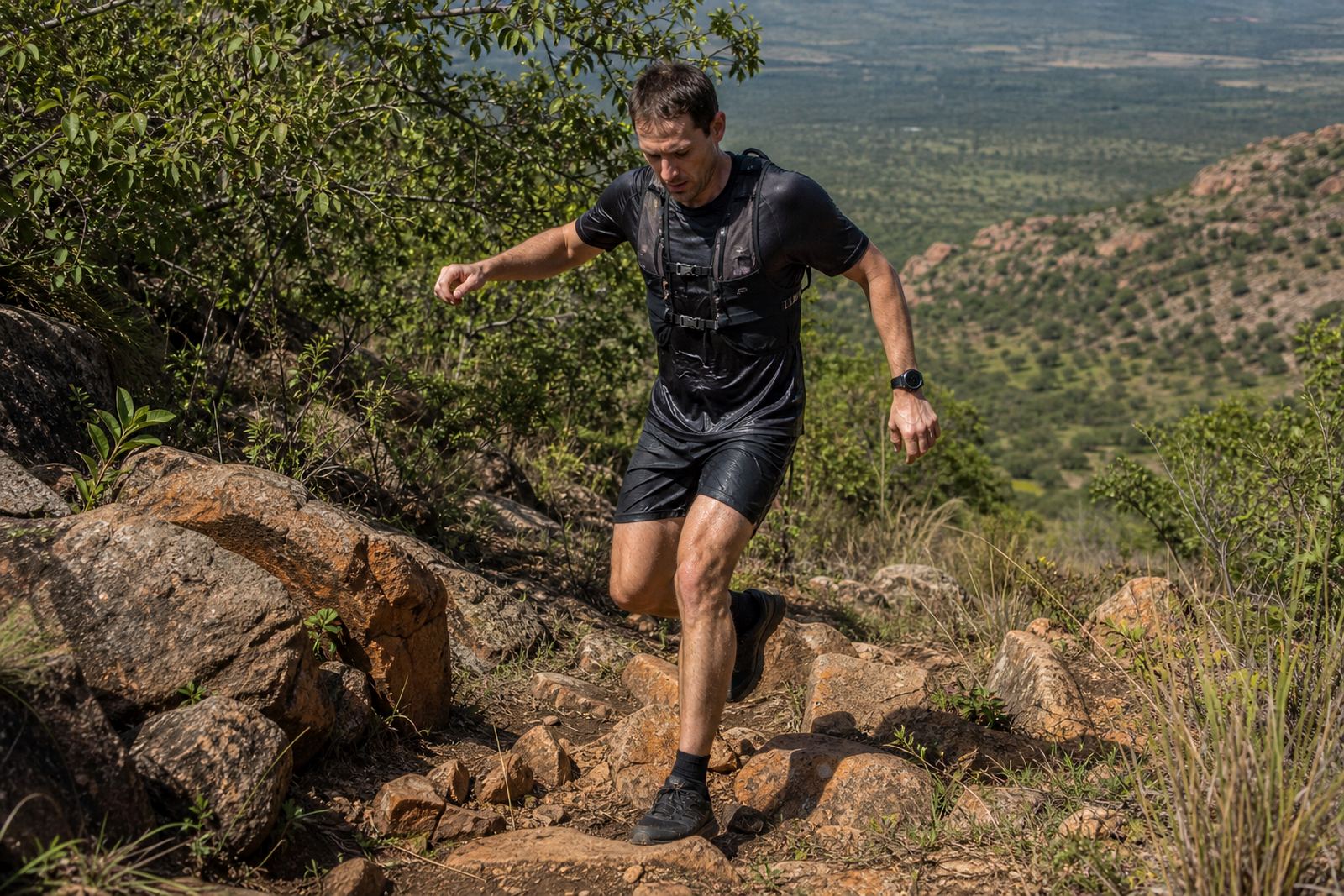
Trail movement starts well before the next step. On a path with loose stone, red dust, roots and short climbs, the eyes should scan two to four metres ahead so you can choose the clearest line. In the Magaliesberg, that often means working around uneven shale, drainage channels after rain, and patches where the grass hides a hole.
Good footing is not about stomping harder. It is about placing the foot under control, keeping the ankle active and choosing the flattest patch you can reach without overstriding. Short steps help on rock because they let you react quickly if a shoe slips. If the surface feels unstable, lower your speed before you lose balance, not after.
Cadence that holds together when the track turns ugly
Cadence is the rhythm of your steps, and on trails it usually needs to be a touch quicker than on the road. A slightly faster turnover helps you stay light over uneven ground and reduces the chance of catching a toe on rocks or grass tufts. The idea is not to sprint. It is to keep the steps compact and regular so your body can adjust as the surface changes.
When people fade on a trail, they often start reaching too far in front. That creates braking force and makes the upper body tense. Instead, keep the elbows relaxed, let the arms match the terrain, and breathe in a pattern you can hold on the climbs. If the hill is steep enough, power hike rather than fight for a run form that has already broken down.
Line choice around bends, rocks and drain lines
The best line on a trail is the one that lets you keep moving with the least drama. On a narrow track near Hekpoort, a slightly wider arc around a bend can be safer than cutting tight and landing on loose gravel. On rocky sections, line choice often means stepping on the higher, flatter stones instead of the wet middle of the path. After rain, those shallow drain lines can look solid but hold mud under a thin crust.
Local trail events and obstacle routes in the Magaliesberg often mix fast runnable sections with banks, gullies and loose exits from obstacles. That means you should treat each corner and dip as a separate decision. Look up, then down, then up again. If another runner is beside you, leave space. A bad line is manageable. A clash at speed is not.
Downhill control without locking up the legs
Downhill running punishes panic. Many runners lean back, brake hard and overwork the quads. A better approach is to lean slightly from the ankles, keep the eyes forward and let the feet turn over quickly. The goal is controlled flow, not full speed. On a steep Magaliesberg slope, that can mean using small steps and accepting that you will not look graceful while saving your knees for later in the session.
If the ground is loose, avoid crossing your feet over each other. That can snag on rock edges or cause a twist when the trail narrows. Keep the body tall enough to stay balanced, but low enough to react. If you are tired, brake earlier. Tired legs tend to make the wrong decision at the wrong time.
Training the legs for mixed terrain and obstacle days
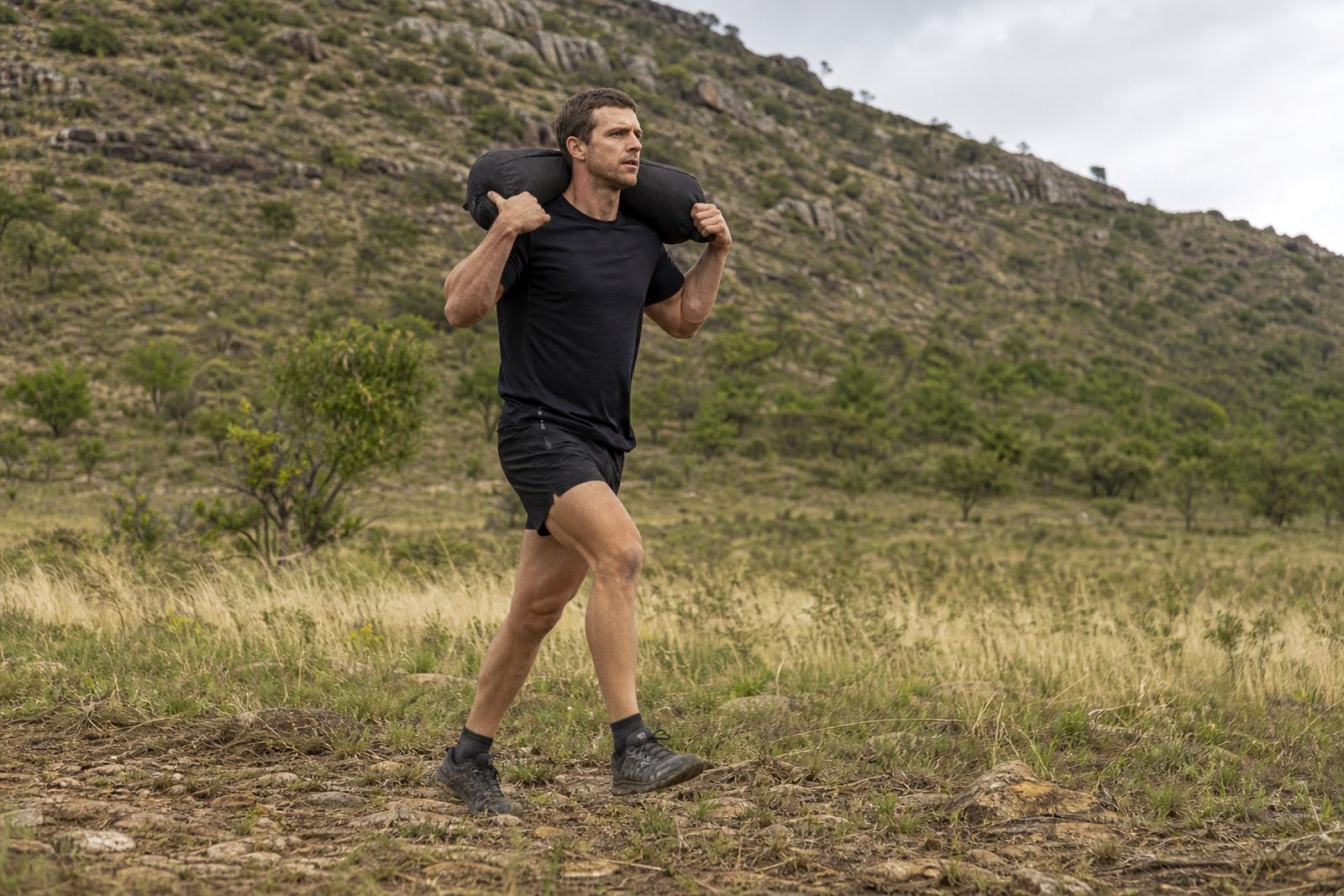
Trail running and obstacle racing ask for more than straight-line fitness. You need calves that can handle climbs, ankles that react to rough ground and a trunk that stays steady when you change pace. Include short hill repeats, uneven ground work and a few sessions where you run after carrying or pulling light loads. That prepares the body for the stop-start nature of obstacle courses without turning every session into punishment.
For many runners from Johannesburg, Pretoria, Durban or Cape Town travelling to a Magaliesberg event, the change in ground is the biggest surprise. Road fitness helps, but it does not teach you how to move over rocks, mud and broken edges. Build that skill with local trail time before race day, and check with a doctor before hard exercise if you have a health concern or have been inactive for a while.
What to sort out before the start horn
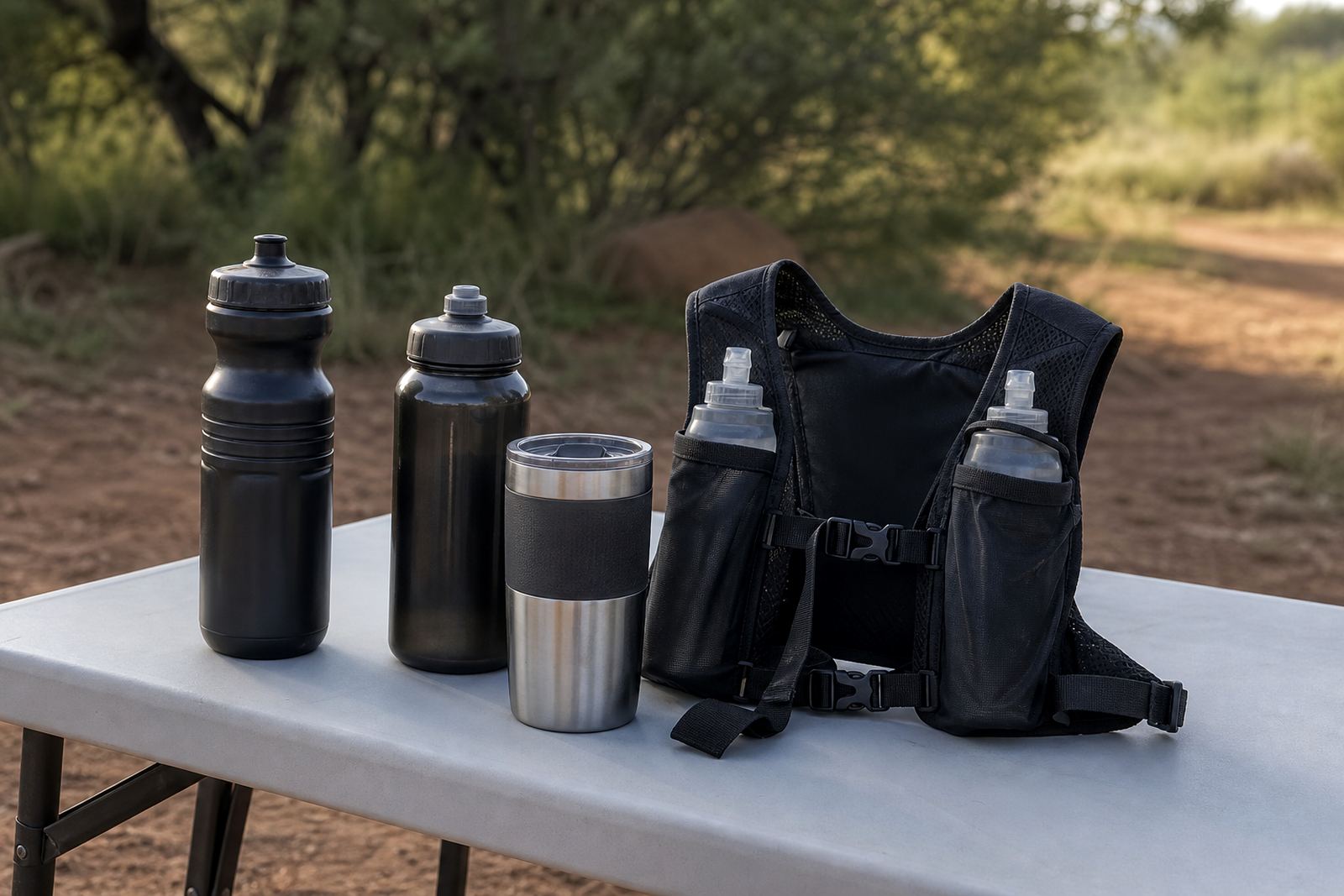
Before any trail race or endurance challenge, the practical details matter. Wear shoes with grip suited to loose ground, and use socks that do not hold too much grit. Carry water if the event asks for it, and check whether a small pack or handheld bottle suits the route. A light snack can help on longer sessions, but do not try new food on race day if you already know it sits badly.
Briefings exist for a reason. They explain hazards, route markings, marshals, water points and what to do if you need assistance. Read the waiver carefully before signing and make sure you understand the safety rules for the event. If you are entering as part of a team, make sure the captain knows who is in which heat and where the recovery area is after the finish. That saves confusion when the body is tired and nobody wants to be hunting for the next instruction.
A Magaliesberg run teaches the same lesson every time
Trail running in the Magaliesberg rewards runners who stay calm and make small smart choices. One clean foot placement, one sensible line around a bend, one shorter stride on a slope can save far more energy than a burst of speed. That is why many obstacle course races and endurance challenges use this terrain. It shows who can adapt, not just who can charge.
If you are heading out from Hekpoort, Krugersdorp, Hartbeespoort, Rustenburg or the cities farther afield, treat the trail as a moving set of decisions. Watch the ground, keep the rhythm, and run the section in front of you instead of the section you wish was there. That habit carries through every rough patch, from a wet bank to a loose hilltop finish.