
When the Finish Tape Is Not the End
In Magaliesberg, race day often ends with dusty shoes, aching forearms and a phone full of pictures from Hekpoort hills or the rocky ground near Hartbeespoort. What happens next matters just as much as the event itself. The people who stay motivated are usually the ones who talk about the race, compare notes and take the lessons into the next training block.
A shared race story gives shape to the effort. One person remembers the rope climb, another talks about the water obstacle, and someone else admits the burpees after a missed grip were harder than expected. That back and forth helps turn a one day challenge into a longer habit. It also keeps the group connected when Johannesburg and Pretoria travellers head home, while local runners from Rustenburg or Potchefstroom carry on with their week.
It helps to treat the post race period as part of the event, not as a gap in between races. A few days of proper rest, light movement and honest reflection can make the next start line feel less far away. You do not need a perfect result to stay involved. You just need a reason to keep showing up, even if that reason is only to walk a little further or recover a little better than last time.
The People Who Keep the Pace After Mud Day
Support after a race often comes from the same people who helped before it. Team captains, training mates and family members all play a part in keeping momentum alive. At team events, a good post race chat can settle nerves, repair a disappointment and give a clear next step for the group.
For corporate entries, the post race community is useful because it gives people a shared story to take from the course into the office. When a group from Pretoria or Johannesburg talks about how they handled a wet grip, a steep carry or a cramped recovery area, they are building trust as a team. That matters on site, and it matters back at the office too.
- Share one moment that went well and one that needs work.
- Agree on a recovery plan for the next 48 hours.
- Keep the group chat active for progress updates, not only race selfies.
- Thank the people who did the quiet jobs, from waiver checks to water handovers.
These small habits help people stay involved without turning every conversation into performance talk.
Recovery Advice That Does Not Overcomplicate Things
After a hard obstacle course race, the body needs ordinary care done properly. That usually means fluids, food, sleep and a gentle return to movement. In the North West heat or the stronger wind off the ridge, many runners forget how much energy they used. By the time they get home, they are sore, hungry and ready to sit down for longer than they should.
A sensible recovery routine can be very plain. Stretch lightly, walk for a few minutes and use the recovery area guidance given on site. If you have a niggle that is not settling, take it seriously. If you are planning a heavier training block, check with a doctor before hard exercise, especially if you are returning after illness, injury or a long break.
- Drink water through the day, not only at the finish.
- Eat a proper meal with protein, vegetables and enough carbs.
- Sleep early if the event left you flat.
- Use the next training session for easy movement, not punishment.
People often think motivation comes from pushing harder. In practice, it often comes from recovering well enough to train again without dread. That is where the post race community earns its keep.
Stories Worth Keeping in the Group Chat
The best race stories are not always the fastest ones. Sometimes they are the small wins, like a first successful wall climb, a captain who kept the team calm, or a runner from Cape Town who thought the sand would be the hardest part and then found the mud far more testing. These stories are worth keeping because they show progress in a form that numbers cannot.
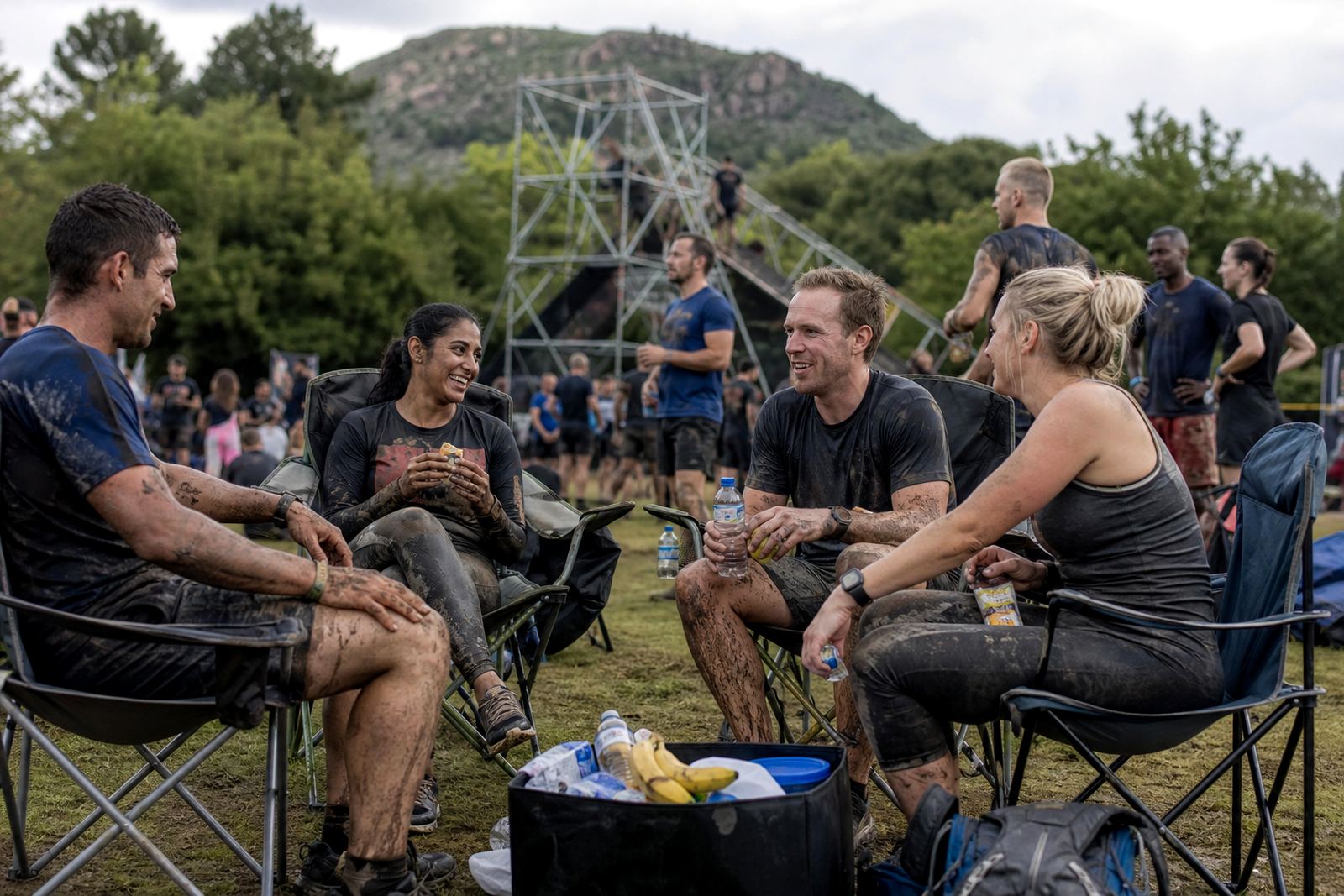
At Punisher events, participants often leave with more than a finish. They leave with a memory of moving through obstacles together, taking instruction during the safety briefing and learning how to work as a unit. That is useful when people train again later, because they already know how it feels to be supported rather than judged.
It also helps to write down a few notes while the event is still fresh. What shoe grip worked, what hand protection was not enough, how the warmup felt and whether the team check in process was smooth. These notes are practical, and they help each person prepare better for the next race without guessing.
How Magaliesberg Makes Community Feel Local
Hekpoort gives obstacle racing a setting that is hard to fake. The ground is honest, the weather changes quickly and the views are good enough to keep people moving even when they are tired. For participants coming from Krugersdorp, Pretoria, Johannesburg or Rustenburg, that setting makes the day feel like more than a workout. It feels like a shared outing with a proper challenge in it.
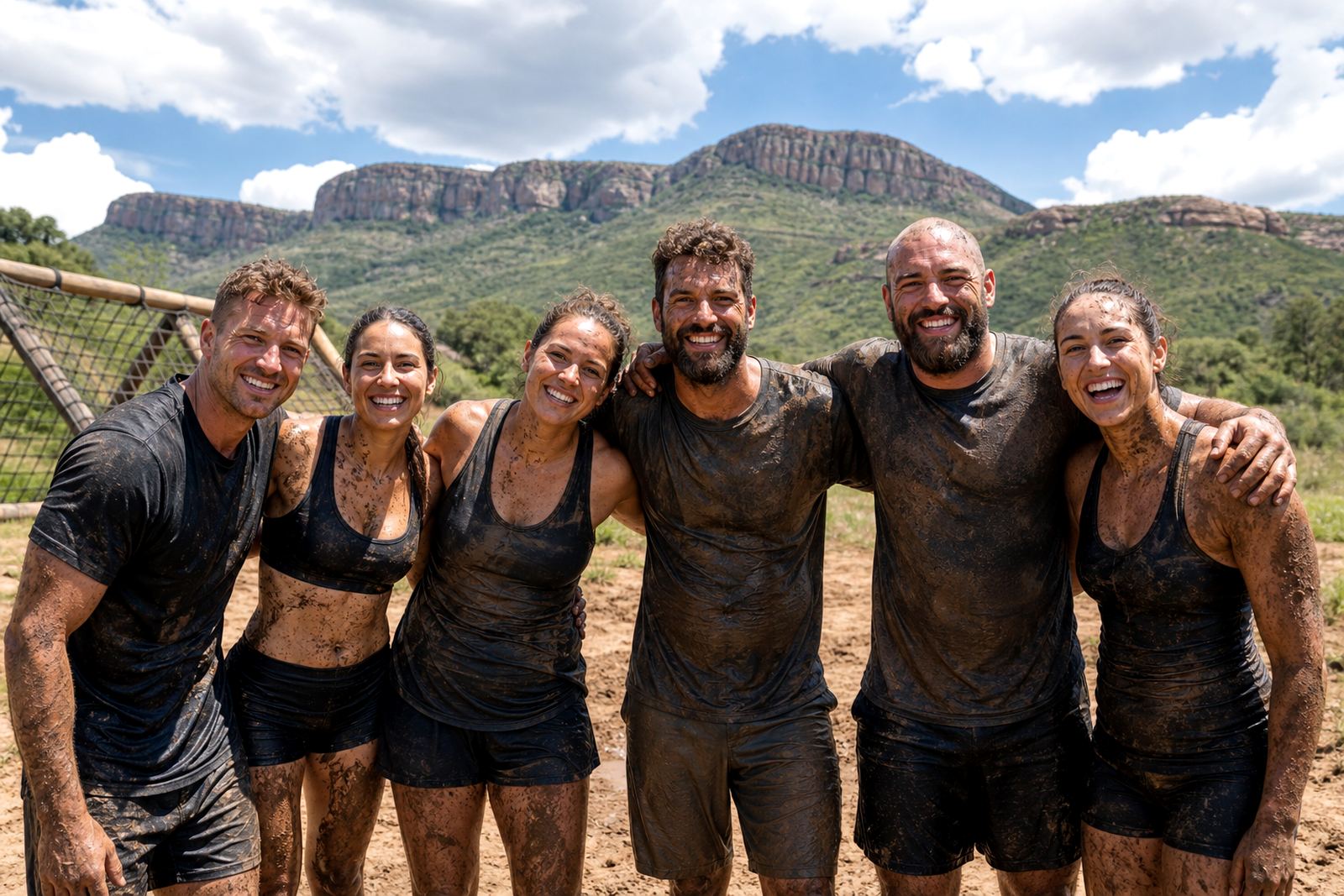
The local example is simple. A mixed team from Pretoria and Johannesburg arrives with different fitness levels, different job pressures and different expectations. After the race, they sit together in the recovery area, swap stories about the course build, and talk through what helped them finish. One person may need to change grip work. Another may need more hill repeats. Another may only need a better breakfast and a calmer start.
That kind of conversation does not stay on the course. It carries into weekday training, family time and the next time a group considers a corporate entry or a team registration. A strong post race community keeps the event alive in a useful way, without making it feel forced or overdone.
Keeping the Next Start Line Within Reach
Motivation after a race is easier to protect when there is a plan. Set one training goal, keep the group informed and make space for rest. If your team used captain communication, safety briefing groups or onsite team checkin, carry the same order into the weeks after the event. It helps people feel part of something without needing constant pressure.
For many runners, the next step is not another race right away. It might be a short walk, a strength session or a proper conversation with the group about what went well. The point is to stay connected enough that the event does not fade into a single photo and a sore calf.
When a community shares the load, the finish line becomes a beginning instead of a one-off effort. That is the kind of momentum that lasts through the week, the season and the next muddy climb.