
Why a team line-up changes the way people train
When people sign up together, training starts to feel real. A colleague, club mate or friend becomes the person who notices if you skip the hill repeats, miss the grip work or leave your hydration pack in the car. That kind of pressure is not harsh, it is useful. It helps people show up on the days when motivation is low and the weather is not helping.
For obstacle course races and endurance challenges, group entry works well because the event asks for more than fitness alone. You need pacing, coordination, a bit of nerve and the willingness to keep moving when the route gets messy. A mixed group can still do well if each person understands their own pace and the team agrees on a plan before race day.
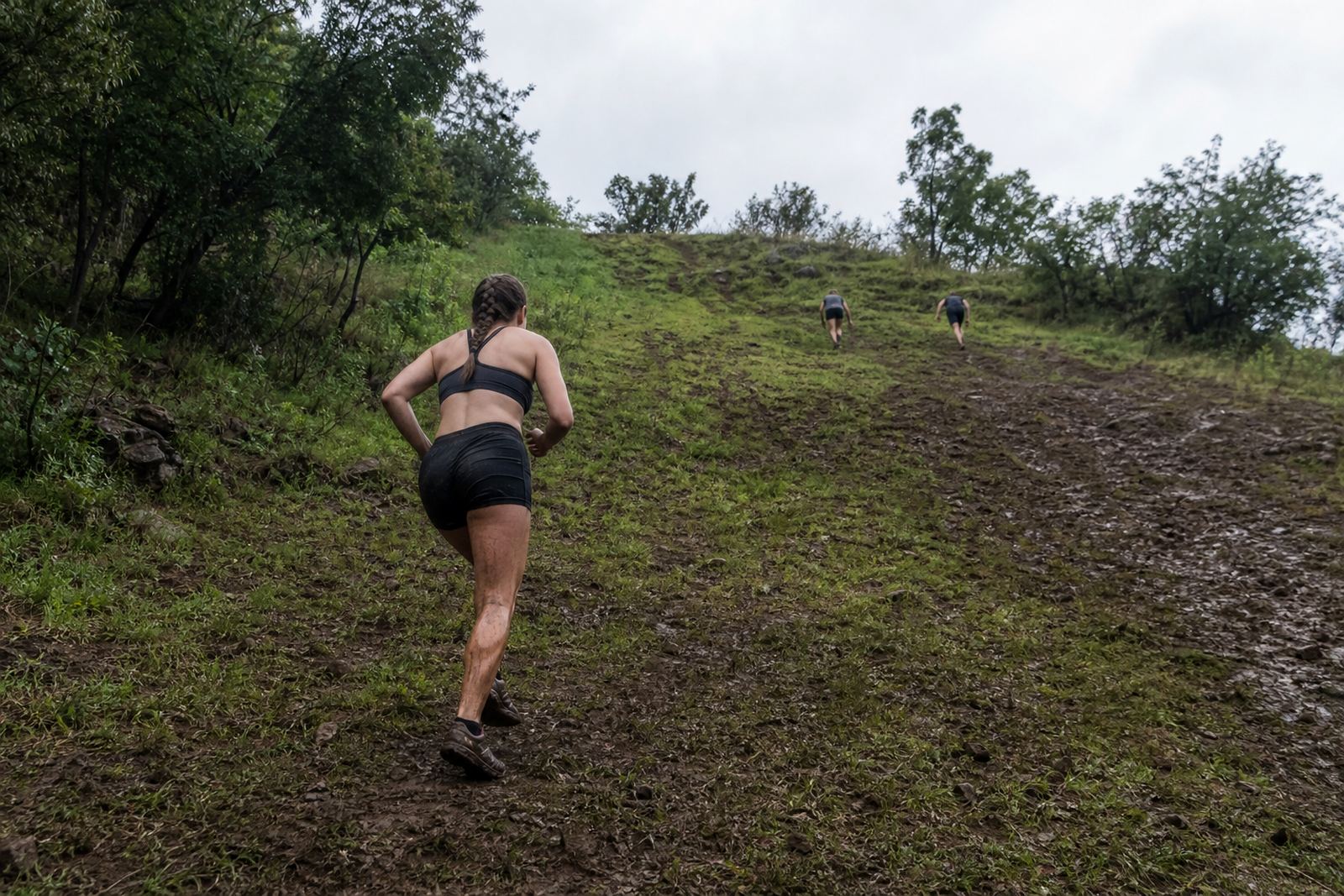
- Set one weekly session for hills, carries or interval work
- Choose a team captain who keeps everyone informed
- Decide who pairs up with slower runners on the course
- Check with a doctor before hard exercise if you have not trained in a while or have any health concerns
Accountability is easier when someone is expecting you
People are more likely to complete the hard parts of training when they know someone else is counting on them. That matters for events around Hekpoort and the wider Magaliesberg area, where uneven ground, loose dust and climbs can test even fit participants. A group entry makes missed sessions more visible, but in a good way. It is easier for one person to phone another and say, are you still doing Saturday training?
On event day, accountability also shows up in the little things. Everyone arrives on time, everyone has read the safety briefing and everyone knows where the heat start is. That reduces confusion at check-in and helps our team support the group more efficiently, especially when participants arrive from Johannesburg, Pretoria, Rustenburg or Potchefstroom.
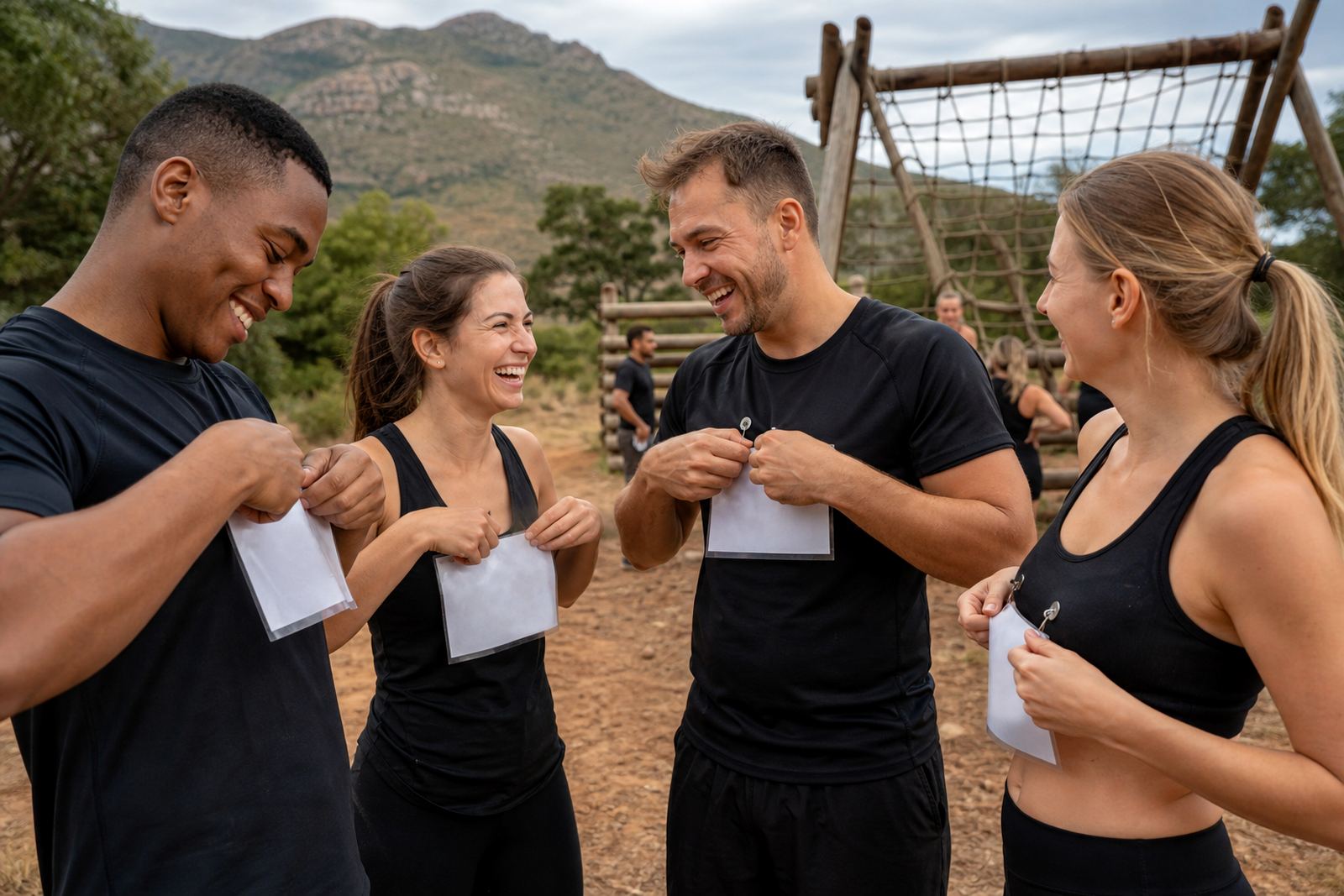
A practical group will also sort out waivers early. That saves time, avoids queue delays and means there is less sorting out under pressure when the race village gets busy.
Confidence grows faster when people learn together
Not everyone in a group comes in with the same experience. Some may be comfortable with rope work, others may be fine on distance but nervous about water, mud or balance obstacles. Training together helps people see that this is normal. Confidence often grows after one shared session where the whole team learns how to lift safely, where to keep eyes on the route and how to call for help if someone is struggling.
For many teams, the biggest gain is not speed. It is trust. When a team has practised together, they are less likely to panic when a section becomes awkward. That is especially useful on courses where the terrain changes quickly and a steady pace matters more than a fast start.
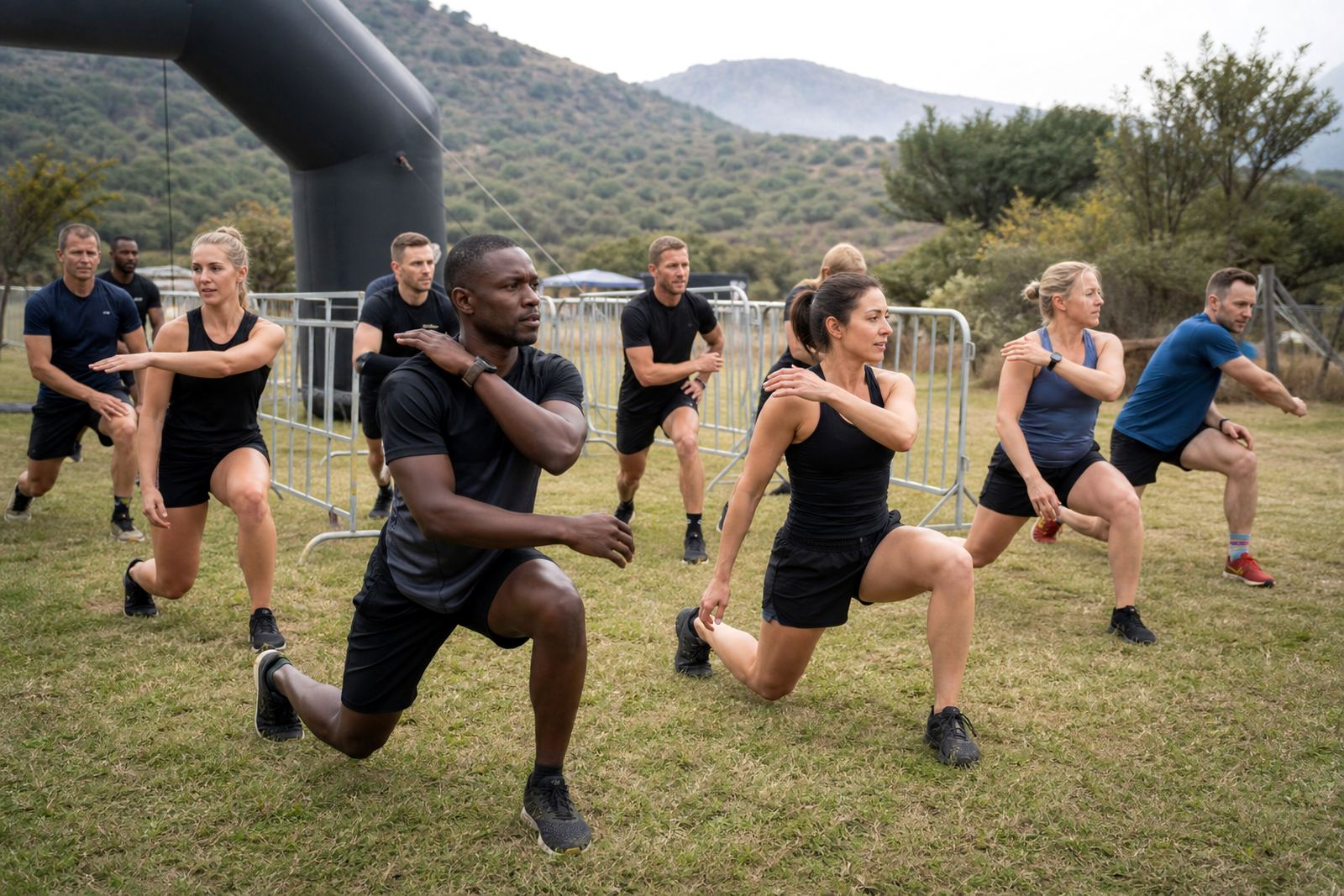
- Use one warm-up routine so everyone begins the same way
- Practise carrying water and moving in single file on narrow ground
- Run short practice laps with one person calling turns or obstacles
- Keep a calm pace, especially in the first half of the course
What the race-day support actually looks like
Group entries are not only about signing several people up at once. They also make it easier to organise support around the whole team. That can include captain communication, team registration help, waiver coordination, safety briefing groups and custom team briefing where needed. It also helps with heat allocation support and onsite team check in, so the group can move through the process without last minute scrambling.
At a Magaliesberg event, we often see groups arrive with a mix of first timers and repeat participants. A clear briefing helps both. The first timers learn where the recovery area is, what to do if they need a pause and how to handle an obstacle they cannot complete. The experienced runners get the details they need about rules, timing and team flow. Everyone benefits when instructions are given before the start, not after problems begin.
If the weather changes, or the ground is softer than expected, the briefing matters even more. Good communication helps reduce slips and keeps the group moving safely.
A local example from Hekpoort to the finish line
A work team based in Pretoria may train in pairs during the week, then come together on a Saturday morning in Hekpoort for a full group session. One person handles pace, another keeps morale up, and someone else makes sure no one forgets gloves or a change of clothes. On race day, that same team arrives more settled because the process is familiar.
That is where the local setting helps. The Magaliesberg area gives teams uneven climbs, open sun and rough patches that feel different from an indoor gym session. A group that has trained on similar ground knows how to protect hands, manage breathing and keep moving through dusty sections. It also helps that supporters can be given clear directions for where to wait, where the recovery area is and how to move around the venue without blocking the flow.
For visitors from Johannesburg or Cape Town, this kind of structure makes the event feel less intimidating. For local teams, it turns a race into a proper shared effort.
What to bring when the whole crew turns up
Group entry works best when everyone packs properly. That does not mean overpacking, just bringing the items that make the day easier. In North West heat, or on a windy morning near Hartbeespoort, small basics matter more than people expect. A forgotten cap or water bottle can affect the whole run, especially if someone is already managing a long day out.
Bring enough to stay comfortable before and after the race, and keep valuables to a minimum. If your team plans to take photo moments or wait in the supporter area, assign one person to keep an eye on bags and another to handle post-race snacks. That avoids confusion and keeps the group together without crowding the course.
- Closed running shoes with good grip
- Water, snacks and a small towel
- Change of clothes for after the race
- Sun protection and a cap where needed
- Any required waiver details and identification for check-in
Groups that prepare this way usually have a smoother finish and less stress at the end of the day.
Why teams remember the day longer than lone entries
There is something different about crossing a finish point with people you trained beside. The shared effort gives the day weight. A group can laugh at the muddy sections, compare the hardest obstacle and remember who kept the team moving when energy dipped. That is why group entry often leads to better event day fun, not just better organisation.
For many organisations, clubs and friend groups, the event becomes a practical test of teamwork rather than a solo performance. The team learns how to communicate under pressure, how to support slower members and how to celebrate without losing focus. That is good for confidence and good for morale too.
If your group wants a better structure from registration through to recovery area guidance, the enquiry form on our contact page is the way to start the conversation.