Start with the ground, not the shoe rack
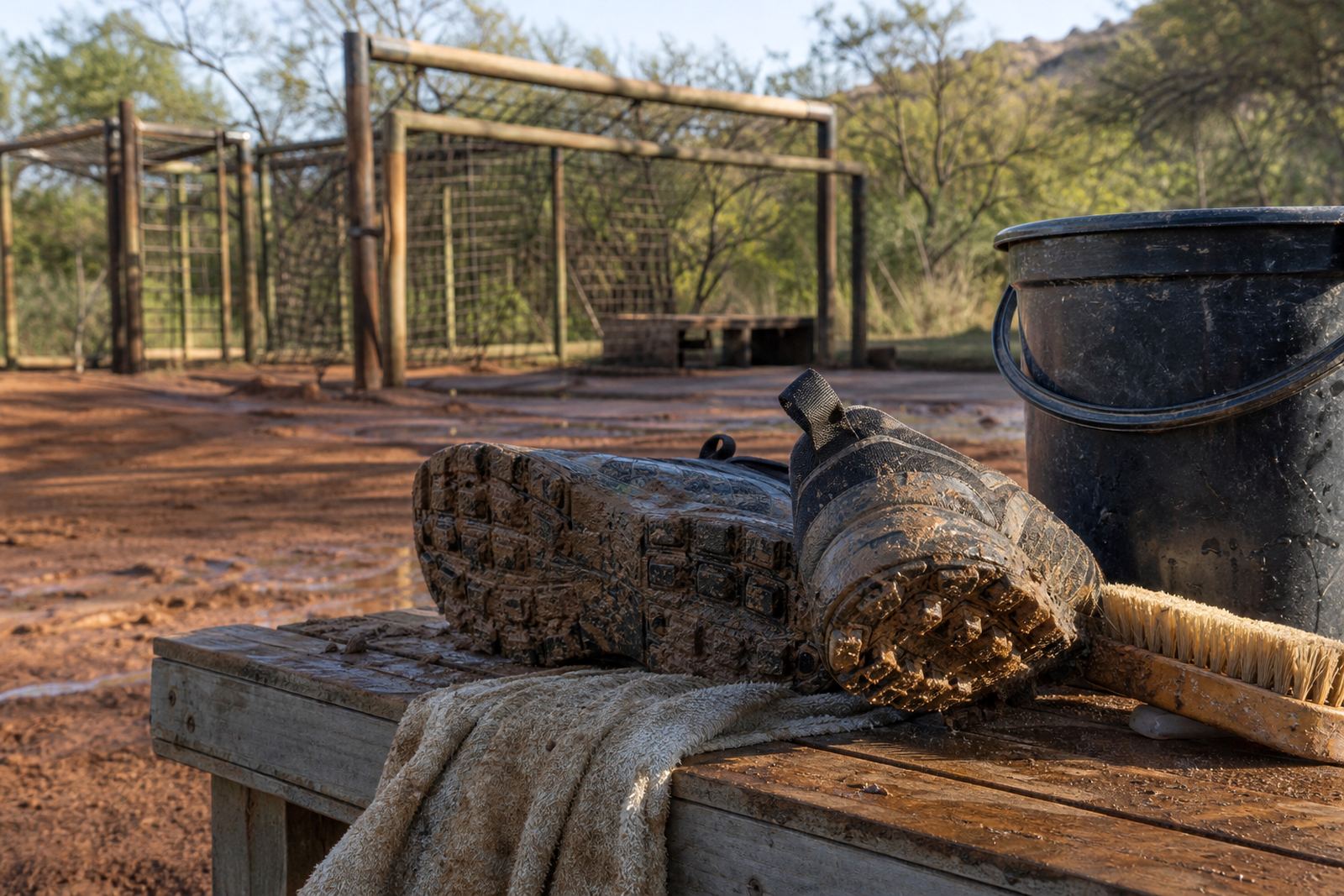
Obstacle course races punish weak footwear. In the Magaliesberg you can go from dry gravel to slick mud, loose stones and shallow water in the same lap, so the shoe has to handle more than a regular road run. If the outsole cannot bite into uneven ground, every climb, descent and carry gets harder than it should be.
Think about the surface first. A good race shoe needs enough grip for wet grass and clay, a tread pattern that clears mud rather than packing it in, and a sole that still feels stable when the ground turns rough underfoot. On hill sections around Hekpoort, a shoe with poor bite will feel fine for 200 metres then start sliding exactly when you need control.
- Look for lugs that are spaced to shed mud
- Check for grip on wet rock and hard ground, not only soft trails
- Choose a sole that feels steady on slopes and loose gravel
- Avoid anything too smooth under the forefoot
Drainage matters when the course turns wet
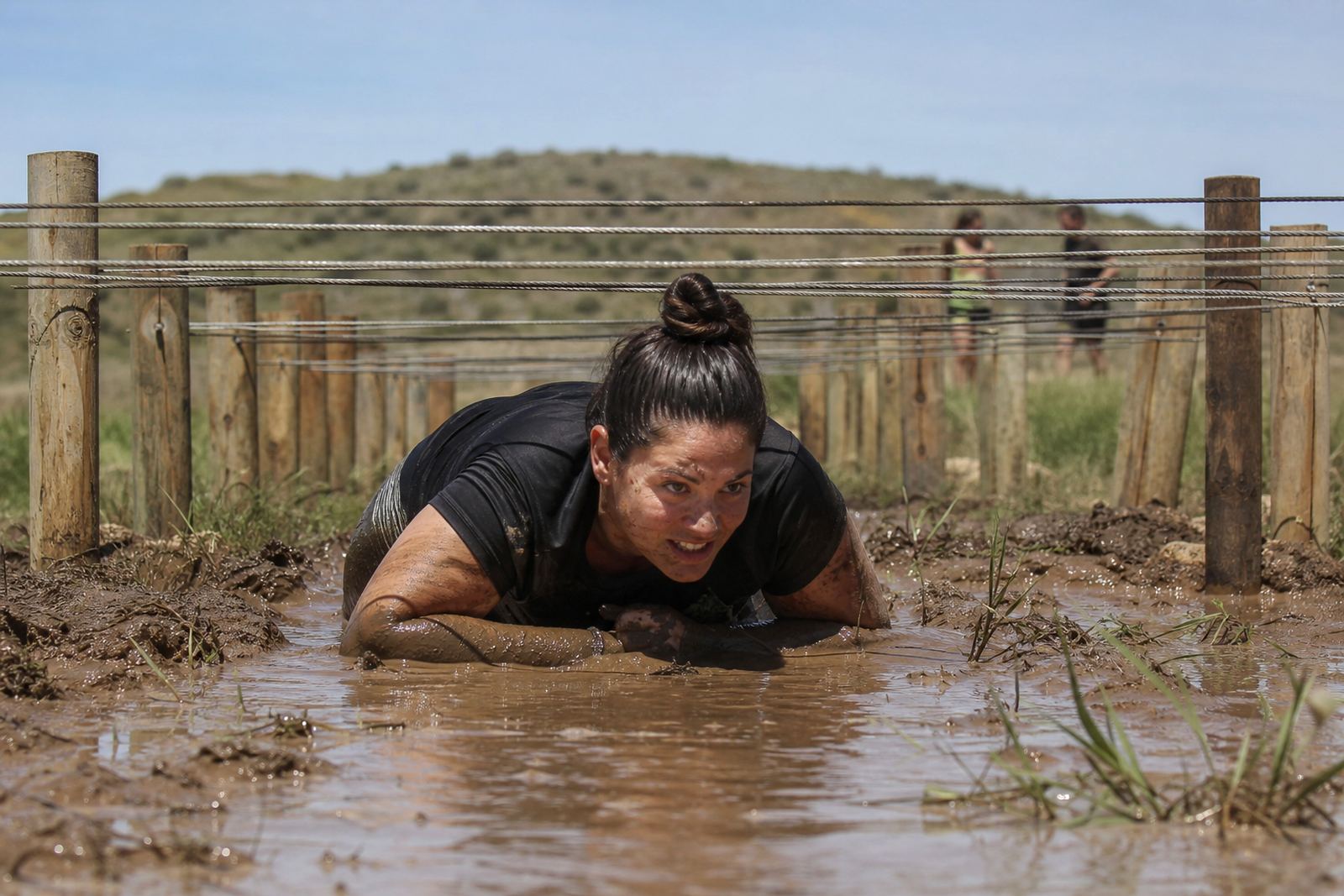
Water crossings, hose sections and muddy pits can load a shoe with water in seconds. If it holds that water, the shoe becomes heavy and rubs your feet raw. Fast drainage is one of the most overlooked features in race shoes, especially for events where you may hit more than one wet obstacle before the halfway mark.
Mesh uppers can help, but they should be tough enough to survive contact with rock, rope and debris. The best option is often a shoe that lets water out quickly while still holding its shape. That balance matters on long endurance challenges where wet feet can lead to blisters, slippage and poor footing later on. A shoe that dries faster also helps when the weather turns hot and you have a long recovery walk after the finish.
- Pick a quick-draining upper that does not stretch out too much when wet
- Check that the tongue and collar do not trap water and grit
- Make sure the shoe still feels secure after it gets soaked
- Thin socks can help, but only if they suit your feet and the distance
Lockdown is more important than cushion
For obstacle course racing, a soft shoe is not always a better shoe. Too much cushion can make you unstable on banked ground, rope climbs and uneven landings. You want enough comfort to handle repeated impacts, but the foot must stay planted inside the shoe when you scramble, jump or change direction quickly.
Heel hold, midfoot lockdown and a snug forefoot all matter. If your toes slide forward on descents, or your heel lifts when you push off, you will feel it by the middle of the race. Test the fit while standing, jogging and doing a few quick turns. The shoe should feel secure without squeezing your toes flat. If there is a size issue, fix that before race day rather than trying to make it work on the fly.
- Try the shoes with the socks you plan to race in
- Leave a little toe room, but not enough for sliding
- Check that the laces stay tied under movement and water
- A locked-in fit is worth more than extra padding
Protection keeps the course from winning
In obstacle racing, protection is not only about comfort. It is about stopping sharp stones, hidden roots and rough landings from ending your race early. A reinforced toe bumper can save your toes when you hit a rock on a downhill or clip a barrier. Some underfoot protection also helps when the route cuts across hard, broken ground that would bruise the foot through a softer sole.
That said, too much bulk can make the shoe feel clumsy. The aim is a practical balance: enough shielding for rough terrain, but not a heavy shoe that drags you down. In the Magaliesberg, where the ground can shift from dusty track to jagged rock in a short stretch, that balance matters. You want the shoe to protect without turning every step into a slog.
- Toe protection helps on rock, barriers and steep climbs
- A firmer sole can reduce pain on sharp ground
- Keep the shoe light enough to move well over distance
- Check that overlays do not rub on the sides of the foot
Train in the shoes before the big day
A new pair on race day is a gamble. Even a good shoe needs time to soften in the right places and prove that it suits your stride. Use them on hills, short runs, stairs and rough ground before you commit to them for a full event. If you train on a mixed surface, you will quickly see whether the grip works or if the fit starts causing hot spots.
It also helps to practise under race-like conditions. Run after a hot afternoon, move through sand or wet grass if you can, and see how the shoes feel when tired. If you have a medical concern, check with a doctor before hard exercise. That is especially wise if you are returning after time off or if the event will be your first serious endurance challenge.
- Break the shoes in over several sessions
- Test them on hills, loose ground and wet patches
- Wear the same socks and lacing setup you will use on race day
- Look for rubbing, slipping or numbness before the event
What to pack with your shoes for race morning
Even the best pair needs the right backup plan. Bring a spare pair of laces, a dry towel and socks you trust. If the event includes a briefing, make sure your footwear is ready before you line up, because muddy hands and rushed changes cause problems. A practical kit makes the start calmer and the finish less stressful.
For teams travelling in from Johannesburg, Pretoria, Cape Town, Durban or Bloemfontein, it helps to think about the whole day. Pack shoes that can handle travel, warm-up and the race itself, then keep a dry pair ready for the ride home. If you are entering as a group, keep your shoes labelled so no one loses a pair in the recovery area. It sounds small, but it saves time when everybody is tired.
- Spare socks and laces
- A small towel for mud and wet feet
- A dry pair for after the finish
- Any tape or blister care you already know suits you