
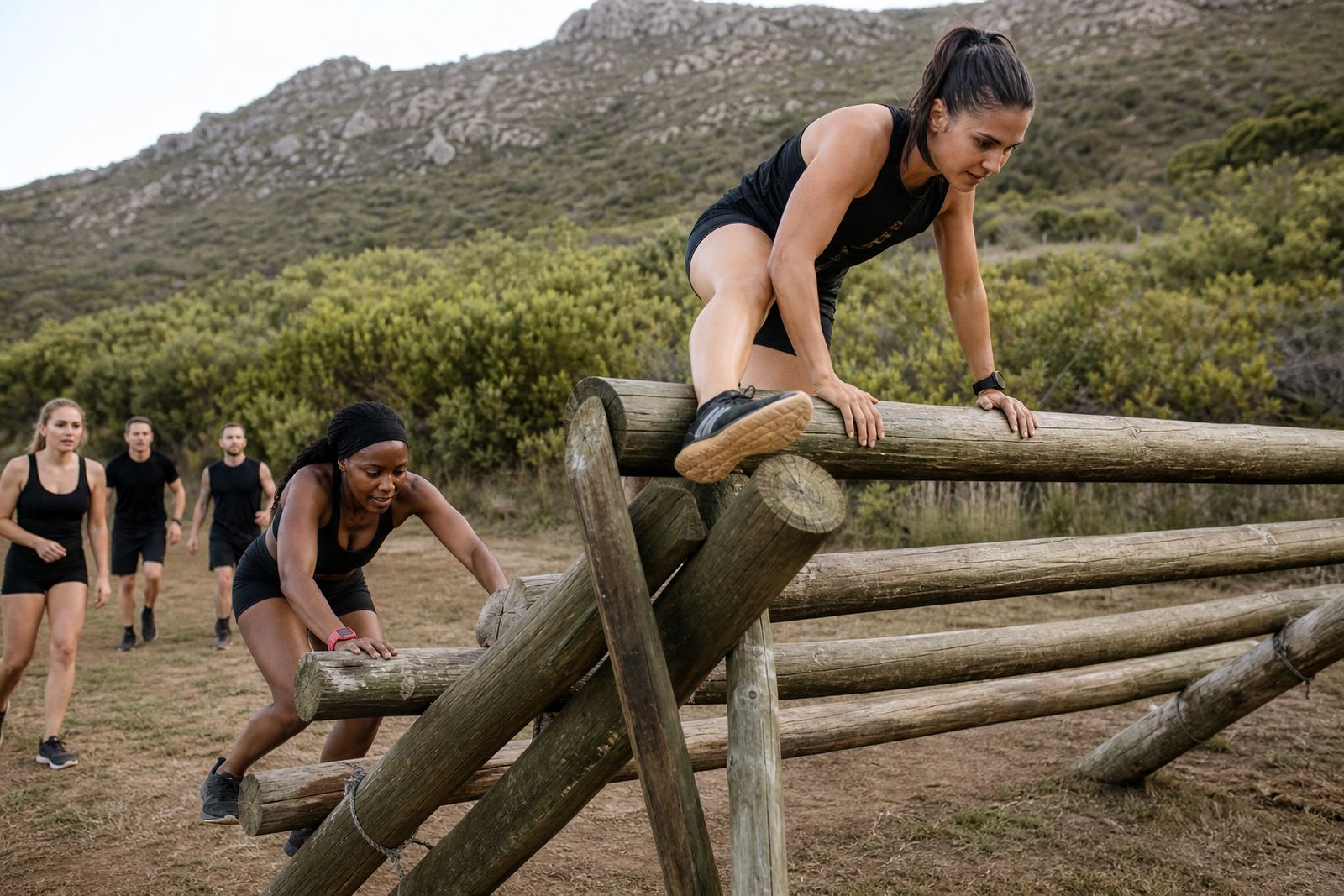
Shoes that can take dirt, rock and water
Your shoes do the hard work before you even reach the first obstacle. Choose a pair with grip that can handle loose ground, wet grass and rocky sections around Hekpoort and the wider Magaliesberg area. If the course includes water, expect your shoes to get heavy, so avoid anything you would hate to get muddy.
Make sure they are already broken in. New shoes can rub, pinch or blister once you are running, climbing and jumping. A secure fit matters more than looking fresh, because loose shoes can slip on obstacles and wet surfaces.
- Trail or training shoes with good tread
- Extra socks in case your first pair gets soaked
- Plasters or blister patches if your feet rub easily
- Laces tied securely and tucked away
Clothing that works from first whistle to finish line
Wear clothes you do not mind getting dirty, torn or stained. Quick drying fabric is a better choice than heavy cotton because it stays lighter once it gets wet and dries faster in the sun. In the North West, mornings can be cool but afternoons get hot, so layers are useful if your start time is early.
Keep your outfit practical. Avoid anything with sharp zips, loose straps or bulky pockets that can catch on rope work or barriers. A cap or buff can help with sun and dust, but only if it stays comfortable under movement.
- Light training shirt or fitted sports top
- Shorts, leggings or tights that allow movement
- Light extra layer for before the start
- Cap, buff or sun cover if you prefer one
- Change of clothes for after the event
Hydration and a small food stash for the hours around race time
Bring water and keep sipping through the morning, not only when you feel thirsty. If you are travelling from Johannesburg, Pretoria, Durban, Cape Town or Bloemfontein, the drive itself can leave you dehydrated before you even arrive. A refillable bottle is usually easier than buying drinks in a rush.
For food, keep it light and familiar. Do not try a new meal just before a hard event, and keep heavy, greasy food for later. If you have training notes from your coach or a race briefing, follow those instructions and check with a doctor before hard exercise if you have any medical concerns, asthma, heart issues or recent injuries.
- Water bottle or hydration pack
- Electrolyte drink if that suits your training plan
- Small snack like a banana, energy bar or sandwich
- Money or card for extras after the event
The clean kit you will be grateful for after the mud
Once the race is done, having a dry set of items makes the rest of the day much easier. Keep a separate bag for your clean clothes so they do not get splashed by muddy shoes or wet towels. A second pair of footwear also helps if your race shoes are soaked through.
If you are travelling with team members, keep your bag easy to identify. A plain black kit bag can look like everyone else’s after a long day, so use a tag or bright marker if needed. Include anything you need for the drive home and a quick stop in town.
- Towel for drying off after the finish
- Dry underwear and a full change of clothes
- Second pair of shoes or sandals
- Plastic bag for muddy kit
- Wet wipes or a small pack of tissues
Little extras that make the day less messy
There are a few small items that save time and stress. Sunscreen is useful even on cooler days because open farm and veld areas around the Magaliesberg can still bite. If you wear glasses, use a strap if you have one. And if your hands blister during training, bring tape or grip support that you already know works for you.
Also keep your paperwork sorted. Waivers, team details and any check in notes should be ready before you get to the venue. That helps the briefing team move everyone through more smoothly, whether you are at Hekpoort Venue, Magaliesburg Venue or travelling in from Rustenburg, Potchefstroom, Pretoria or Johannesburg.
- Sunscreen and lip balm
- Small first aid items you already use in training
- Glasses strap if needed
- Waiver and any event paperwork
- Cash or card for small purchases
Race-day bag check before you leave Hekpoort
Before you head out, lay everything on the floor and check it once more. You want the bag to cover the race, the recovery time after and the drive home. This is especially useful if your team is split across different areas and everyone is arriving from different directions. A last minute check prevents the common mistake of packing shoes but forgetting socks, or packing clothes and leaving the towel behind.
A good habit is to pack in three groups: race kit, clean kit and paperwork. That keeps the bag tidy and makes it easier to hand over items if your team captain is sorting details at the venue. If you are unsure about your readiness for hard exercise, speak to a doctor before race day. The right pack can help, but it does not replace proper training or medical advice.
- Race kit: shoes, clothing, hydration
- Clean kit: towel, spare clothes, dry shoes
- Paperwork: waiver, ID if needed, team details