
What to do when you turn off the tar
Arrive with enough time to park, walk to the entry point and sort out your paperwork without rushing. If you are travelling in from Johannesburg, Pretoria, Rustenburg, Potchefstroom or further afield, plan for extra time because traffic, gravel access roads and weather can slow the last stretch into Hekpoort or Magaliesburg. Bring your ID or booking details, plus a clear bag or small kit bag for your personal items.
At check-in, team members are usually split into the correct heat or group so the flow stays orderly. If you are part of a company team, make sure the captain knows who has arrived and who still needs support with registration. Keep your shoes on and your bag packed neatly, you may need both hands free for wristbands, forms and any last-minute instructions.
- Have your booking details ready before you queue
- Keep a copy of your waiver status if you completed it earlier
- Tell staff if you are with a team, school group or corporate entry
- Allow extra time for parking and walking from the vehicle
The paperwork bit that keeps the day moving
Every participant needs the required waiver or indemnity form before taking part. This is standard for obstacle course racing and endurance events, because the course can include mud, water, climbing, crawling and uneven ground. If you are registering as part of a group, one person may sort part of the admin but each runner still needs their own details captured correctly.
If anything on your form is unclear, ask before the start rather than waiting until you are at the line. Our support team can help with waiver coordination, team registration help and onsite team check-in. For corporate entries, it helps to have one person from the office or team captain handle the list so names, heat allocation and emergency contacts match up properly.
- Read the waiver fully before signing
- Use the same name you used for your booking
- Check emergency contact details carefully
- Tell staff about any missing forms as soon as you arrive
What the safety talk covers before the first obstacle
The safety briefing is there so everyone knows how to move through the course, where to wait, and how to handle obstacles without crowding others. Bianca Khoza and the briefing team focus on the practical parts: safe passing, obstacle order, water points, where the recovery area sits, and what to do if you need a pause. Listen closely even if you have done similar races before, because course layouts change from venue to venue.
You may also hear reminders about hydration, sun protection and pacing. In the Magaliesberg heat, that matters more than people think. If you have not trained hard for a while, or you are not sure how your body will react to climbing, scrambling and longer efforts, check with a doctor before taking on strenuous exercise. That is especially important if you have asthma, a heart condition, joint concerns or another issue that could affect hard exertion.
- Stay with your group until the briefing is finished
- Ask about obstacle modifications before the start if needed
- Listen for direction on water, recovery and medical support areas
- Do not skip the briefing even if the course looks familiar
What to pack so you are not stuck halfway through
Bring kit that can handle dirt, dust, wet ground and a bit of rough contact. Good trail shoes or training shoes with grip are usually better than smooth-soled casual shoes. Spare socks, a towel, water, sunscreen and a change of clothes are all worth packing, especially if you are driving back to Pretoria, Johannesburg or even further after the event. In winter mornings, a light layer helps before the warmup, then can be left at bag drop if that is available.
A small kit bag works better than carrying loose items. Leave valuables at home where you can, and keep only what you need for the day. If you are with a team, label your bag clearly so it does not get mixed up in the rush after warmup. Also, if the weather turns and the ground gets sticky, having an extra pair of socks can make the trip home much more comfortable.
- Grip shoes that you do not mind getting muddy
- Water bottle or hydration pack
- Sunscreen, towel and spare socks
- Dry clothes for the drive home
How the course flow works from start to finish
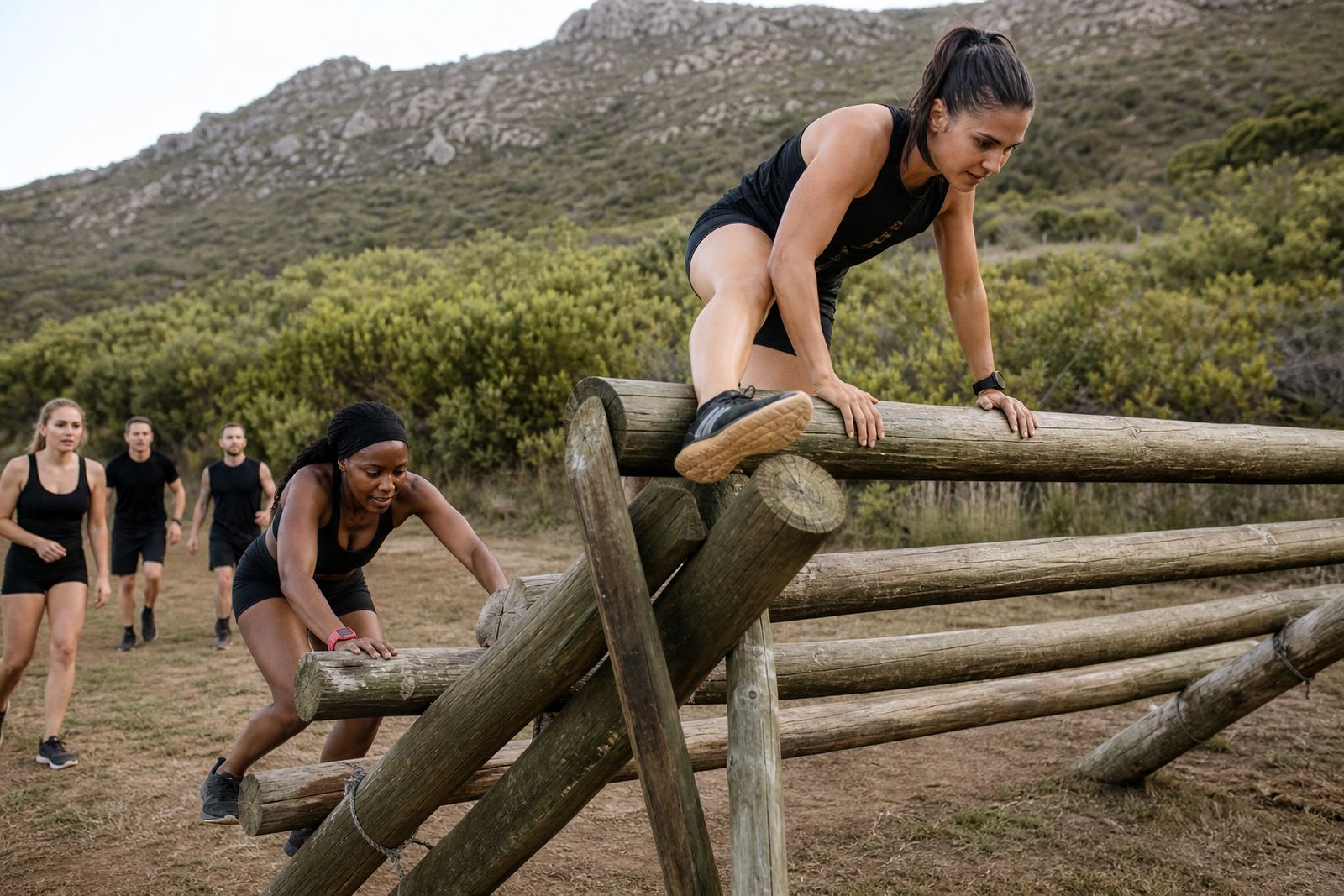
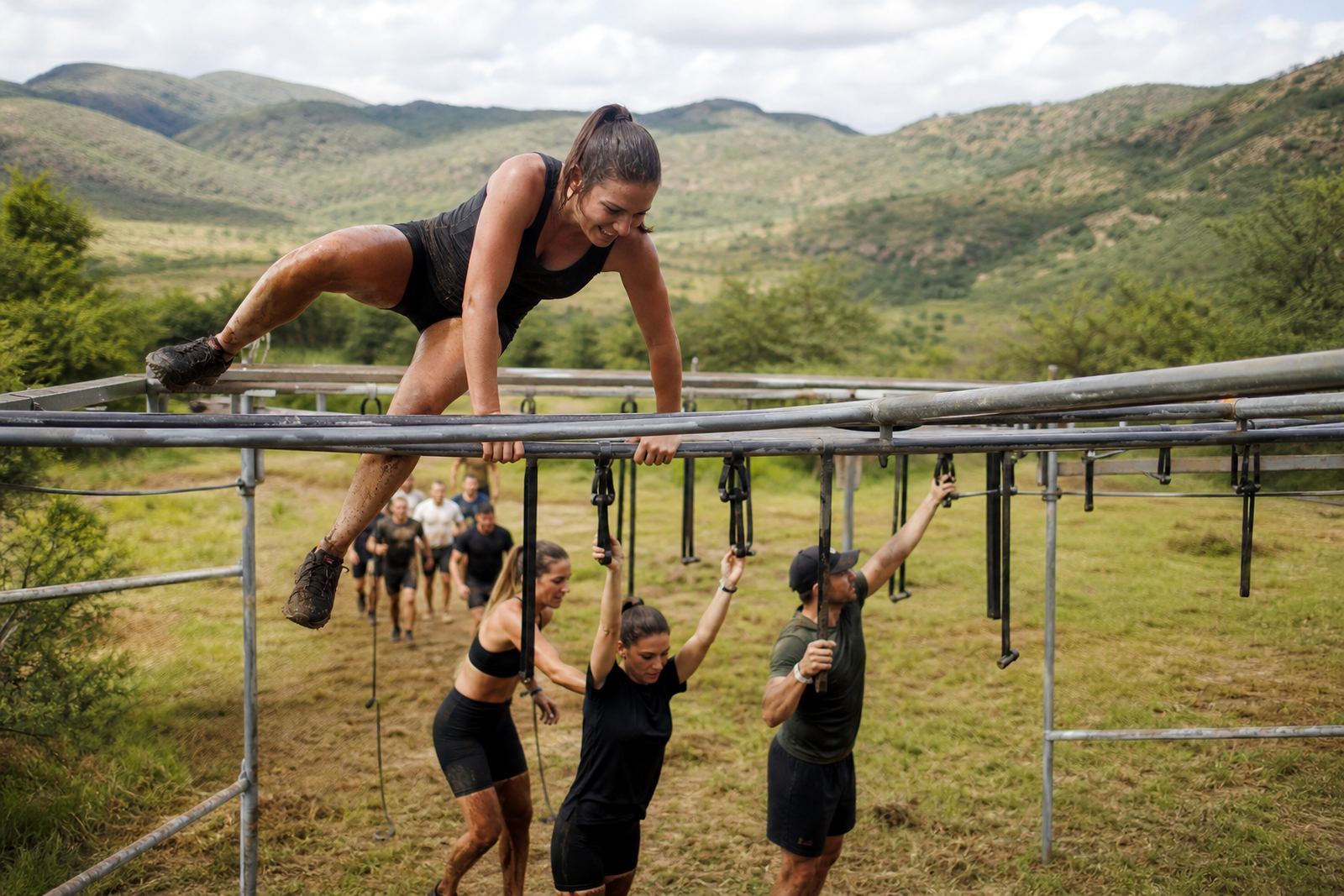
After the briefing and warmup, participants are released in organised heats or groups so the course stays manageable. That helps reduce bottlenecks at the first few obstacles and keeps teams moving at a steady pace. You may be placed into a heat that suits your group, or split by timing and capacity so there is enough room on the course. Heat allocation support is there to help with this, especially for larger companies or mixed fitness teams.
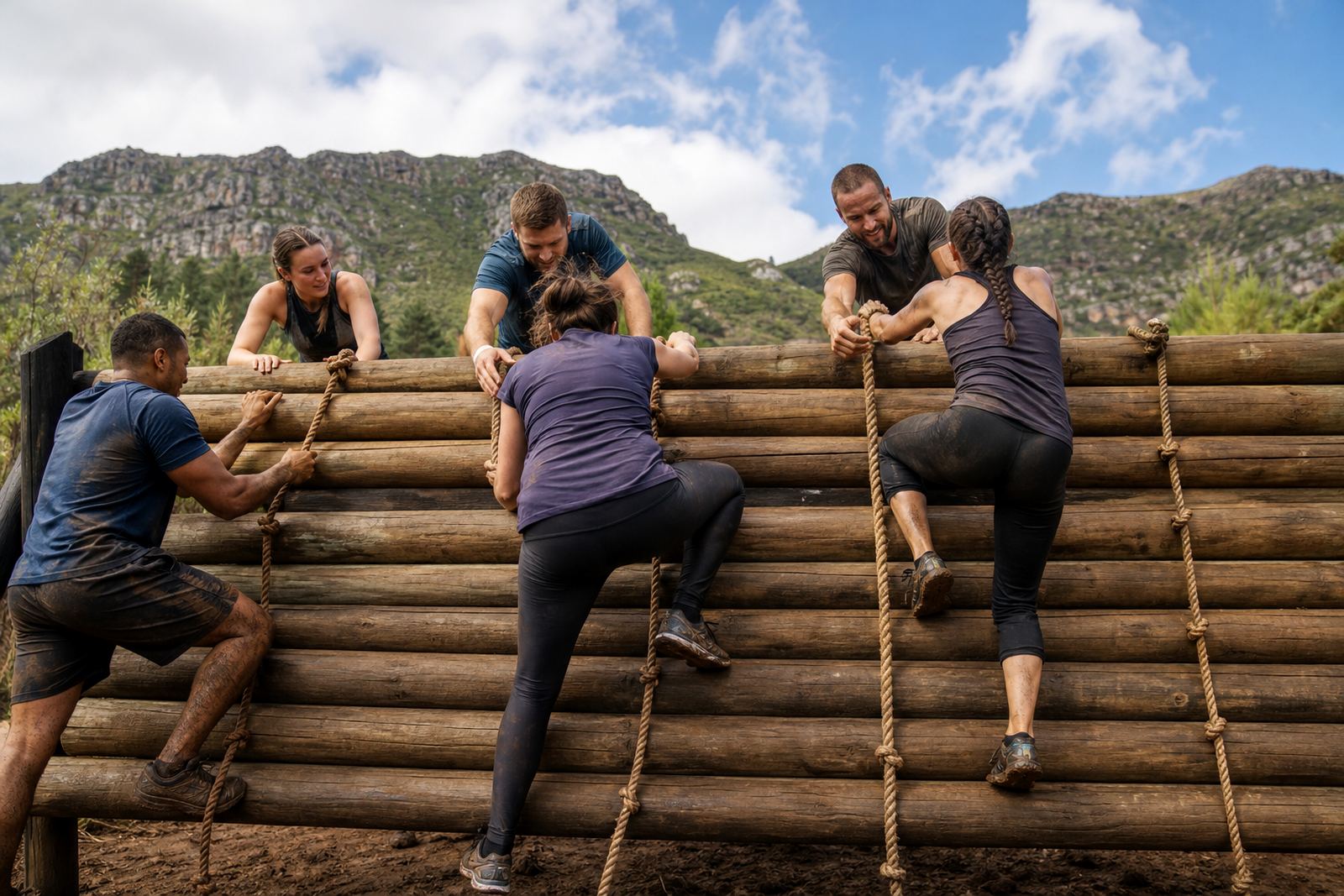
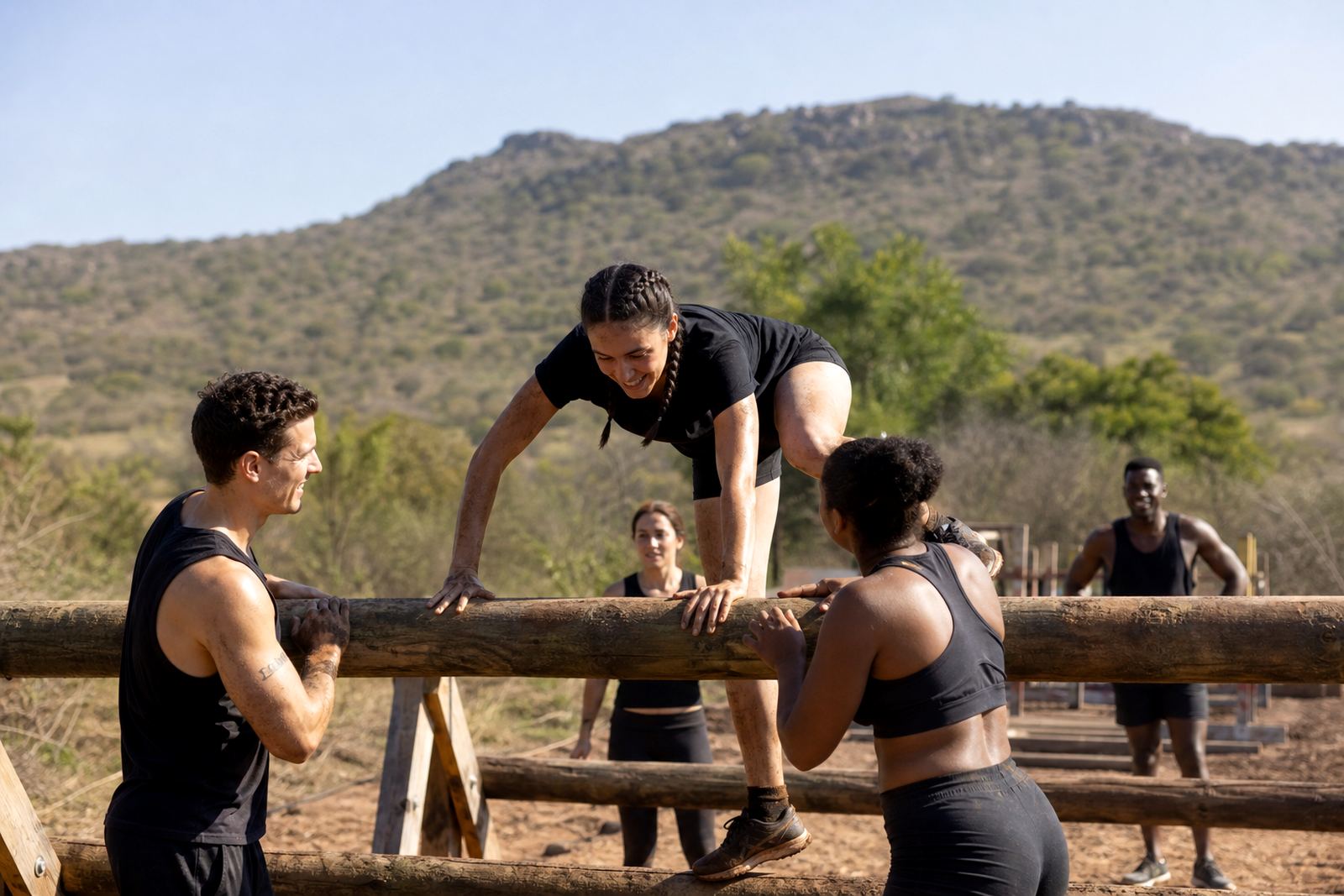
Once you are out on course, follow marshals instructions at each obstacle and respect the space of runners ahead of you. Some people move quickly, others take a steadier line, and both are fine. If you need to step aside, do it safely and call out clearly. The course is meant to be challenging, not chaotic. Team members can still encourage each other, but do not block an obstacle or push a runner who is already committed to a movement.
If you need a pause, a reset or help after the line
Not every runner finishes in the same condition, and that is normal. If you need a breather, head toward the recovery area guidance points and let a marshal know if you feel unwell, dizzy or cramped. Support staff can guide you on where to sit, how to rehydrate and how to rejoin your team after you have recovered. For groups, captain communication helps everyone stay informed when one person needs a bit more time.
After the finish, use the time to collect your things, hydrate and change if needed before heading out. Team photo moments and supporter planning are usually easier once everyone has come through and people are no longer rushing. If you are bringing family or colleagues to watch, let them know where to stand so they do not crowd the finish zone or the recovery area.
- Tell a marshal if you feel unsteady or overheated
- Use the recovery area before you rush off
- Check that your team knows where to meet after the finish
- Keep your belongings together before leaving the venue