
Start with what your body already does well
There is no need to train like an elite athlete before your first obstacle race. Begin with walking, short jogs and bodyweight work that you can repeat each week without falling apart by Wednesday. If you have not exercised hard for a while, check with a doctor before taking on heavy training or a demanding event.
For a beginner, consistency matters more than punishment. Two or three training days a week is enough to build a base, especially if you are balancing work, family and travel to the Magaliesberg or North West. Keep the pace honest but manageable, and give yourself time to recover between sessions.
- Walk or jog for 20 to 30 minutes at a steady pace
- Do squats, lunges and push-ups using good form
- Practise short bursts of effort, then recover properly
- Finish each session with light stretching and water
Build legs, lungs and grip before the obstacles do
Obstacle racing asks for more than straight-line running. You need legs that can climb, lungs that settle quickly and grip that holds when the ropes, walls and carries start to bite. Work on these areas separately and then combine them in one session each week.
A useful pattern is to run, then do a strength movement, then run again. That teaches your body to keep going while tired which is exactly what a course asks for. If you train on hills around Hekpoort or the Magaliesberg, use them, but keep the effort controlled so you do not overload your calves or knees.
- Hill repeats for climbing strength
- Farmer carries with buckets, sandbags or dumbbells
- Dead hangs or towel hangs for grip endurance
- Step-ups on a stable box or bench
Do not skip rest days. A sore body that never recovers becomes a slower body, and sometimes an injured one.
Learn the race skills that save energy on the day
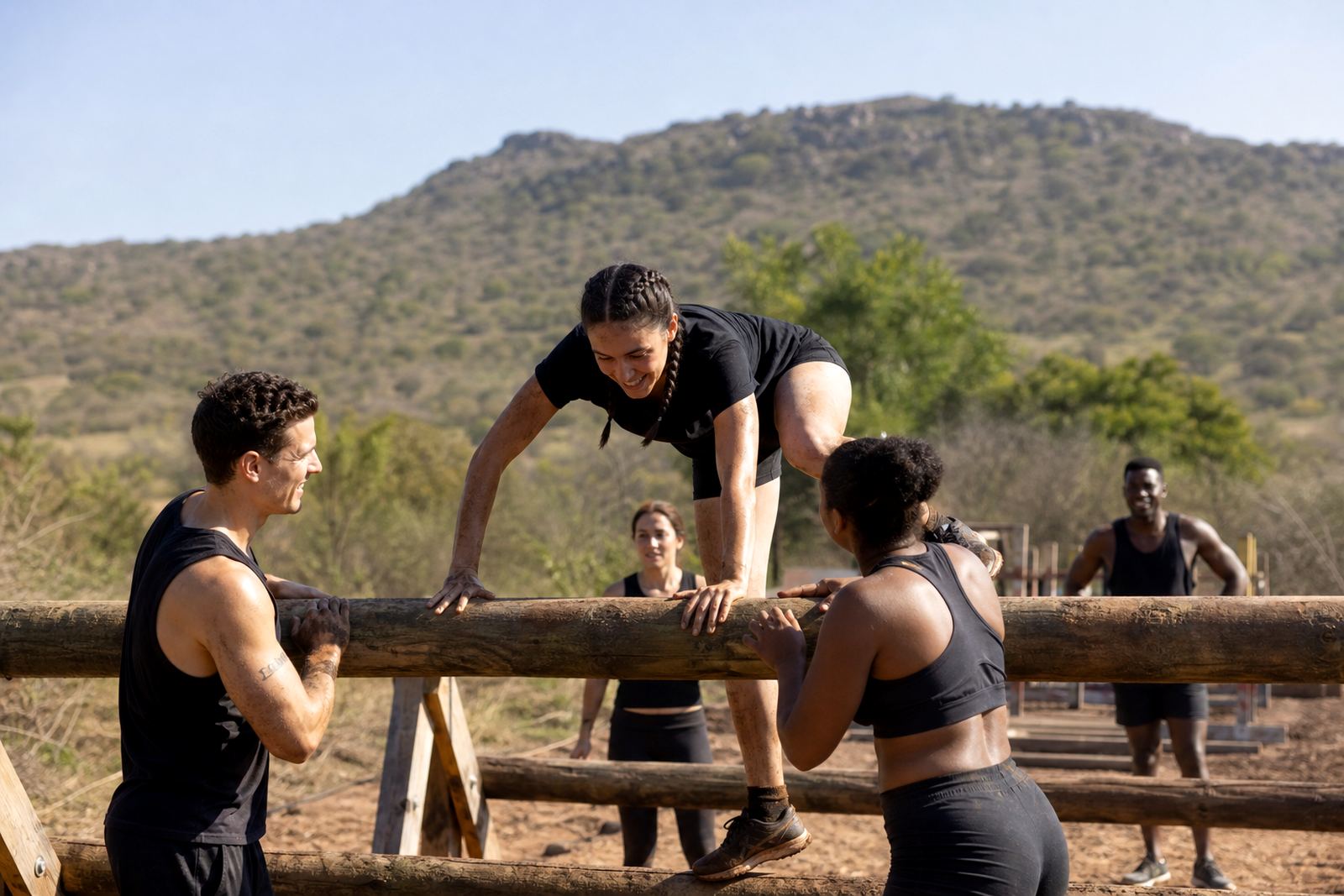
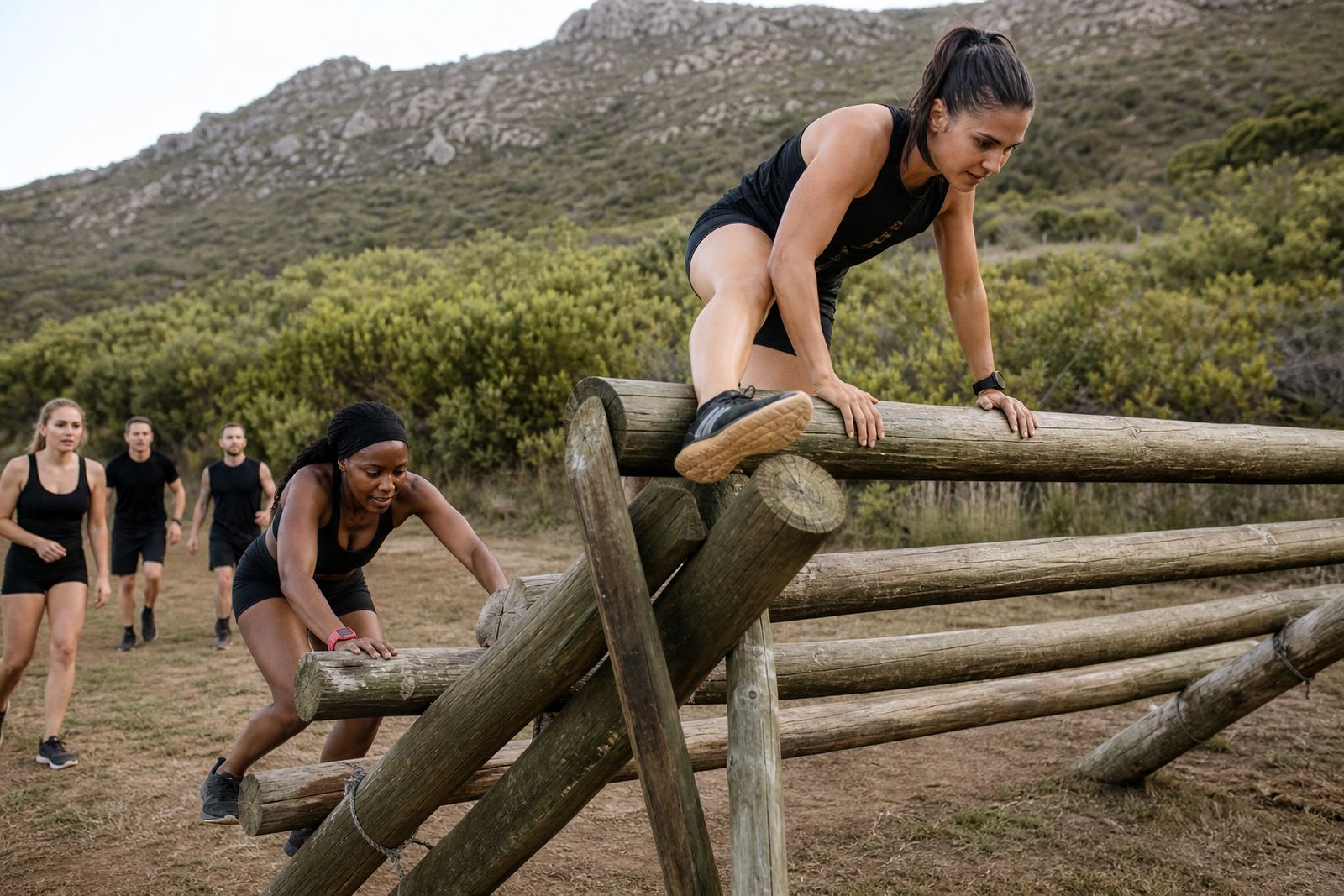
Many people think obstacle racing is only about fitness, but technique makes a big difference. A wall is easier if you know how to plant your feet. A carry is more manageable if you keep your breathing steady. Even a muddy section becomes less stressful when you know not to rush every step.
Before event day, practise moving efficiently rather than forcing speed. This is where a custom team briefing can help for groups, clubs and corporate entries. It gives everyone the same instructions on pacing, order and what to do when the course changes because of weather or ground conditions. And yes, a little patience helps when the line at an obstacle is longer than expected.
- Practise climbing, crawling and stepping over low barriers
- Learn how to breathe through effort instead of holding your breath
- Get used to wet shoes, dust, uneven ground and loose footing
- Work on safe falling and getting back up without panic
What to sort out before you travel to the venue
On the practical side, event prep is easier when your kit is packed the night before. For teams travelling from Pretoria, Johannesburg, Rustenburg or Potchefstroom, this matters because race mornings start early and traffic can be unpredictable. Keep your documents ready, your clothing clean and your bag light enough to carry around the venue.
Waiver coordination and on-site check in are part of the process for many group entries. Make sure everyone in your group understands the safety briefing time and the basic rules before heading to the start line. If you are bringing supporters, they also need to know where they may stand, where recovery areas are and what access points are available at the venue.
- Photo ID and any required entry confirmation
- Comfortable running kit that can get dirty
- Trail shoes or trainers with decent grip
- Water, a snack and a dry top for after the race
- Sun protection, especially for open course areas
Safety briefing is not a formality, it is part of the race
A proper safety briefing helps everyone understand the course, the risks and the expectations around each obstacle. Listen carefully, ask questions early and do not assume you will figure it out once the whistle goes. That approach usually ends with someone standing in mud looking confused, which is not ideal for anyone.
Pay attention to how marshals handle the different sections, where to wait if a lane is busy and what to do if you need support. If you are in a team, your captain should know where the group starts, how heat allocation works and where to meet if someone needs a slower pace. The point is not to make things difficult; it is to keep the event orderly and safer for everyone.
If you feel unwell before the start, say so. It is better to step back than to push through something that could turn serious.
How to train in the week before event day
The final week should not be a punishment week. Reduce hard sessions, keep your body moving and let your muscles settle. A short jog, a few mobility drills and light bodyweight work are enough for most beginners. You should arrive fresh, not flattened.
Sleep, water and food matter more than last-minute panic training. Eat normally, drink enough and avoid trying something new right before the event. If the weather is hot, dusty or wet, plan for that too. In the North West and around the Magaliesberg, conditions can change quickly and a course can feel very different after rain or strong sun.
- Do one light session to keep the legs awake
- Stop hard training at least a few days before the race
- Check your kit, laces and socks the night before
- Keep your breakfast familiar and easy to digest
Training with a group makes the whole thing easier
Teams do better when everyone knows the plan. That is where corporate entry planning, captain communication and support for group warmups help. A mixed group often has strong runners, cautious beginners and a few people who hate hills but love the idea of finishing together. That is normal.
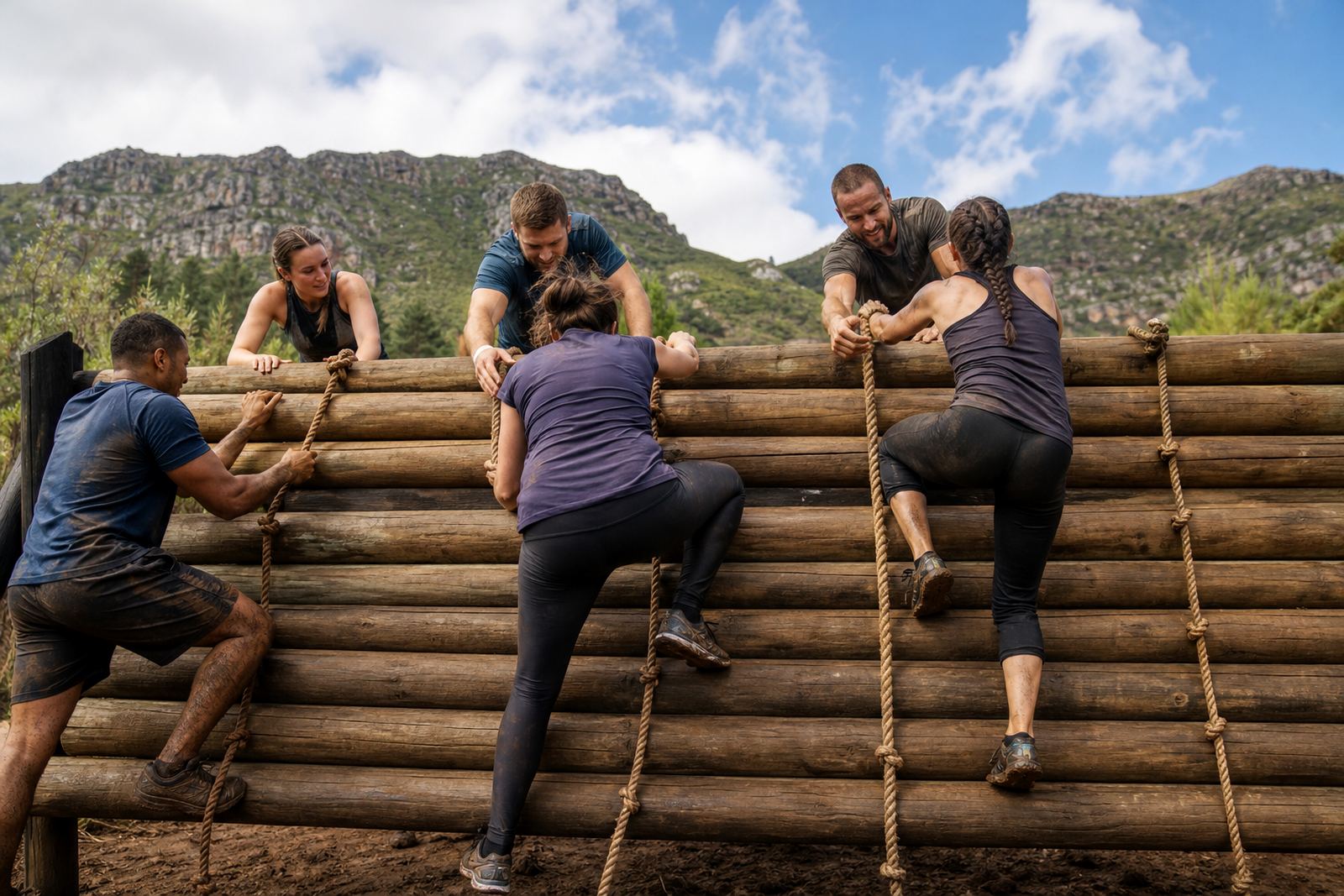
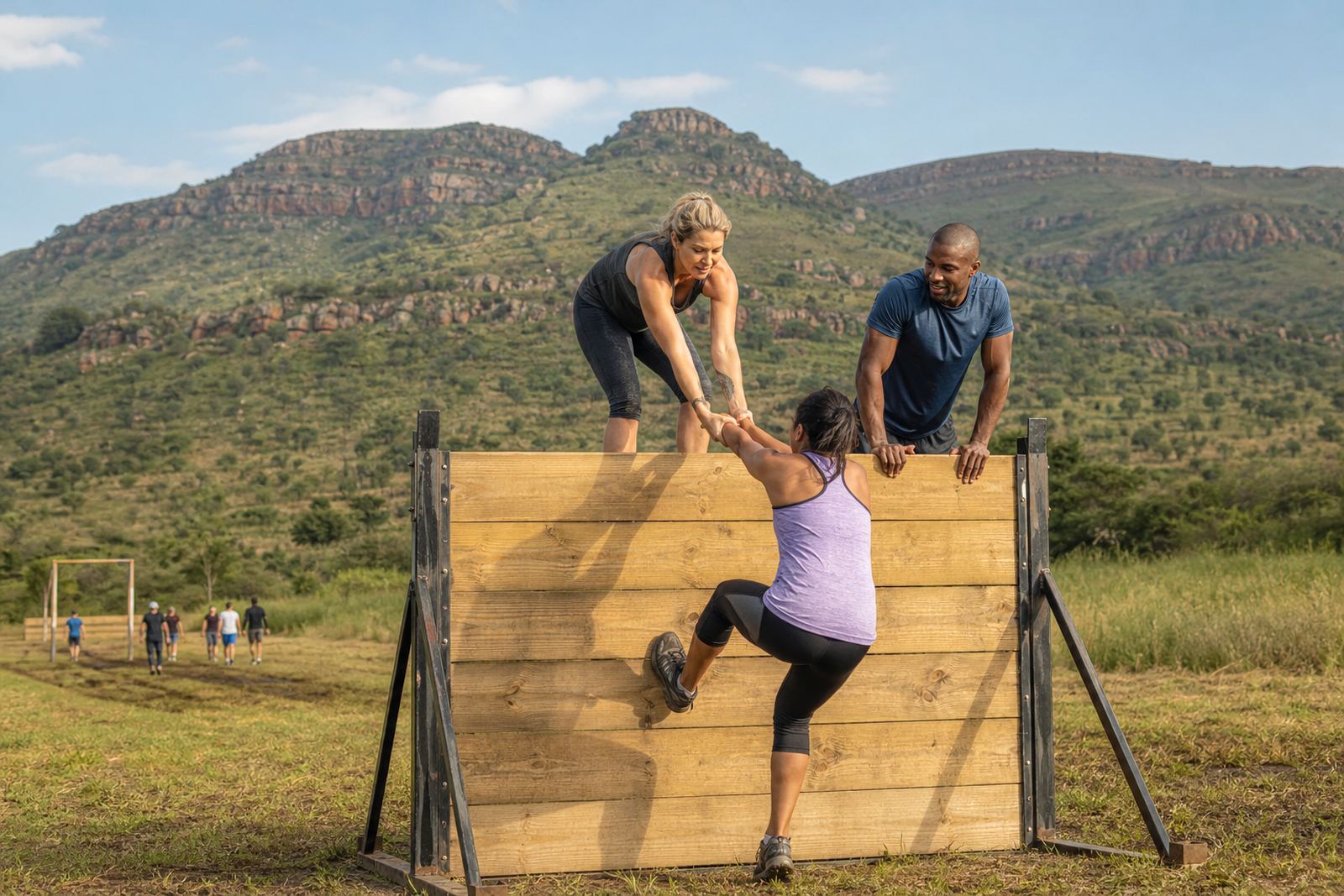
Use the weeks before the event to match pacing, agree on call-outs and decide how you will move through the course. Someone may need a slower line, someone else may need encouragement at the wall and someone else may just need a reminder to breathe. Good teamwork does not remove the challenge, it makes the challenge more manageable. That is usually the difference between a scramble and a finish everyone can enjoy.
For entrants travelling into Hekpoort, Magaliesburg, Hartbeespoort or Krugersdorp, the most useful preparation is still the basics: steady training, clear instructions and the right kit. Get those right and the rest becomes much easier to handle.