
Waterline running with a proper grip test
The River Crossing Race is built around safe water crossings, wet ground and obstacle sections that ask participants to balance, wade, climb and keep moving under changing underfoot conditions. It is used for adventure events in the Magaliesberg and North West, with routes suited to Hekpoort, Magaliesburg, Hartbeespoort, Krugersdorp, Pretoria, Johannesburg, Rustenburg and Potchefstroom travel groups.
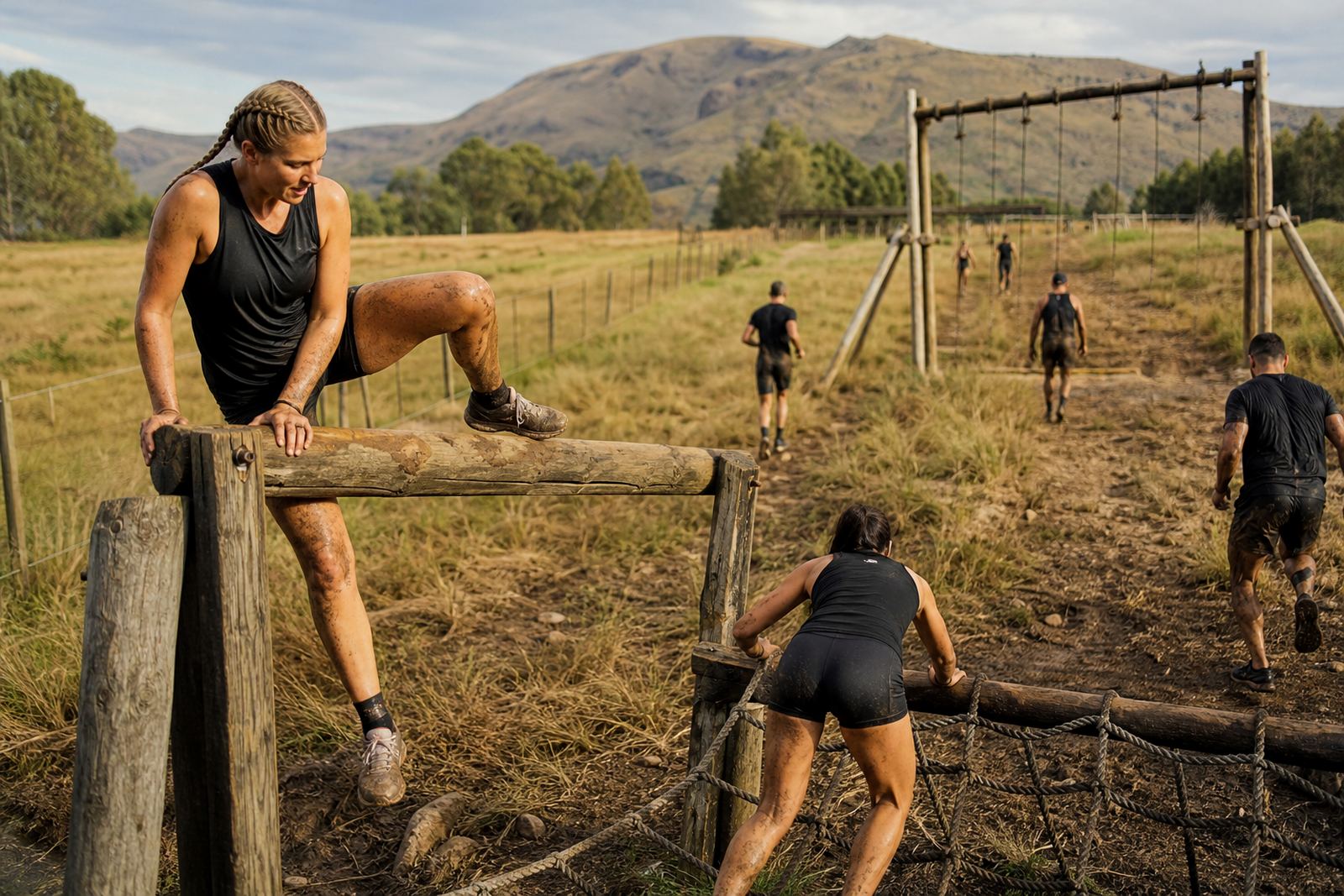
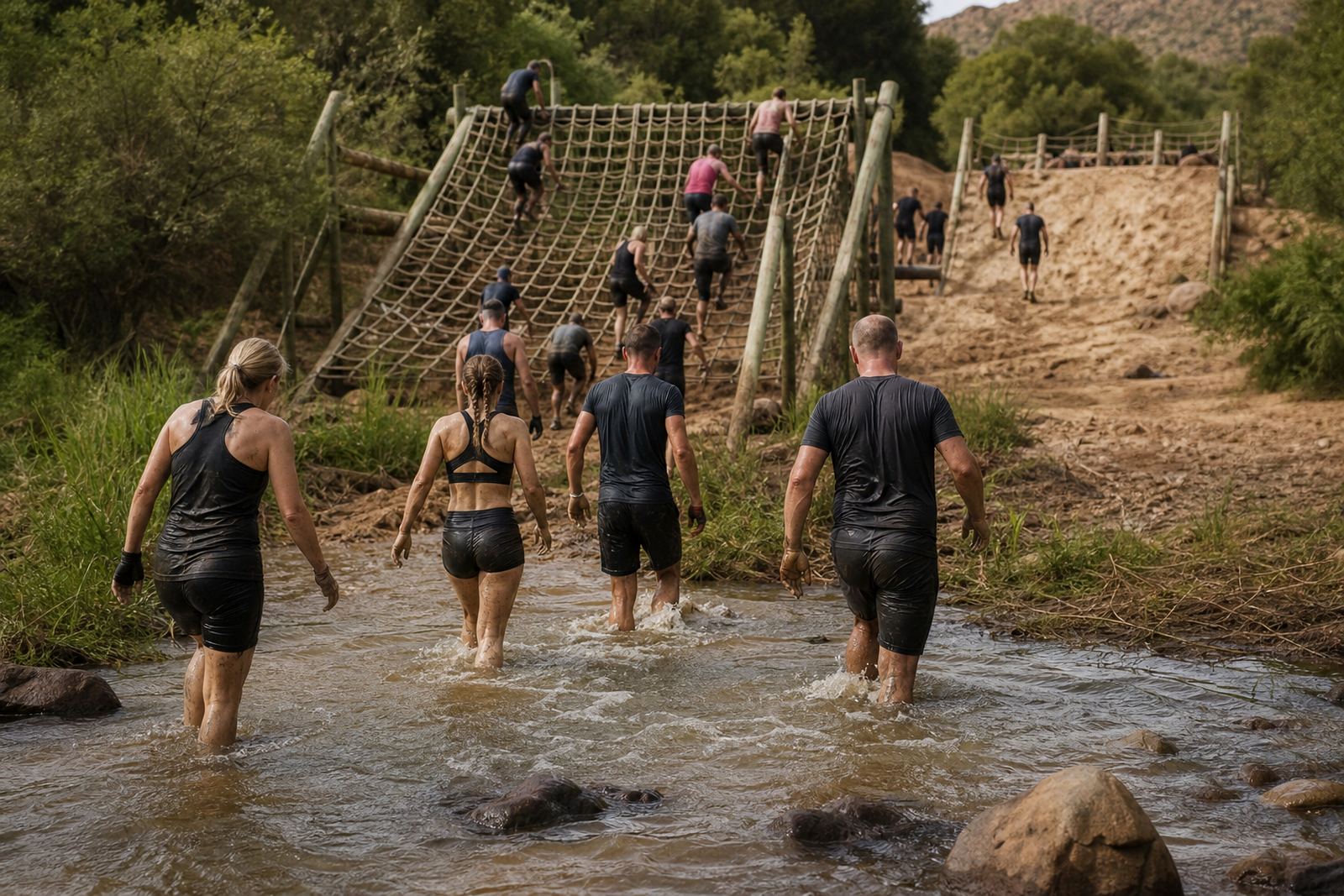
The course format works well for teams that want a shared challenge rather than a flat road run. Expect river edges, shallow crossings, muddy entries and exits, carrying points, low crawls and practical strength tasks. The race can be set up for heats, team waves or corporate group starts, with briefing support before each group heads out.
- Wet terrain sections for traction and balance
- Safe crossing points with course marshals nearby
- Obstacle spacing that suits mixed pace groups
- Options for team or individual completion
Sizes, route lengths and event layout choices
This format can be adapted to different route lengths and difficulty levels, depending on the venue access, river conditions and the type of entrants expected. Shorter layouts are useful for first-timers, school-age family groups and corporate teams, while longer routes suit participants who want a fuller endurance test. The course can be marked for clear turning points, recovery stops and spectator viewing areas.
Route planning usually takes account of slope, bank stability, water depth and the distance between marshal posts. In the Magaliesberg area, where weather and ground conditions can shift quickly, the layout needs enough space for queueing at crossings and safe movement around wet patches. For larger group events, heat allocation and start intervals help reduce congestion at the river points.
- Short, medium and longer challenge layouts
- Team waves, open waves or managed heats
- Course markings for entry, exit and detour points
- Spectator-safe viewing zones where the site allows it
Where this race fits best in the field
The River Crossing Race suits farm venues, outdoor adventure sites and open ground near natural or controlled water features. It works particularly well where there is enough space for runners to approach, cross and recover without blocking the next group. If the site sits near a river, dam edge or wetland section, the setup must respect land access rules, municipal requirements and any site-specific safety controls.
For businesses and event organisers, this format is often chosen for team building days, club challenges and mixed-ability adventure events. It is also a good fit for regions with hot conditions, because the water element changes the pace and gives participants a physical break before the next obstacle. In coastal humidity or after heavy rain, grip and foot placement need closer attention, so the route must be adjusted to match the surface on the day.
- Farm venues with open turnaround space
- Outdoor event grounds with controlled water access
- Corporate challenge days and team events
- Adventure club calendars and seasonal race series
Build, fitting and site setup details to confirm
Before a River Crossing Race is signed off, the organiser needs to confirm river access, ground conditions, parking, emergency access and where the start and finish will sit. If temporary barriers, ropes, staging or timing points are being used, those must be placed so they do not create a slip hazard near the water. Any fitted course pieces, such as crawl frames, handholds or entry platforms, should be anchored for wet conditions and checked again after rain.
Where the site has uneven banks or soft ground, the build team may need to widen foot access or add traction surfaces at the most used points. The layout should also allow for marshal positioning, participant flow and recovery space after each crossing.
- Venue access for vehicles, marshals and emergency response
- Ground firmness at entry and exit points
- Power needs for timing, communication or briefing equipment
- Space for check-in, warmup, recovery and support teams
Safety briefing, waiver handling and participant prep
Every group needs a clear safety briefing before starting. That includes how to enter and leave the water, where to wait if the course backs up, how to report a slip or cramp, and which obstacles must be tackled one at a time. Waiver coordination forms part of the entry process, with captain communication useful for larger teams that need one person to pass on last-minute instructions.
Participants should check with a doctor before hard exercise, especially if they have heart, breathing, joint or balance concerns. For the event itself, the usual preparation is practical: trail shoes with a solid grip, clothing that can get wet, a dry change of kit, a towel and water. Gloves can help on rope or frame sections, and a small waterproof bag is handy for keys and phones. Jewellery and loose items should be left out of the race area.
- Signed waiver and team registration details
- Grip-friendly shoes and quick-dry clothing
- Dry clothes, towel and drinking water
- Any personal medication that a participant normally carries
After-race care and what to confirm when ordering
After the finish, the course area should be checked for loose debris, shifted markers and any slippery build-up on steps, ropes or handholds. Wet surfaces need to be cleaned and dried where possible, and temporary items should be removed or stored so they do not corrode in the weather. In humid or rainy conditions, ropes, mats and metal fittings need extra attention so they last through repeated events.
When ordering a River Crossing Race setup or booking an event package, confirm the venue, preferred route length, number of heats, expected fitness range and whether you need team support services. It also helps to confirm whether your group needs warmup guidance, onsite check-in, supporter planning, recovery area guidance or custom team briefing. For clients in Johannesburg, Pretoria, Cape Town, Durban and Bloemfontein travelling to the Magaliesberg area, transport timing and arrival windows should be set early so the briefing starts on time.
- Venue name and access route
- Number of entrants and team structure
- Preferred start format, wave or heat
- Support services needed on the day
Key facts
| Format | Obstacle course race with safe water crossings and wet terrain sections |
|---|---|
| Typical use | Adventure racing, corporate team events, club challenges and mixed-fitness entries |
| Course setup | Marked route with marshal points, briefing area, entry and exit controls |
| Venue fit | Farm venues, outdoor event grounds and sites with controlled water access |
| Participant prep | Grip shoes, quick-dry clothing, towel, water and a dry change of kit |
| Event controls | Waiver handling, safety briefings, heat allocation and recovery area guidance |