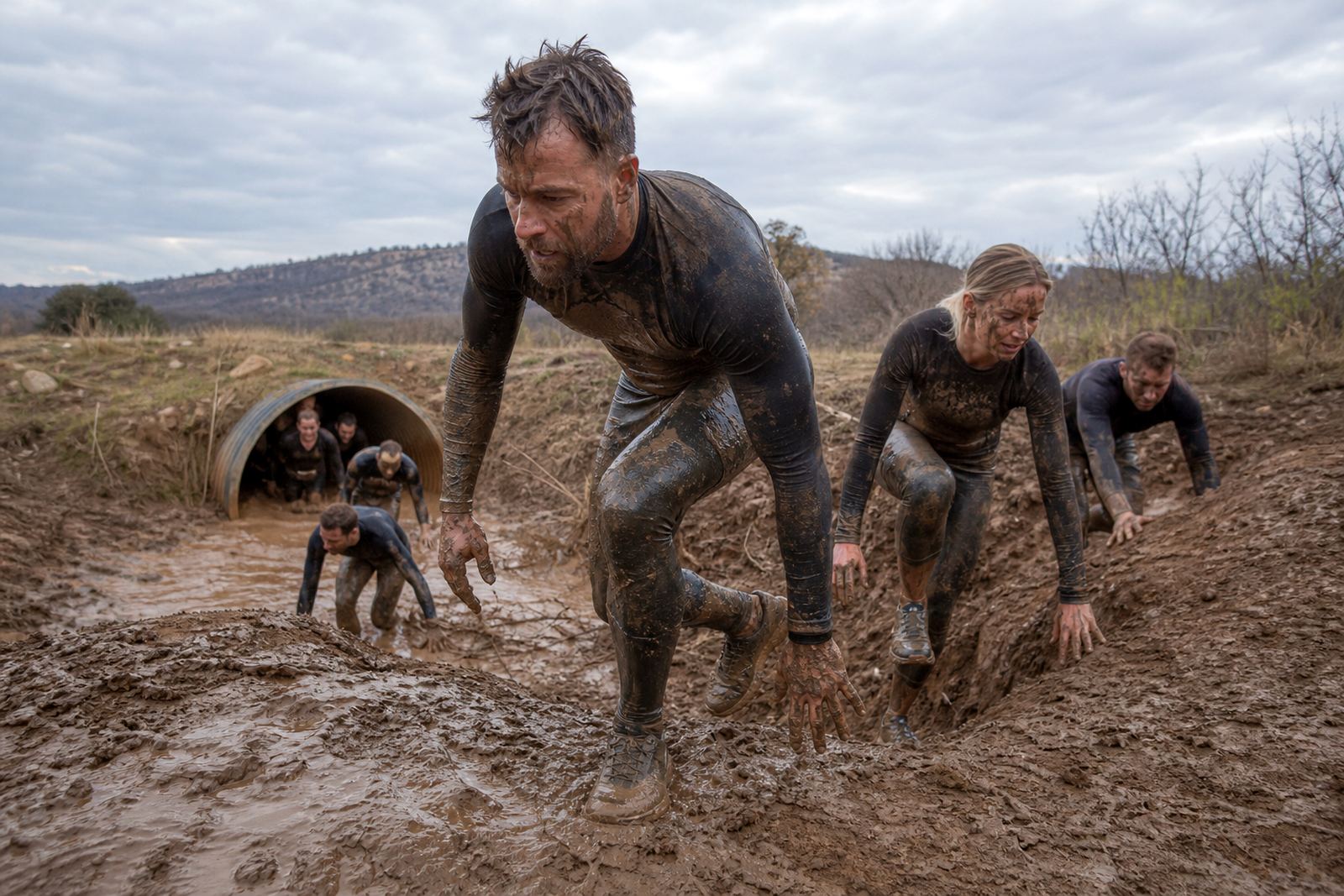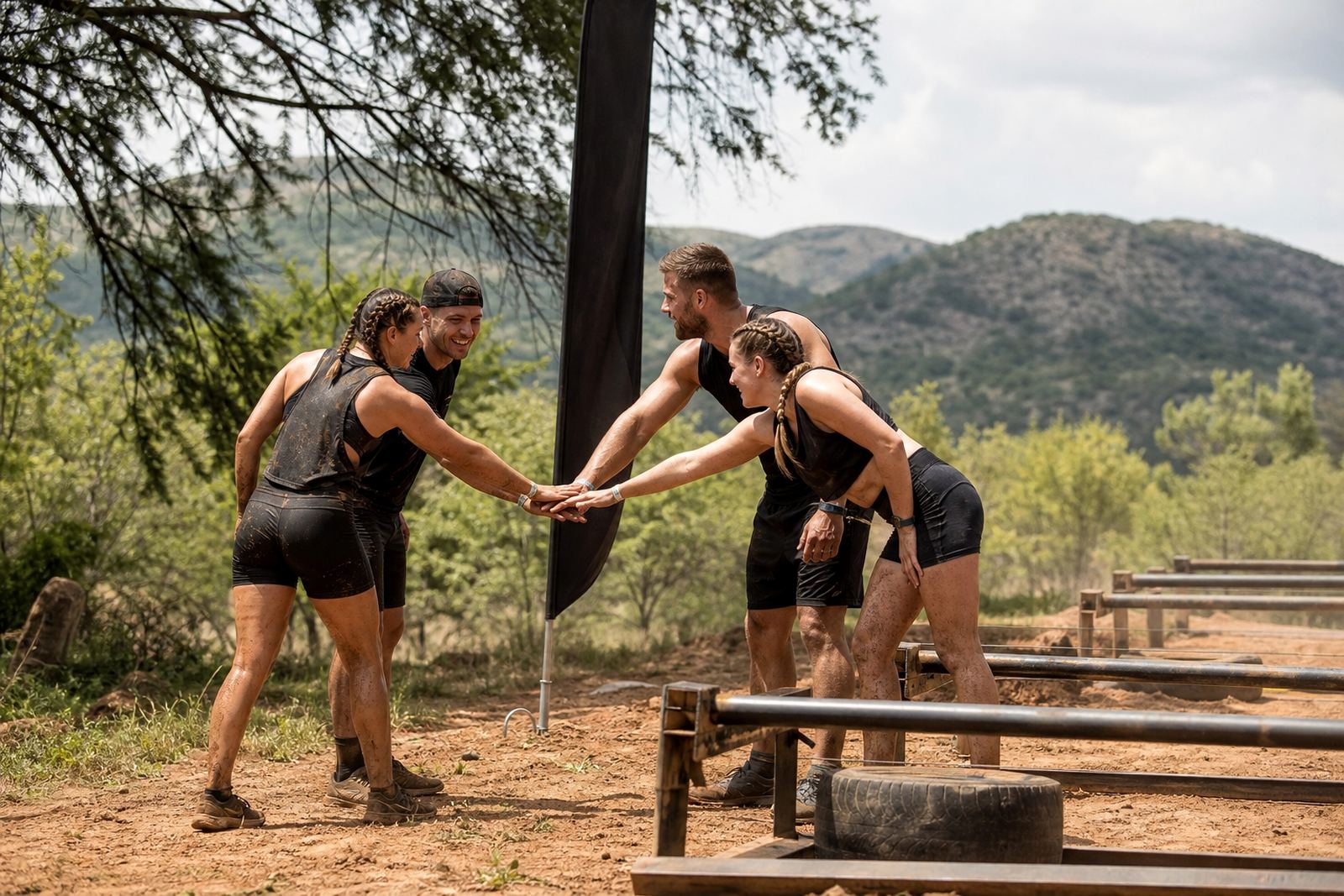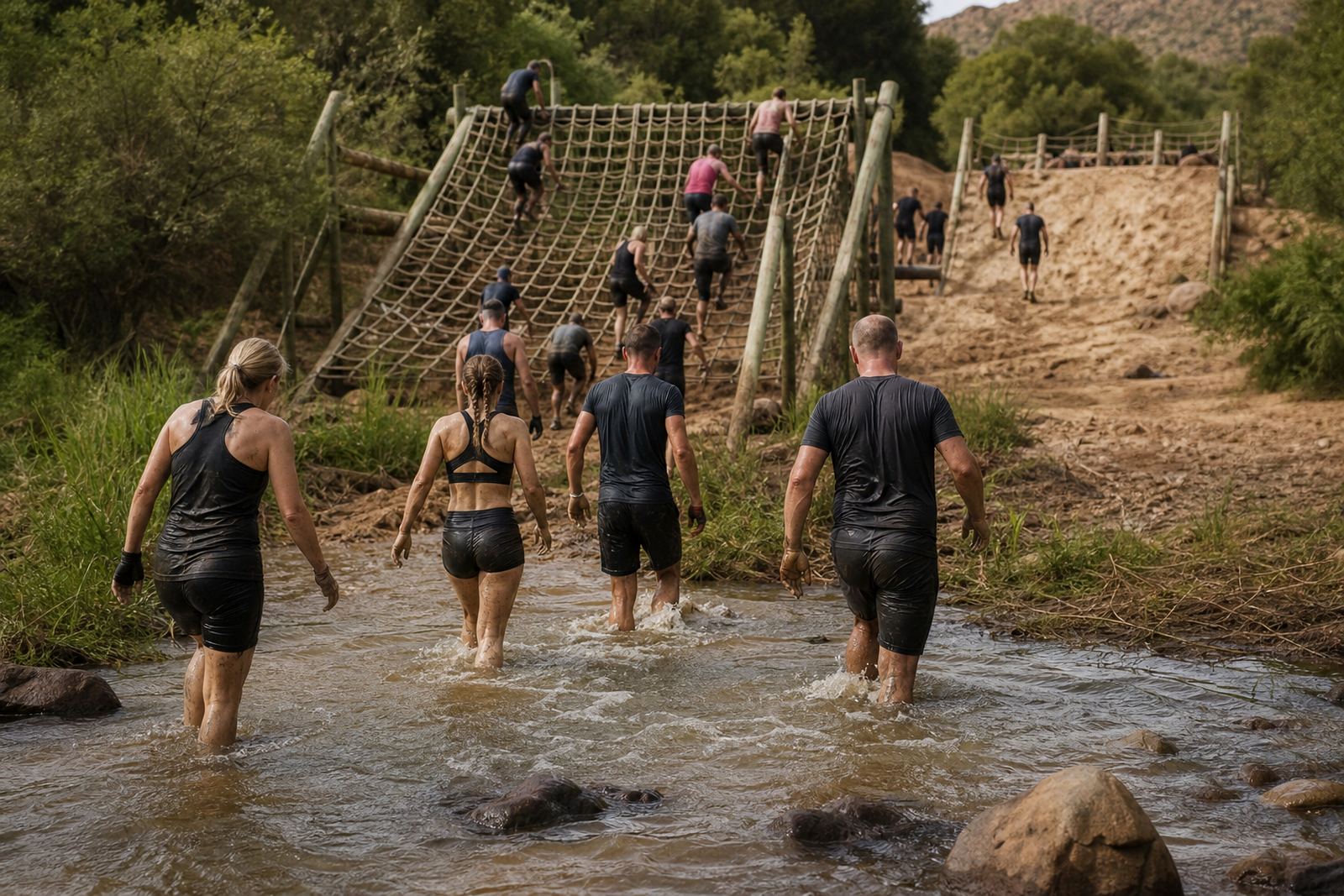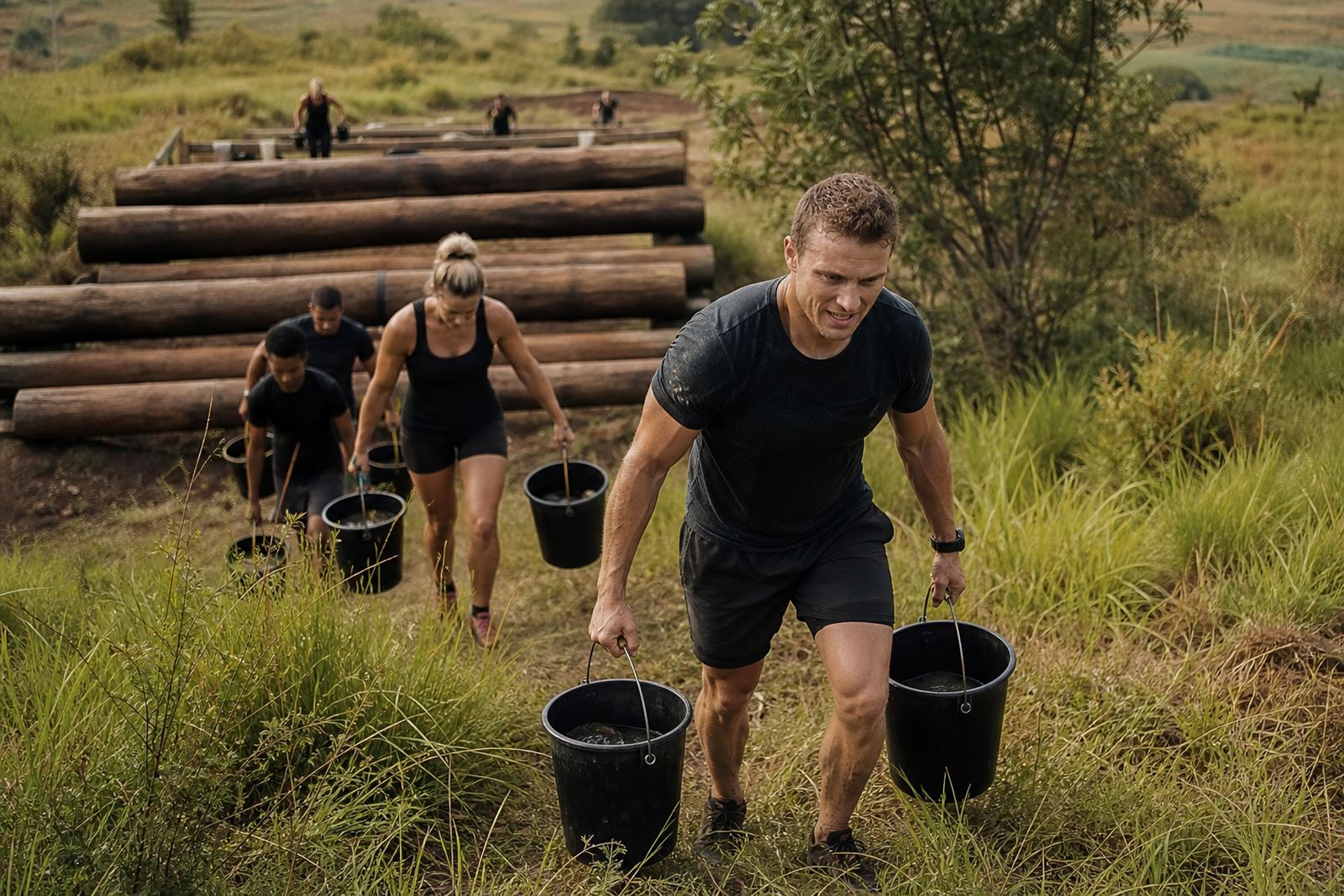
What Carry Challenge asks of the body
Carry Challenge is built for repeated work under load. Participants move bags, frames, tyres, sand-filled gear or similar carry loads across uneven tracks, with short recoveries before the next effort. The aim is to keep moving steadily, hold form under fatigue and finish the section without dropping standards on safety or control.
It works well as a standalone challenge or as one station inside a broader obstacle course race. The ground can include gravel, compacted dirt, grass, slope changes and loose patches, so foot placement matters as much as upper-body strength. Participants should check with a doctor before hard exercise, especially if they have heart, back, knee or shoulder concerns.
- Repeated carry intervals over outdoor terrain
- Grip, trunk control and leg drive all matter
- Can be used in short heats or longer endurance blocks
Load options and carry formats that suit the route
We set Carry Challenge up in a few practical formats depending on the event, the field and the site layout. Loads can be matched to men’s, women’s, mixed or corporate team entry groups, and the carry distance can be adjusted for age group, fitness level or heat timing. For some events the load stays the same from start to finish; for others it is swapped between stations to test handling and recovery.
Typical options include single-object carries, partner carries, repeated shuttle carries and team relay carries. The load should be heavy enough to demand good effort but still manageable with correct technique. On sloped ground around Hekpoort and the wider Magaliesberg, we often shorten the carry line a bit and use clearer lane marking so teams can keep their spacing.
- Single participant carry or paired relay format
- Short shuttle sections or longer endurance carries
- Load changes by category, route length and event type
Where this station fits best
This product suits outdoor events where the route can be clearly marked and the surface checked before race day. It performs well for corporate team days, club endurance events, military-style fitness challenges, charity-style entries and mixed-ability adventure groups. The Carry Challenge is particularly useful where you want to reward discipline rather than speed alone.
In the Magaliesberg and North West, the station suits venues with open ground, access for course build gear and room for marshals to guide the flow. It also works for travelling entrants from Pretoria, Johannesburg, Rustenburg, Potchefstroom and the broader Gauteng area. In summer, shade and water points need close planning; in dusty months, footing and dust control must be managed carefully.
If you are running a corporate entry, we can help with team registration, captain communication, heat allocation support, onsite team check-in and recovery area guidance. That makes it easier for group leaders to keep people in the right start wave and ready for their carry section.
Setting it up safely on uneven ground
Carry Challenge needs course marking, marshal placement and a clear safety briefing before the first heat. The load area should be stable, with a defined start and finish point and enough space for participants to turn without crowding. Where the route passes over rocks, ruts or wet patches, the section should be inspected and adjusted before racing starts.
For larger groups, we recommend a custom team briefing, safety briefing groups and waiver coordination before arrival. If the event is held during a hot spell or after heavy rain, the ground conditions can change fast, so the course build lead and safety officer should check the route again on the day. Load handling should always be explained clearly, including how to lift, where to set the load down and when to call for assistance.
- Clear lane marking and marshal positions
- Pre-race briefing on lifting, carrying and stopping safely
- Route checks for wet ground, loose stones and visibility
What to bring for a carry section
Participants should arrive in clothing that can handle dirt, sweat and repeated contact with the load. Good trainers with grip are important, and socks should fit properly to reduce rubbing over longer efforts. Bring water, a towel, a change of clothes and any personal items needed for the recovery area after the race.
For corporate or group entries, it helps if captains remind teams to pack the small things that are easy to forget on race morning. The ground can be dusty in the dry season and muddy after rain, so spare footwear and a sealed bag for clean kit can be useful. If the event includes warm-up time, arrive early enough to take part properly rather than rushing through the start area.
- Grippy trail shoes or similar outdoor footwear
- Gloves if allowed in your category
- Water, towel, dry clothes and sun protection
- Any personal support items agreed during briefing
Ordering the right carry setup
When ordering a Carry Challenge build or asking us to include it in a race format, please confirm the route length, expected participant level, team or individual format and the terrain at the venue. Also let us know the number of heats, the age group, whether the station is for a corporate team or open field, and how much space is available for marshal control and recovery.
If your event is near Hekpoort, Magaliesburg, Hartbeespoort, Krugersdorp, Pretoria, Johannesburg, Rustenburg or Potchefstroom, we can align the build with the venue access and the day’s run order. For group bookings, our team can assist with waiver coordination, captain communication, custom team briefing and supporter planning through the enquiry form on our contact page.
Ask us to confirm the carry load style, the surface type, the spacing between repeats and whether the section needs team relay handling or individual completion. Those details affect safety, pacing and the way the marshal team manages the heat.
Care, storage and event-day checks
Carry loads and handling gear should be cleaned after each event, then dried before storage if they have been exposed to rain, mud or wet grass. Straps, handles and load shells should be checked for wear, fraying or loose fixing points before the next use. If a load has been used on coastal trips or in very damp conditions, it should be wiped down properly so corrosion does not build up on any metal parts.
Store the equipment in a dry area away from direct sun for long periods, and stack it so the shape of the load does not become distorted. On event day, check that each carry item is balanced, the route is clearly marked and the recovery area is ready for participants who need a pause after the station. In strong wind or heavy heat, briefing times may need a small adjustment so the group starts in good condition.
- Dry fully before storage
- Inspect handles, seams and fixings before each event
- Keep loads out of standing water and direct sun where possible
Key facts
| Product type | Obstacle race carry station for strength and endurance events |
|---|---|
| Primary use | Repeated loaded carries over uneven outdoor ground |
| Format options | Single, pair, relay and heat-based layouts |
| Terrain suitability | Gravel, dirt tracks, grass, slopes and mixed outdoor surfaces |
| Participant level | Adaptable for beginners, club athletes and corporate teams |
| Setup needs | Marked route, marshal coverage, briefing area and recovery zone |