What the obstacle skills race tests on course
This race format puts the useful parts of obstacle racing front and centre. Participants move through walls, rope climbs, monkey bars, narrow balance work and carry sections that ask for timing, grip and foot placement more than raw speed alone. It is a strong fit for the Magaliesberg terrain, where uneven ground, dust and weather can change how each obstacle feels from one heat to the next.
The course works well for travellers from Johannesburg, Pretoria, Cape Town, Durban and Bloemfontein who want a proper challenge in the North West, with enough variety to keep the race interesting from start to finish. It also suits mixed ability teams because the technical sections reward practice, calm breathing and a good race plan, not just upper-body strength.
- Wall climbs with mixed handholds and footholds
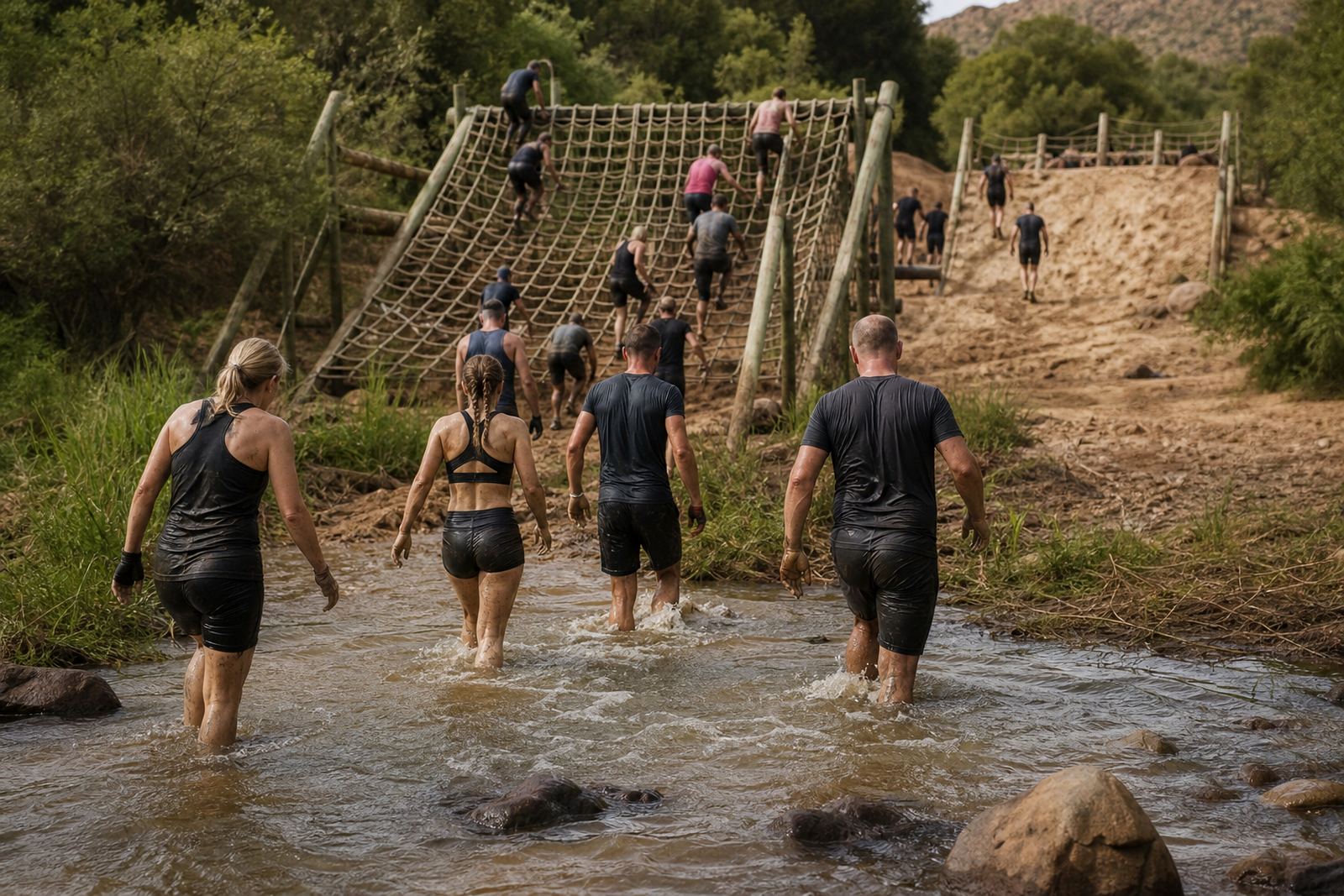
- Rope sections for ascent, traverse or controlled descent
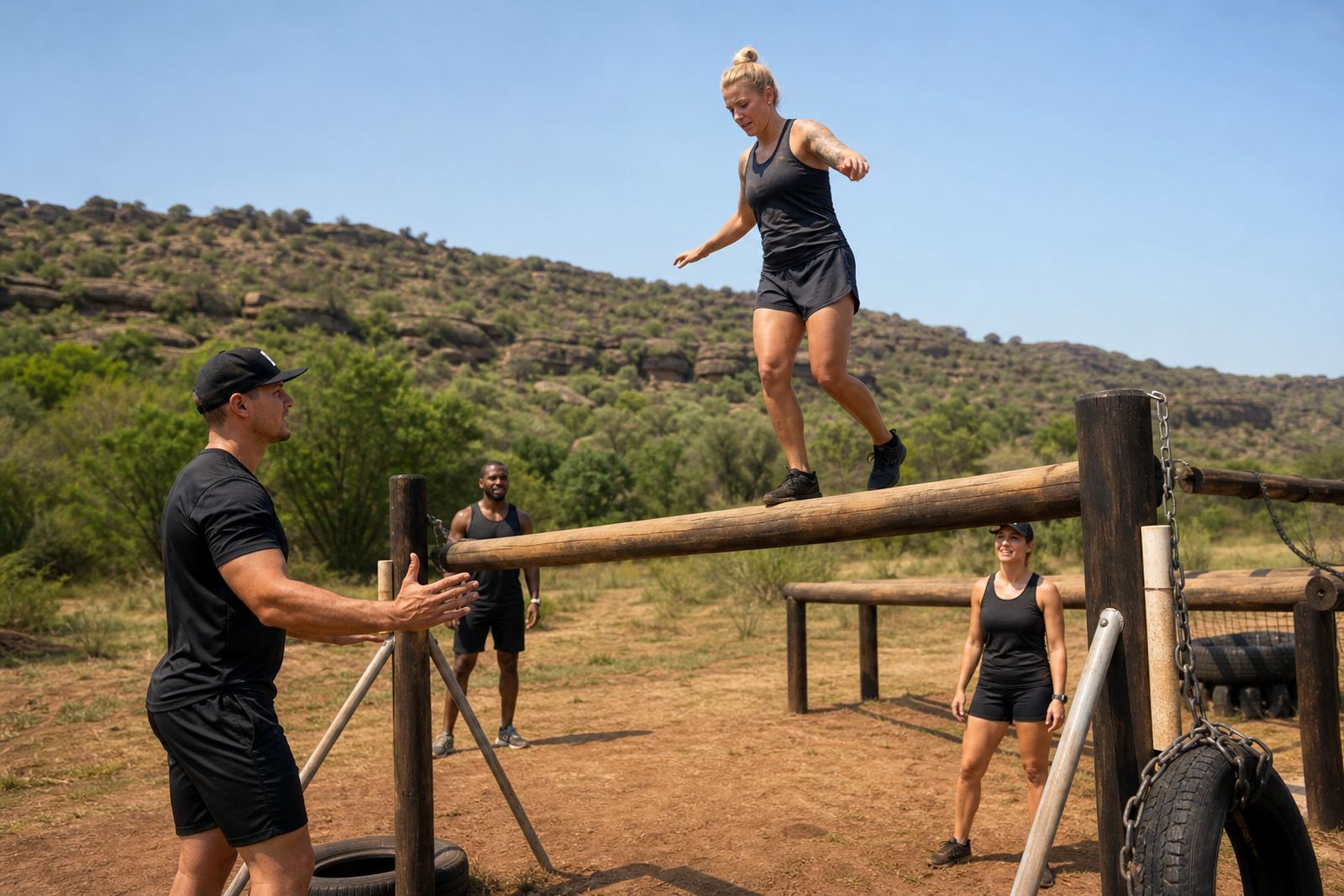
- Balance elements on raised or narrow surfaces
- Grip-heavy rigs, carries and short scramble sections
Course sizes and race-day options we can set up
The obstacle skills race can be set up as a shorter skills loop, a standard course or a longer endurance format depending on the venue and group type. For corporate entries, we can split teams into heats, stagger starts or keep the whole group together for a shared race window. Hekpoort and the wider Magaliesberg area suit compact layouts with strong spectator flow, while larger open spaces near Hartbeespoort, Krugersdorp and Rustenburg can carry more technical lanes and recovery space.
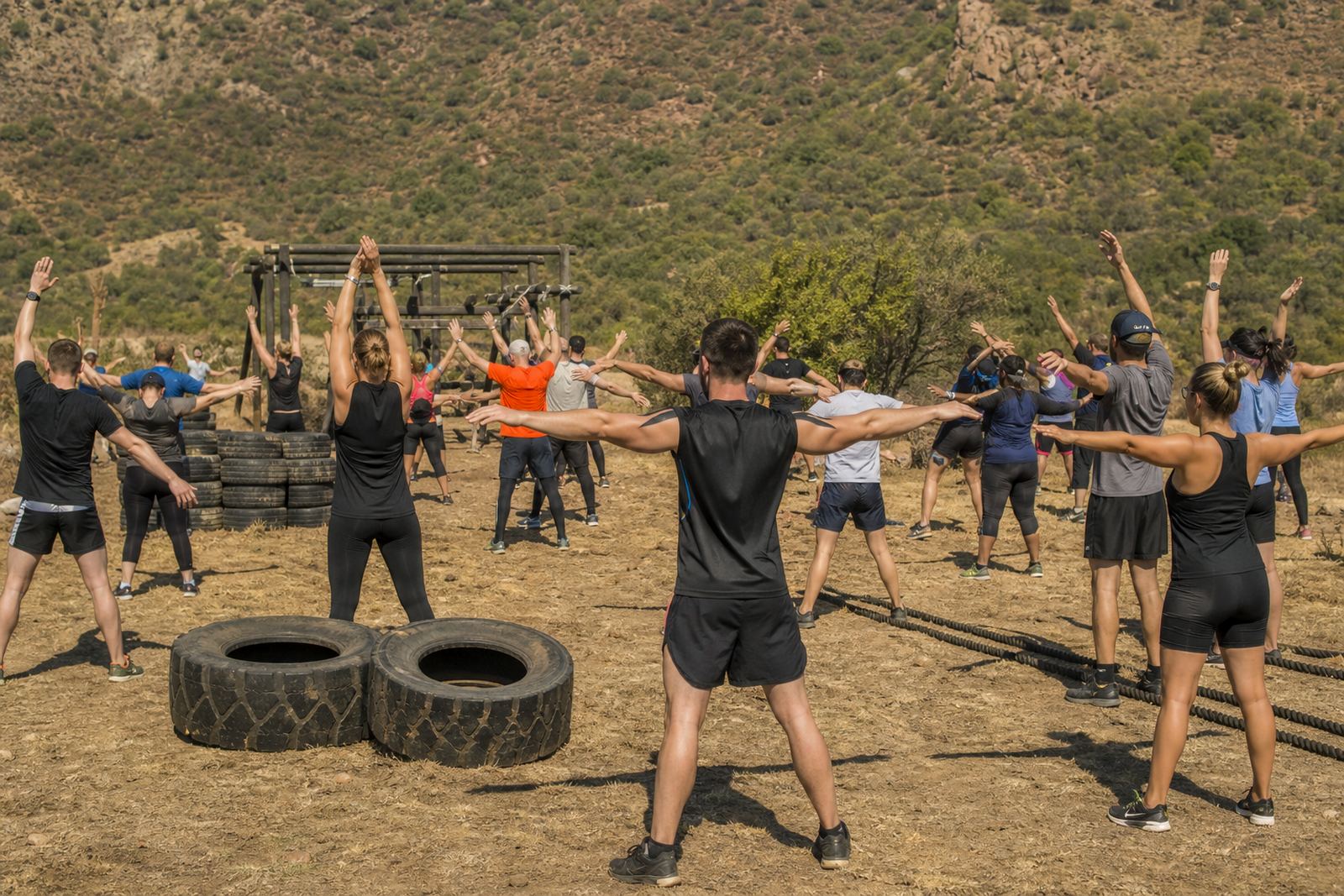
Options usually depend on how much terrain is available, whether the surface is hardpack, grass or loose gravel, and how much room is needed for warm-up, marshal points and finish area movement. If the race is being used for team building, we can set a format that supports captain communication, team photo moments and onsite team checkin without crowding the start line.
- Single-lane or multi-lane obstacle layouts
- Timed heats for smaller groups or large entry days
- Team-based or individual race formats
- Short skills focus or longer endurance challenge setup
Where this format fits best around North West
This product suits outdoor venues with enough ground to build safe run-ins, obstacle spacing and a recovery area. In the Magaliesberg region, the dry winter air and hot summer afternoons mean shade, water points and clear marshal sightlines matter a lot. Coastal humidity is not the issue here, but dust, sun exposure and sudden weather changes can still affect grip and footing, so the venue layout should allow for good footing checks before each heat.
It works well for corporate days, club challenges, adventure weekends and mixed-level participant groups. For teams travelling in from Pretoria or Johannesburg, the route and parking plan matter, while visitors from Potchefstroom or Bloemfontein often need clear arrival notes, bag drop guidance and a simple recovery area setup after the race.
- Corporate team events and department challenges
- Adventure weekends with mixed fitness levels
- Venue-based races in Hekpoort, Magaliesburg and Hartbeespoort
- Travelling groups needing structured check-in and briefing flow
What the build team needs to know before fitting the course
Obstacle course build needs enough time for anchoring, measuring, marshalling and a final safety check before participants arrive. We need to know ground conditions, slope, access for equipment, and whether the site has any municipal limits on noise, public gathering or vehicle movement.Where gas is used for any support equipment, safe storage and placement must also be checked.
For race flow, the team should confirm where the briefing area sits, where support staff stand, and how participants move from warm-up to start without crossing active lanes. Bianca Khoza and the briefing crew usually work out the safety talk structure, while Johan du Plessis handles obstacle spacing, entry points and surface protection. There is also a need for clear space around rope sections and high-step obstacles so participants can move through at a controlled pace.
- Ground type, slope and available footprint
- Access for delivery vehicles and build crews
- Power needs for timing, lighting or speaker support if used
- Clear briefing, warm-up and recovery area placement
Safety briefing, waivers and participant readiness
Every obstacle skills race should begin with a clear safety briefing. Participants need to understand obstacle order, how to call for help, when to skip an obstacle and how to move past slower athletes without causing contact. Waiver coordination forms part of the entry process, and corporate organisers often want captain communication handled before race day so the group knows what to expect. If someone has any health concern or has not exercised hard in a while, they should check with a doctor before taking part in strenuous training or racing.
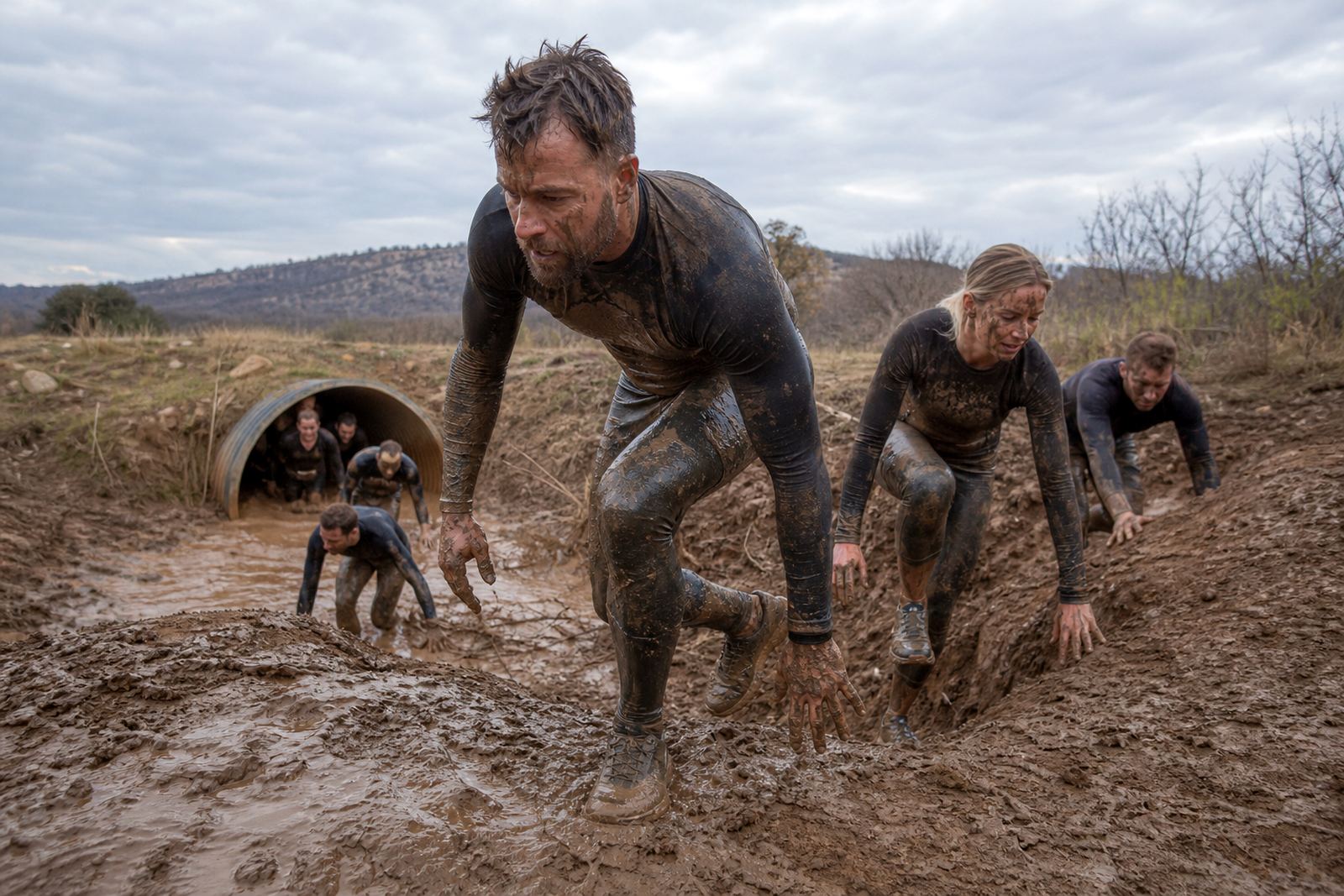
We also recommend that participants arrive ready for sun exposure, grip work and rough ground. It sounds basic, but people often turn up in gear thats fine for a short run and then struggle on ropes or muddy patches. The right clothing, footwear and hydration plan can make the difference between a steady race and a messy one.
- Closed training shoes with strong grip
- Water bottle or hydration pack
- Lightweight clothing that can handle dust and mud
- Change of clothes and towel for after the race
- Any personal taping or grip aids already approved for use
Care, recovery and repeat-use handling
Because this is a race format built for repeated event use, the course materials need regular inspection, cleaning and dry storage. Rope sections should be checked for fraying, grip surfaces for wear, and balance items for movement or loose fittings. After rain or a dusty event in the Magaliesberg area, surfaces need to be cleaned down before the next heat starts, and any slippery patches should be dealt with immediately.
For organisers, the recovery area should be kept clear of trip hazards, with water, shade and seating available where possible. Tshepo Khumalo often helps with training content, so teams can be reminded how to warm up shoulders, wrists, hips and calves before the start, then cool down afterwards. A good recovery routine helps keep the event useful for both first-timers and seasoned competitors.
- Inspect ropes, grips and fasteners before each use
- Clean dust, mud and sweat from contact points
- Store dry materials under cover after the event
- Keep recovery, shade and water stations close to the finish
Key facts
| Format | Obstacle skills race with walls, ropes, balances and grip work |
|---|---|
| Venue fit | Outdoor sites in Hekpoort, Magaliesburg, Hartbeespoort, Krugersdorp, Pretoria and Johannesburg access areas |
| Participant level | Mixed fitness groups, corporate teams and endurance entrants |
| Setup needs | Measured lanes, marshal points, briefing area, warm-up space and recovery area |
| Safety support | Safety briefing groups, waiver coordination, captain communication and onsite team checkin |
| Use case | Team building, adventure racing and technical obstacle training days |