
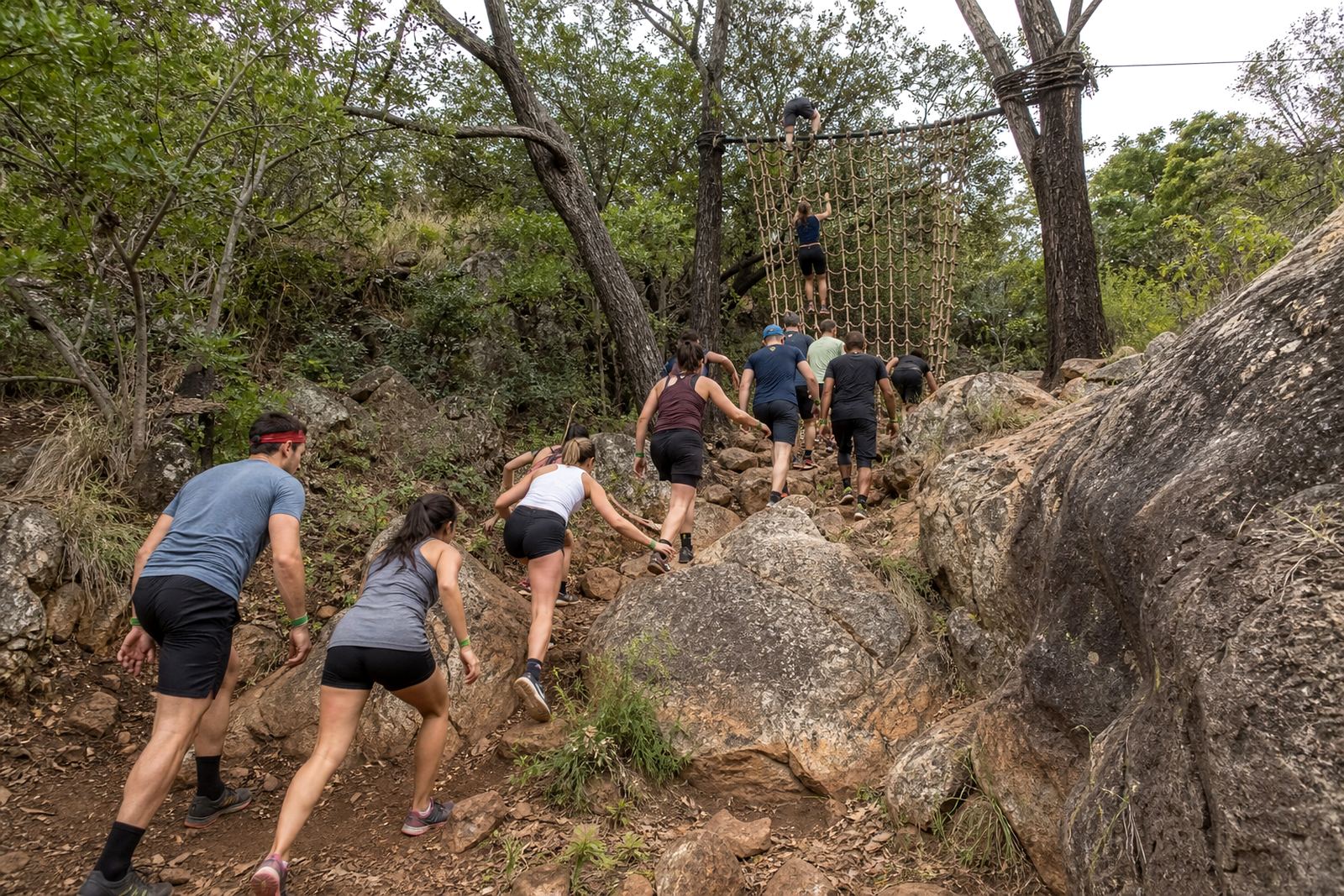
What the hill climb layout asks of you on race day
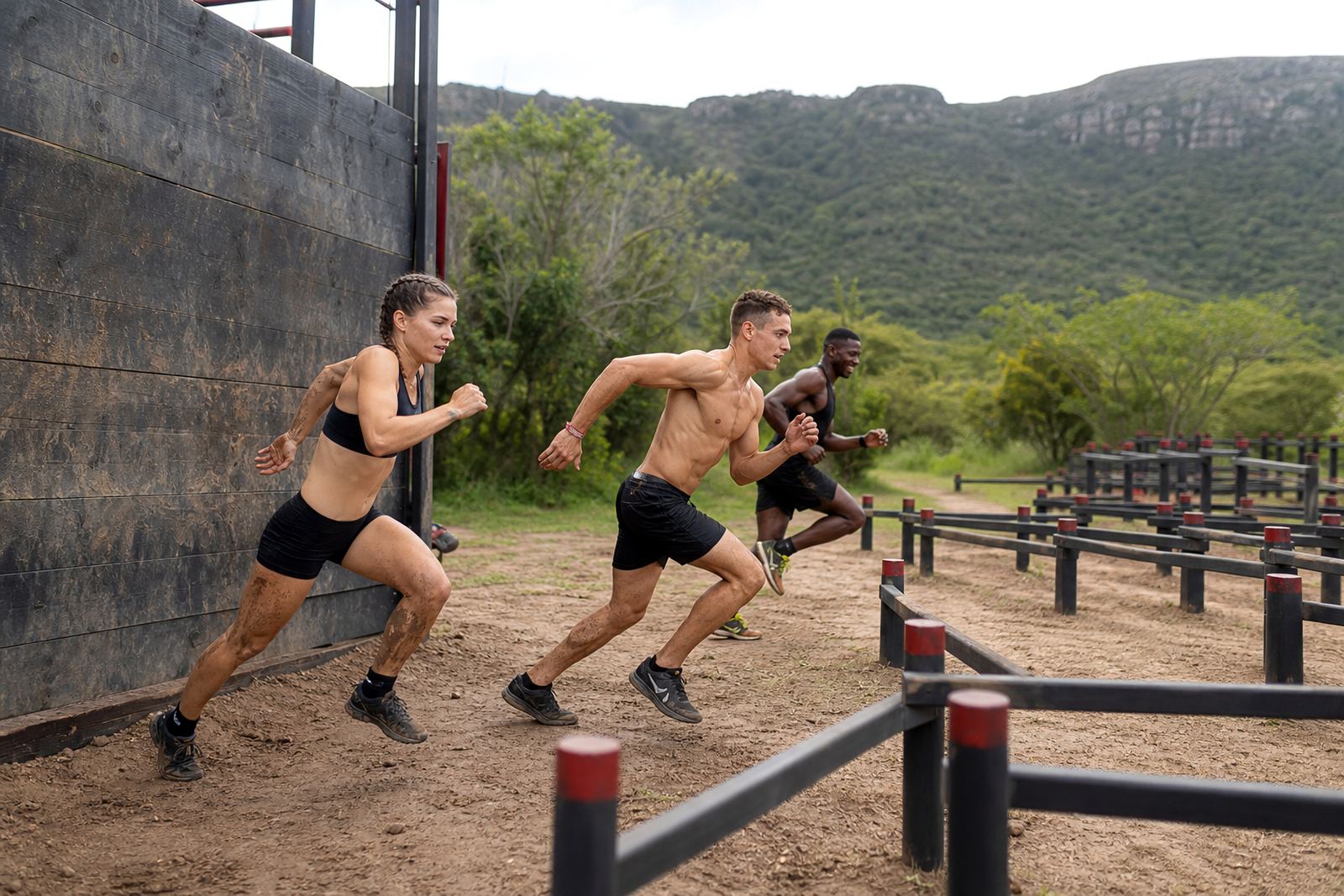
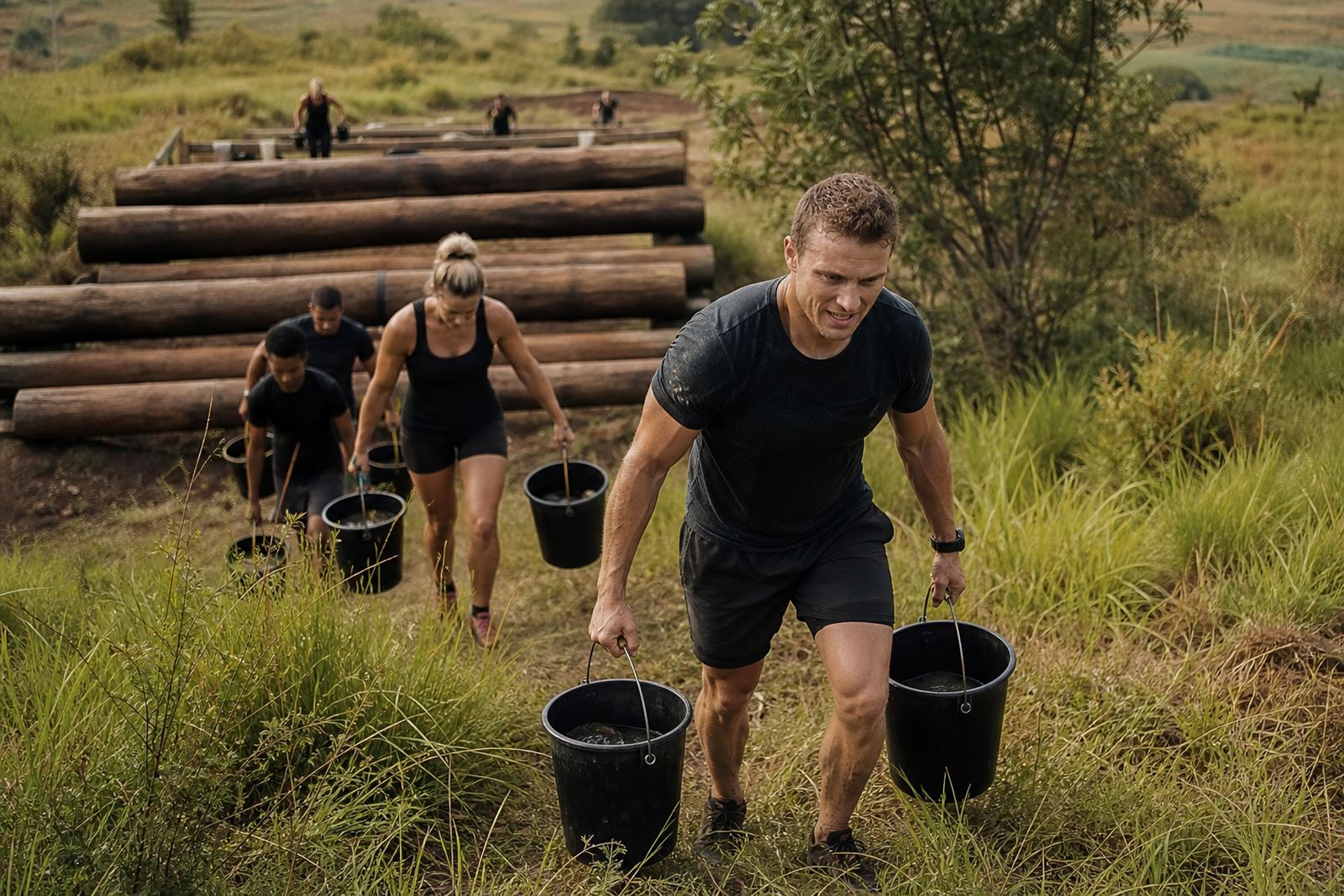
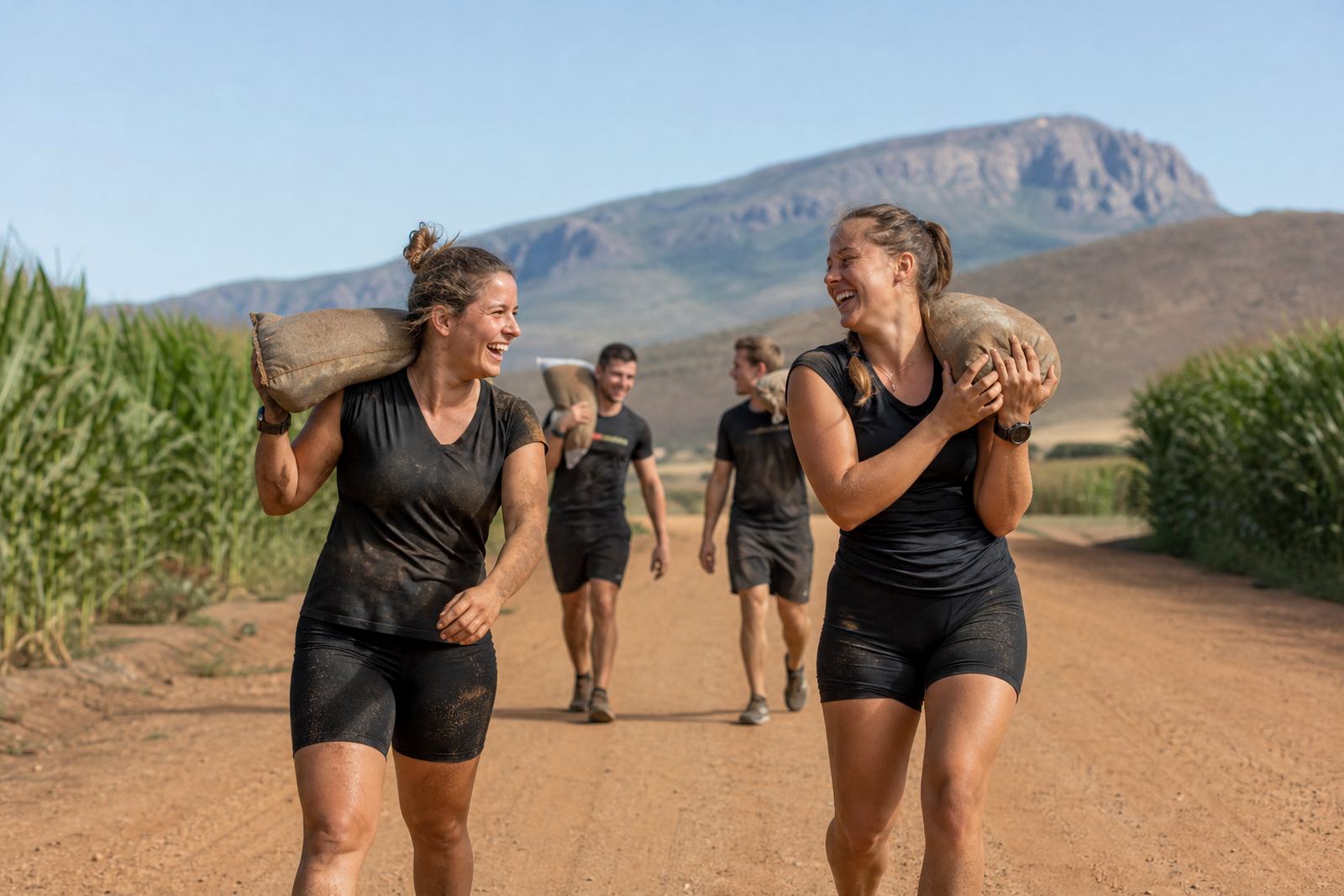
This course is set up around climbing, descending and moving through obstacle sections that reward control more than speed alone. The route can include slopes, uneven ground, carries, balance work, crawl sections and grip challenges, all arranged so runners and walkers can settle into their own pace. It is the kind of event where a good footing matters as much as fitness, especially when the ground is loose or damp after rain.
Hill Climb OCR is suitable for participants who want a hard effort without a flat, repetitive circuit. The Magaliesberg terrain brings natural variation and the course is planned to use that shape rather than fight it. Some teams enter for personal achievement, others for training, and some for company days where the point is to finish together and still have energy for the return trip home.
- Steep climb sections with controlled pacing points
- Downhill stretches where footing and body position matter
- Obstacle stations that can be scaled for different fitness levels
- Route markings and marshal points for guided movement
Course sizes, layout choices and who it suits best
The course can be configured for small groups, corporate entries and larger field starts, depending on how your team wants to tackle the day. For mixed fitness groups, a shorter route with fewer climbing repeats may suit first timers, while experienced entrants may want more elevation gain and longer carry work. For schools, clubs and businesses, we can also shape the briefing and heat allocation so the start feels orderly and the field does not bunch up on the first climb.
It suits teams travelling in from Pretoria, Johannesburg, Rustenburg, Potchefstroom and the wider North West, as well as entrants making a weekend of it from the coast or the interior. The course is a good fit for people who enjoy outdoor endurance work, hill repeats, obstacle technique and team encouragement. If you have members who are unsure about the distance or climb load, the participant support team can help structure the entry so everyone knows what to expect before the first whistle.
- Suitable for all fitness levels with route planning that can be adjusted
- Useful for corporate team days, training groups and challenge entrants
- Can be matched to heat sizes, start timing and group handling needs
- Works well for mixed squads where some want to race and others want to complete
Setting the course up properly in Magaliesberg conditions
Because the route uses hills, the ground must be checked carefully before build and before each start wave. Course setup usually includes line marking, obstacle positioning, marshal points, recovery access and clear entry and exit lanes at the tougher stations. In Magaliesberg, weather and soil can change the feel of the route quickly, so the build has to allow for wind, dust, heat and the odd wet patch after a storm.
If the event is being set for a corporate or group entry, the fit is usually less about equipment and more about flow. That means making sure the heat timing works, the warmup area is close enough to the start and the recovery area is easy to find afterwards.Access roads, parking flow and visitor movement are checked so the day does not clog up at the gate.
- Ground assessment before installation and again on event day
- Clear marshal points for climbs, descents and obstacle lanes
- Recovery area and participant flow planned around the finish
Briefing, waivers and the paper trail that keeps the day moving
Before anyone starts, participants are taken through the safety briefing so they know the route rules, obstacle handling and where to call for help if needed. Waiver coordination is part of the process, especially when groups are entering together and need each person recorded properly. For companies, schools and clubs, captain communication helps the team leader pass on reminders about arrival time, kit and any course notes that matter on the day.
We ask participants to check with a doctor before hard exercise if they have concerns about their readiness for this kind of event. That is especially important for anyone returning to training after a long break or managing a known condition. The team does not provide medical advice, but it does make sure the event information is clear, the warmup is organised and the support staff know where to guide people if they need a slower line or a break. It all helps the start stay calm rather than rushed.
- Signed waivers and group entries can be handled in advance
- Safety briefing groups can be split by heat or company team
- Captain communication helps with reminders and final checks
- Warmup and briefing areas are planned before the first wave moves out
What to bring for a hill-heavy start
Good kit makes a real difference on a course like this. Bring trail shoes or trainers with a grip that suits loose ground, clothing you do not mind getting dirty and a small bag with dry layers for after the finish. In the Magaliesberg heat, a cap and sunscreen can help, while early starts or cooler months may call for a light long sleeve top. A towel, water bottle and a change of socks are also practical, because wet feet and dusty shoes can turn a ride home into a faff.
We also suggest that teams check their own packing before travel, especially if they are coming from Durban, Cape Town or Bloemfontein and need to keep the kit together overnight. For group leaders, it helps to confirm which team members need support at registration, who is carrying the waiver paperwork and who is responsible for the warmup timing. If your group wants team photos afterwards, leave a bit of extra time so nobody is rushed straight back onto the road.
- Grip shoes or trail footwear
- Water, towel and a dry shirt for after the finish
- Sunscreen, cap and any personal items needed for the weather
- Team paperwork, arrival details and a clear meeting point for the group
The details to confirm before your entry is locked in
When ordering or confirming a Hill Climb OCR entry, the first thing to settle is the number of participants and whether the group wants individual or team handling. After that, confirm the preferred heat, any custom briefing needs and whether your team wants support at check-in or at the recovery area. If there are people arriving late from the Pretoria side, or visitors coming through from Krugersdorp or Hartbeespoort, it helps to set a clear plan for arrival and movement to the start.
Please also confirm any specific needs around the route layout, including whether your group wants a more measured climb, extra time between heats or captain communication for a company entry. For the safety team, it is useful to know if anyone in the group has limited experience with obstacle racing or prefers a slower pace. Those details let the event team line up the briefing, the group warmup and the start flow properly, instead of making last minute changes at the gate.
- Participant numbers and team structure
- Heat preference and arrival timing
- Briefing format, waiver handling and check-in support
- Any group needs for recovery, photos or captain updates
After the finish, when legs still know they worked
The finish is not just a line in the dirt. It is the point where the climbing, grip work and descending all catch up with you at once. That is why recovery area guidance matters, especially on a hill course where breathing, legs and feet can all feel tired at the same time. A proper cool down, a drink and a place to sit for a few minutes makes the exit steadier for everyone, and helps the team leave with the day still feeling good.
For corporate entries and mixed groups, the finish area can also be set up to support team photo moments and a quick debrief before everyone heads off. It is a practical way to close the day without noise or confusion, and it works well for groups travelling back towards Johannesburg, Pretoria or Rustenburg. Hill Climb OCR is about testing effort on difficult ground, but it should still end with order, support and a clear next step for the team.
Key facts
| Course type | Obstacle course race with steep ascents, descents and technical footing |
|---|---|
| Terrain | Hill ground in Magaliesberg with uneven surfaces and natural gradient changes |
| Suitable for | Individuals, corporate teams, clubs and mixed fitness groups |
| Support options | Safety briefing groups, waiver coordination, team registration help and onsite check-in |
| Group handling | Heat allocation, captain communication, warmup support and recovery area guidance |
| What to bring | Grip shoes, water, sunscreen, dry clothes and any personal items needed for the day |