How the relay leg works on the ground
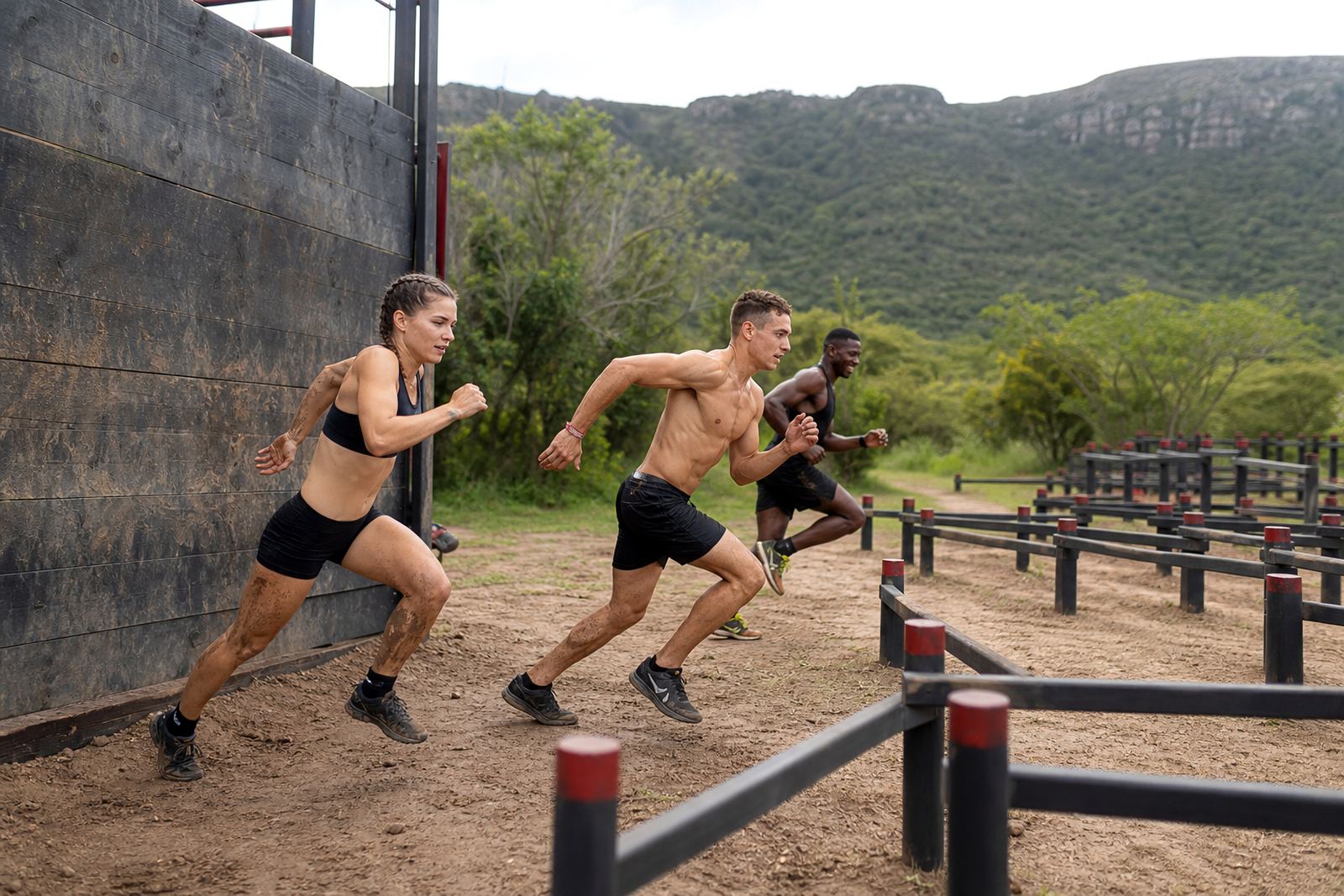
The Team Relay Race is built around short, repeatable race legs that let a group split the load and keep momentum through the course. One runner works a section, tags out at the transition zone, then the next person moves in while the team supports from the side line. It works well for offices, clubs, and families who want the pressure spread out without losing the feeling of a proper challenge.
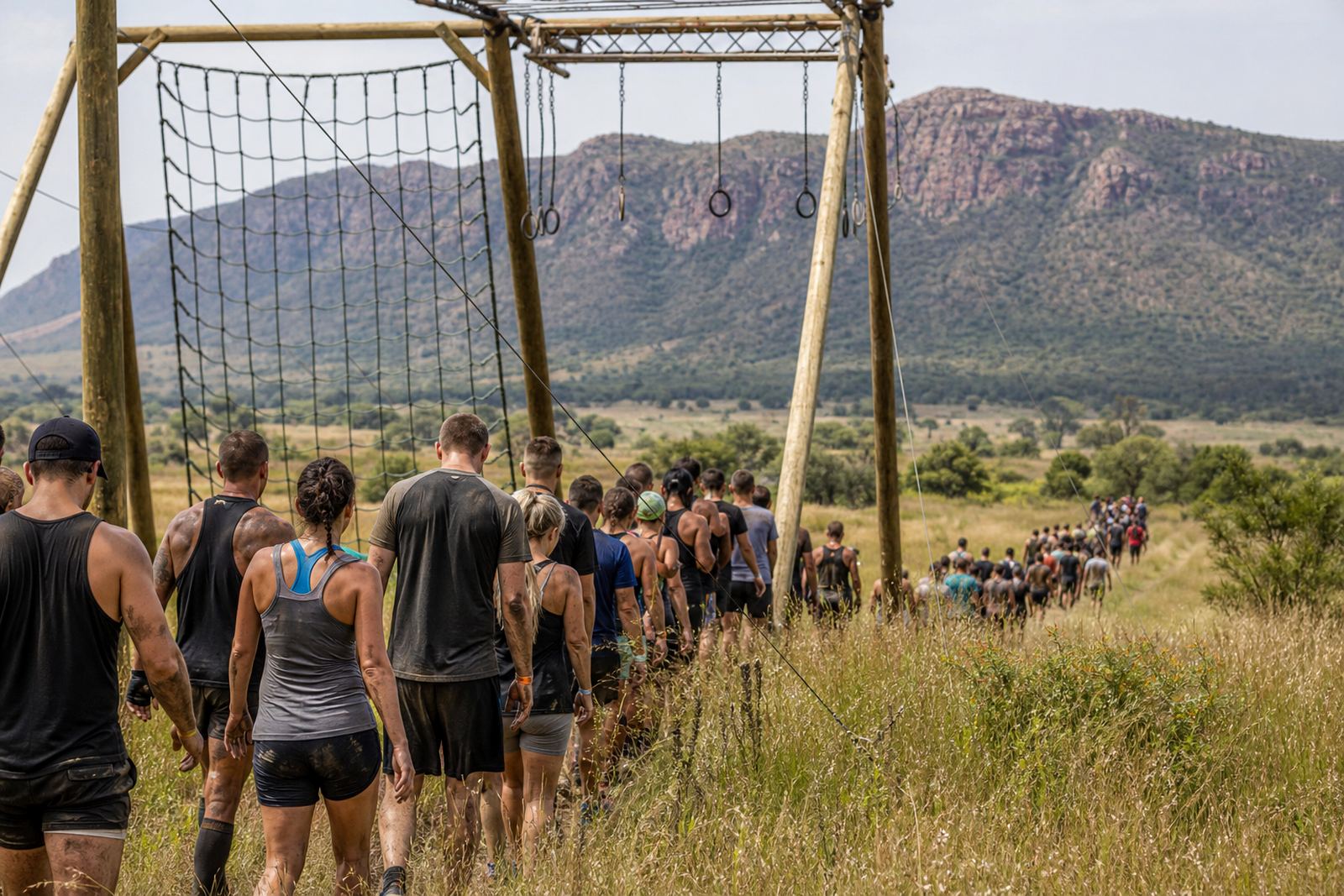
At our Hekpoort base in Magaliesberg, the route can be set up on open ground, veld or mixed terrain depending on access and weather. The course may include crawls, carries, balance sections, low walls, sand, mud patches and climbing features, with spacing planned so the handovers stay orderly. The layout needs clear marshal points, a marked exchange area and enough room for teams to queue without clashing.
- Relay format with timed or untimed legs, depending on the event brief
- Team handover points marked for safe changeovers
- Course elements adjusted for mixed fitness levels and group size
- Supporter zones kept away from active obstacles and running lines
Sizes, heats and team formats that fit different groups
Team Relay Race formats can be set for compact office groups or larger mixed teams travelling in from Johannesburg, Pretoria, Rustenburg, Potchefstroom, Cape Town, Durban or Bloemfontein. The right format depends on how many runners you have, how long each leg should run, and whether you want a fast turnover or a more social pace. Some groups want short explosive legs, others prefer longer stretches with more endurance work in between.
Heat allocation is useful when multiple teams are on site at once, because it keeps the transition area tidy and the briefing clear. Where needed, we can split teams into waves, assign captains, and group similar ability levels together so nobody feels dropped into a bad fit. There is a lot of value in getting the leg lengths right, especially when one or two members are not regular exercisers.
- Team sizes can be arranged around small groups, medium squads or larger corporate entries
- Leg length can be kept short for speed or extended for endurance
- Mixed ability teams can be balanced through wave planning
- Captain communication helps keep the whole group on the same page
Where the relay suits best in the North West
This product suits open outdoor venues where there is room for spectators, warmup space and a recovery area after the final leg. The Magaliesberg area works well because the terrain gives you natural variation without needing heavy site work, though conditions do shift with wind, rain and dust. In hot weather, runners need shade and water points close to the transition zone, and in colder months the briefing area should stay dry and sheltered.
Corporate groups often choose a relay because it suits team building without forcing everyone to run the whole route at once. It also works for support crews, where some people are stronger on speed, others on climbs, and a few are better at keeping the group organised. The relay makes space for that, and its easier to manage when you have first timers mixed with seasoned racers.
- Suitable for farms, open venues and controlled outdoor event grounds
- Useful for corporate team days, club challenges and social fitness events
- Can be managed with separate supporter zones and recovery area guidance
- Works well where access roads allow team arrivals and equipment drop-off
Briefing, waivers and safety steps before the start
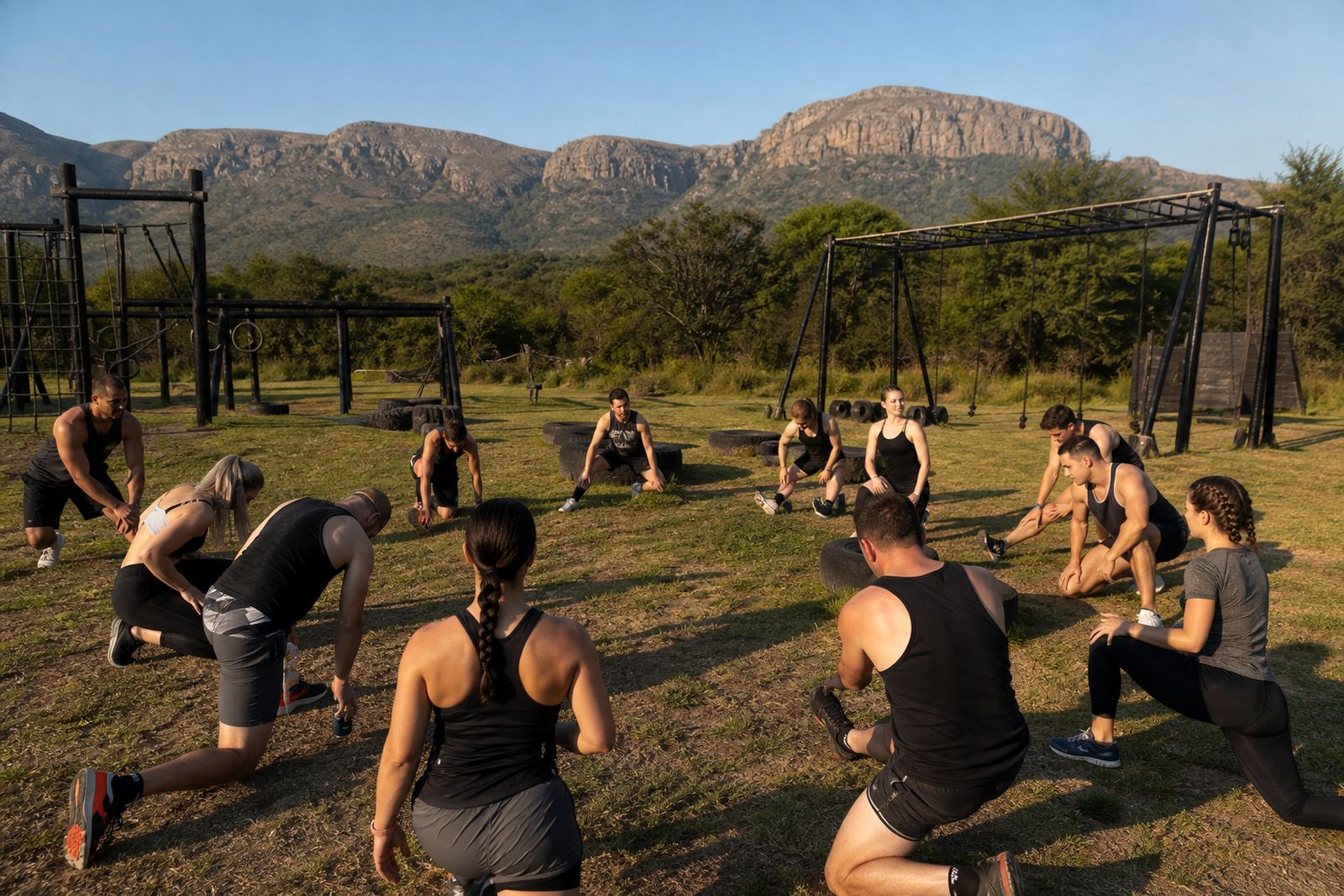
Every relay needs a proper safety briefing before the first runner sets off. That briefing should cover obstacle technique, passing zones, falls, spacing, hydration, and what to do if someone needs to step out of a leg. Participants should read and sign the waiver before start time, and team captains should make sure everyone understands the course rules, because confusion on race day slows the whole field down.
We also recommend that participants check with a doctor before hard exercise if they have any health concerns, especially if they have been inactive for a while, are recovering from injury, or have any condition that could affect effort tolerance. The aim is to keep the event challenging but controlled. In practice, a clear briefing cuts down on avoidable mistakes and helps the marshals focus on moving teams through safely.
- Safety briefing groups can be scheduled before the first wave
- Waiver coordination helps keep registration orderly
- Custom team briefing available for mixed experience groups
- Onsite team check-in supports faster start line flow
What to bring when your team is entering
For a Team Relay Race, teams should arrive with clothing that can handle dirt, water and friction, plus shoes with decent grip on loose ground. A spare top and dry socks are worth packing, and a small towel helps at the finish if the venue gets muddy. If the event is held in summer, sun protection and extra water matter. In winter, a warm layer for before and after the leg is a good idea.
Teams should also plan for practical bits around the day, not just the race itself. That means a change bag, any required ID for registration, and enough time to settle in before the briefing. If you are bringing supporters, it helps to arrange where they stand, where they park and how they move between viewing points. That keeps the day calmer for everyone, and it stops the finish area turning into a bottleneck.
- Trail shoes or trainers with grip
- Clothing that can get wet, dusty or muddy
- Water, snacks and a dry change of clothes
- ID and any paperwork needed for team registration
- Sun hat, sunscreen and a warm layer if weather shifts
Surface care, course setup and order details to confirm
The relay course is built and cared for as an outdoor event system, so the ground surface, obstacle spacing and transition points all matter. Before each event, the build crew checks the footing, clears loose hazards, and makes sure marshals have a clean line of sight to the high movement areas. If rain or wind changes the surface, the setup may need extra packing, marking or rerouting so the race stays usable without creating sloppy gaps or unsafe turns.
When placing an order for a Team Relay Race, confirm the venue access, expected team count, space for warmup and recovery, and whether the event needs a shorter or longer leg profile. It also helps to confirm arrival times for coaches or cars, power access if the event area needs it for admin or sound, and whether the site has any municipal or venue rules around noise, parking or waste handling. The more detail you give upfront, the easier it is to match the relay to your group and avoid last-minute changes.
- Confirm team count and any split into heats
- Confirm venue surface type, access roads and parking space
- Confirm briefing area, recovery area and supporter space
- Confirm if power access is available for event admin or announcements
- Confirm any site rules around waste, noise or restricted areas
Key facts
| Product type | Relay-style obstacle course race format |
|---|---|
| Typical use | Team building, club challenges, school groups and mixed ability outdoor events |
| Course setup | Marked start, relay exchange zone, marshal points and obstacle sequence |
| Terrain | Open veld, mixed ground, sand, mud patches and controlled outdoor spaces |
| Support services | Entry planning, waiver coordination, safety briefings, captain communication and onsite check-in |
| Venue base | Hekpoort, Magaliesberg, North West |