Why this Klerksdorp brief needed a firmer grip
The client was a local event organiser in Klerksdorp looking for an obstacle course format that would test pulling strength, grip control and pacing without turning the day into a chaos run. The brief called for a course that felt tough, but still workable for first timers, office teams and regular endurance entrants who train hard during the week and need a clear race day structure.
We set the project up as a technical event concept rather than a loose fun run. That meant planning the obstacle order, marking where people would queue, and making sure each hanging section had enough recovery space before the next effort. The course had to suit the North West heat, dusty ground and the kind of gusty afternoon conditions that can move hanging kit around if the layout is not thought through properly.
- Client type: regional event organiser in Klerksdorp
- Project focus: grip strength, upper body output and controlled movement
- Audience: individuals, mixed teams and corporate groups
- Area served: Klerksdorp, Potchefstroom, Rustenburg and travellers from Johannesburg and Pretoria
The obstacle layout we put on paper first
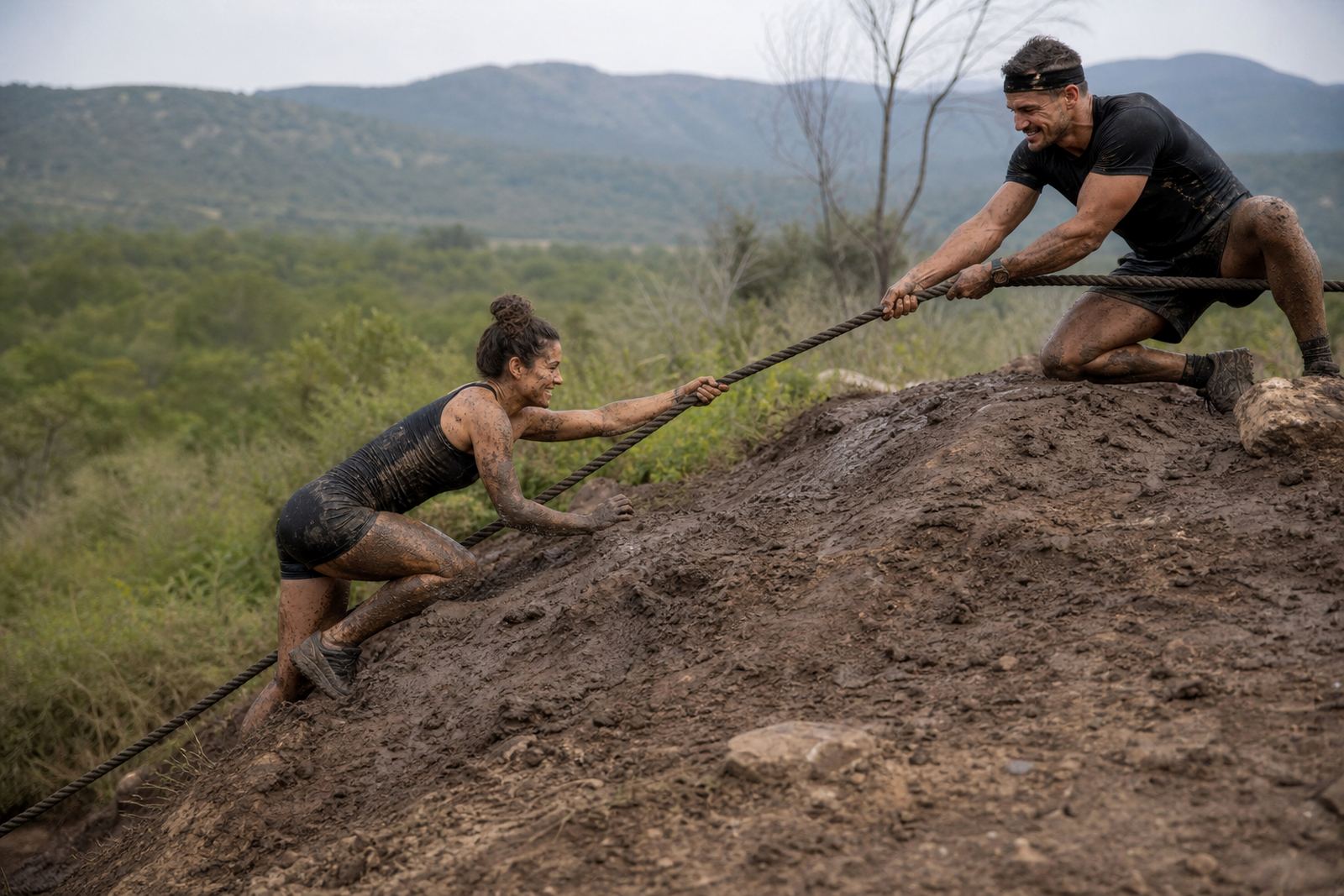
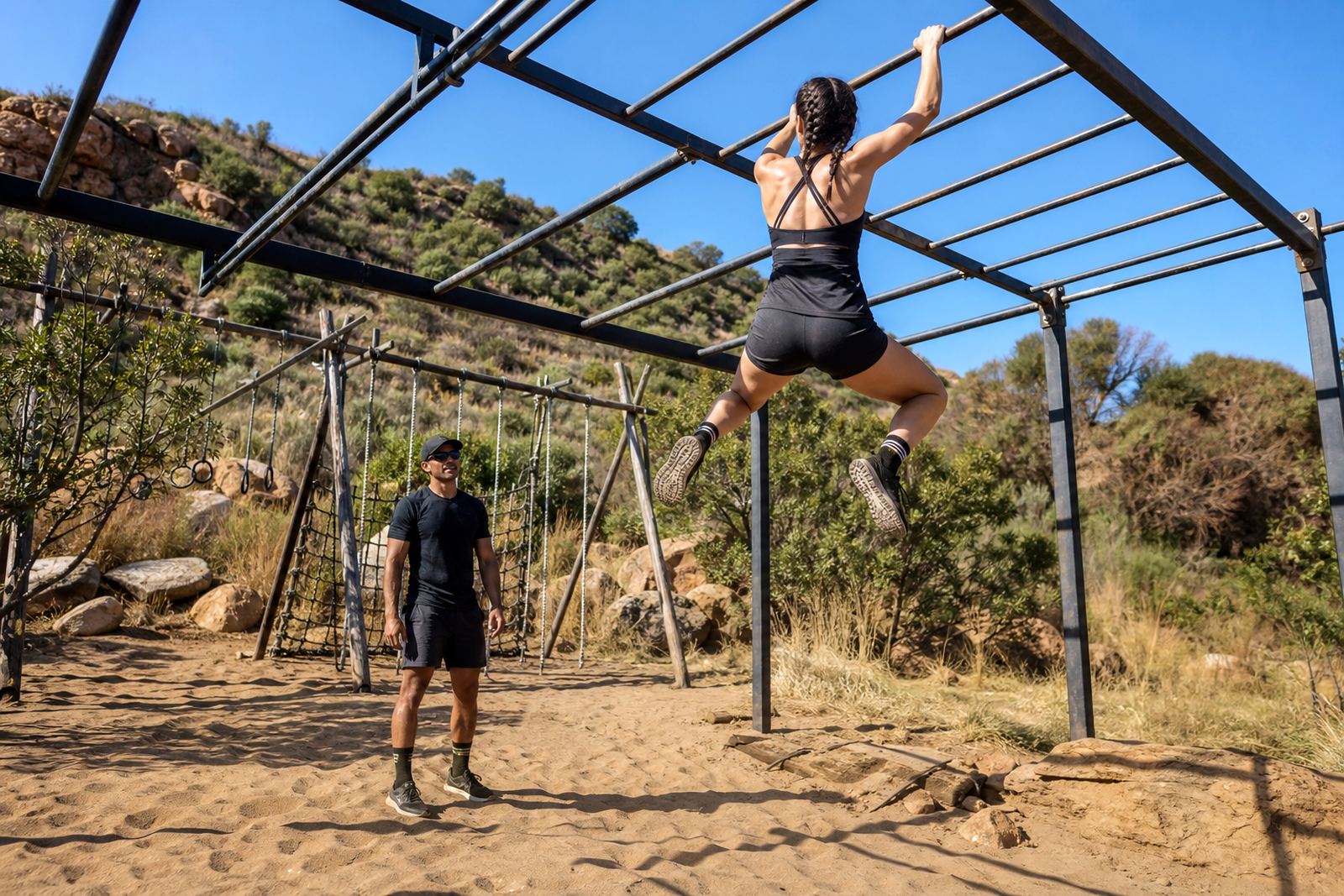
The course plan centred on hanging obstacles, traverse sections and a few carry points that forced participants to keep moving under fatigue. We kept the layout practical for a full outdoor build, with clear entry and exit points on each station so marshals could see whether someone was struggling and step in early if needed.
The technical side sat in the details. Handholds had to feel challenging without being awkward, and the spacing between elements had to allow a steady flow. We also allowed for shaded holding areas near the start and finish, because Klerksdorp heat can catch people out after a warmup and a hard first block. The route lines were set so people could understand the order quickly, even if they arrived late or had never done a race like this before.
- Hanging obstacles with controlled reach distances
- Upper body stations using bars, ropes and suspended holds
- Clear marshal positions at high effort points
- Recovery gaps between the hardest sections
Safety briefing, waivers and the no-surprises part
For a race like this, the safety side matters just as much as the course shape. We prepared participant briefing notes, waiver flow and marshal guidance so the organiser could run the event in a calm, orderly way. People were told what the hanging work would ask from their shoulders, forearms and core, and they were reminded to check with a doctor before hard exercise if they had any health concerns.
The briefing also covered what to bring and what not to bring. Good grip gloves can help on some obstacles, but they are not a substitute for technique, and a wet pair can cause trouble if the ground is dusty or the weather changes. Participants were told to arrive with suitable shoes, enough water, sun protection and a clean change of clothes for after the finish. We also flagged that anyone feeling unwell on the day should speak to the briefing team before taking part, not after the race has already started.
- Waiver coordination before the first wave moved out
- Safety briefing groups for teams and individual entrants
- Captain communication for team leaders
- Recovery area guidance for post-race cooling down
How the build and race support were handled
Our team worked from the Hekpoort base in Magaliesberg and handled the event support in a staged way over three weeks. The first week was planning and route logic, the second was participant flow, briefing content and marshal instructions, and the final week covered on-site readiness, final checks and travel arrangements for the support crew. That gave enough time to fix small issues before race day, instead of scrambling at the gate.
The build lead handled obstacle placement and the movement lines between each station. Operations coordinated the support zones, while participant support kept communication clear for group leaders and late arrivals. Safety and briefing were handled as a dedicated task, not as an afterthought, which matters on a course with hanging elements where people can tire quicker than they expect. The organiser also received help with team registration, heat allocation support and custom team briefings, so the start process stayed orderly.
- Timeline: 3 weeks from concept to final support pack
- Base of operations: Hekpoort, Magaliesberg
- Regional support flow: Klerksdorp with visitors from Pretoria, Johannesburg, Rustenburg and Potchefstroom
- On-site functions: check-in, warmup, captain updates and team photo moments
What changed for the organiser on race day
The biggest result was clarity. Once the briefing process and obstacle order were locked in, the organiser had a cleaner race day with fewer questions at the start and less confusion at the more technical stations. Marshals knew where the pressure points were, and participants understood which sections would demand grip, balance and patience rather than speed alone.
Teams also moved through the event more confidently because there was a proper warmup and a clear recovery zone at the end. That helped with crowd control and gave the support crew space to assist anyone who finished hard and needed a few minutes before heading out. It sounds small, but on a windy day with dust underfoot and people arriving from different towns, those details make the whole thing feel sorted, not rushed.
- Cleaner participant flow at the start line
- Better handling of technical obstacles by first-time entrants
- Stronger team communication through captain updates
- Less confusion around safety, waivers and finish area movement
The practical bits teams actually asked about
For this kind of obstacle race, people usually want the same straight answers: what should we wear, how hard is it, and what happens if someone is not confident on a hanging section. We kept the guidance direct. Wear shoes with decent traction, arrive hydrated, and do not test yourself against a hard obstacle if you are already drained before the start. If a participant is not sure about their fitness for heavy upper body work, the right step is to speak to a doctor before race day, not to guess.
We also reminded the organiser to keep the day organised for supporters and non-racers. That means showing where spectators can stand safely, where teams can regroup, and where people can collect themselves after the final obstacle. It is a small detail, but it changes the feel of the event a lot. A race that is physically demanding does not have to feel messy. It just needs clear instructions, enough marshals and a course that knows exactly what it wants to test.
- What to bring: water, sun protection, towel, change of clothes and suitable shoes
- What to expect: grip work, hanging sections and upper body fatigue
- Who should check medically first: anyone with a concern about hard exercise
Next round refinements for a harder field
If we ran a similar Klerksdorp Grip Test again, we would tighten the marshal sightlines at the longest hanging section and add a little more shade near the waiting area. We would also build in one extra briefing point for team captains, because mixed groups often need a second reminder about pacing before they hit the technical block. Small changes like that help keep the day moving and reduce avoidable stoppages.
From a project point of view, this one showed that an obstacle race can still feel adventurous while staying controlled and practical. That balance matters for corporate entries, community teams and serious endurance runners alike. The course asked enough of the body to feel earned, but the structure around it made sure participants and organisers stayed on the same page from first briefing to final finish.
- Sharper marshal placement at long-hold stations
- Extra shade and water planning near queue zones
- One additional captain check-in before the technical block
Key facts
| Project | Klerksdorp Grip Test |
|---|---|
| Town focus | Klerksdorp, North West |
| Course type | Technical obstacle race concept |
| Core features | Hanging obstacles, upper body sections, marshal-led control |
| Timeline | 3 weeks |
| Base | Hekpoort, Magaliesberg |