Read the obstacle before you move a muscle
Height work gets easier when you stop treating it like a sprint and start treating it like a sequence. Look for the handholds, the foot placements, the landing zone and any point where your body might swing out of line. If the structure has rope, rails or a platform, check where your weight will transfer before you commit.
A good rule is to pause for one full breath before you step up. That small pause helps you notice if the surface is wet, dusty or slick from morning moisture. Around Hekpoort and the Magaliesberg ridges, wind can make a top section feel more exposed than it looks from the ground, so a quick visual check is worth the time.
- Scan from bottom to top before you climb.
- Choose three contact points where possible.
- Plan where your feet will land before your hands leave the last hold.
- Do not rush just because the person behind you is moving fast.
Breathing is your brake pedal
Many participants lose control on elevated obstacles because their breathing turns shallow and fast. That tightens the shoulders, reduces grip and makes the body feel shakier than it actually is. Slow exhale, then move. If you feel your chest lock up, stop for a moment and reset your rhythm.
Try counting one steady breath on the approach, then a second breath while you stabilise on the obstacle. That pattern gives your mind a job to do and keeps panic from taking over. If you are crossing a narrow beam or climbing a stepped frame, exhale on the effort and inhale once you are secure again.
People often think composure means not feeling nervous. It does not. It means noticing the nerves and still making calm choices. That skill matters on race day, whether you are in a corporate team, a mixed fitness group or an individual heat from Johannesburg, Pretoria or further afield.
Train your body for awkward angles, not only for speed
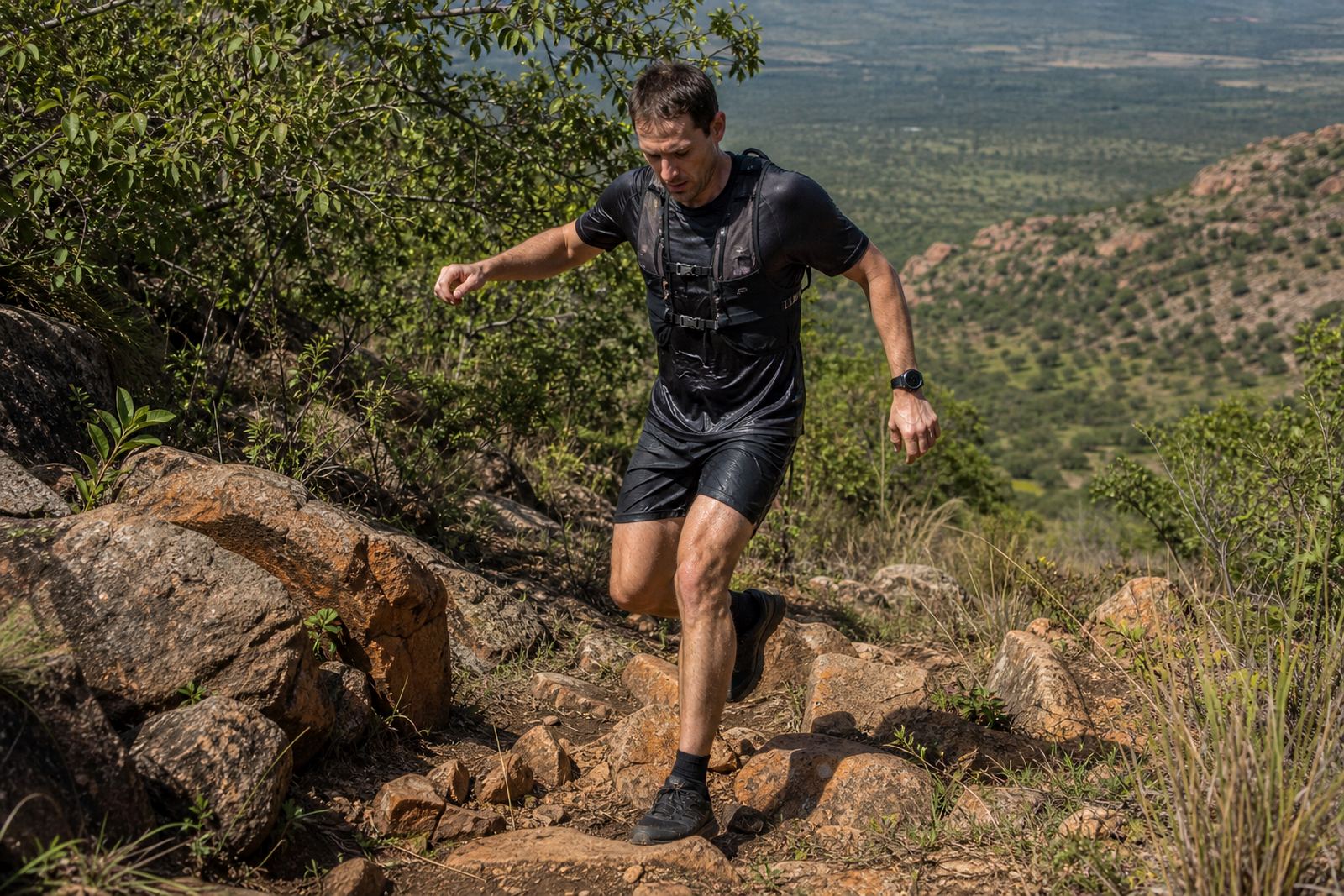
Flat running helps with endurance, but height obstacles ask for grip, balance and shoulder control. Train those qualities in small doses before race day. Step-ups, hanging holds, controlled climbs and single-leg balance work all help your body learn how to manage unstable positions.
It also helps to practise moving while a bit uncomfortable. Hold a plank, then stand and walk straight away. Climb a step, turn, and come down slowly. This teaches your body to recover its balance after effort, which is exactly what elevated obstacles demand.
- Work on grip strength with carries, hangs and towel holds.
- Include step-ups and controlled descents.
- Practise standing up from the ground without rushing.
- Train with proper shoes that give traction on dust and gravel.
If you are new to hard exercise or have a medical condition, check with a doctor before pushing into a demanding event. That is especially important if you have had chest pain, dizziness, joint instability or a recent injury.
Feet first, hands second, ego last
When people slip on high obstacles, it is often because they reach too far with their hands and neglect their feet. Your legs are stronger than your arms, so let them do the heavy lifting. Move your feet one at a time, keep your hips close to the structure and avoid leaning back unless the obstacle calls for it.
A useful mindset is to treat each move like a job, not a performance. Put one foot down, make it solid, then move the next limb. If you feel rushed, slow your hands down first. The hands often create the panic, while the feet create the control.
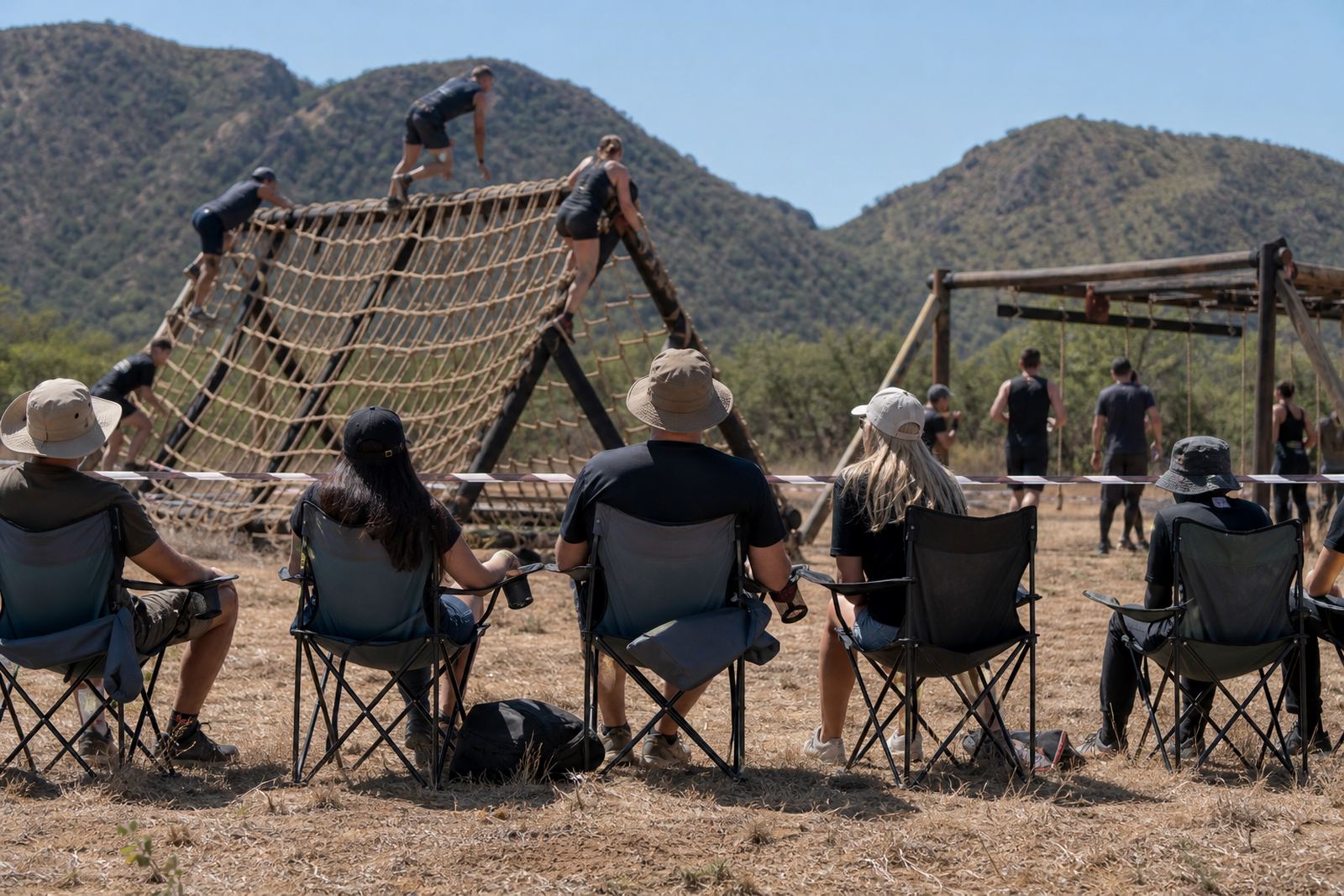
In a Magaliesberg race setting, this matters on ladders, cargo-frame climbs and elevated crossings where the ground beneath may be uneven. At Hekpoort, for example, a participant might arrive from Pretoria in cooler morning air and then face sun, dust and a bit of fatigue later in the course. The trick is not to chase speed too early. Save energy for the sections that need precision.
Use the briefing, it is there for a reason
A proper safety briefing is not a formality. It tells you how the obstacle is built, where marshals are positioned, how to wait your turn and what to do if you lose balance. Pay attention to the wording, especially on weight shift, dismounts and any section where only one person can move at a time.
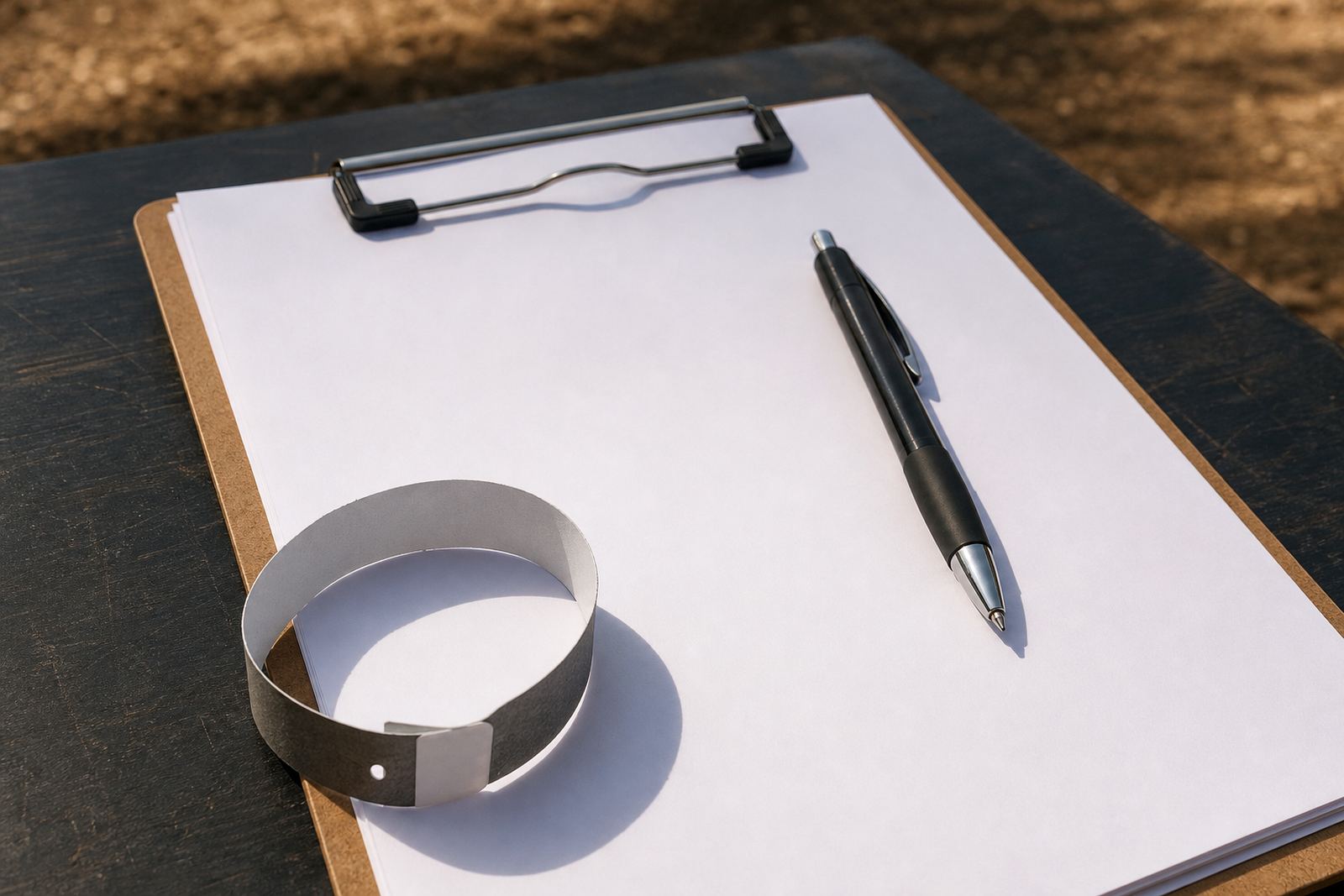
Waivers, briefing groups and captain communication all exist to reduce avoidable mistakes. If you are entering as a team, make sure everyone hears the same instructions. The fastest way to lose confidence is to guess wrong halfway up a structure.
- Listen for the rules on spacing and waiting points.
- Ask about any wet, shaded or wind-exposed sections.
- Confirm how to dismount before you climb.
- Know where the recovery area is if someone needs a pause.
For corporate groups and visitors from Krugersdorp, Rustenburg or Potchefstroom, the briefing also helps people support each other without crowding the obstacle. Clear roles reduce confusion and keep the pace steady.
Pack for grip, water and the bits people forget
What you bring affects confidence more than many participants expect. The wrong socks, a loose shirt or a dry mouth can turn a manageable obstacle into a messy one. Bring clothing that stays in place, shoes with decent tread and enough water for the day. A spare shirt and a small towel can make the recovery period far more comfortable.
Sun protection matters in North West conditions, and so does a sensible snack plan if the event runs over several hours. If you are travelling from Cape Town or Durban, give yourself enough time to arrive settled, not stressed. Rushing into a race after a long drive is a poor start for any elevated obstacle section.
- Supportive shoes with grip.
- Comfortable clothing that dries quickly.
- Water bottle or hydration pack.
- Sunblock, cap and a small towel.
- Any personal items required for a waiver or check-in process.
Confidence grows in the recovery area too
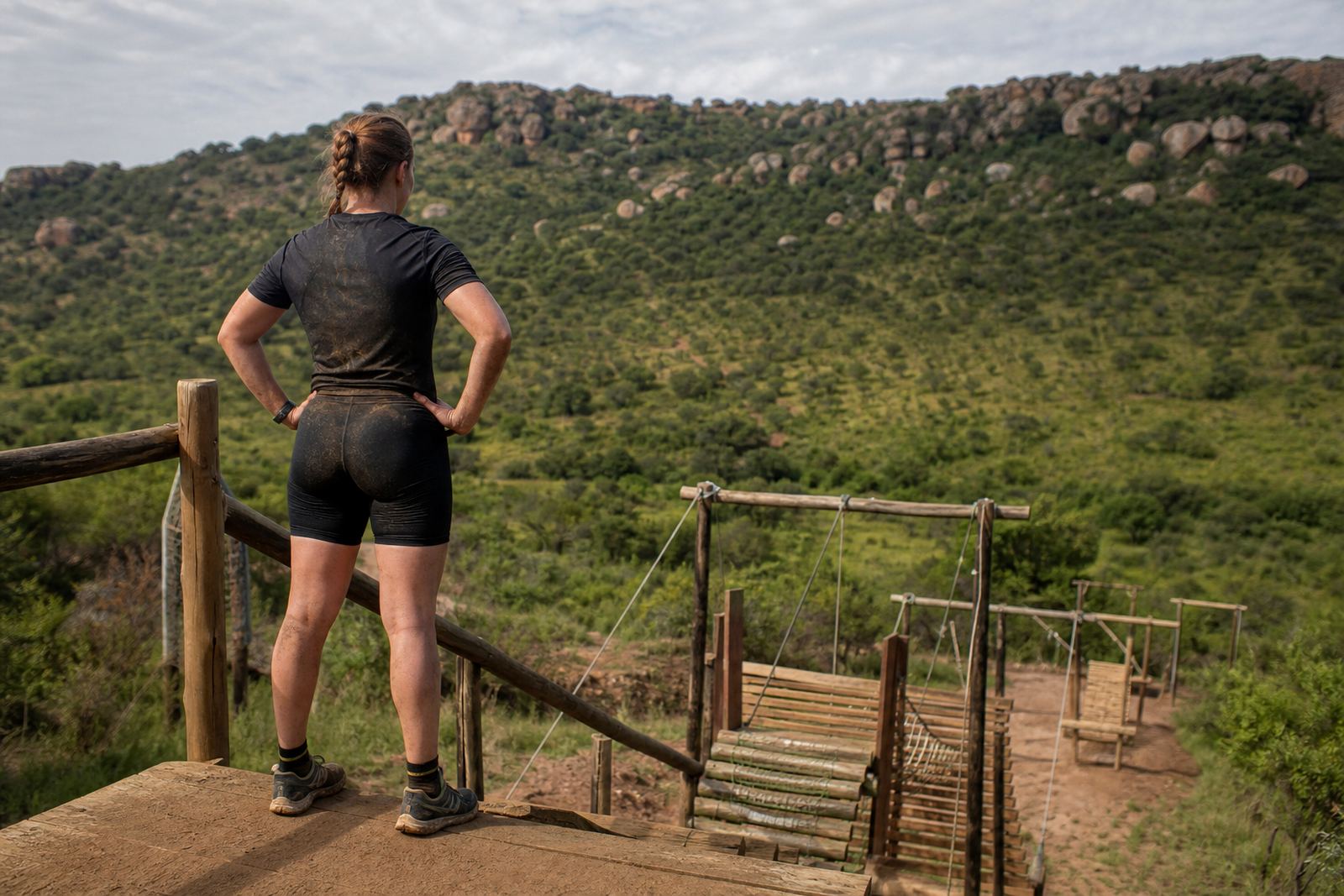
Not every win happens on the obstacle itself. Sometimes the most useful moment is stepping down safely, shaking out your arms and resetting before the next challenge. Recovery areas, supporter planning and team photo moments are part of a sensible event flow because they give participants a chance to regroup.
That reset is especially useful for first timers. A participant may fail one section, recover, then clear the next with better judgement. That is not a setback. It is part of learning how to handle height under pressure. If your team is entering together, use the downtime to check on each other, share water and settle the breathing before the next wave or heat.
At Punisher events based in Hekpoort and around the Magaliesberg, practical support matters as much as the obstacle design. Safety briefings, team registration help, custom team briefing and onsite check-in all work best when participants treat the day as a measured effort rather than a race against their own nerves.