
A race format built for school groups, not casual foot traffic
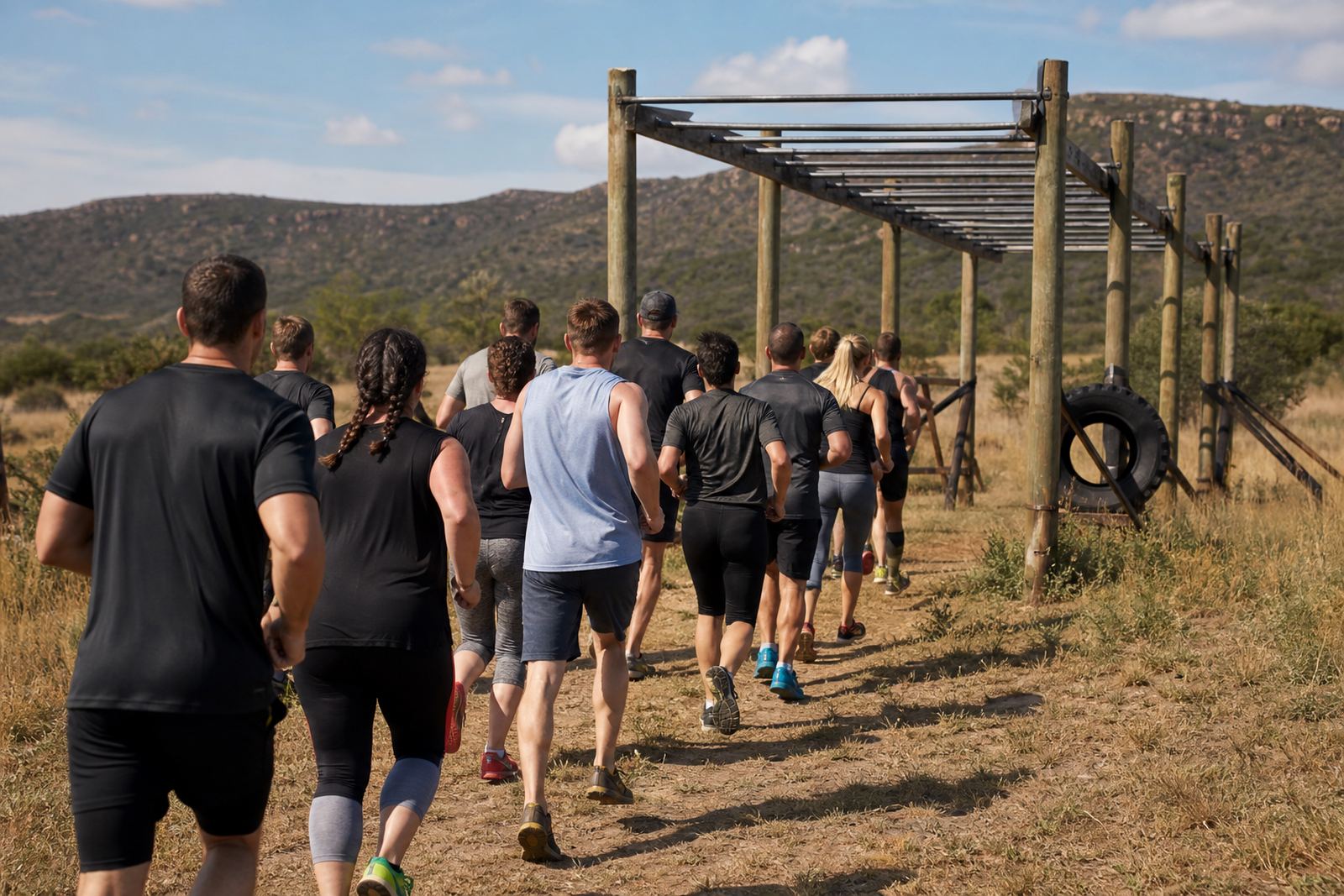
This event is set up for school leavers and youth teams who need a controlled challenge with a strong outdoor feel. The course typically mixes running sections, climbs, crawls, carries, balance obstacles and group tasks, so learners move through a full race flow rather than just a short stunt route. In the Magaliesberg and Hekpoort area, ground conditions can change quickly after rain, so route planning has to suit slope, dust, loose stone and heat on the day.
The format works well for organised groups from Johannesburg, Pretoria, Rustenburg, Potchefstroom and further afield who are travelling in for a supervised event. Teachers, coaches and group leaders can use it as a year-end activity, reward day or team-building challenge, with each participant briefed before they start. It is active, demanding and fun, but still structured enough for a mixed fitness group to take part with the right oversight.
Course sizes and event set-ups that fit different group plans
We set up the School Leavers Race in different course lengths and obstacle mixes, depending on the venue layout and the age group involved. A shorter route suits a tighter schedule and younger participants, while a longer route allows more running, more station time and a fuller endurance feel. Where needed, obstacles can be arranged in a way that keeps traffic moving, which helps groups avoid long bottlenecks and unnecessary waiting in the sun.
- Short course option for a quicker school outing and lighter routing
- Mid-length option for mixed fitness levels and larger year groups
- Longer challenge format for schools wanting more endurance work
- Team-style waves where captains keep group movement organised
- Venue-based adjustments for slopes, shade, access tracks and crowd flow
At the Hekpoort Venue and Magaliesburg Venue, the terrain can be used to add variety without overcomplicating the route. For travelling groups, access from Pretoria, Johannesburg, Krugersdorp and Hartbeespoort can be managed through a clear arrival plan, with a steady check-in process and a nominated group contact.
What is included around the race day itself
The product is not only the obstacle course. It also includes the practical event pieces that make school groups easier to handle on the ground. This starts with safety briefing groups, waiver coordination, captain communication and onsite team check-in. The briefing covers movement between obstacles, how to ask for help, where to wait, and what to do if a participant feels unwell or gets a knock. For school groups, that clarity matters as much as the course design.
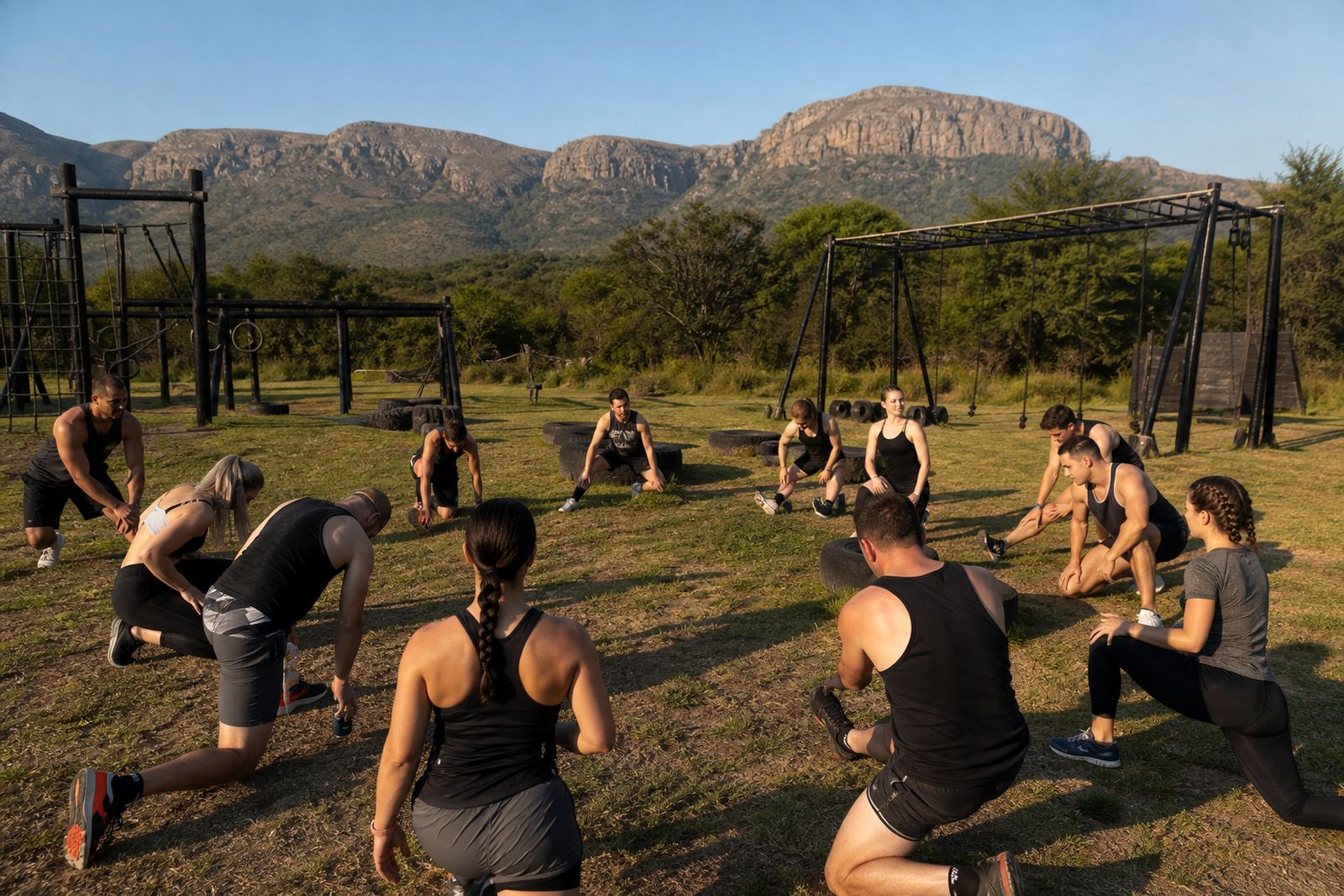
We also support heat allocation, group warmup sessions, supporter planning and recovery area guidance. The warmup gets bodies ready before the first climb or carry, and the recovery area gives participants a place to sit, drink water and catch their breath after finishing. Where a school wants it, a custom team briefing can be prepared for teachers, prefects or group captains so the day runs in a better order, not in a scramble.
- Safety briefing groups before start times
- Waiver coordination for each participant or group pack
- Onsite check-in and captain communication
- Warmup and recovery area direction
- Team photo moments for schools and parent groups
Fit for youth supervision, school calendars and venue rules
The School Leavers Race suits school leavers, sports squads, youth ministry groups and end-of-year outings where adults are present and responsible for supervision. It is a strong fit for events run from the North West, Gauteng and nearby provinces, especially when the group wants a shared physical challenge with clear boundaries. The event can also be adapted for corporate family days where older learners or junior participants are part of a wider group programme.
Venue rules matter. Some sites need tighter access control, designated parking, quieter loading areas or stricter waste handling, especially where there are neighbouring farms, uneven tracks or municipal requirements for gatherings. That is why the organiser needs to confirm the venue access point, the number of groups arriving together, and whether buses, minibuses or private vehicles are being used. In some places the arrival road is dusty and rough, so sensible footwear and a bit of extra time at the gate are worth it.
What to bring, what to wear and what to check first
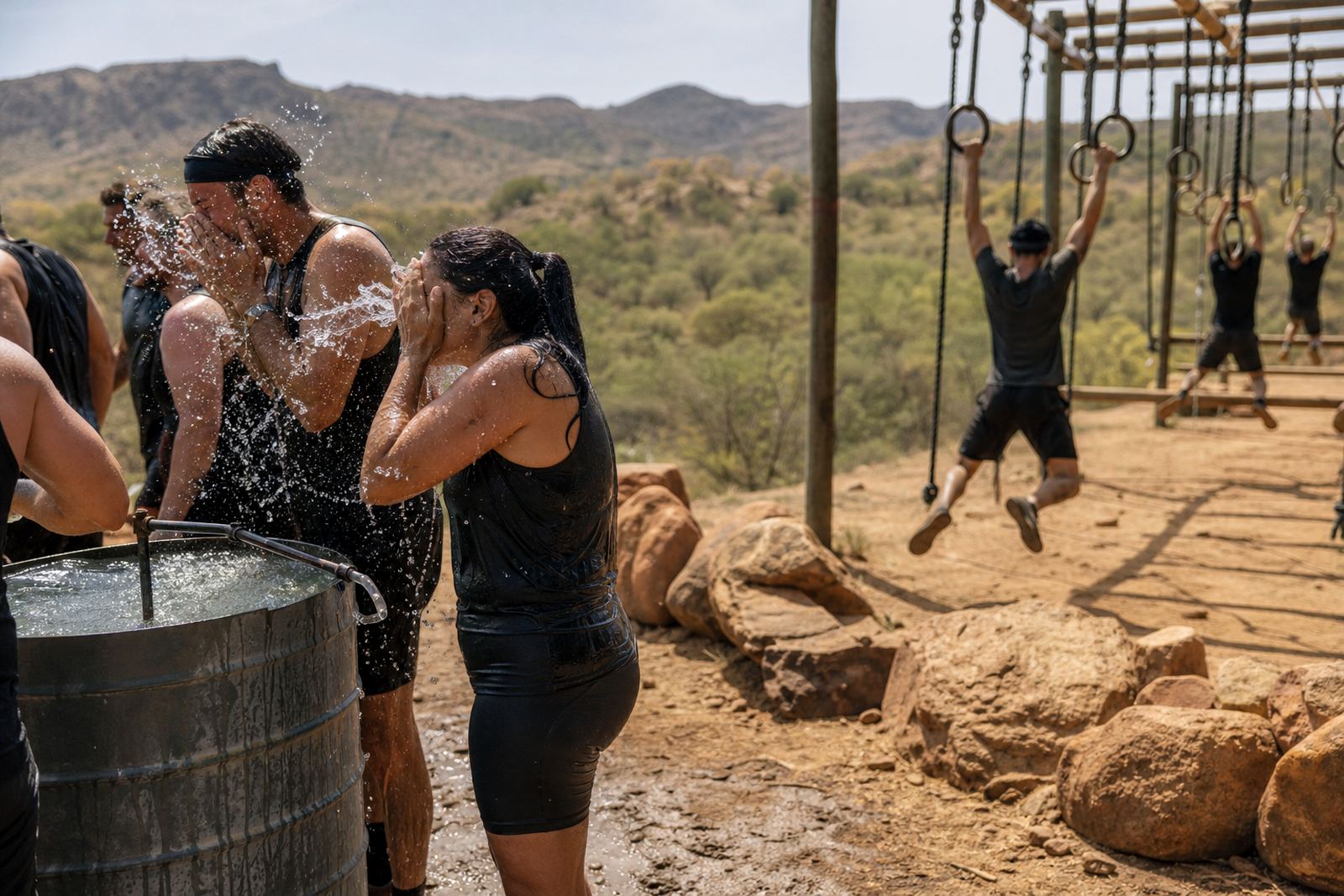
Participants should arrive with clothing that can handle mud, water, dust and repetitive movement. Closed shoes with proper grip are the safer choice, and a spare pair of socks can help after the finish if the course is wet. A small towel, refillable water bottle, sun protection and a dry change of clothes are all useful. School groups should also keep a basic kit together for hair ties, plasters and any permitted personal items that the supervising adult wants to carry.
Before hard exercise, each participant should check with a doctor if there is any concern about asthma, heart conditions, previous injuries or another health matter. That is especially important for learners who have not done strenuous activity recently. The organisers should also confirm whether any participant needs a modified route, slower wave or closer supervision, and the group leader should make sure those details are shared before arrival. It saves time on the day and helps avoid confusion at the start line.
- Closed running shoes with good grip
- Change of clothes and a towel
- Water bottle and sun protection
- Any school-approved snacks for after the race
- Medical notes or supervision details where needed
Care after the course and keeping gear ready for the next group
After the race, equipment and event areas should be cleaned down and checked for wear. Ropes, frames, mats, carry items and marked routes need inspection before the next school group uses them. In a high-use setting, especially where mornings are wet and afternoons dry out fast, mud and grit can build up quickly on contact points. A good rinse, dry-down and reset helps keep everything in working order.
For school groups, the recovery period matters too. Encourage participants to cool down, rehydrate and change out of wet clothing before they travel home. That is a better call than letting sweaty kit stay on through a long drive back to Pretoria or Johannesburg. If the event was held in strong sun or windy conditions near Magaliesberg, extra water and shade in the recovery space make a noticeable difference.
Details to confirm when placing the order
When ordering a School Leavers Race, confirm the venue, expected age band, group size, travel plan and the level of supervision in place. It also helps to confirm whether the school wants a short or extended course, whether any participants need a gentler wave, and whether the event should include team briefing time before the first start. If the event uses a particular field, open area or farm access route, the surface and parking layout should be checked early.
We also need to know the arrival window, the number of teachers or adults attending, and whether any supporters are staying on site. That allows proper planning for heat allocation, check-in, photo time and the recovery area. With school groups, the paperwork side needs to be neat and the practical side needs to stay calm, otherwise the morning gets messy fast.
- Venue and access point
- Age group and supervision ratio
- Preferred course length
- Arrival time and vehicle mix
- Any participants needing special routing or extra support
Key facts
| Event type | Organised obstacle race for school leavers and supervised youth groups |
|---|---|
| Course style | Running, carries, crawls, climbs, balance work and team stations |
| Route options | Short, mid-length and extended challenge formats |
| Best suited to | Schools, youth clubs, sports teams and graduation-style outings |
| Venue use | Outdoor field, open ground or purpose-set race area with access control |
| Support included | Briefing, waiver coordination, check-in, warmup and recovery guidance |