A sharper start for racers who want a cleaner run
Competitive Heat is set up for participants who prefer a brisk start and a more focused obstacle sequence. It is used for obstacle course races and endurance challenges where timing, spacing and clear lane control matter, especially on mixed terrain in the Magaliesberg area around Hekpoort and Magaliesburg.
This category works well for athletes from Johannesburg, Pretoria, Rustenburg, Potchefstroom, Durban, Cape Town and Bloemfontein who want a race feel that is less casual and more direct. It still suits a range of fitness levels, but the pace is quicker and the flow between obstacles is tighter, so participants should arrive ready to move efficiently.
What the category includes on race day
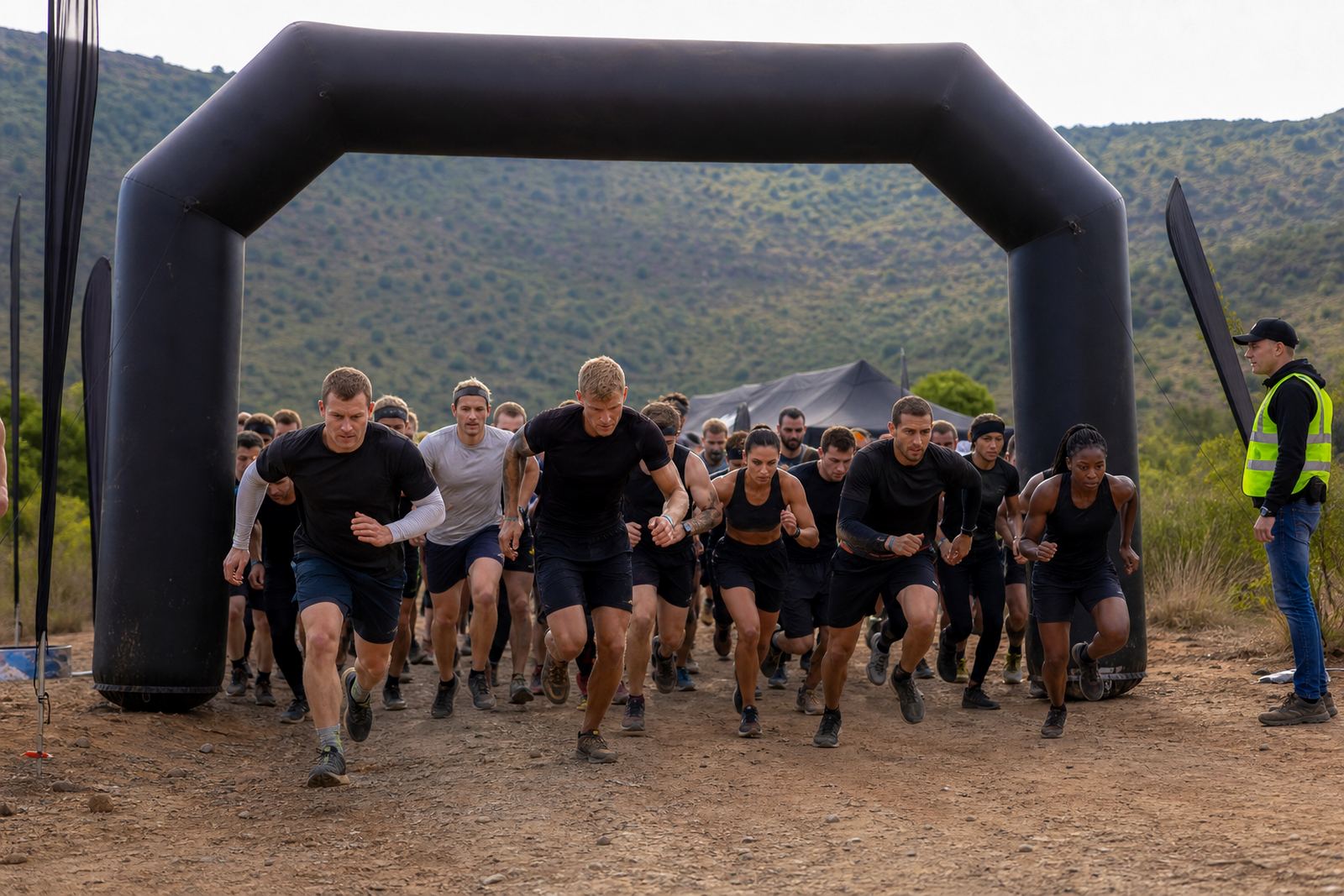
Competitive Heat is more than a start slot. It ties into the race admin, the briefing process, warmup timing and the way participants are grouped before they head out. Our team handles the moving parts so the heat starts in order and competitors know what to expect before the first obstacle.
- Heat allocation support for organised starts
- Safety briefing groups before the wave begins
- Onsite team check-in and participant confirmation
- Captain communication for team entries
- Recovery area guidance after the finish
- Team photo moments for corporate and group entries
For corporate teams and organised groups, the category can be matched to your pace preference and start order so the group is not split across random lanes.
Entry sizes and race fit at the venue
Competitive Heat is suitable for individuals, pairs and full team entries. It is often chosen by corporate groups, training clubs and mixed teams where the faster runners want a cleaner start while others still want the challenge of the course. If your group has different pace levels, we can help with heat planning and captain communication so the entry is handled properly.
In the Magaliesberg region, course ground can change with weather, dust, early morning damp and the heat of the day, so it helps to plan for conditions rather than only the distance. Participants should check with a doctor before hard exercise if they have any concerns about strain, breathing, joints or heart health.
- Best for runners who can keep moving steadily through obstacles
- Works for training groups that want a performance-minded start
- Useful for teams that need a more ordered race flow
- Can be grouped with custom team briefing and warmup support
What to bring for a faster-paced obstacle heat
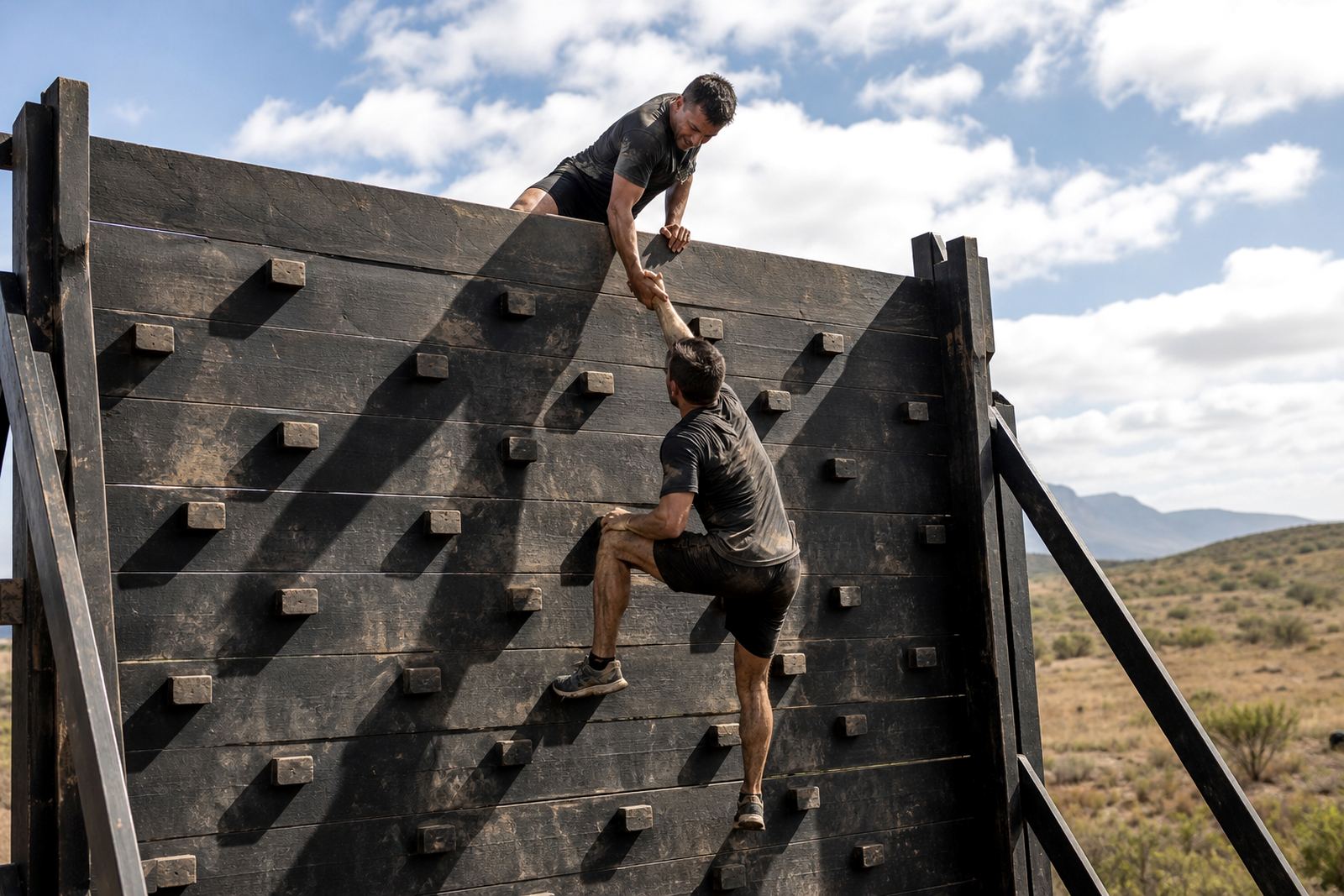
Bring gear that suits a hard working outdoor race site. The course may include uneven ground, mud, rock, dust, water sections and grip challenges, so footwear and clothing should be chosen for movement and balance rather than comfort alone. In summer, sunscreen and a cap can help between obstacles, while in cooler months a dry top for after the finish is worth packing.
- Trail shoes or trainers with good grip
- Water bottle for before and after the run
- Change of clothes and a towel
- Sun protection and a light layer for early starts
- Photo ID if requested for check-in
- Any personal items needed for your own comfort and recovery
Do not bring loose items that can fall out during climbs or crawls. For team entries, one captain should keep track of waiver completion and the final check-in details.
Briefings, waivers and the order of the start
A Competitive Heat needs clear admin before anyone reaches the start line. Waiver coordination, participant check-in and the safety briefing should be completed in full so the heat can move without avoidable delays. The briefing covers course conduct, obstacle use, passing points, water points and what to do if a participant needs to step out.
Our safety and briefing officer works with the team to keep instructions practical and direct. If your entry includes a captain, we can support captain communication so everyone receives the same information. That matters on faster starts, where a small delay or missed instruction can affect the whole group.
- Waivers should be completed before race day where possible
- Heats are allocated to keep the start area orderly
- Participants are briefed on safe obstacle use and course movement
- Group warmup sessions can be arranged before the start
Care, recovery and keeping the kit ready for the next run
After a Competitive Heat, clothes and shoes should be cleaned as soon as practical to remove mud and grit. Let footwear dry out fully in shade, especially for coastal humidity or wet weather training, and do not leave wet kit sealed in a vehicle bag. If your team is doing repeat training or another event soon, check laces, soles and gloves before packing away.
For group organisers, recovery area guidance helps participants cool down properly and avoid cramping after a hard effort. Drink water, stretch lightly and allow time to settle before leaving the venue.
Competitive Heat suits people who want a race category that feels organised, direct and energetic. It is a practical choice for participants who want a quicker start without losing the support structure around the event.
Key facts
| Product type | Obstacle course race start category |
|---|---|
| Category pace | Faster moving start with cleaner obstacle flow |
| Suitability | Individuals, pairs, club entries and corporate teams |
| Venue region | Magaliesberg, North West, based in Hekpoort |
| Support included | Waiver coordination, safety briefing groups, heat allocation and onsite check-in |
| Participant planning | Captain communication, warmup support and recovery area guidance |