
A Midrand brief with more than one kind of competitor
The client was a Midrand based organising group planning a mixed team challenge for people arriving from Johannesburg, Pretoria and other inland routes. They needed an event format that suited first timers, fitter runners and those who preferred a steady pace, all in the same heat structure without confusion at the start line.
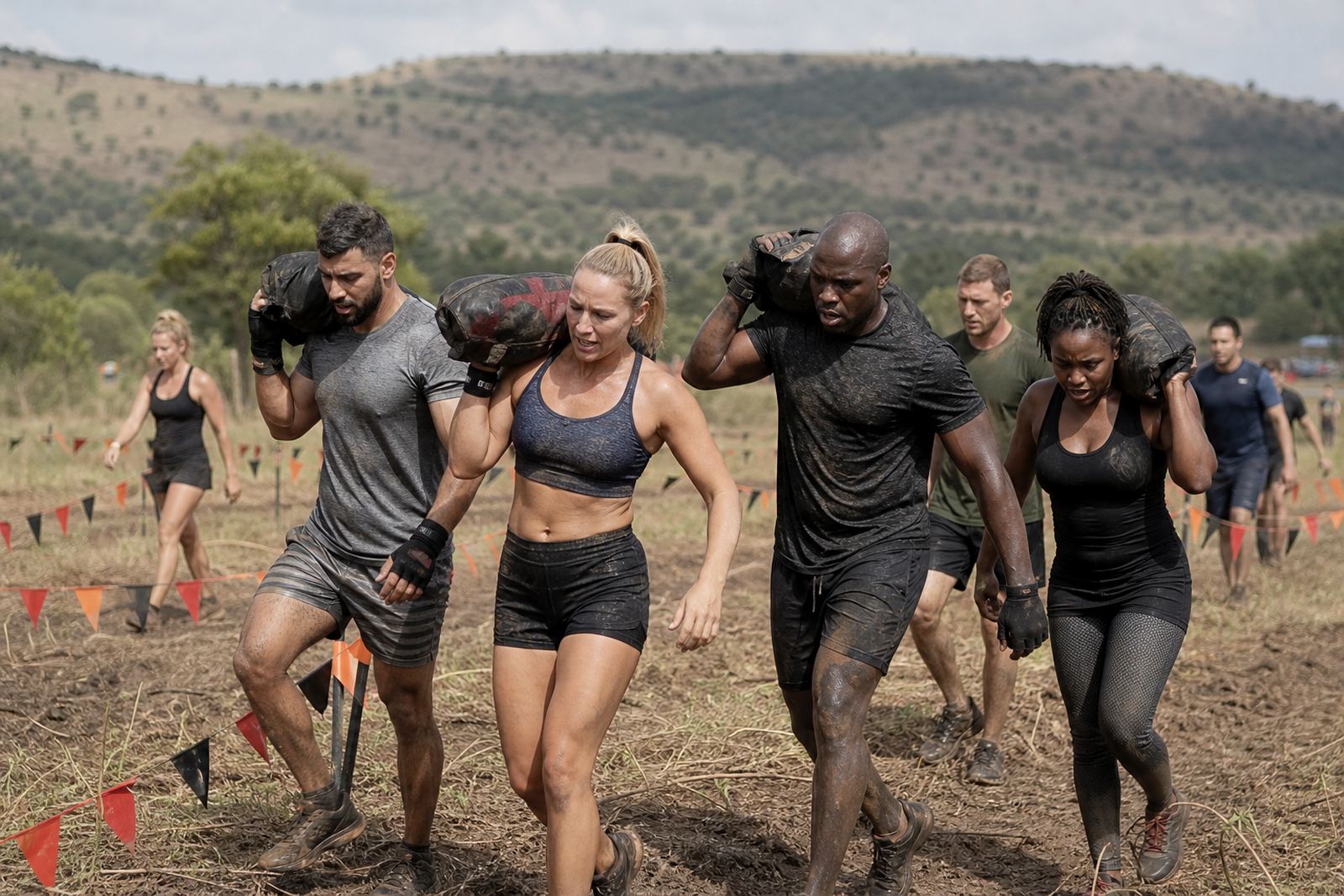
The project brief asked for a day that felt active and competitive, but still manageable for people who train differently. We kept the focus on cooperation, task sharing and steady movement through the course, with space for mixed teams to support one another at climbing points, carries and balance sections.
- Mixed team entry format for corporate and social groups
- Shared obstacles designed for cooperation rather than solo speed only
- Support for entrants travelling from Midrand, Pretoria and Johannesburg
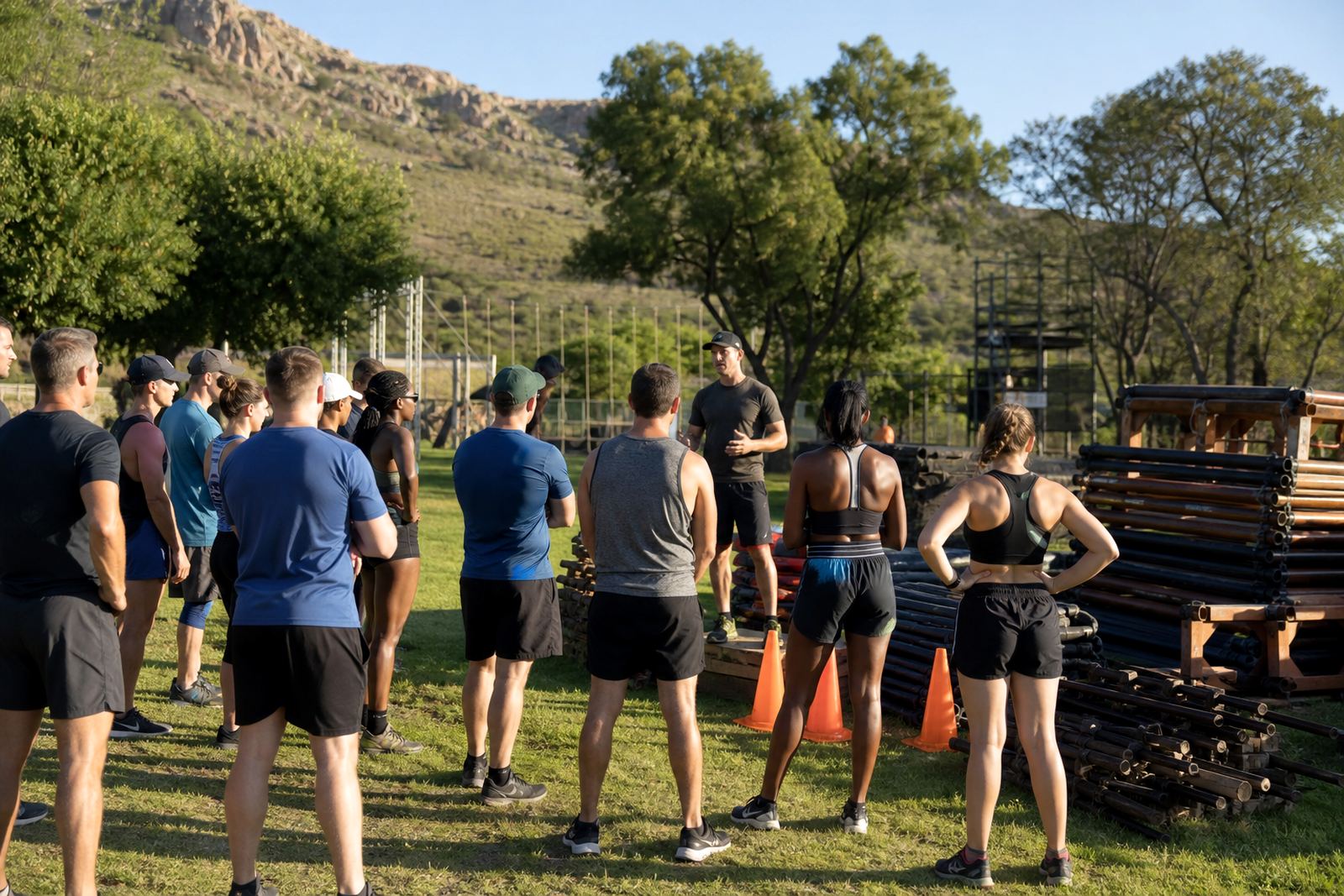
- Clear race day flow for registration, briefing and warmup
What had to be kept tight before race day
The main constraints were practical. The event needed to fit a busy travel window for Gauteng entrants, keep safety briefings clear for groups with different fitness levels, and make sure every participant understood the waiver process before starting.
Because the course was built for mixed teams, we could not treat every obstacle the same. Some sections needed space for team encouragement and some needed slower movement so nobody got pushed into a risk they were not ready for. We also advised that participants check with a doctor before hard exercise, especially if they had not done recent training or were returning after a long break.
- Waiver coordination for all team members before the start window
- Safety briefing groups with one lead contact per team
- Heat allocation support to reduce delays at the line
- Recovery area guidance for post-race regrouping
There was also a timing issue around arrivals from different towns. We kept the flow simple enough for visitors from Krugersdorp, Rustenburg, Potchefstroom and Pretoria to park, sign in and get moving without bunching up at the same point.
How the race day structure was put together
We supplied the event handling around the course, not just the obstacle line itself. That included corporate entry planning, team registration help, captain communication, onsite team check in, and custom team briefing notes for mixed entries. Bianca handled the safety and briefing side, while Lerato and Ayanda kept participant flow moving and settled.
The training content support was also part of the project. Tshepo prepared practical guidance on what to expect in the lead up, including warmup habits, grip work and basic pacing. The aim was not to overcomplicate it. People needed enough information to arrive prepared, not overloaded with jargon or long rules no one reads.
- Group warmup session before the first wave
- Custom captain communication for team leads
- Supporter planning so families and colleagues knew where to stand
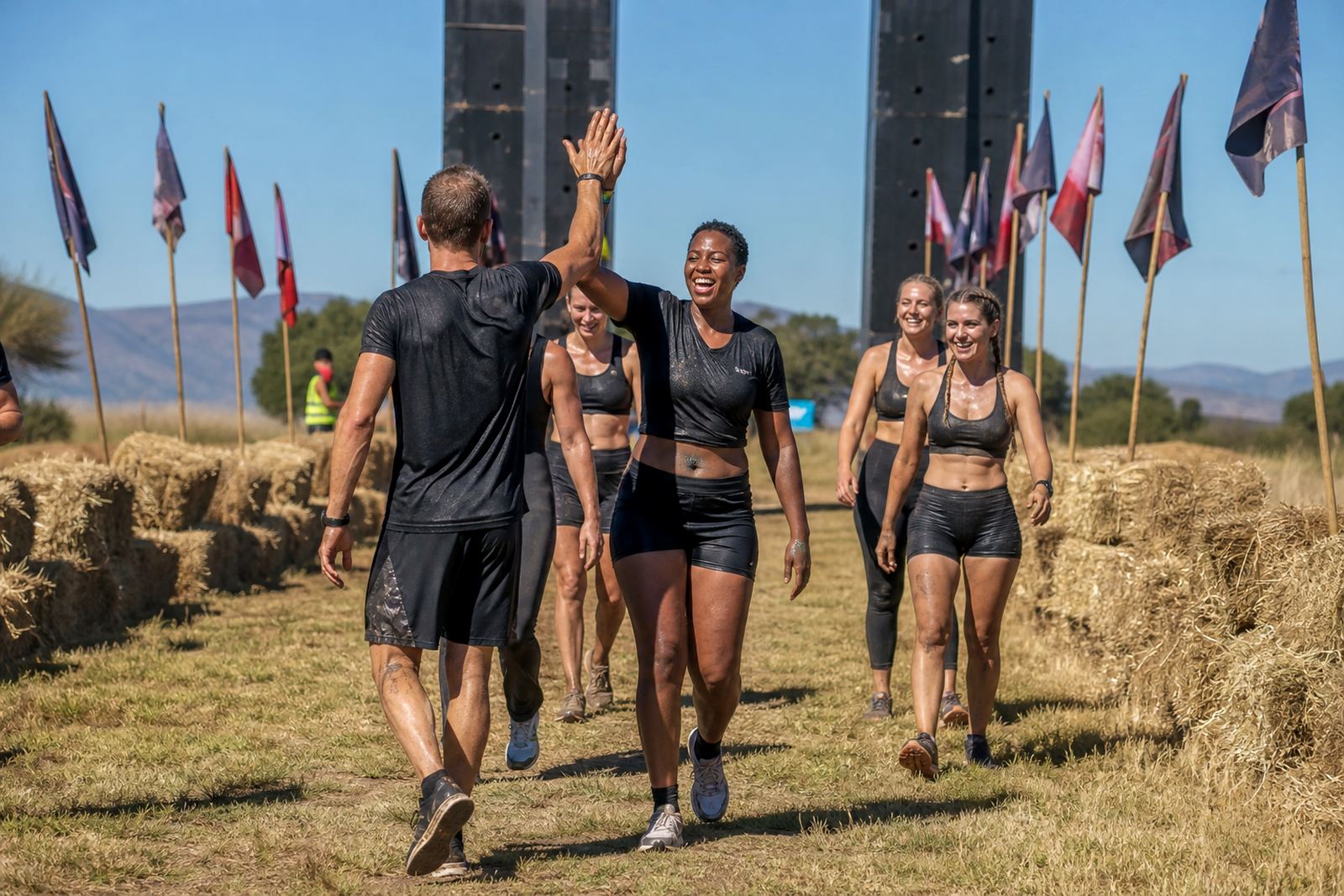
- Team photo moments after the finish, before people scattered
We also used the Magaliesberg setting properly. Hekpoort and the wider North West area can bring dry ground, wind and sudden changes in light, so the course notes had to suit real outdoor conditions rather than ideal ones. That meant water advice, footwear checks and enough space for marshals to guide teams clearly.
Midrand teams, from sign-up to start line
The project ran over four weeks from first enquiry to final race day support. Week one was used for intake, format decisions and participant category planning. Week two covered waiver preparation, briefing structure and the first round of team lead communication. Week three focused on heat allocation, course flow and recovery area setup. Week four was race week, with final checks and onsite coordination.
That four week window worked because the team stayed disciplined about decisions. No one tried to change the whole format halfway through. Once the mixed team layout was settled, the work moved from planning into clean execution, which made the day easier for both organisers and participants.
- Week 1: event brief, team types and entry flow
- Week 2: waivers, safety notes and captain contact setup
- Week 3: heat planning, check in flow and warmup plan
- Week 4: onsite management and race day support
What the event achieved on the ground
The result was a race day format that gave mixed teams a proper challenge without shutting out less experienced entrants. The shared obstacles encouraged cooperation, and the support structure reduced confusion around sign in, briefings and team movement through the venue. That mattered for a group drawn from different towns, because not everyone arrived with the same familiarity of obstacle racing.
Participants could move at a sensible pace, stay with their team, and still feel like they had done something serious. The course format helped captains lead better, and the support areas made the end of the event calmer. It also gave organisers cleaner control over the day, which matters when you are dealing with outdoor conditions and people arriving from all over Gauteng and the North West.
- Clearer team movement from arrival to finish
- Better understanding of shared obstacles and team roles
- Less congestion at check in and briefing points
- Stronger finish experience for mixed ability groups
The feedback from the structure was practical rather than flashy. People understood where to go, what to carry, and how to handle the day. That is usually what makes a race like this work, not extra noise or overdone promises.
What went right at the Midrand mixed teams day
For Punisher team entries, this basic approach still works: keep the briefing clear, keep the waiver process tidy, and make sure the team lead knows exactly what is expected before the first wave. For mixed teams, that is often the difference between a smooth start and a messy one.
We would also keep the travel friendly approach for entrants coming in from Johannesburg, Pretoria, Cape Town, Durban and Bloemfontein. People appreciate straightforward directions, practical what to bring guidance, and a venue flow that does not waste time. On a hot day, that can be the difference between a good race and a long one.
- Repeat the captain-led team communication
- Keep warmup, waiver and briefing steps in one clean sequence
- Keep recovery areas close enough for tired finishers
- Maintain support for corporate groups and mixed social entries
For future mixed team projects, we would keep the same tone with participants too: no fuss, no confusion, and enough support to let people focus on the race itself. That is the part teams remember, even after the mud has dried.
Key facts
| Project | Midrand Mixed Teams |
|---|---|
| Location | Magaliesberg base, serving Midrand entrants |
| Client type | Mixed team event organiser |
| Timeline | 4 weeks |
| Key services | Corporate Entry Planning, Waiver Coordination, Safety Briefing Groups, Onsite Team Checkin |
| Core format | Inclusive team entries with shared obstacles and mixed ability support |