Where the recovery zone sits after the last obstacle
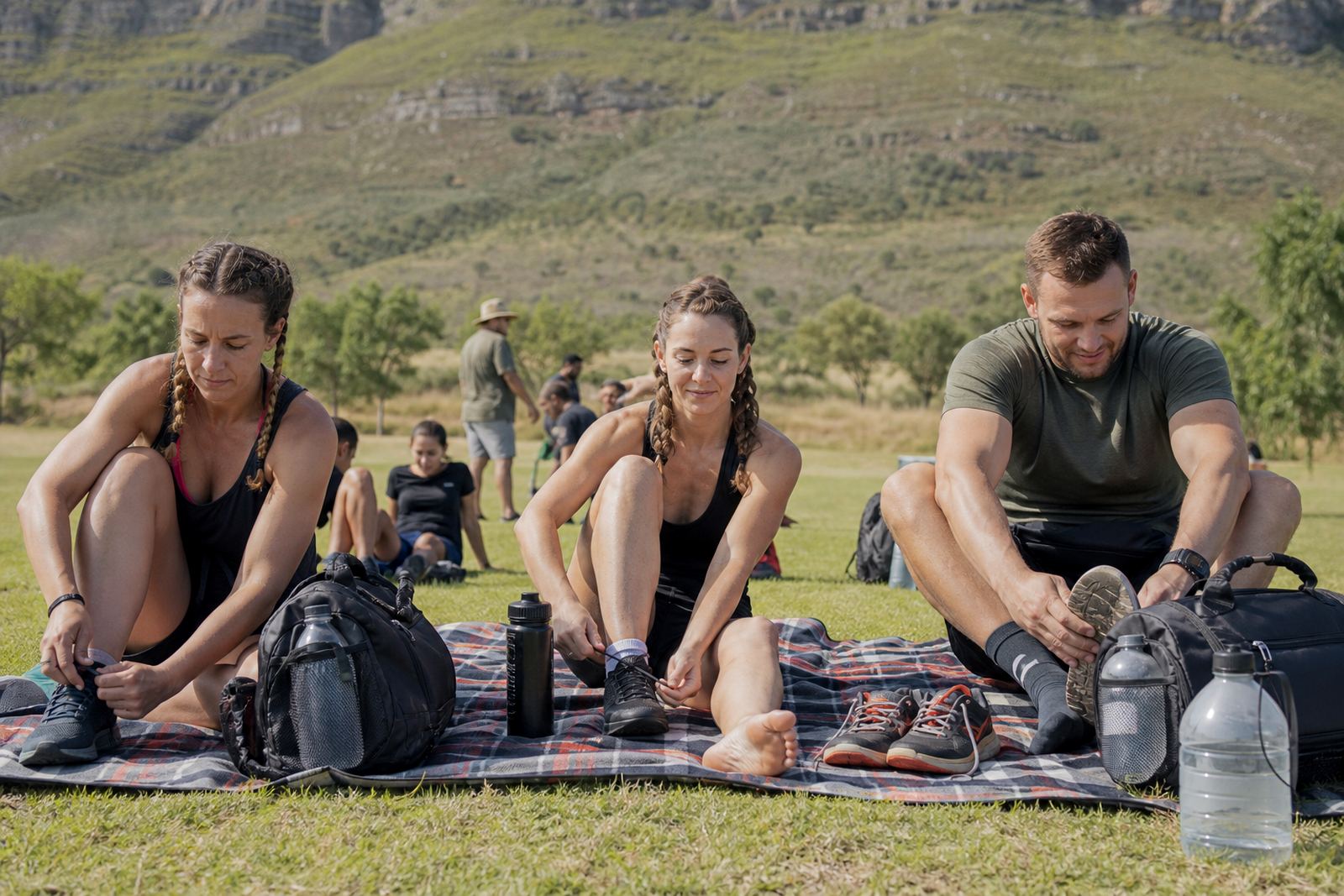
The recovery area is positioned so finishers can move out of the race flow without crowding the handover points, briefing zone or spectator walkways. At our Hekpoort base in the Magaliesberg, the ground can be dusty in dry weather and slippery after rain, so the layout is set for steady foot traffic, shaded regrouping and easy access to team support. It is planned for people arriving from Johannesburg, Pretoria, Cape Town, Durban and Bloemfontein, with enough space for changing, sitting down and sorting kit before heading home.
The space is kept practical rather than flashy. You will find room to pause, count heads, check that everyone is accounted for and let the body settle after climbs, crawls and carries. We also keep access paths clear for race staff, first aid response and participants who need a slower exit after the run. A little order here makes the whole finish feel calmer, especialy when the course has left everyone covered in mud.
What the recovery guidance covers on the day
Recovery Area Guidance is about the small but important steps after racing. It helps teams know where to go, where to place bags, how to change clothing without blocking others and what to do first once the final obstacle is done. It also gives clear direction on where to find water, shade, seating and team meet-up points. For corporate groups, school teams and mixed fitness entries, this support keeps the finish organised and less hectic.
- Post-race regrouping point for teams and families
- Space for clean clothing, towels and dry shoes
- Guidance on where to sit, stretch and recover
- Direction for lost items, support queries and team check-in
- Clear flow between finish, briefing staff and exit routes
We keep the advice basic and practical. If someone is cramping, dizzy or struggling after exertion, the first step is to slow down, sit or lie down if needed, and call for assistance through the onsite team. Anyone with a medical condition or concern should check with a doctor before taking part in hard exercise.
How we set up the post-race flow
The process starts before the first wave moves off. Our operations team maps the route from finish to recovery area, then marks where participants should change, where team leaders can regroup and where support staff should stand by. Bianca Khoza, our Safety and Briefing Officer, checks that the handover points are explained clearly in the pre-race talk, while Lerato Zondo and Ayanda Nxumalo keep the participant flow steady on the ground. That way nobody has to guess where to go after the muddiest sections.
On race day, the sequence is straightforward: finish, collect yourself, move to the recovery area, change if needed and settle in for water, snacks and team photos if your group wants them. If the course has been especially wet or the weather has changed, we adjust the layout so bags stay dry and the walking surface stays as safe as possible. The aim is a calm finish, not a rush.
- Arrival and finish-point direction from race staff
- Move to the marked recovery area and locate your team
- Use the changing space and keep muddy kit contained
- Follow any further instructions for exit, pickup or team photos
What to bring if you want a smoother finish
We advise participants to pack a few practical items in a small dry bag or kit bag, especially for events in the Magaliesberg where weather can shift quickly and the ground may stay wet underfoot. Bring a full change of clothes, spare socks, dry shoes and a towel. A rubbish bag helps keep muddy kit separate from clean items. If you use tape, inhalers or other personal race essentials, keep them easy to reach.
For colder mornings in North West or windy conditions around the hills, a warm layer is useful once you have cooled down. A water bottle is also worth bringing, because post-race thirst can hit hard after obstacle carries and long runs. If you travel from Pretoria, Krugersdorp or Rustenburg, plan a little extra time for changing and sorting your vehicle before heading off, so no one has to sit in wet gear for the drive home.
- Dry clothes and underwear
- Small towel and plastic bag for muddy kit
- Water bottle and light snack
- Warm layer for after the race
- Any personal items required for your own comfort
Safety, comfort and the common sense checks
Recovery guidance is not only about comfort, it is also part of safe event management. Once the race ends, people can be tired, shaky or lightheaded, so we keep support staff visible and briefed. Mud, sweat and uneven ground can make a finish area tricky to move through, so we watch for slips and make sure the route to the recovery space stays open. If a participant feels unwell, they should stop, sit down and call for help straight away.
We also remind teams that personal health matters before any hard exercise. If you have a heart condition, asthma, joint injury, pregnancy concerns or another medical issue, please check with a doctor before entering a demanding course. Our staff can explain the route and the recovery process, but they do not give medical advice. That keeps the focus where it should be, on safe participation and good decision-making.
Pricing approach and turnaround for team bookings
Recovery Area Guidance is usually included as part of a broader team or event support plan, especially for corporate entries and larger groups needing clearer finish-zone direction. Pricing depends on the size of the group, the number of support staff required, the layout of the venue and whether the race needs extra marked areas for changing or regrouping. We do not use one fixed figure for every event because a small team in Hekpoort has very different needs from a larger travelling group coming from Johannesburg or Cape Town.
For turnaround, we work according to the event schedule and the time needed to plan the finish flow properly. Simple group setups can be arranged quickly, while bigger team events may need more coordination between briefing, entry records, participant support and onsite flow. Carmen Botha handles corporate entry planning, and Tshepo Khumalo keeps the guidance aligned with the race-day instructions so everyone gets the same message. The result is a finish area that feels orderly without overcomplicating it.
Aftercare once the mud is washed off
Once participants leave the recovery area, the best aftercare is practical and unhurried. Change into dry clothing as soon as possible, drink water and check for any cuts, blisters or sore joints that need attention. If the weather was cold or wet, make sure the body warms up properly before a long drive. For teams, a brief check-in later in the day can help confirm that everyone got home safely and nothing was left behind.
We also encourage teams to keep the recovery plan in mind for future events. Some groups want a quieter corner for seniors or first-timers, others need a bigger kit drop area, and some prefer a fast exit after the final photo. Ayanda Nxumalo supports those preferences so the setup suits the group rather than forcing everyone into one pattern. That practical follow-through is what makes the finish feel complete.
Key facts
| Service type | Post-race recovery area planning and guidance |
|---|---|
| Best for | Obstacle course races, endurance challenges, corporate teams and mixed fitness groups |
| Venue fit | Indoor-outdoor marshalling, shade use, muddy ground and changing space flow |
| Typical inclusions | Finish-zone direction, regrouping point, changing guidance, comfort support and exit flow |
| Turnaround | Set according to event size, venue layout and race-day schedule |
| Coverage area | Hekpoort, Magaliesburg, Hartbeespoort, Krugersdorp, Pretoria, Johannesburg, Rustenburg and Potchefstroom |